The Mustang GTD was already Ford’s most extreme road-going expression of the nameplate, but the 2028 model year gives it a more pointed link to the company’s earliest racing ambitions.
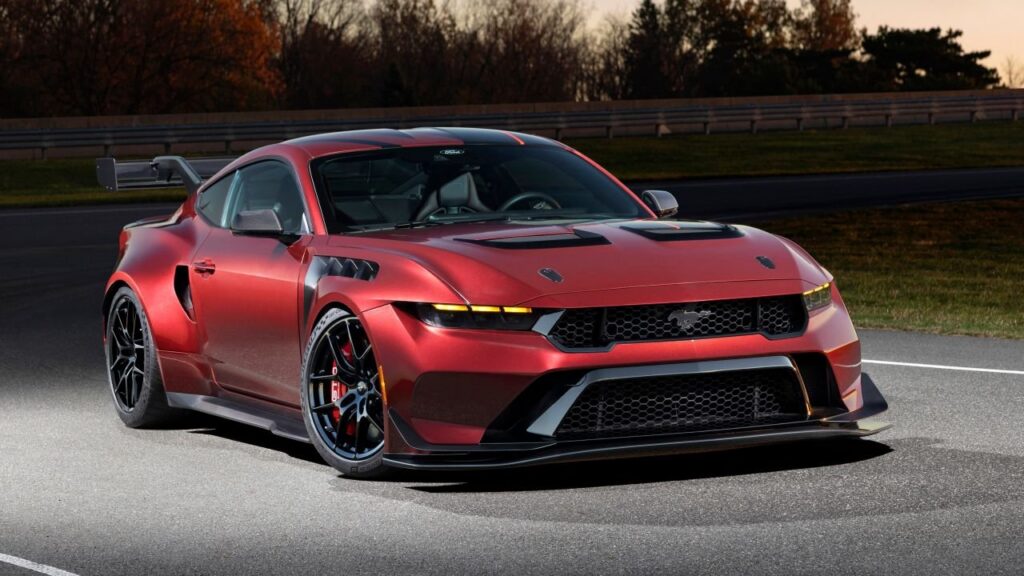
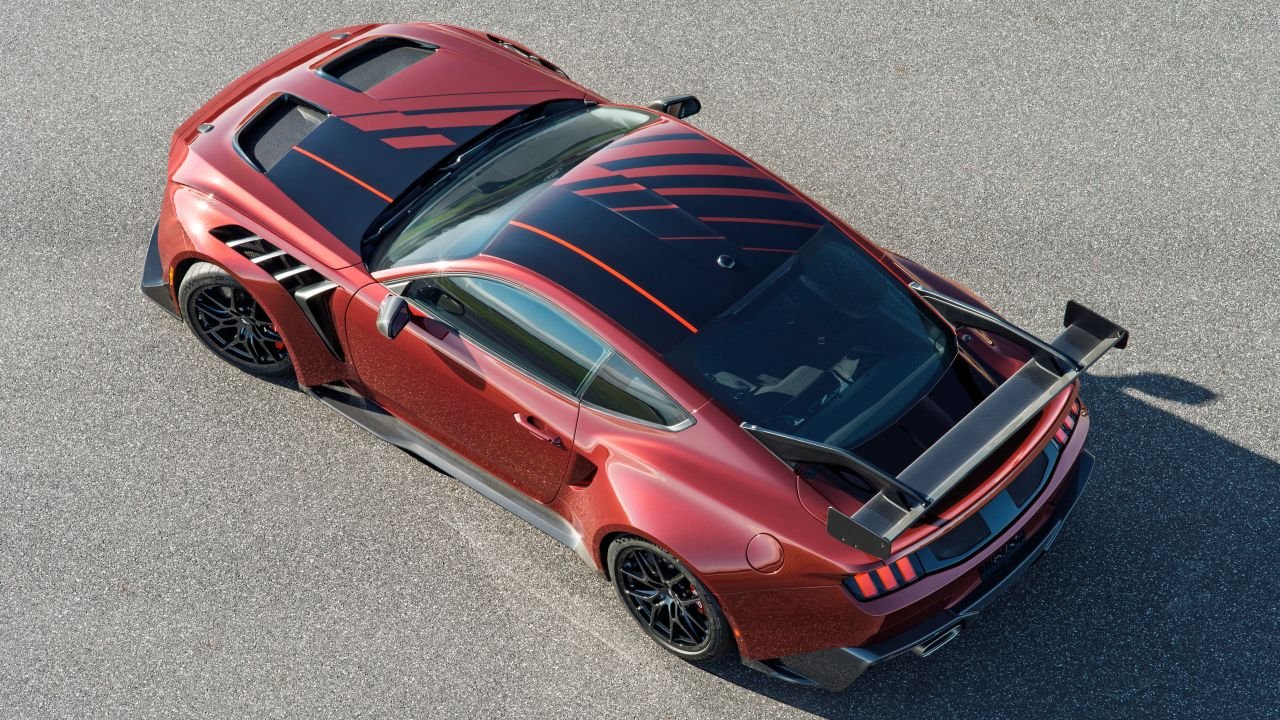
The new 1901 edition honours Sweepstakes, the car Henry Ford built and raced in 1901, and wraps the GTD’s modern carbon-fibre aggression in a heritage-minded Royal Red and black treatment.
Underneath, the important numbers remain unchanged, which means the car still centres on an 815 hp supercharged V8 and an 8-speed dual-clutch transaxle sending power to the rear axle.
At a glance
- Ford has introduced the 2028 Mustang GTD 1901 edition as a tribute to Henry Ford’s 1901 Sweepstakes racer.
- The special edition pairs Royal Red paint with black livery elements, carbon-fibre aero parts and the Performance Package as standard.
- Ford says bookings for the 2028 Mustang GTD will open in December, with deliveries expected to begin in Q2 2027.
A Mustang GTD with a 1901 reference point
The 1901 edition is less about changing the GTD’s mechanical character and more about giving Ford’s flagship Mustang a specific piece of brand memory to carry.
Sweepstakes matters because it sits at the very beginning of Henry Ford’s competition story, long before Mustang became a performance shorthand of its own.
Ford has chosen a direct visual route rather than a subtle one, using Royal Red paint with a black livery to separate the edition from the standard 2028 Mustang GTD.
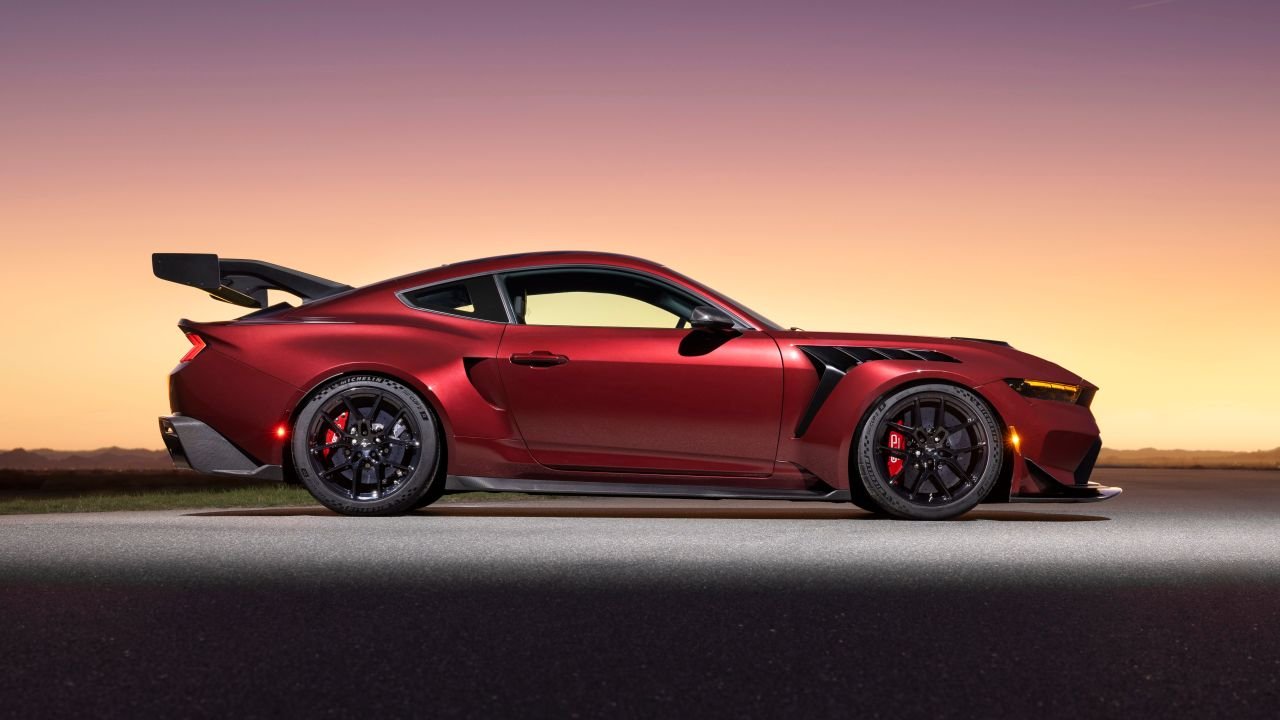
Gloss black wheels and red brake calipers continue the theme, while the carbon-fibre splitter, diffuser, rocker panels and rear spoiler keep the car’s track-focused body language intact.
The Performance Package is standard on the 1901 edition, which makes sense for a car built around a racing reference rather than a purely cosmetic anniversary treatment.
Royal Red outside, Mahogany Red within
The cabin follows the exterior’s red and black palette without abandoning the GTD’s competition-minded tone.
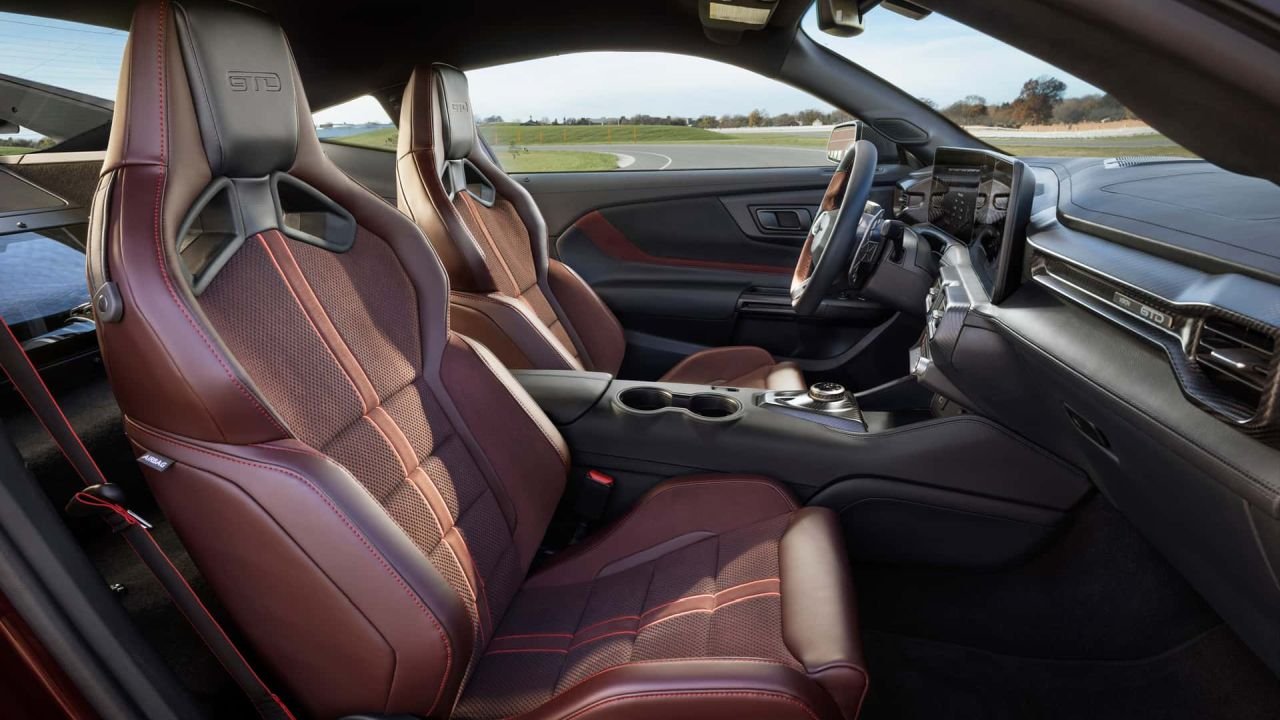
Mahogany Red leather seats are finished with Race Red stitching, while the black door pads receive Mahogany Red accents.
The dashboard is black, giving the interior a cleaner visual base and keeping the stronger colour work focused on the seats and door areas.
For 2028, the broader Mustang GTD range also gains 3D-printed titanium paddle shifters, a leather-wrapped centre console and leather around the instrument binnacle.
Ford is also adding magnesium wheels as an option, along with updated livery choices for the standard Mustang GTD.
The flagship V8 formula carries over
Ford hasn’t changed the core hardware beneath the 2028 Mustang GTD, which is likely the point.
The car continues with a 5.2-litre V8 producing 815 hp and 664 lb-ft of torque, paired with an 8-speed dual-clutch transaxle.
Power is sent to the rear axle, preserving the GTD’s role as the most serious and specialised road-going Mustang in the current line-up.
Rather than chase a new output figure for 2028, Ford has used the model year update to refine materials, options and visual identity around an already extreme package.
Details & Specifications
| Brand | Ford |
|---|---|
| Model | 2028 Mustang GTD 1901 edition |
| Edition theme | Tribute to Henry Ford’s 1901 Sweepstakes racer |
| Exterior | Royal Red paint with black livery |
| Aero elements | Carbon-fibre splitter, diffuser, rocker panels and rear spoiler |
| Wheels | Gloss black wheels on the 1901 edition, magnesium wheels optional on the 2028 Mustang GTD |
| Brakes | Red brake calipers |
| Interior | Mahogany Red leather seats with Race Red stitching, black door pads with Mahogany Red accents and black dashboard |
| Engine | 5.2-litre V8 |
| Power | 815 hp |
| Torque | 664 lb-ft |
| Transmission | 8-speed dual-clutch transaxle |
| Driven axle | Rear axle |
| Package | Performance Package standard on the 1901 edition |
| Bookings | Ford says bookings commence in December |
| Deliveries | Ford says deliveries are expected to begin in Q2 2027 |
The 2028 Mustang GTD 1901 edition should appeal most to buyers who want the flagship Mustang’s full performance brief with a stronger historical thread, rather than a new mechanical variant.
It’s a neatly judged idea for Ford, connecting an 815 hp modern Mustang to the small, consequential racing car that helped shape the company’s performance story at the very start.