In Zimbabwe, the idea of a walking trail is turned inside out.
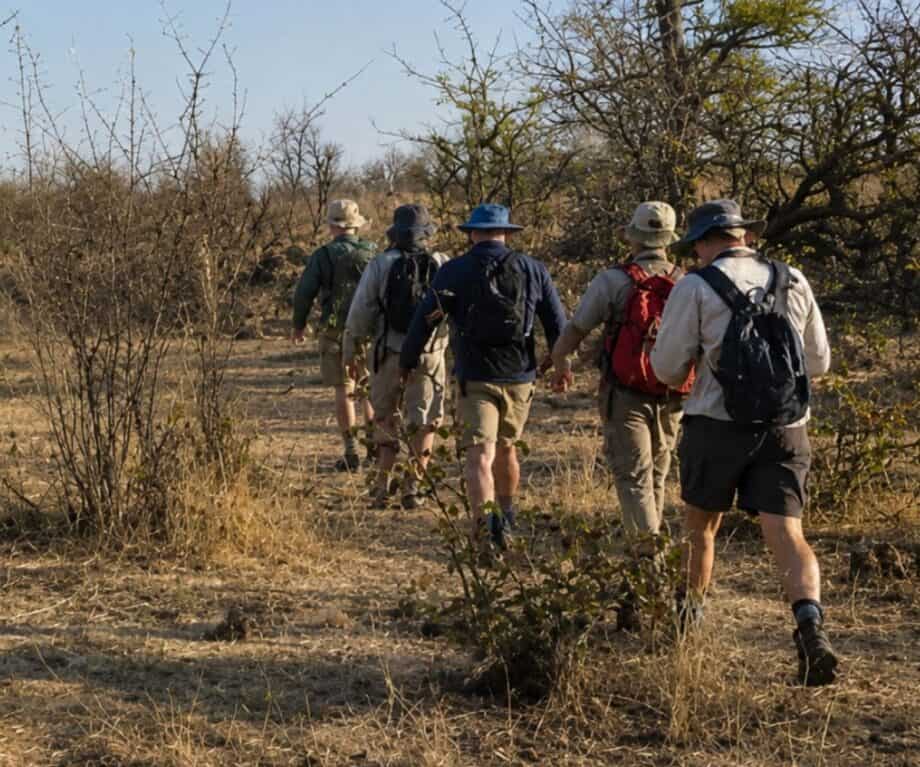
There may be no painted markers, no fixed loop and no promise that today’s route will resemble yesterday’s.
Instead, the trail is often written by elephants, riverbeds, wind direction and the quiet judgement of a professional guide who knows when to follow, when to wait and when to change course entirely.
At a glance
- Zimbabwe’s walking safari trails are immersive guided journeys shaped by wildlife movement rather than fixed hiking routes.
- The experience depends heavily on expert guiding, tracking, bushcraft and the ability to interpret signs in the landscape.
- Northern Hwange National Park is one of the standout regions, with sandstone hills, springs, gorges, the Deka River and layers of human history.
Trails made by wildlife rather than maps
A conventional walking trail usually asks travellers to follow a route that’s already been planned.
Zimbabwe’s walking safaris work differently because the route can shift from hour to hour.
One morning might begin along an elephant path pressed into the earth over generations.
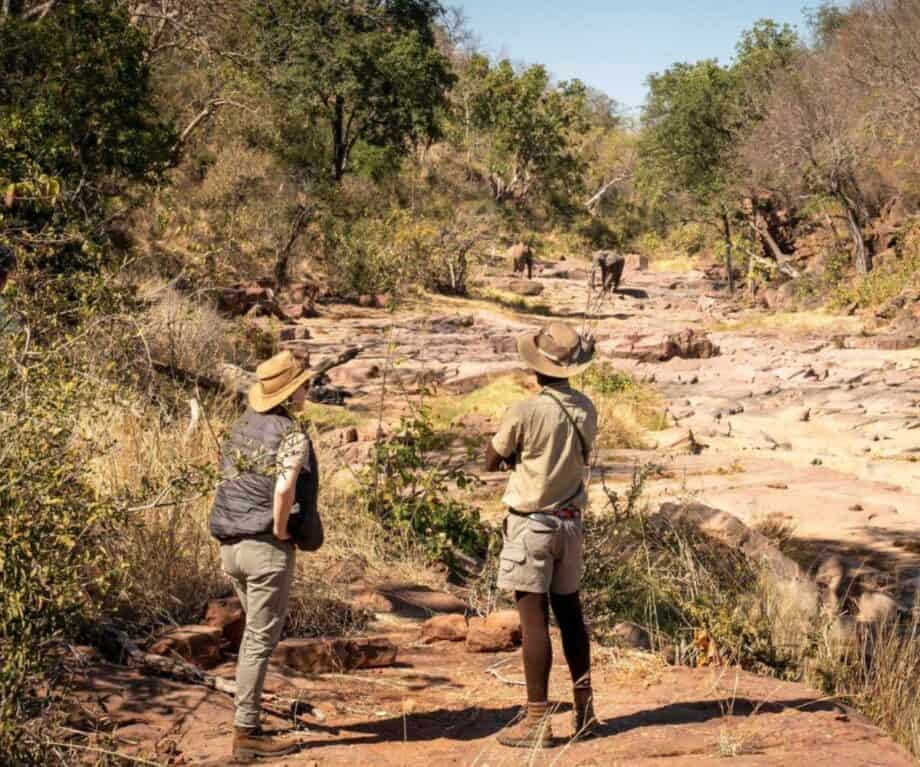
Another might follow a seasonal riverbed where spoor in the sand reveals who passed before sunrise.
The point isn’t simply to reach a viewpoint or cover distance, but to move through the bush with enough patience to notice what it’s saying.
Fresh tracks, alarm calls, broken branches and the direction of the breeze become part of the experience rather than background detail.
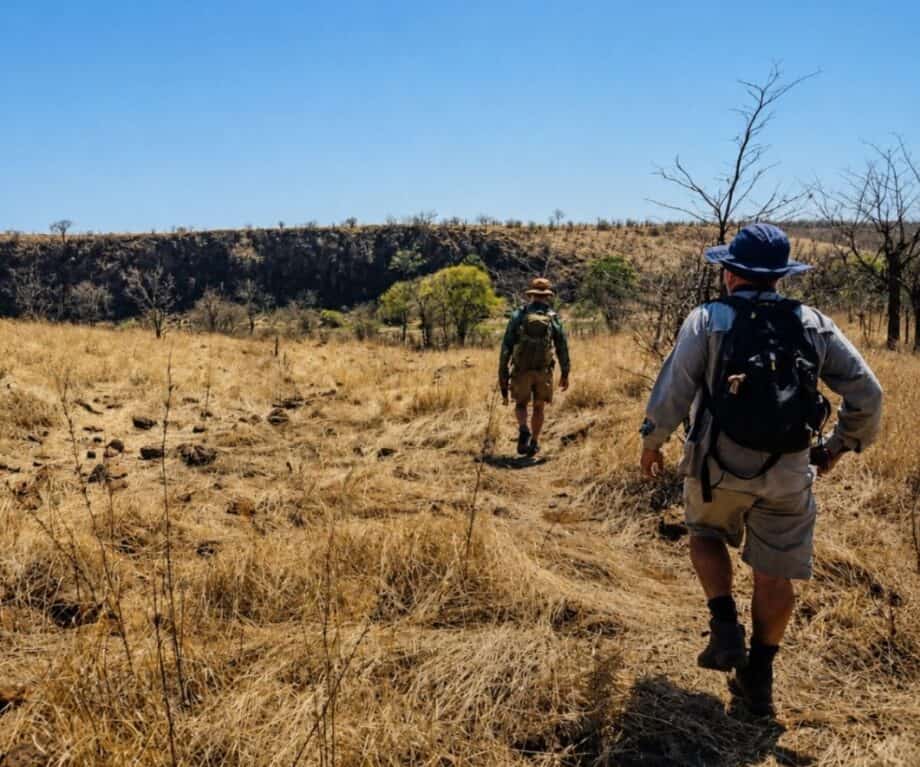
That shift changes the pace of safari travel in a meaningful way.
Wildlife sightings still matter, but so does the evidence that surrounds them.
The guide is central to the experience
Zimbabwe has earned a strong reputation among serious safari travellers because of the calibre of its professional guides.
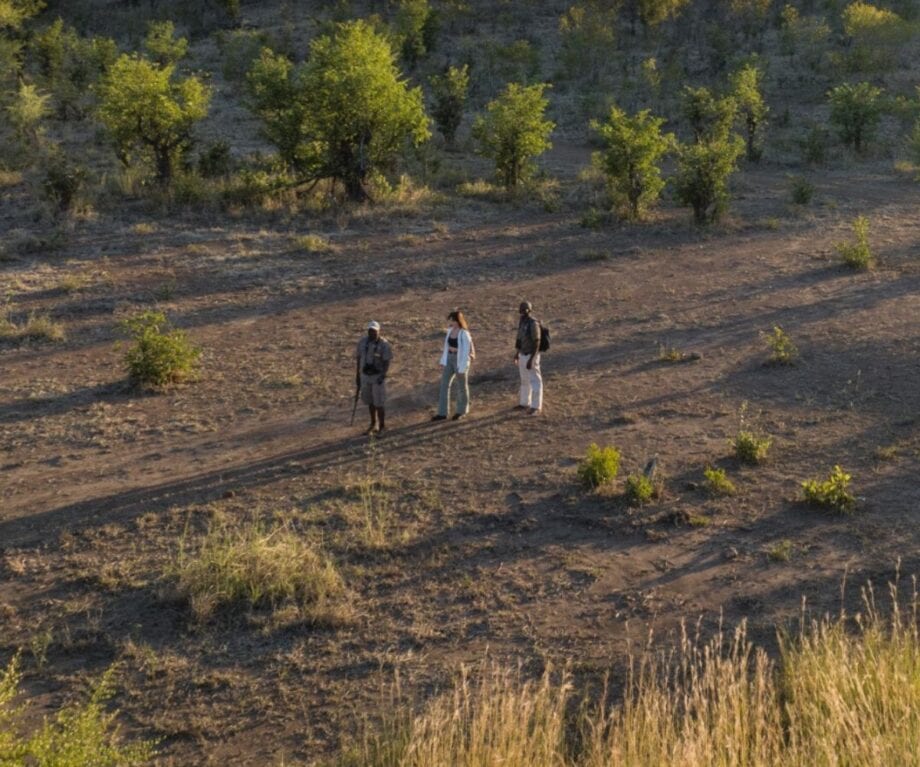
The country’s Professional Guide qualification is widely regarded as one of the most rigorous in Africa, requiring years of preparation across ecology, tracking, animal behaviour, bushcraft, astronomy and wilderness safety.
That training matters when guests are walking through country inhabited by elephant, buffalo, lion and other dangerous game.
It also changes the texture of the journey.
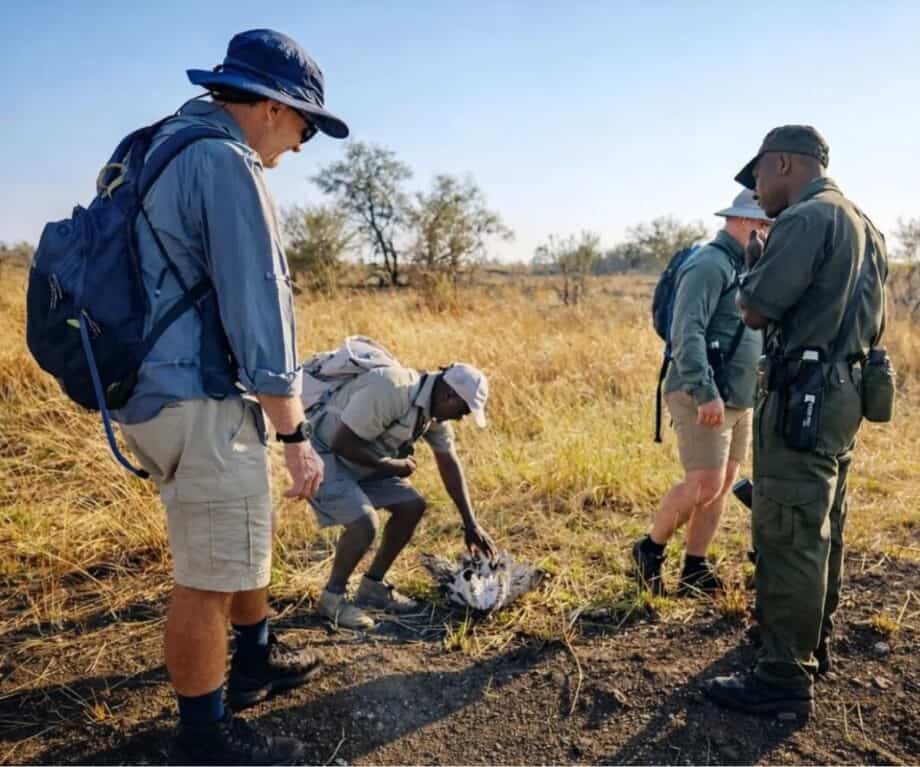
A good guide can turn a single print in damp sand into a sequence of events, or identify the meaning of an alarm call before the animal that caused it has appeared.
Some guides are bird specialists, some are gifted trackers and others have deep knowledge of medicinal plants, trees, springs and old routes through the landscape.
On foot, those skills become more than credentials.
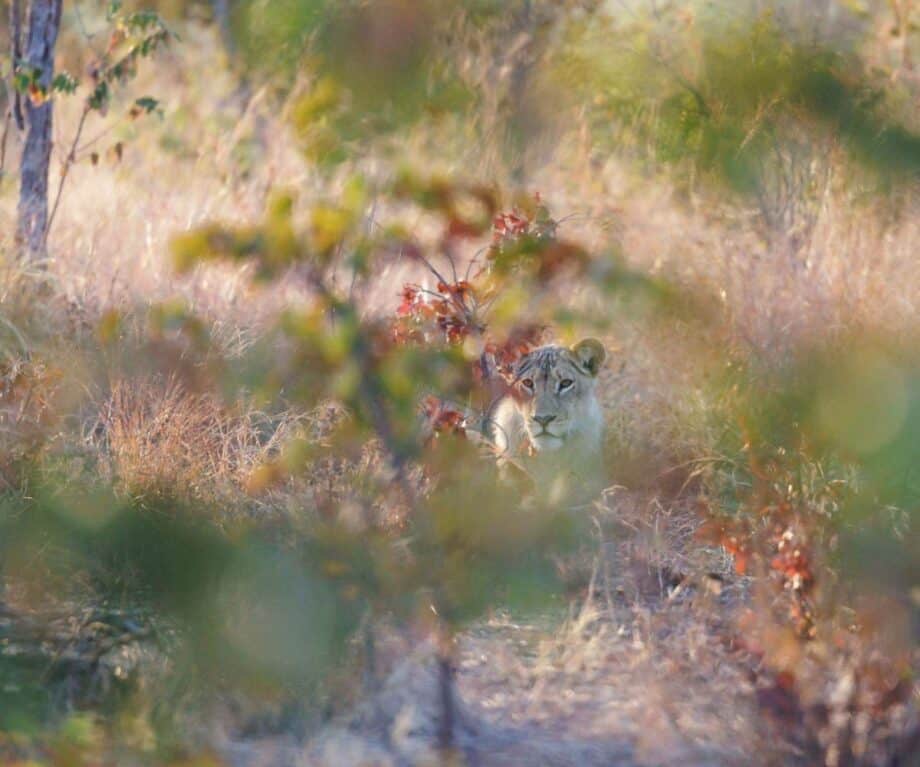
They are the difference between simply walking in wilderness and beginning to understand it.
Northern Hwange is built for walking
Northern Hwange National Park is one of Zimbabwe’s most compelling areas for this style of safari.
While parts of southern Hwange are defined by broad Kalahari sands, the north brings a more varied walking landscape of sandstone hills, natural springs, hidden gorges and the Deka River.
That variety gives each day a different rhythm.
Open woodland can give way to rocky escarpment, then to permanent water where wildlife paths converge.
The Deka River adds structure to the journey without making it feel prescribed.
Walkers may follow its course through changing habitats, reading the country as animals have moved through it for centuries.
The region also carries a human story.
Ancient Nambya settlements, San hunter-gatherer petroglyphs and petrified forests add historical and geological depth to a journey that might otherwise be viewed only through the lens of wildlife.
Private concessions bring freedom and quiet
Some walking in northern Hwange takes place in private concessions, which gives guides more freedom to shape the day around real conditions rather than a rigid plan.
If fresh spoor pulls the group in a new direction, the route can change.
If elephants are drinking at a spring, the party can stop at a respectful distance and let the moment develop at its own pace.
This lack of pressure is part of the appeal.
There are no vehicle queues at sightings and fewer reminders of the safari circuit that exists elsewhere.
For travellers used to game drives, the quieter tempo can be revealing.
The bush feels less like a series of highlights and more like a living system, one that rewards attention as much as luck.
Zimbabwe’s walking safari trails appeal to travellers who want more than a checklist of sightings.
They suit people who are happy to slow down, listen carefully and let the landscape set the agenda.
By the end, the absence of a marked path feels less like a missing feature and more like the whole point.