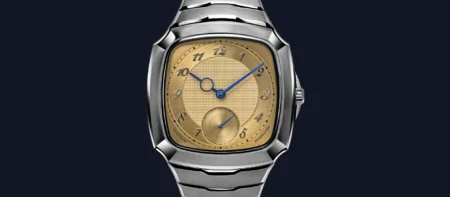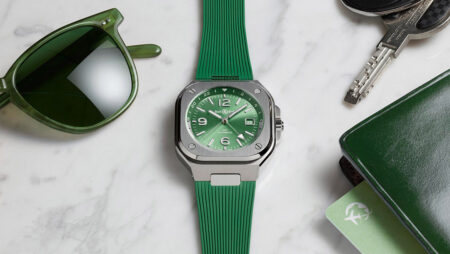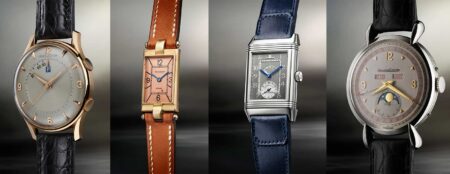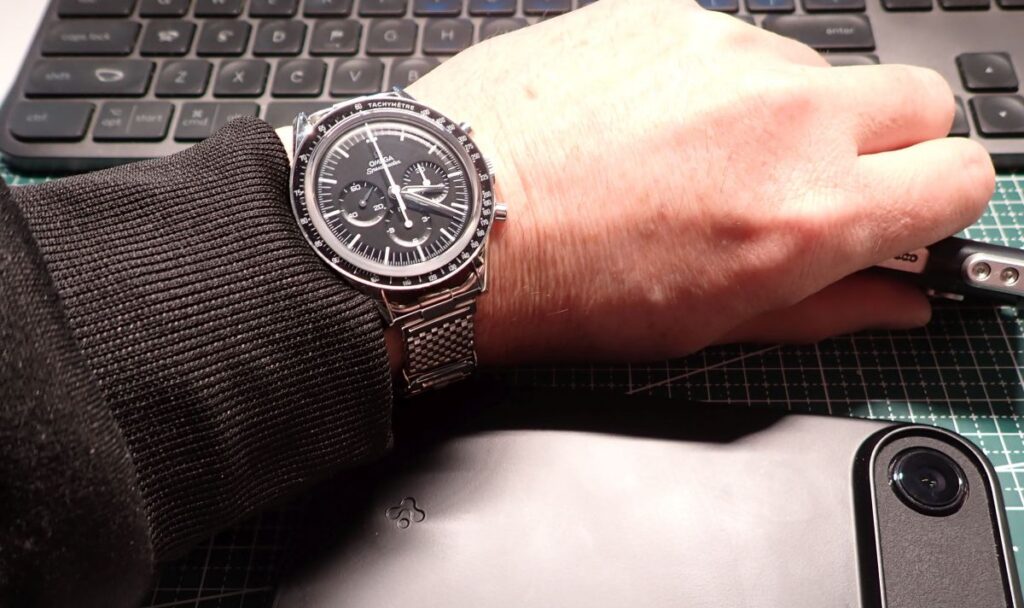
The wristwatch is no longer essential, and pretending otherwise misses the point.
Time is already on our phones, laptops, cars, ovens and televisions, while a voice assistant can answer the question without our even looking up.
Yet watches remain objects people design, repair, collect, inherit, argue over and wear with intent.

That tension is exactly why they’re interesting.
At a glance
- The traditional wristwatch has become an anachronism, but not an irrelevant one.
- Its appeal now rests as much on engineering, memory, design and personal meaning as on timekeeping.
- In a culture built around screens and upgrades, a watch offers a slower, more deliberate relationship with technology.
Redundancy isn’t the same as irrelevance
We often treat technological replacement as if it automatically erases value.
It doesn’t.

The fountain pen survived the ballpoint, vinyl survived digital music, film photography survived the smartphone camera, and printed books survived the e-reader.
None of these objects remains compelling because it is the most efficient answer to its original problem.
They endure because efficiency is only one way of measuring an object’s worth.

The wristwatch belongs in that same category.
It has moved from necessity to choice, and that shift changes the relationship completely.
A different way to meet the time
Checking a watch is not the same gesture as checking a phone.

A watch tells the time and then lets the moment end.
A phone may begin with the time, but it also contains messages, email, calendars, news, social media and enough distractions to turn a glance into a detour.
That makes the wristwatch feel newly specific.

It asks for very little attention.
You raise your wrist, read the dial or display, and move on.
In that small restraint, the watch becomes less a rejection of modern technology than a decision not to funnel every interaction through the same glowing rectangle.

Old functions with new meaning
For much of the wristwatch’s history, technical features were answers to practical problems.
Divers needed water resistance and elapsed-time bezels.
Pilots needed legibility and useful calculations.
Soldiers needed robust watches that could tolerate harsh conditions.
Explorers, sailors, scientists and engineers used specialised instruments because today’s alternatives were not yet available.
Most contemporary owners don’t need those capabilities in the original sense.
A dive bezel may never time a decompression stop, a chronograph may be used for cooking, and a GMT hand may simply keep another place present on the wrist.
The usefulness hasn’t disappeared so much as changed form.
What began as function becomes cultural memory.
The appeal of unnecessary engineering
The mechanical watch is beautifully excessive.
We found easier ways to measure time decades ago, yet watchmaking still builds tiny machines from springs, wheels, jewels, levers and escapements that run continuously on the wrist.
Quartz did not make that achievement less compelling.
Nor did it remove the human story from timekeeping.
Quartz watches have their own lineage, from tuning forks and stepping motors to solar charging, thermocompensation, high-frequency movements and long efforts to make wristwatches more accurate and more robust.
Then there are the stranger branches of watch history, including ana-digital layouts, LCD experiments, unconventional cases and unusual displays.
Taken together, they show how many inventive answers have been given to one very simple question.
What time is it?
When a watch becomes autobiographical
Once necessity fades, choice takes over.
That is where watches become personal.
One person chooses a discreet dress watch, another prefers a large tool watch, and someone else wears a battered piece inherited from a parent.
Another owner may buy the digital watch they wanted as a child.
Measured only as timekeeping appliances, these choices can seem irrational.
Measured as objects of memory, identity and taste, they make perfect sense.
Watches attach themselves to birthdays, jobs, journeys, relationships, achievements and people.
Scratches may annoy at first, then slowly become part of the object’s own record.
Eventually, a watch can stop feeling like something merely owned.
It becomes something that was there.
A slower object in an upgrade culture
Much of modern technology lives inside an upgrade cycle.
Devices are replaced, platforms change, services evolve and yesterday’s interface quickly starts to feel old.
A traditional watch operates on a different timescale.
A mechanical watch can be serviced again and again.
A straightforward quartz watch can keep working for decades.
Cases gather marks, bezels fade, bracelets loosen and dials age.
Age does not automatically diminish the object.
Sometimes it is exactly what makes the watch more interesting.
That is a rare relationship to have with technology now.
The wristwatch no longer has to justify itself purely by telling us the time, and that freedom may be its greatest modern strength.
It can stand for engineering, design, memory, inheritance, ritual or simple pleasure.
Sometimes the best reason to wear a watch is that looking at it makes you smile.