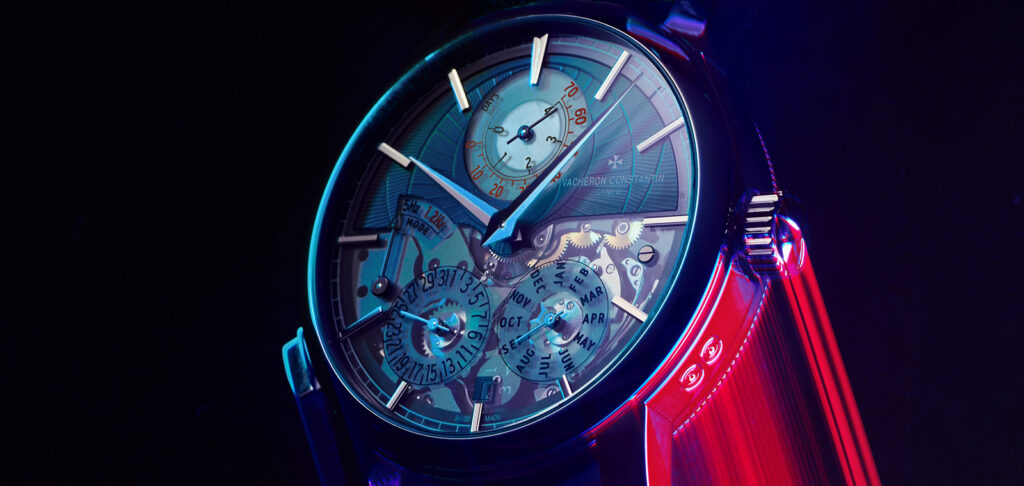
Vacheron Constantin’s Twin Beat Perpetual Calendar is one of those watches that treats a familiar ownership headache as an engineering brief.
The updated version keeps the original concept intact but sharpens the movement enough to stretch its already unusual standby reserve to 70 days, five days more than before.
For a manually wound perpetual calendar, that’s not a party trick. It’s a serious answer to the irritation of picking up a stopped calendar watch and having to reset a full spread of indications.
At a glance
- Vacheron Constantin has updated the Twin Beat Perpetual Calendar with a 70-day maximum power reserve.
- The watch uses two regulators, switching between a 5Hz active mode and a 1.2Hz standby mode.
- The gain comes largely from refinements to the instantaneous jumping calendar mechanism and movement differentials.
A perpetual calendar built to avoid stopping
The Twin Beat was first introduced in 2019 and appeared only in very small numbers, making its return notable for collectors who follow Vacheron Constantin’s more experimental complications.
Rather than making the perpetual calendar simpler to correct, Vacheron Constantin focused on keeping it running for long enough that correction becomes less frequent.
That matters because a stopped perpetual calendar can be awkward to restart, especially when multiple correctors, calendar indications and adjustment safety periods are involved.
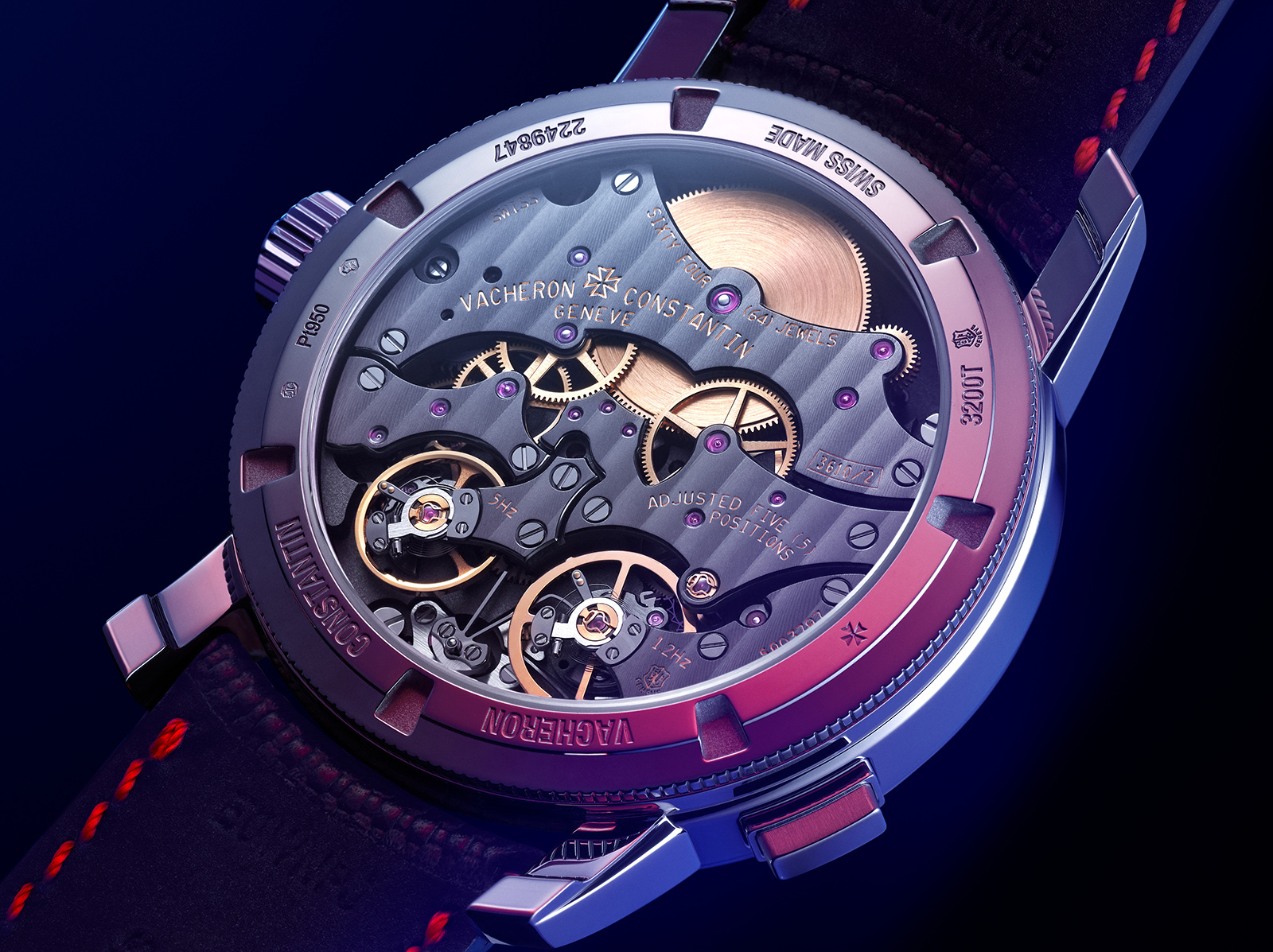
The updated Twin Beat remains manually wound, which makes the 70-day reserve more striking.
Most long-reserve watches pursue endurance by storing more energy through larger or multiple barrels, often with size and performance compromises.
Vacheron Constantin’s approach is more unusual. It reduces energy demand by allowing the movement to run at a drastically lower frequency when the watch is off the wrist.
Two balances and one clever switching system
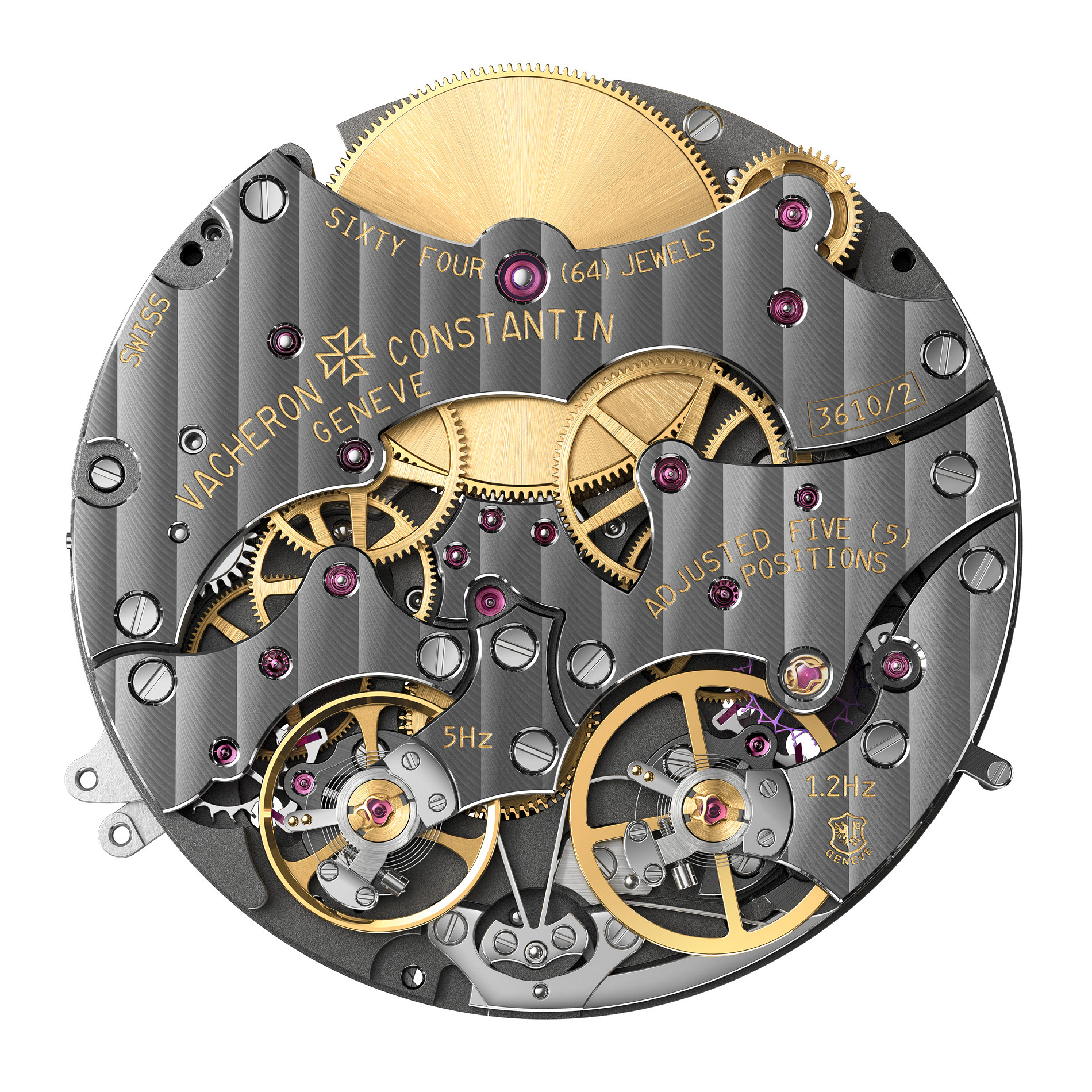
The manual-winding Calibre 3610 QP uses two going trains and two balances, both fed by twin co-axial barrels coupled in series.
Only one balance and one going train operate at a time.
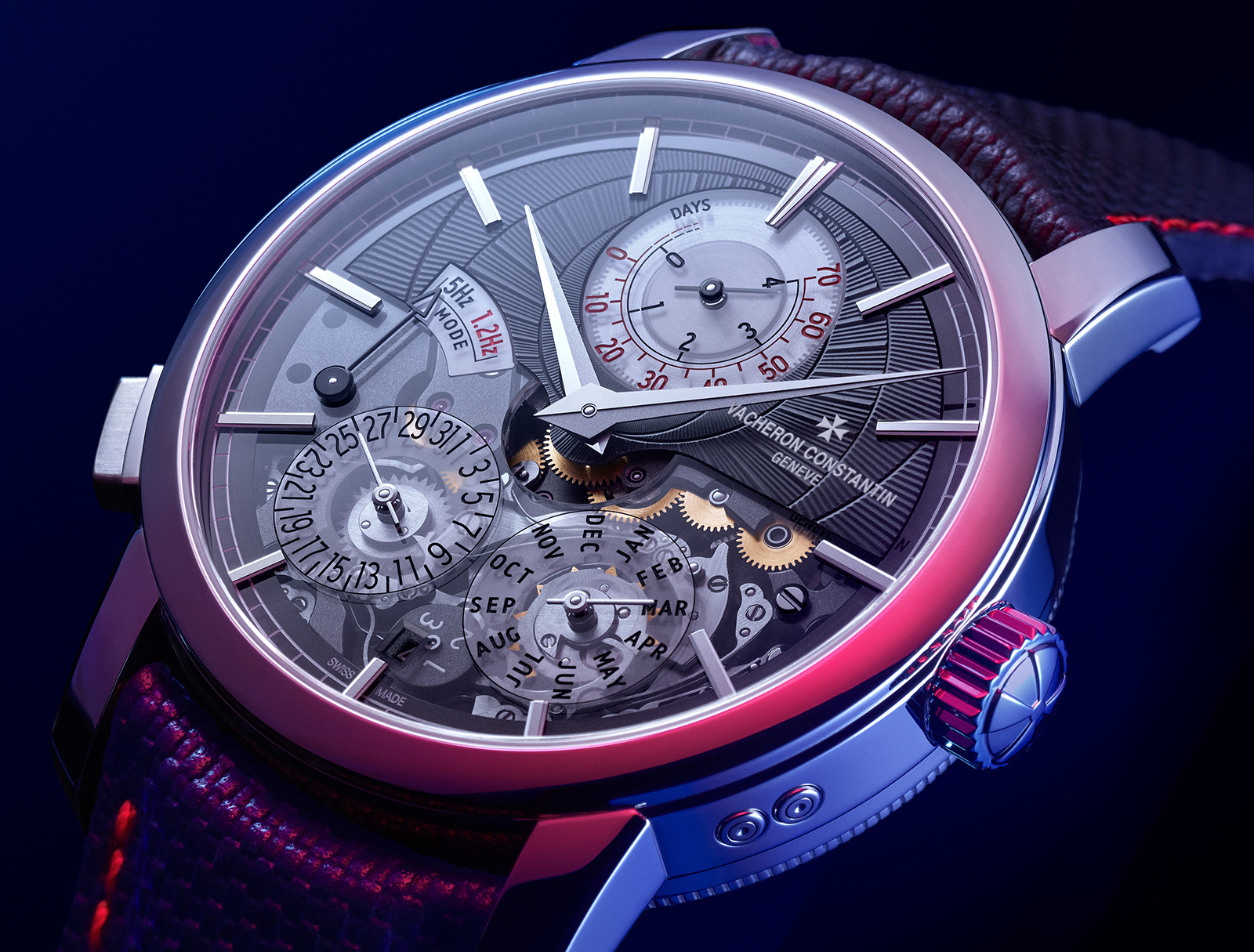
A pusher at 8 o’clock controls a V-shaped brake lever, visible around 6 o’clock, which stops one balance roller while freeing the other.
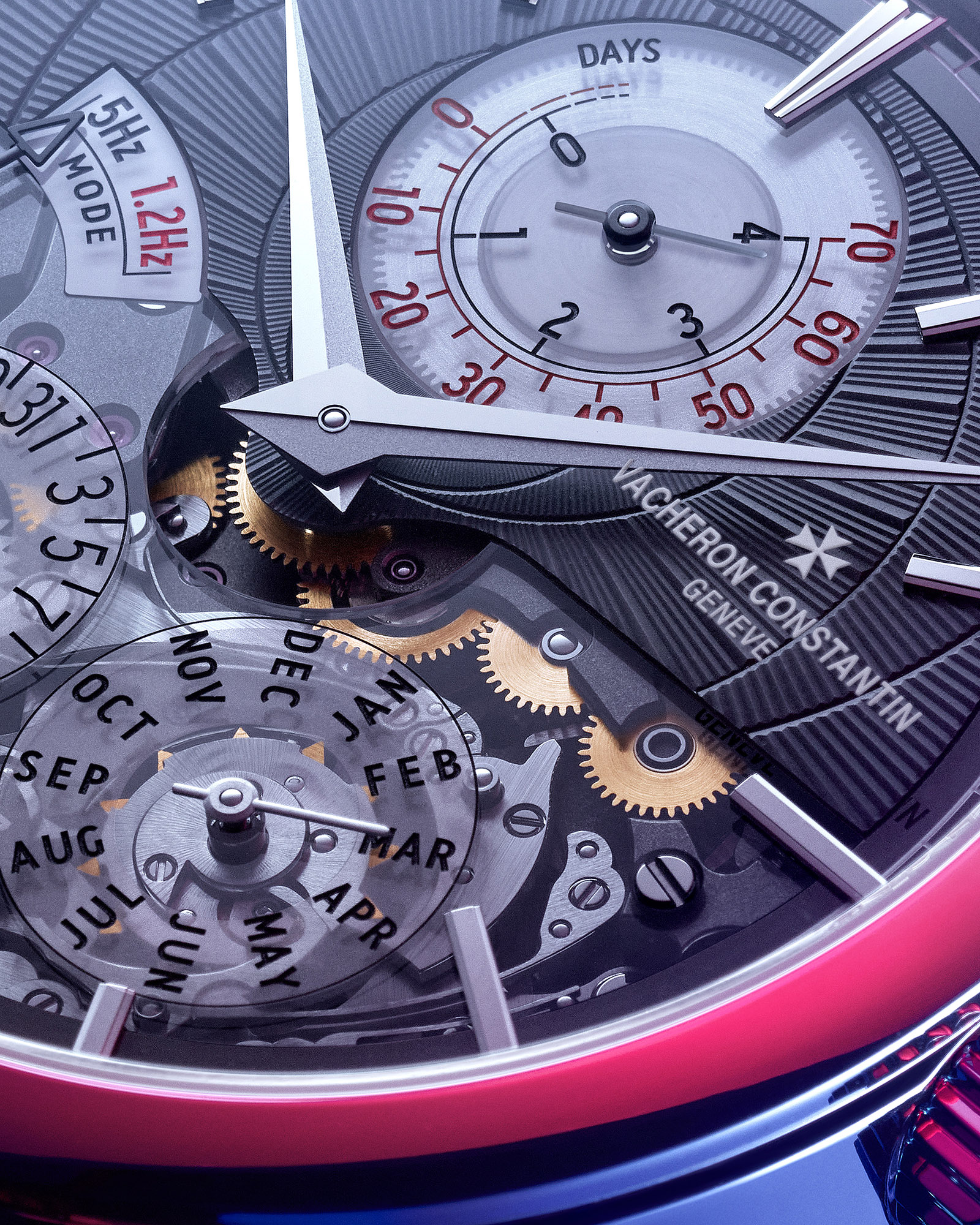
In active mode, the movement is regulated by a 5Hz balance intended for normal wear.
In standby mode, a larger second balance takes over at just 1.2Hz, an extremely slow rate chosen to reduce consumption while the watch is set aside.
That low-frequency regulator uses a hairspring measuring 0.015mm thick, while its going train uses a silicon escape wheel to reduce inertia.
The contrast is dramatic. The watch can run for about four days in active mode, but up to 70 days when operating in standby mode on a full wind.
The differentials behind the 70-day display
The updated movement includes further refinements to its differentials, although Vacheron Constantin hasn’t detailed every mechanical change.
Their purpose remains central to the Twin Beat idea.
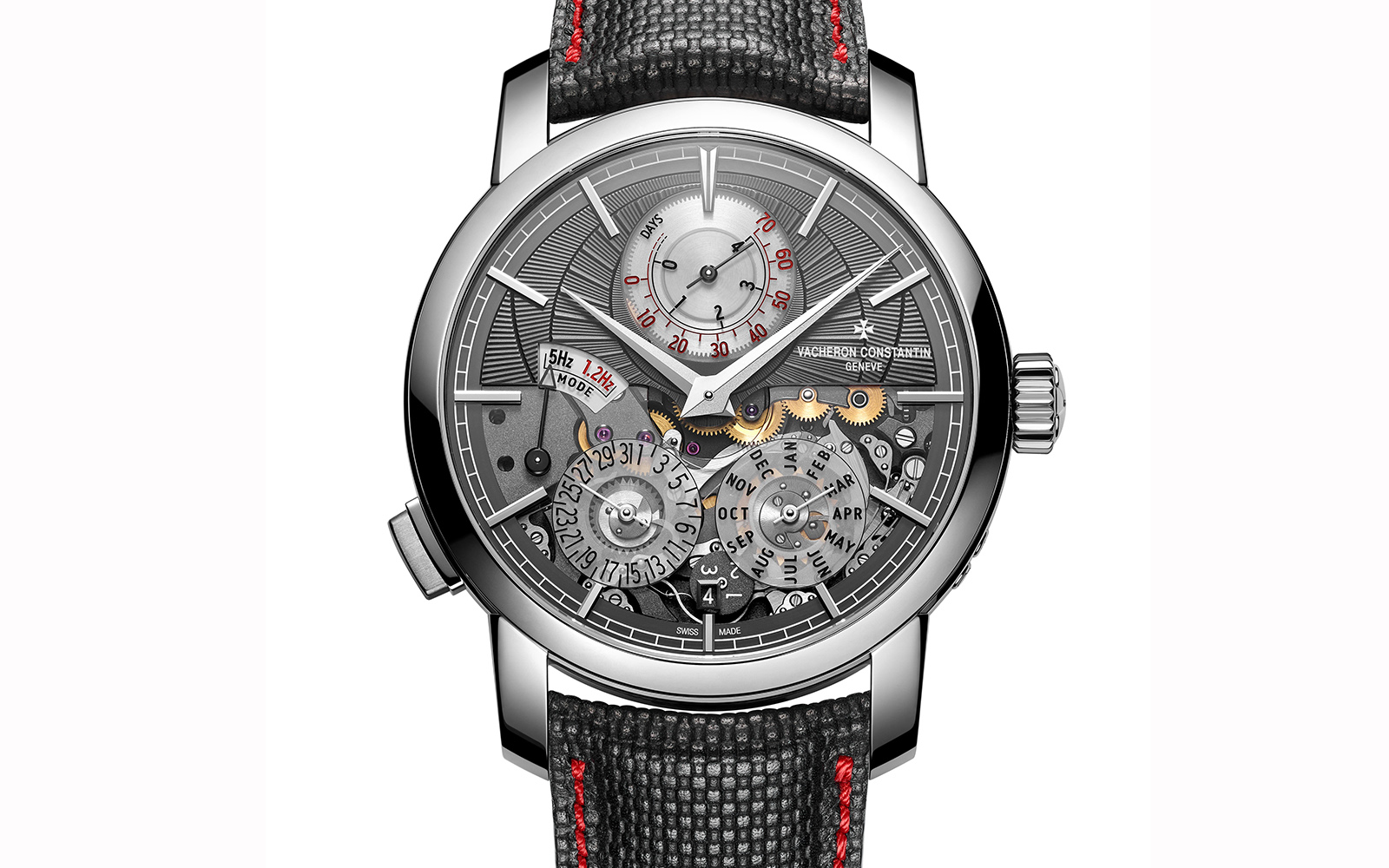
One differential allows the mainsprings to unwind normally while power is routed through whichever going train is active.
Another sits on the display side and combines the outputs of the two trains into a common display train, so the hands and perpetual calendar advance consistently no matter which regulator is in use.
A third differential is used for the power reserve indication.
Here, the challenge is scale, as several revolutions of the barrels must be translated into a small movement of the display hand.
The mechanism uses a second differential as a reducer, comparing two closely matched rotational speeds and sending only their small difference to the indicator.
An instantaneous calendar with lower energy demand
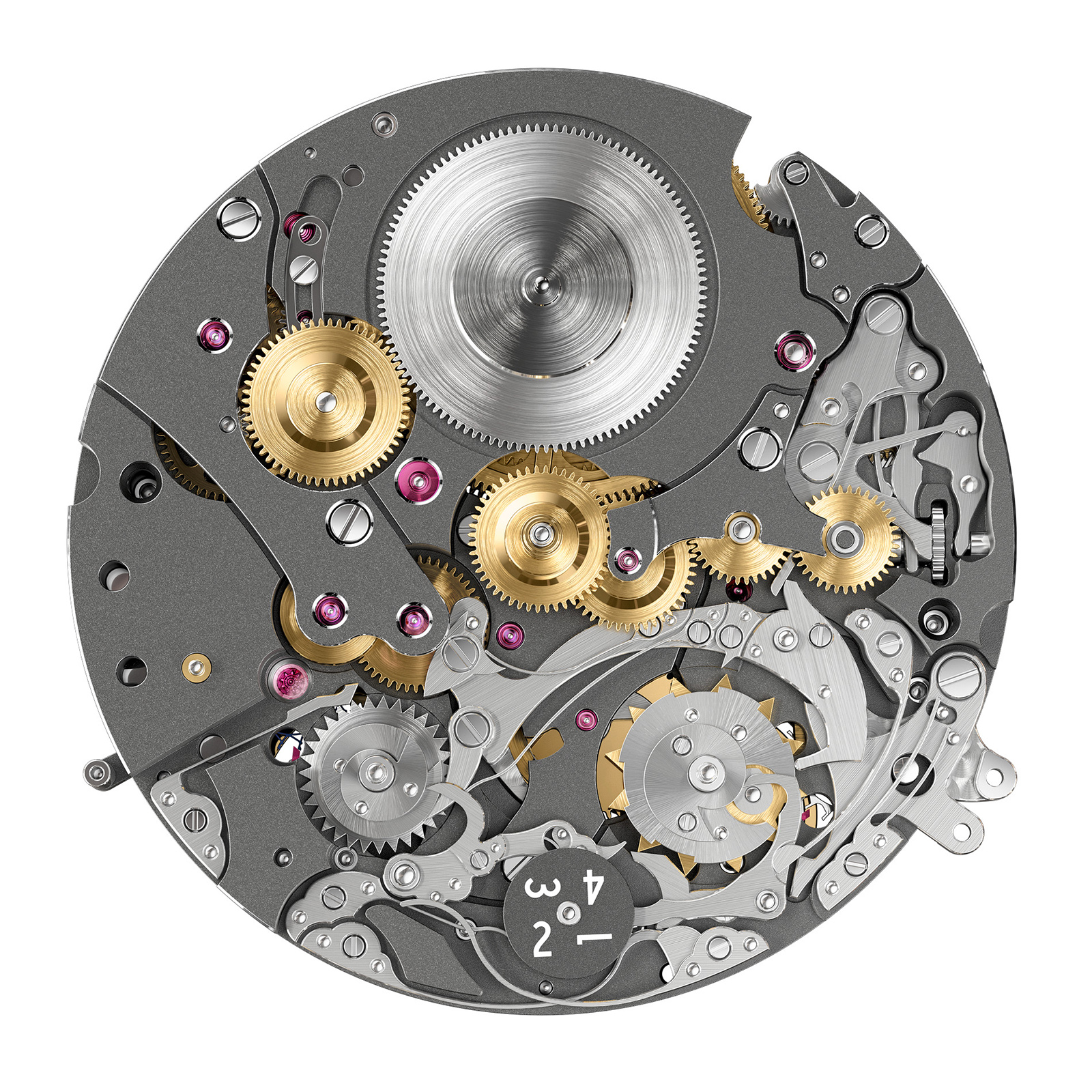
The extra five days of running time come mainly from improvements to the instantaneous jumping calendar system.
Instantaneous calendar displays need stored energy to be released at once, and that sudden draw can disturb the going train if it isn’t carefully managed.
Vacheron Constantin’s system uses two co-axial wheels linked by a spiral spring.
One wheel completes a revolution per day, while the other turns slightly more slowly through a different gear ratio.
Across 24 hours, the phase difference tensions the spring.
At midnight, the mechanism temporarily disconnects from the driving train and releases the stored energy to advance the calendar indications in a controlled jump.
A regulating train ending in a flywheel governs that release, and the sapphire dial allows a view of key calendar components from the front.
The perpetual calendar itself uses a 12-month cam and a Maltese-cross satellite to manage February’s changing length.
Details & Specifications
| Brand | Vacheron Constantin |
|---|---|
| Model | Twin Beat Perpetual Calendar |
| Movement | Manual-winding Calibre 3610 QP |
| Complication | Perpetual calendar with instantaneous jumping indications |
| Power reserve | Up to 70 days in standby mode |
| Active mode | 5Hz regulator with conventional steel escape wheel |
| Standby mode | 1.2Hz regulator with silicon escape wheel |
| Barrels | Twin co-axial barrels coupled in series |
| Mode switching | Pusher at 8 o’clock operating a V-shaped brake lever |
| Calendar control | 12-month cam and Maltese-cross satellite for February |
| Dial | Sapphire dial revealing calendar works |
The latest Twin Beat Perpetual Calendar doesn’t chase novelty through a new dial colour or decorative twist.
Its appeal is more satisfying than that, because it shows Vacheron Constantin continuing to refine a genuinely original solution to one of complicated watch ownership’s most persistent inconveniences.