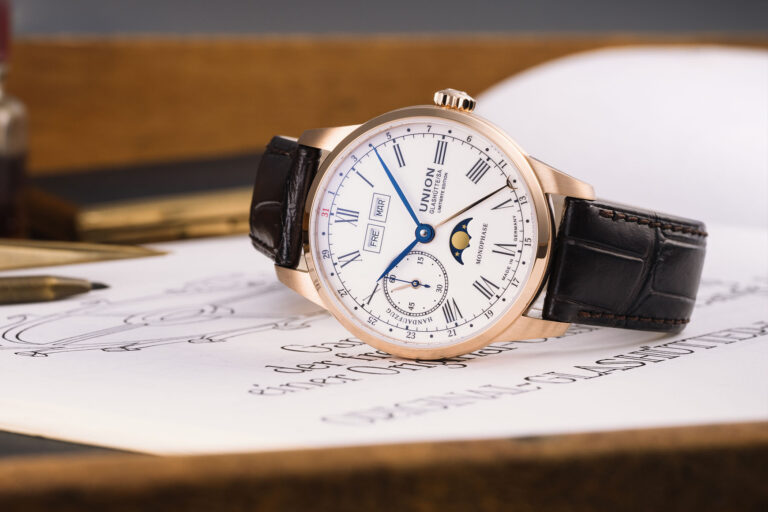
Union Glashütte has a particular advantage within modern German watchmaking, sitting at the intersection of industrial access and regional identity.
The new 1893 Johannes Dürrstein Edition Double Moon Phase leans directly into that position, combining a classically arranged calendar display with a manually wound movement finished in the Glashütte manner.
It’s an elegant, detail-heavy watch that feels aimed at collectors who want a traditional complication without stepping into far more expensive territory.
At a glance
- Union Glashütte has introduced the 1893 Johannes Dürrstein Edition Double Moon Phase as a new non-limited model.
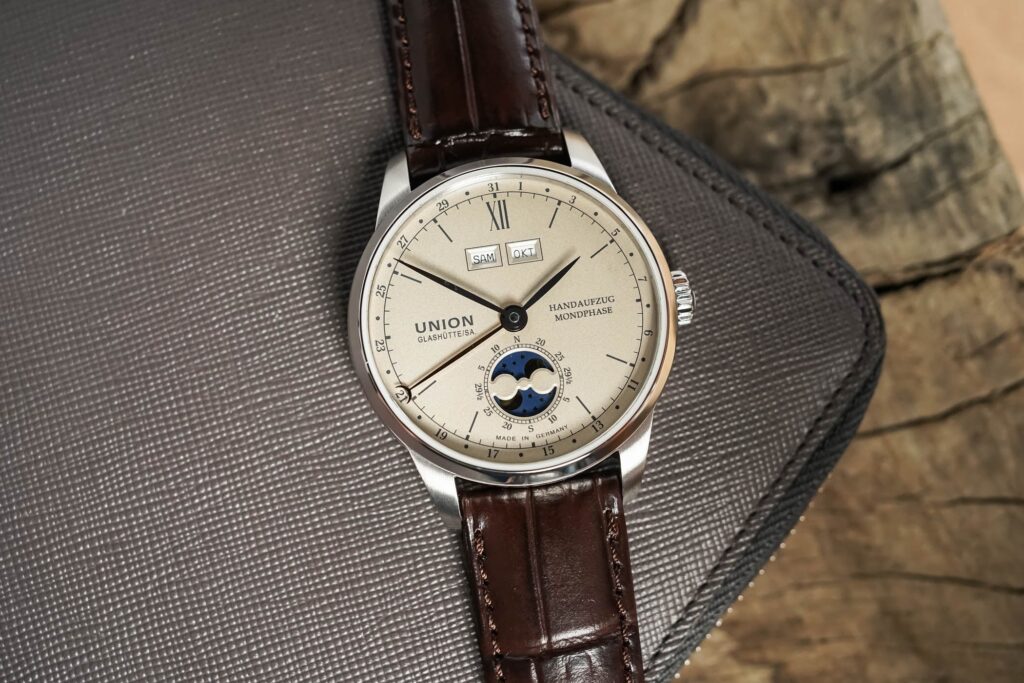
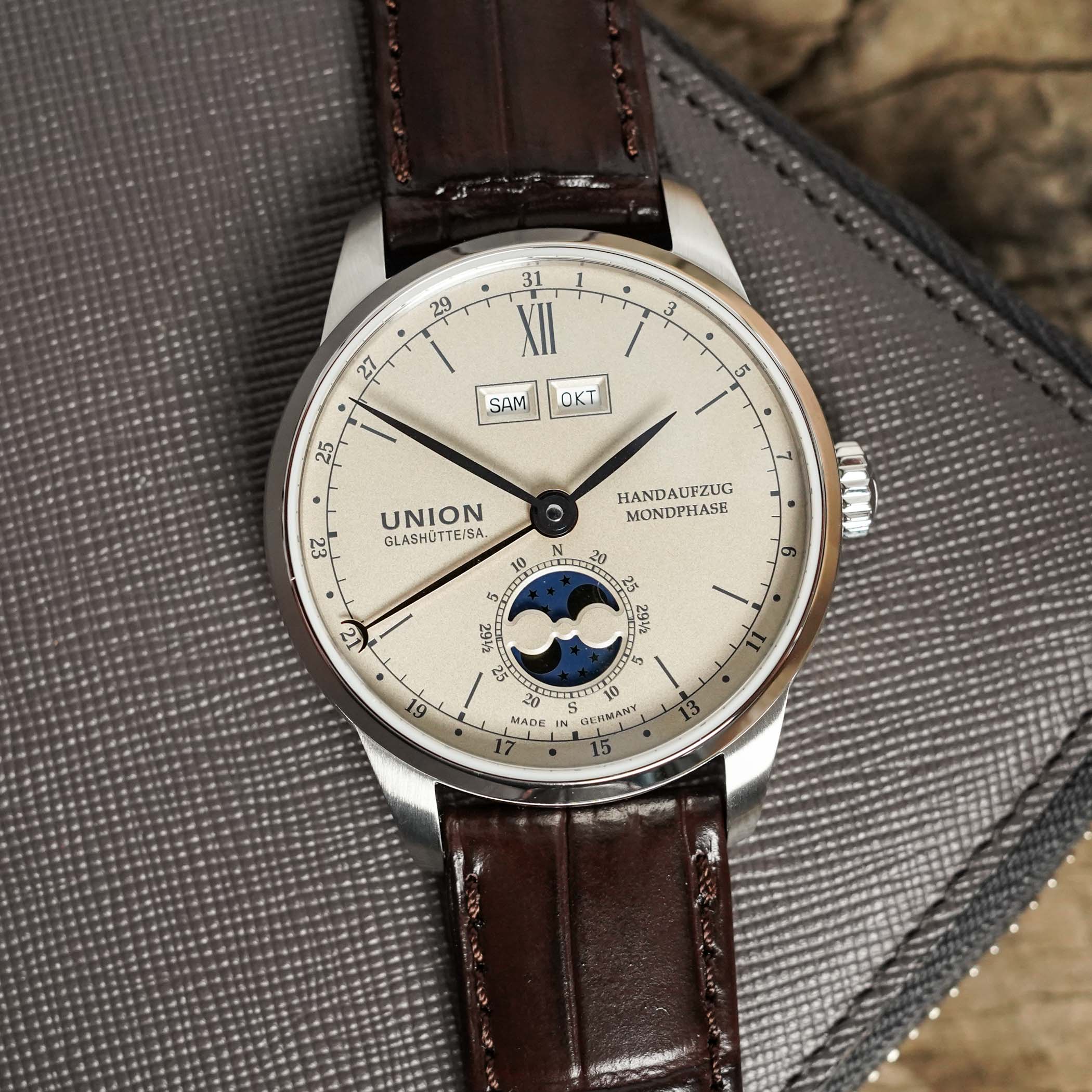
- The watch features a champagne dial with engraved, lacquer-filled markings, pointer date, day, month and a double moon phase display.
- It is priced at EUR 3,100 and uses the manually wound UNG-58.S2 movement developed with ETA exclusively for Union Glashütte.
A Glashütte tribute with a traditional calendar layout
The 1893 Johannes Dürrstein line is named for both Union Glashütte’s founding year and the man behind the brand, which gives this model a natural home within the catalogue.
Rather than chasing novelty for its own sake, the watch follows a familiar German formula of symmetry, legibility and restrained decoration.
The stainless steel case measures 41mm across and 12.23mm thick, with a 50.05mm lug-to-lug span.
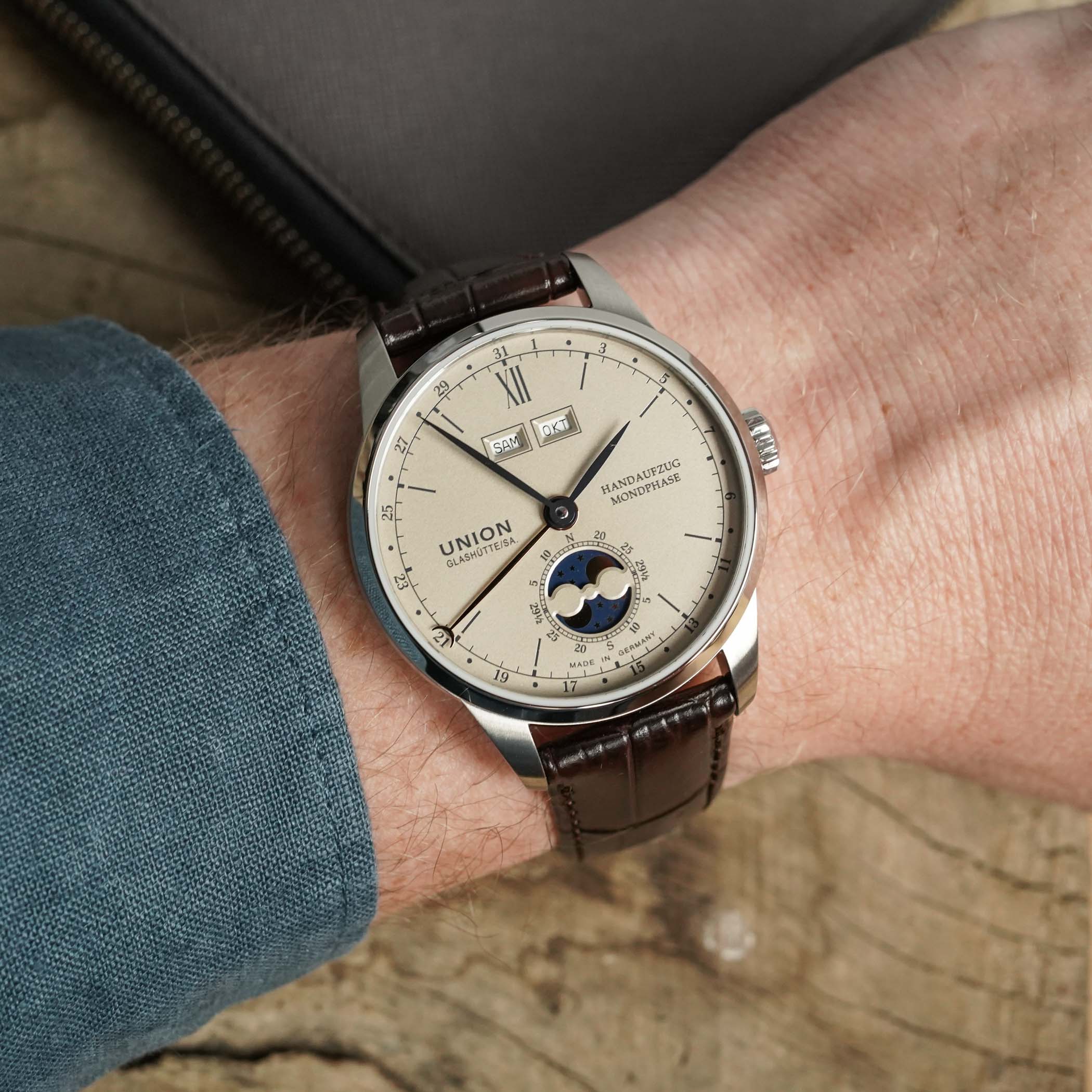
Those are contemporary proportions rather than vintage ones, though the watch keeps its profile composed through brushed case flanks, brushed lugs and a polished sloped bezel.
A domed sapphire crystal with double-sided anti-reflective coating sits over the dial, while a second sapphire crystal opens the view onto the movement.
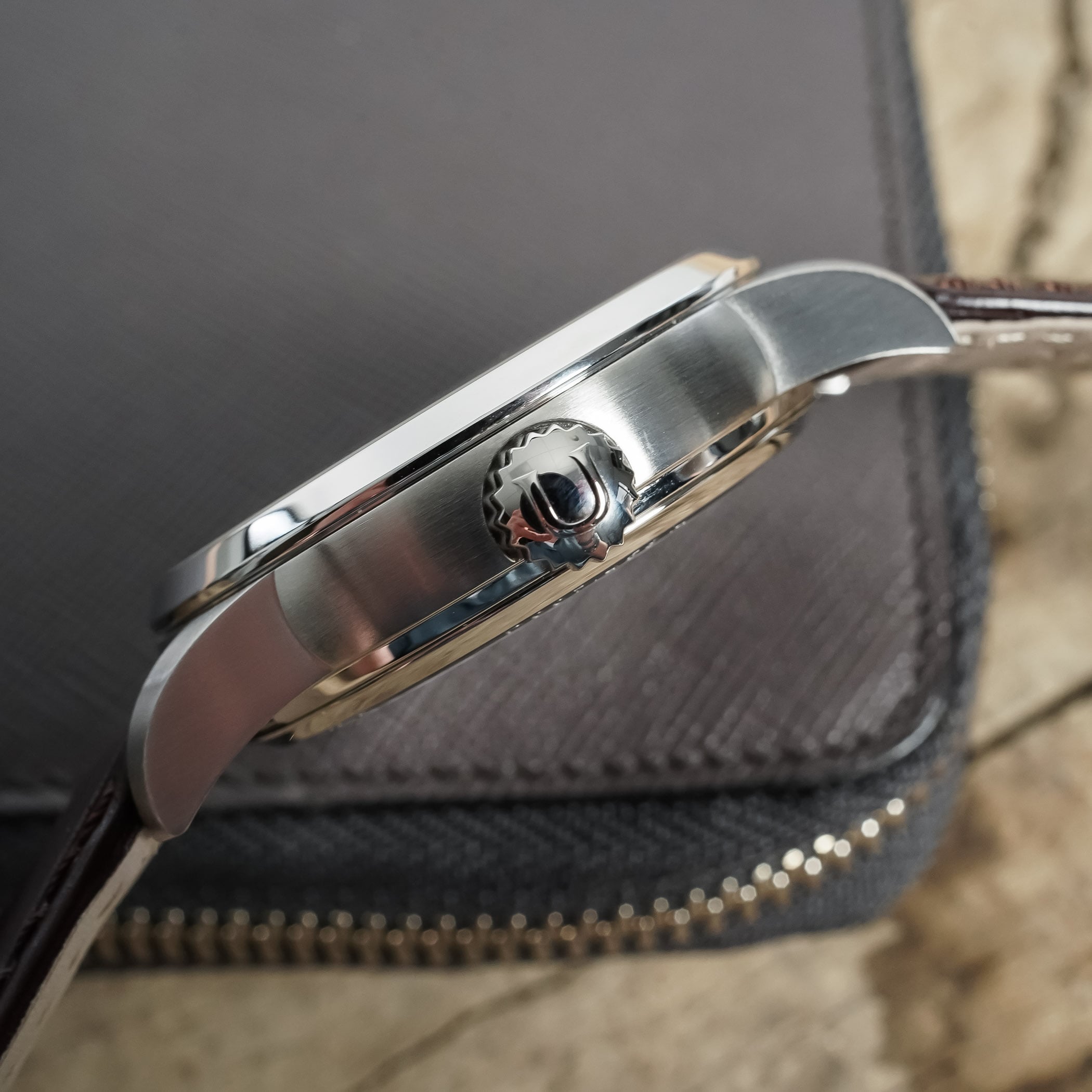
The knurled crown carries the Union Glashütte logo, and a recessed corrector on the opposite side adjusts the day display with the included tool.
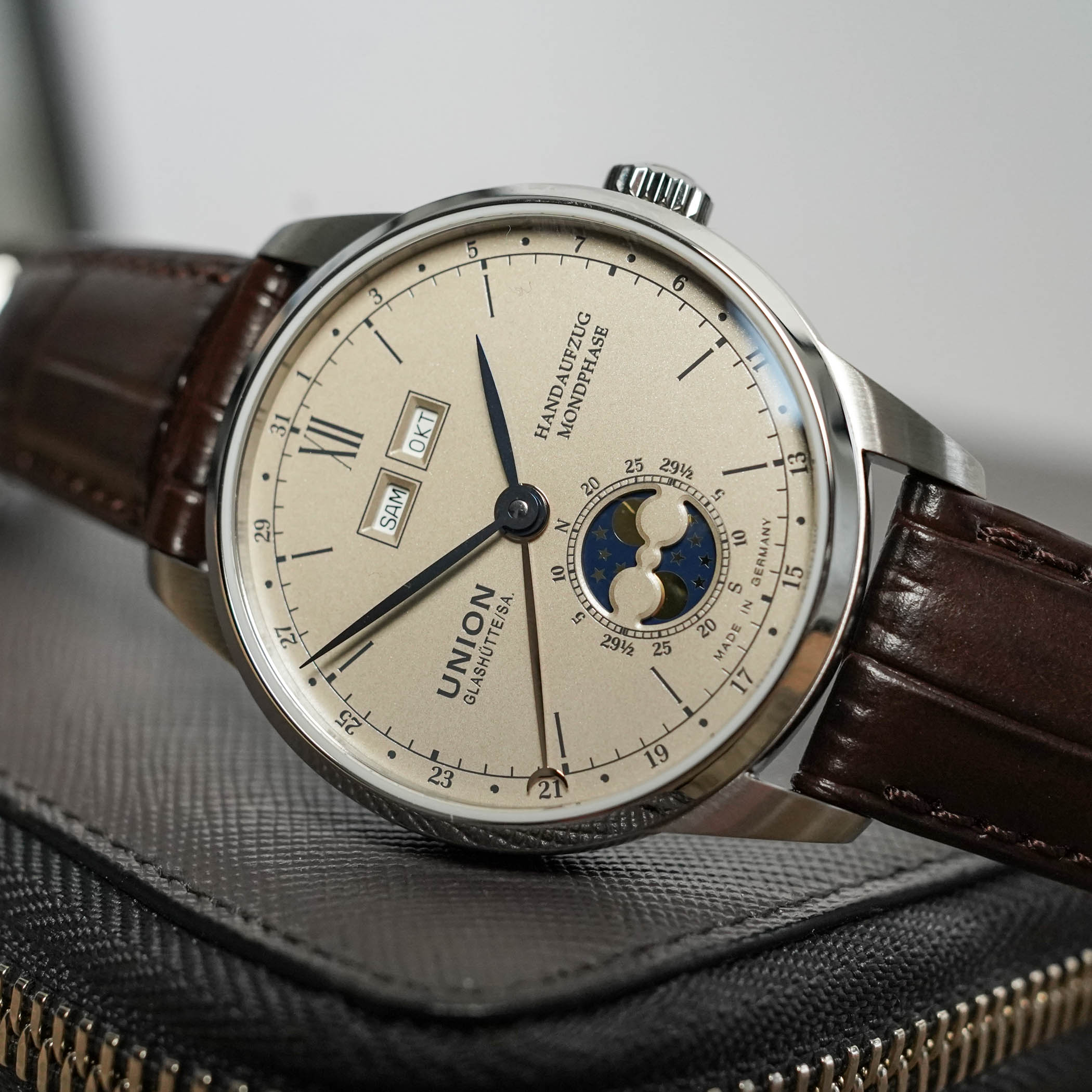
Water resistance is rated to 100 metres, a welcome practical detail for a watch that otherwise presents itself as a refined calendar piece.
The champagne dial is the main event
The dial is where the Double Moon Phase earns most of its character.
Its champagne-coloured surface is sandblasted for a soft texture, giving the display warmth without becoming too ornate.
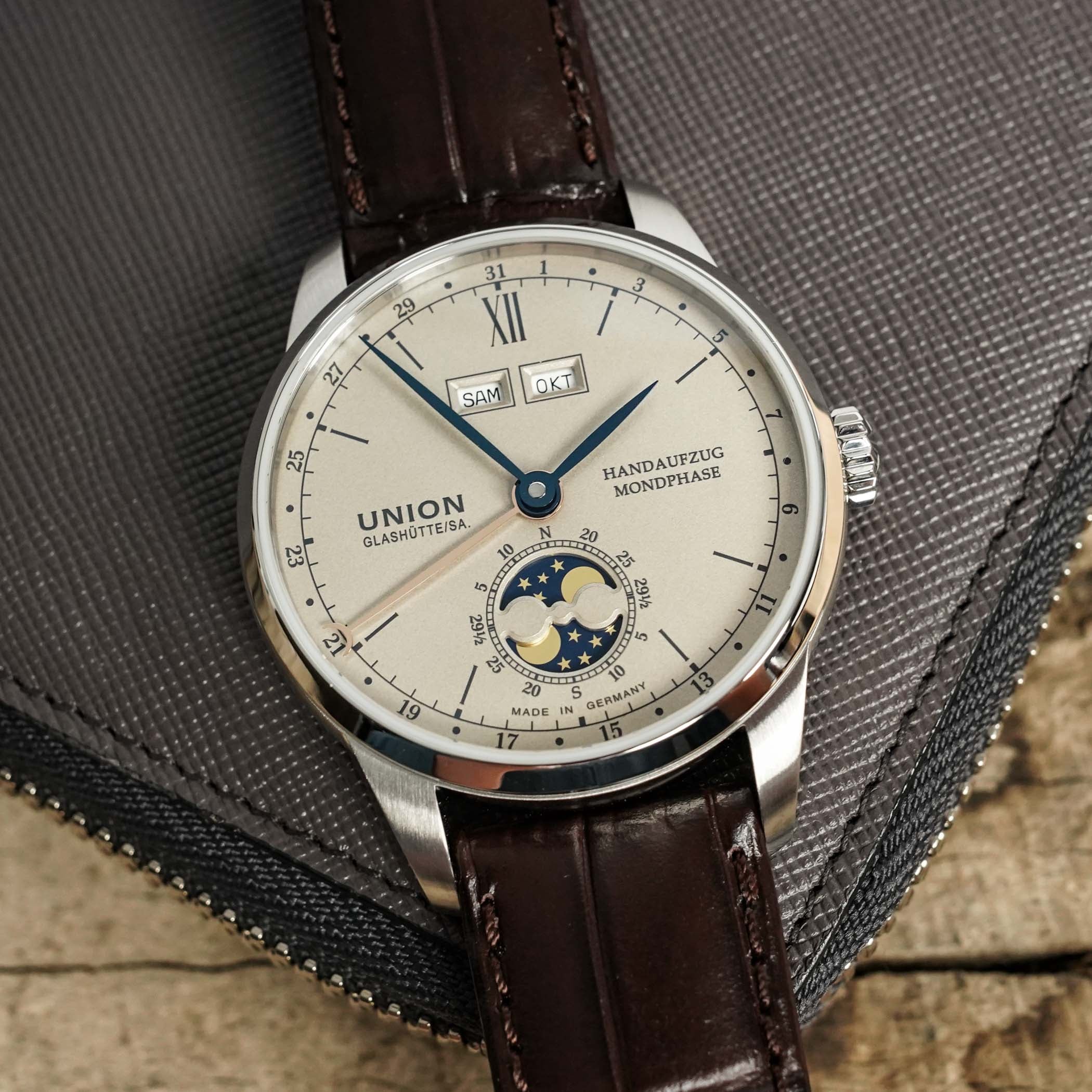
A pointer date scale runs around the outer edge, indicated by a gold-coloured central hand.
Inside that sits a ring of baton hour markers, interrupted by a Roman XII at noon.
The day of the week appears in a bevelled window on the upper left, with the month shown in a matching aperture on the upper right.
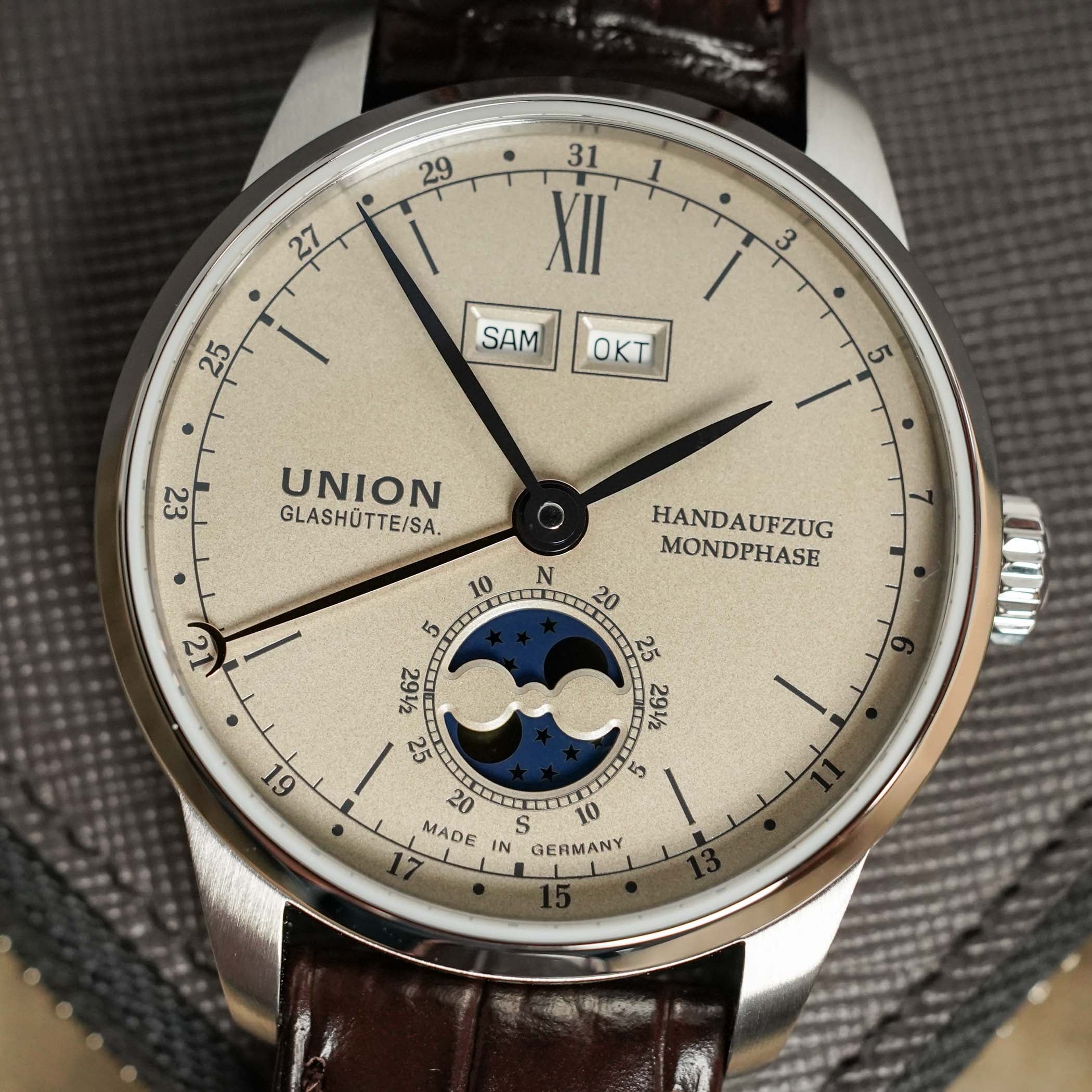
Union Glashütte keeps the time display simple with blued leaf-shaped hour and minute hands, and the absence of a seconds hand helps the dial feel calmer than its list of indications might suggest.
The lower half is reserved for the double moon phase, using a blue disc decorated with gold moons and stars.
A printed double scale tracks the 29.5-day lunar cycle for both the northern and southern hemispheres, giving the complication a visual and functional reason to dominate the lower dial.
One of the strongest details is the treatment of the dial text and scales, which are engraved and then filled with black lacquer.
That choice gives the watch a more deliberate, crafted appearance than a simple printed dial would have delivered at this price.
A manually wound UNG movement with Glashütte character
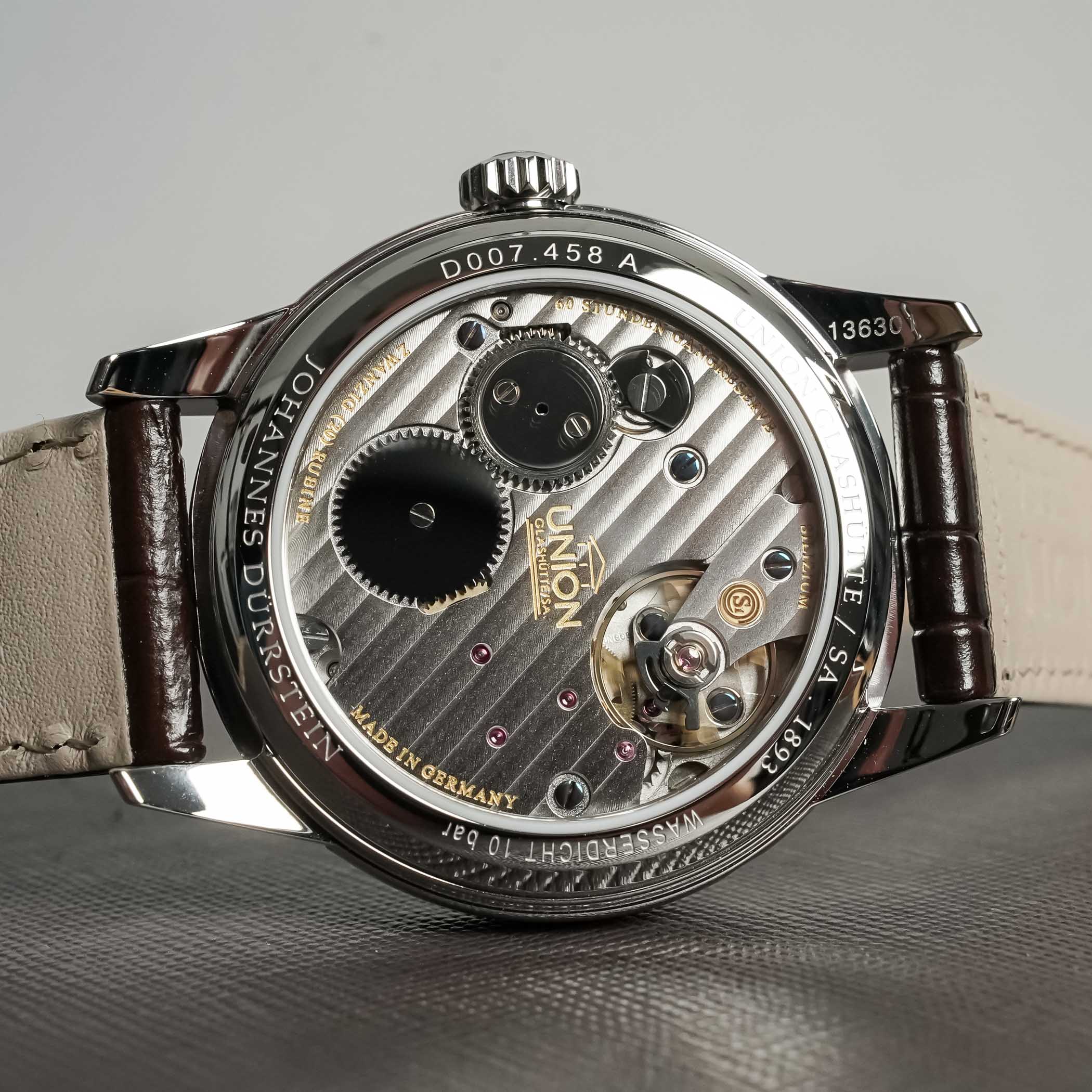
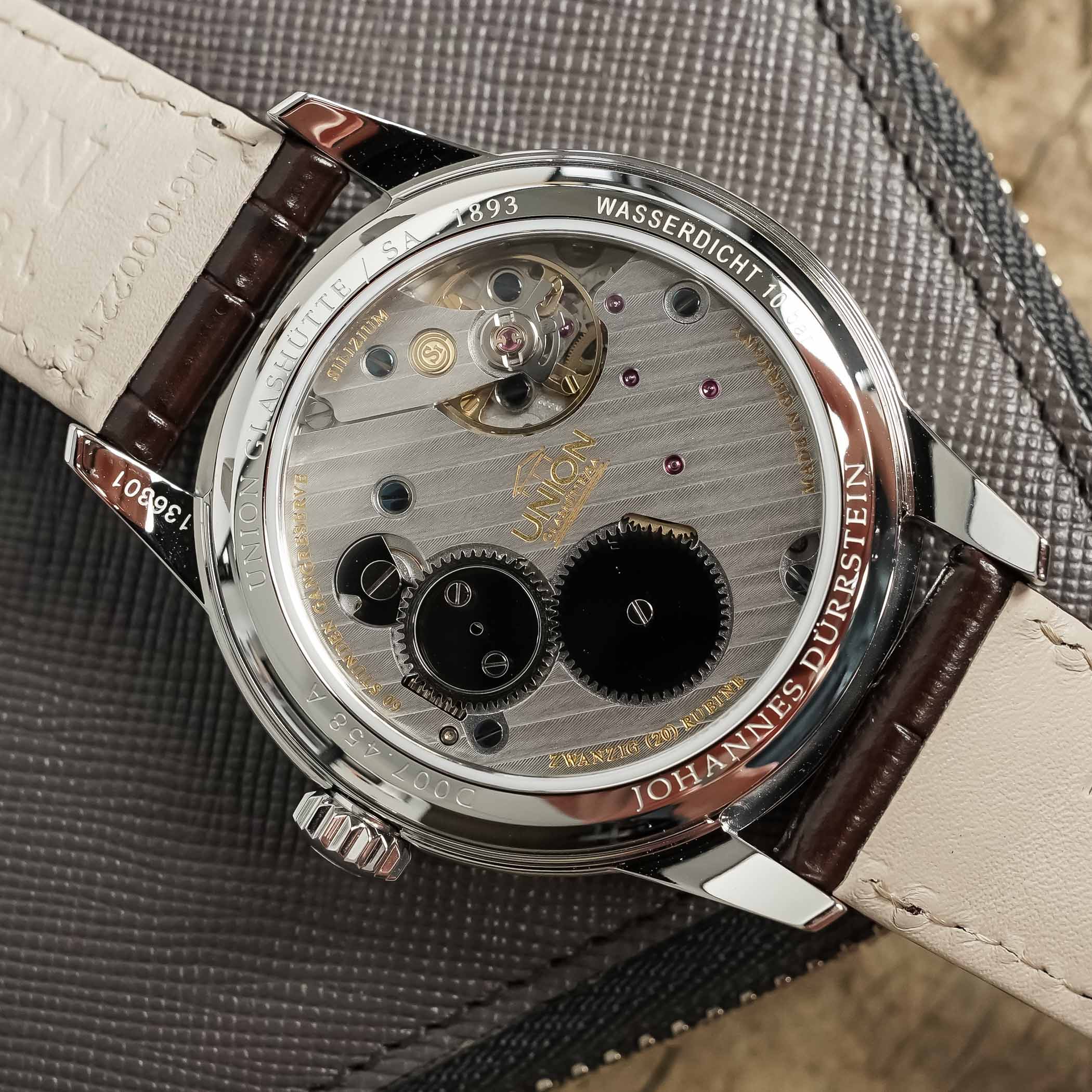
Inside is the calibre UNG-58.S2, a manually wound movement developed with ETA and exclusive to Union Glashütte.
Its architecture is linked to the Valjoux 7750 family, though here it has been reworked into a non-chronograph calibre for this calendar and moon phase application.
The movement runs at 28,800 vibrations per hour, uses 20 jewels and offers a 60-hour power reserve.
It also uses a silicon balance spring, marked by the SI medallion visible through the caseback.
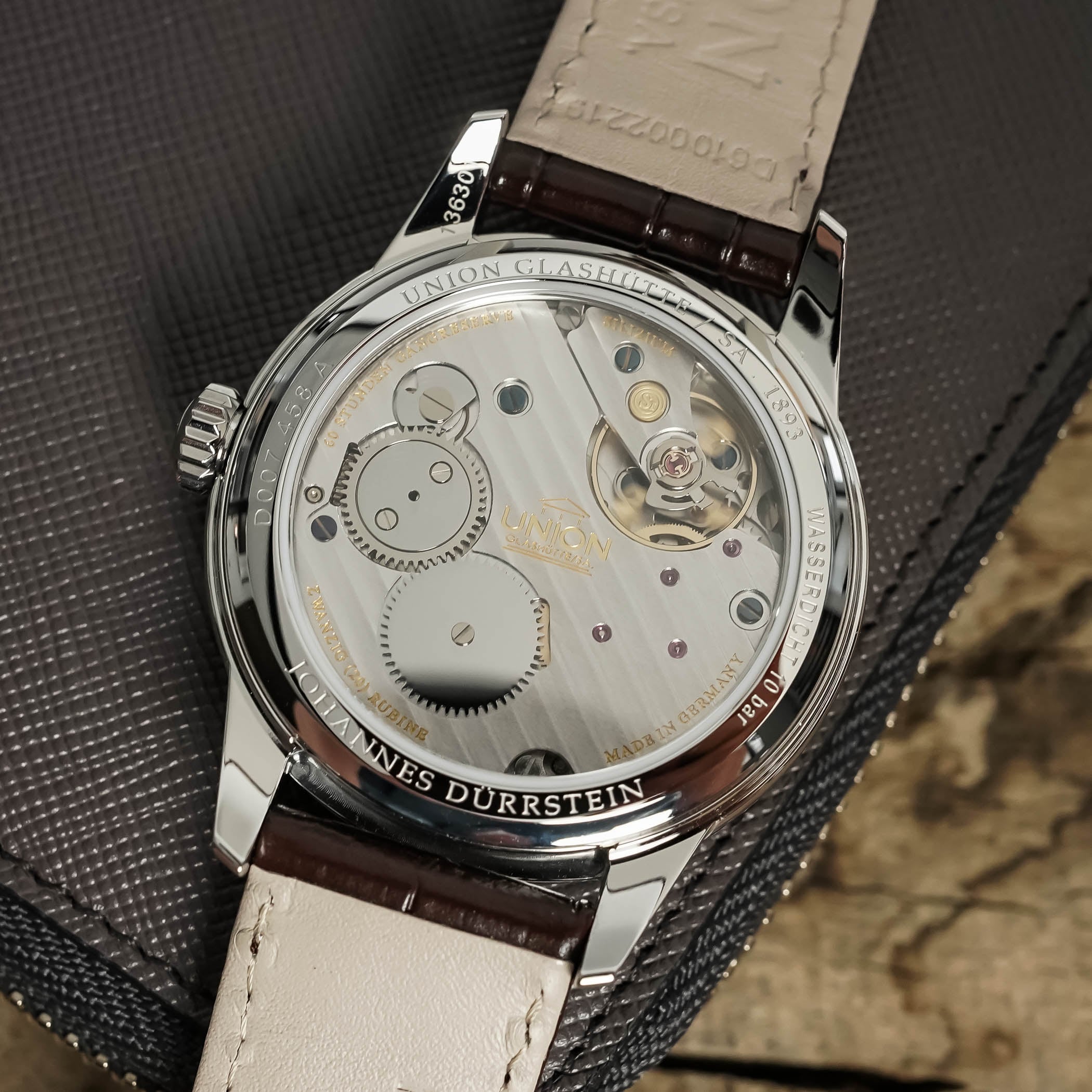
Finishing is a meaningful part of the appeal, with broad Glashütte ribbing across the large central plate, blued screws, polished winding gears and gold-filled engravings.
It’s not a hand-built haute horlogerie movement, but it does give the watch a more distinctive identity than a plain off-the-shelf calibre would.
Details & Specifications
| Brand | Union Glashütte |
|---|---|
| Model | 1893 Johannes Dürrstein Edition Double Moon Phase |
| Reference | D.007.458.16.039.00 |
| Case size | 41mm diameter, 12.23mm height, 50.05mm lug-to-lug |
| Case material | Stainless steel with brushed and polished finishing |
| Crystal | Domed sapphire crystal with double-sided anti-reflective coating |
| Caseback | Sapphire crystal |
| Water resistance | 100 metres |
| Dial | Champagne-coloured sandblasted dial with engraved, black-filled markings |
| Hands | Blued leaf-shaped hour and minute hands, gold-coloured pointer date hand |
| Movement | Calibre UNG-58.S2, manually wound |
| Frequency | 28,800 vibrations per hour |
| Jewels | 20 |
| Power reserve | 60 hours |
| Balance spring | Silicon |
| Complications | Pointer date, day, month and double moon phase |
| Strap | Chocolate brown calfskin leather with alligator embossing |
| Clasp | Butterfly clasp |
| Production | Not limited |
| Price | EUR 3,100 |
Price and positioning
At EUR 3,100, the 1893 Johannes Dürrstein Edition Double Moon Phase sits in an interesting part of the market.
It offers a moon phase with calendar indications, visible movement finishing, a 100-metre case and dial work that feels more elaborate than the price might suggest.
The chocolate brown calfskin strap with alligator embossing suits the warm dial tone, while the butterfly clasp is functional even if it lacks micro-adjustability.
This won’t be the smallest or thinnest formal watch in its category, but it does balance day-to-day usability with a more romantic complication set.
For collectors drawn to Glashütte watchmaking, classical calendar displays and a strong value proposition, this Union Glashütte makes a persuasive case without pretending to be something it isn’t.