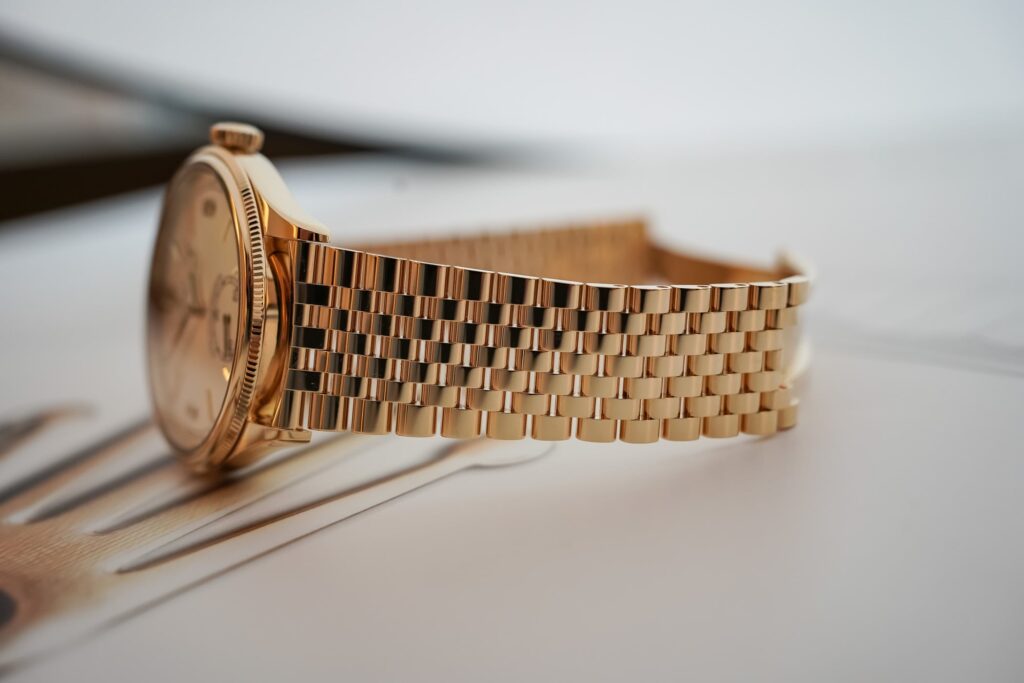
Metal bracelets feel inseparable from modern watch design, yet they’re a relatively recent chapter in horology.
Before the 20th century, a wristwatch on a metal bracelet was more likely to be a rare custom jewel than a regular catalogue item.
The story really accelerates in the 1920s, when wristwatches became both fashionable and practical, and the bracelet began evolving from decorative accessory into engineered component.
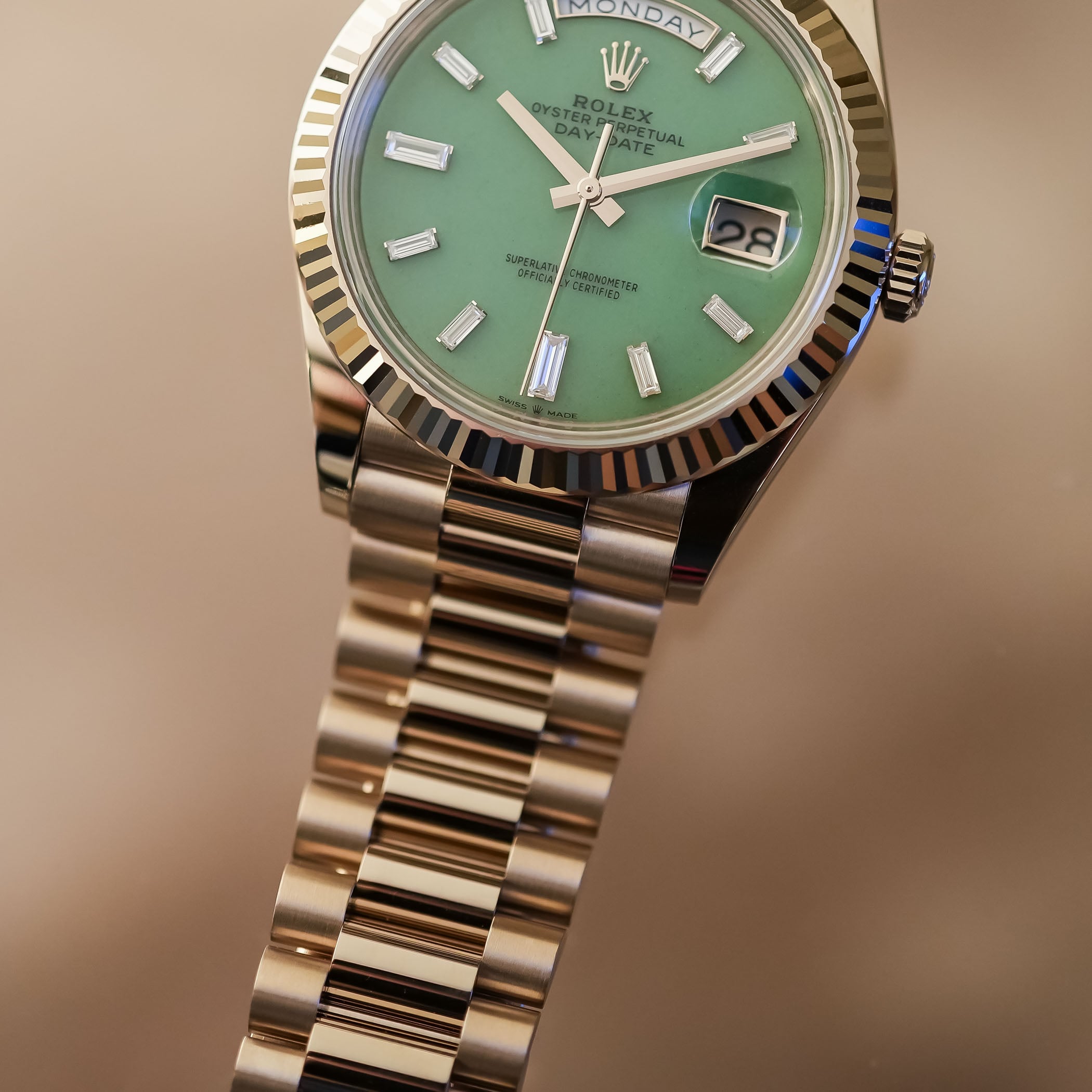
At a glance
- Metal watch bracelets became a mainstream wristwatch feature in the 20th century, especially from the 1920s onward.
- Early breakthroughs included the Bonklip bracelet, Gay Frères’ expanding and luxury bracelet work, and Rolex’s later Oyster designs.
- Modern bracelets can be among the most complex and costly parts of a watch to develop, often involving tight tolerances, hand finishing and intricate clasps.
From rare jewellery to everyday wristwear
There are documented examples of metal bracelets attached to wristwatches before the wristwatch became mainstream, including a handful of late 18th-century pieces and rare precious-metal women’s watches from the early 19th century.
Those examples were exceptions, usually bespoke objects rather than signs of an industry-wide shift.
The change came when wristwatches moved from novelty and military utility into civilian fashion.
By the 1920s, the wristwatch had cultural momentum, and metal bracelets began to appear as a serious alternative to leather straps.
Several names stand out in that evolution, particularly Rolex, Gérald Genta and Gay Frères.
Rolex helped bring the bracelet into the language of the modern sports watch, Genta later gave the integrated bracelet enormous design significance, and Gay Frères supplied much of the technical and aesthetic expertise that made high-end bracelets viable.
The hidden difficulty of a good bracelet
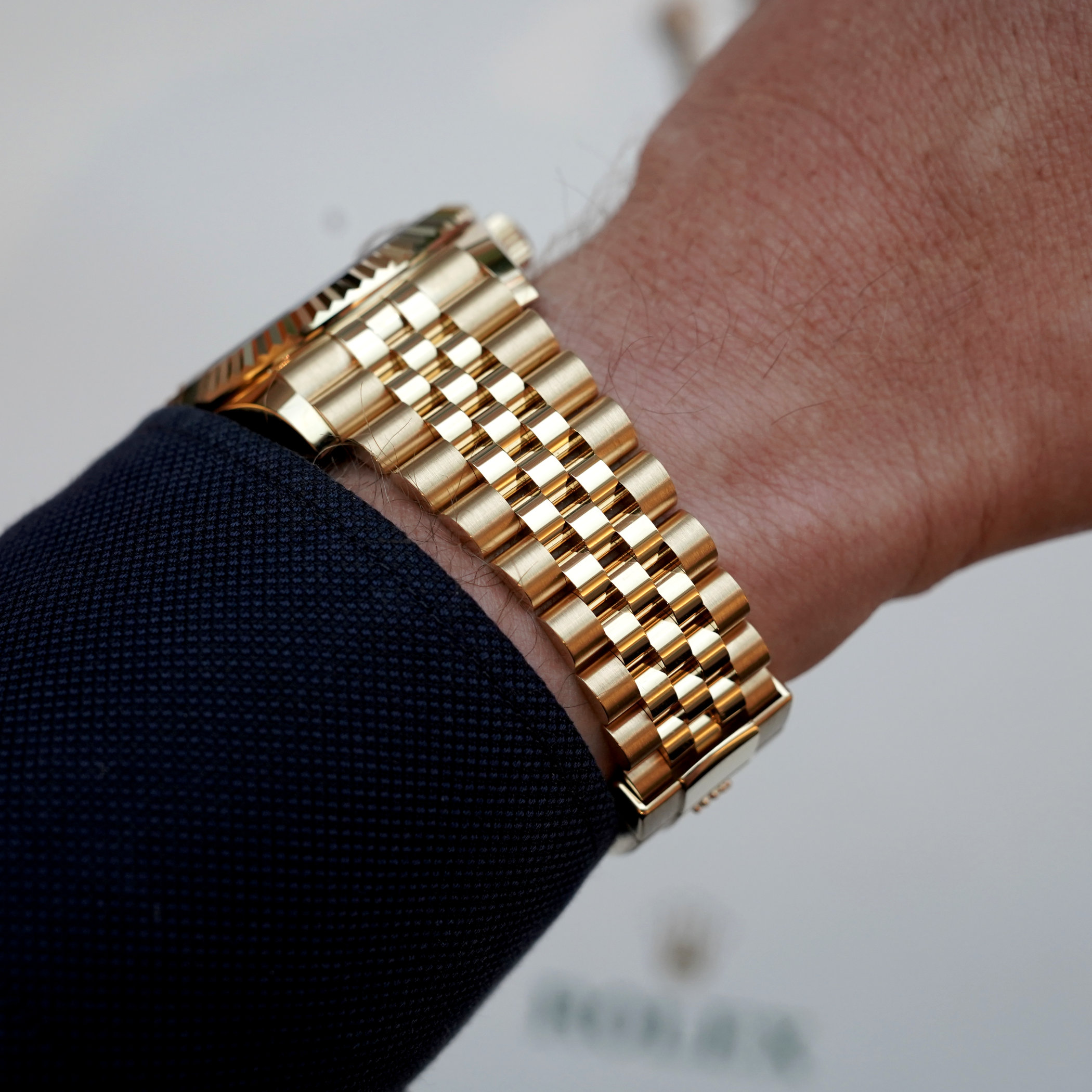
A watch bracelet can look simple from a distance, but a well-made one is an unusually demanding object.
It needs to articulate smoothly, sit comfortably, taper naturally, avoid pinching hair, resist unwanted noise and hold its shape over years of use.
That takes far more than stamping out links and attaching a clasp.
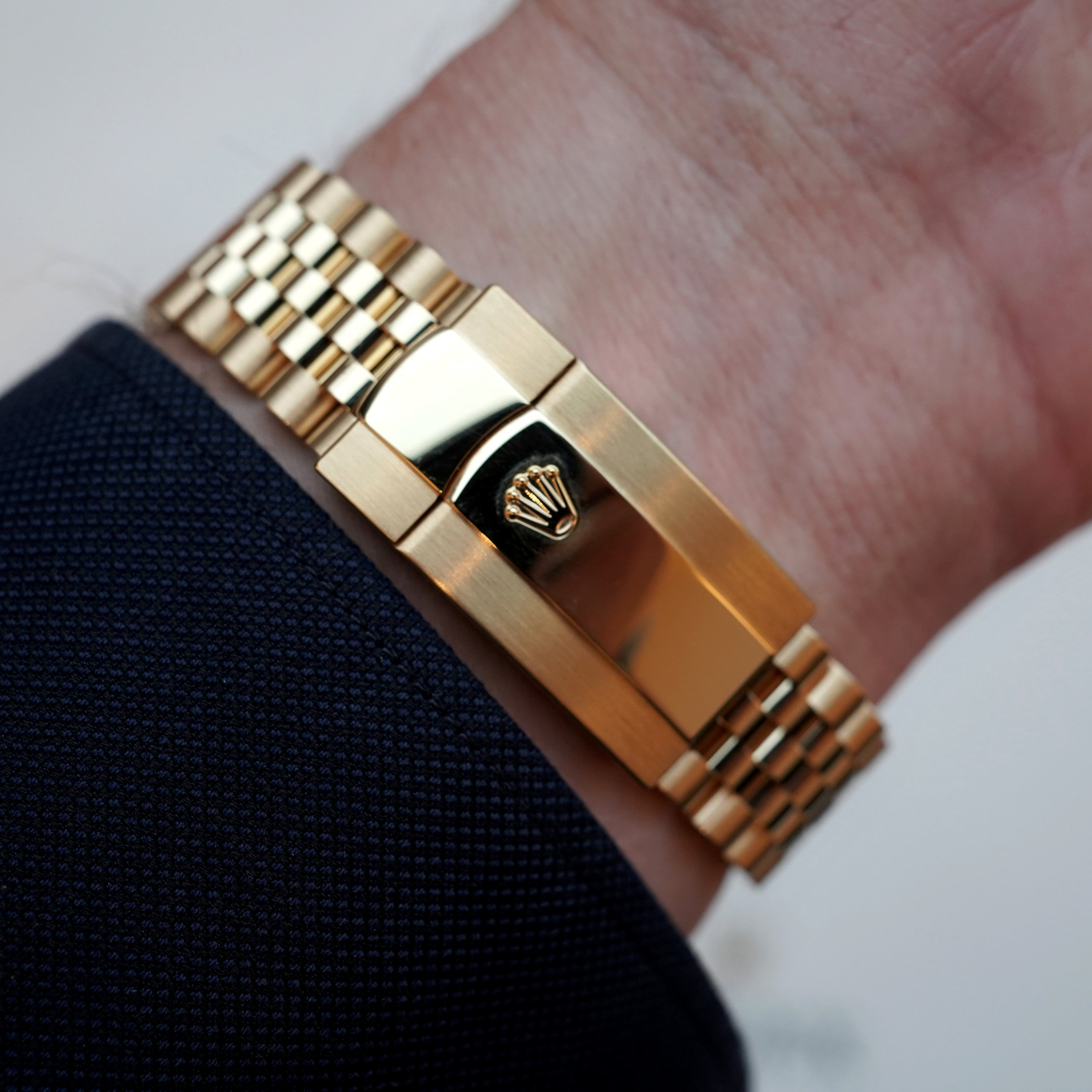
For mid-range and high-end watches, bracelets are often developed specifically for a model, with end links shaped to meet the case cleanly and individual parts finished to match the watch head.
The tolerances are unforgiving because a fraction of a millimetre can mean the difference between a bracelet that feels precise and one that rattles, binds or sags.
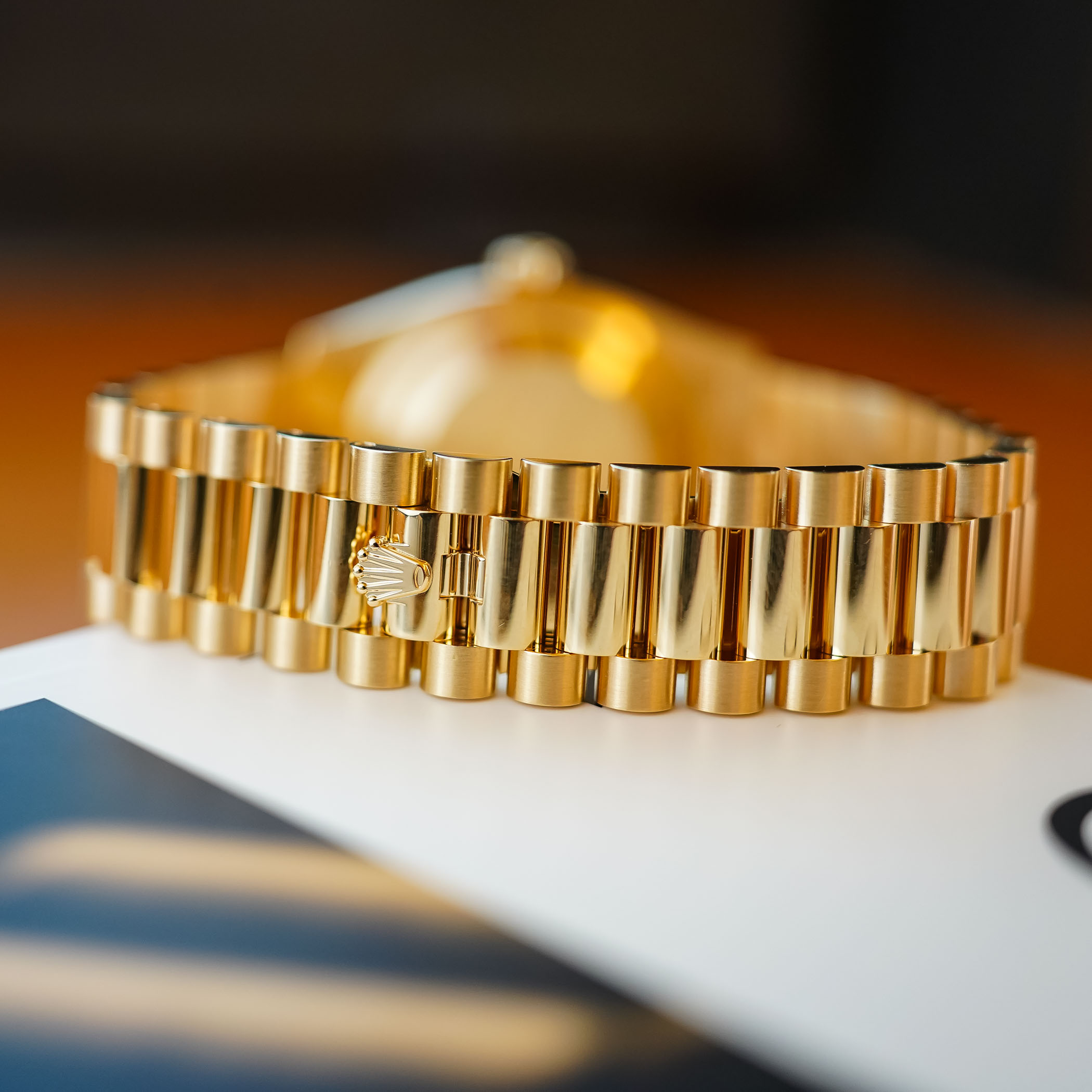
A modern Rolex Oyster bracelet is often cited as an example of deceptive complexity, with roughly 190 individual components despite its visually straightforward three-link layout.
The clasp adds another layer of engineering.
Butterfly closures, dive-watch locking systems and tool-free micro-adjustments are now expected by many buyers, but each has to be compact, secure and intuitive enough to disappear in daily use.
Bonklip and the military appeal of adjustable steel
One of the defining early bracelet designs was the Bonklip, a lightweight construction sometimes nicknamed the ladder or bamboo bracelet.
Its architecture used thin metal tube links connected by loops, creating a bracelet that was durable, flexible and unusually easy to size.
Rather than removing links, the wearer could pass the clasp end through the opposite lug and hook it onto the desired tube link.
In practical terms, it offered a level of adjustability closer to a modern fabric strap than a conventional metal bracelet.
The Bonklip design was patented in England in the late 1920s by B.H. Britton and Sons through Dudley Russel Howitt, and the company produced it in significant numbers for decades.
Similar ideas appeared around the same period, including the Krementz design, but Bonklip became the name with real staying power.
Rolex offered Bonklip bracelets in the 1930s as a popular alternative after leather straps, before the brand’s focus shifted toward the Jubilee and Oyster bracelets in the mid-1940s.
The bracelet also found a devoted audience in aviation.
During the Second World War, it was favoured by Royal Air Force pilots because stainless steel could handle hard use, resist corrosion and be adjusted quickly.
Its military role continued after the war through British Ministry of Defence issue, with reference-numbered versions such as 6B/2763 for 17.5mm and 6B/3033 for 20mm.
Post-war RAF navigator watches from IWC and Jaeger-LeCoultre were fitted with these reference-numbered Bonklip bracelets, giving the design a lasting connection to tool-watch history.
The idea hasn’t disappeared.
Serica has made the Bonklip a signature part of its field- and military-inspired watches, while specialists such as Forstner and Joseph Bonnie offer modern interpretations for enthusiasts who appreciate the original’s functional clarity.
Gay Frères shaped the bracelet as luxury engineering
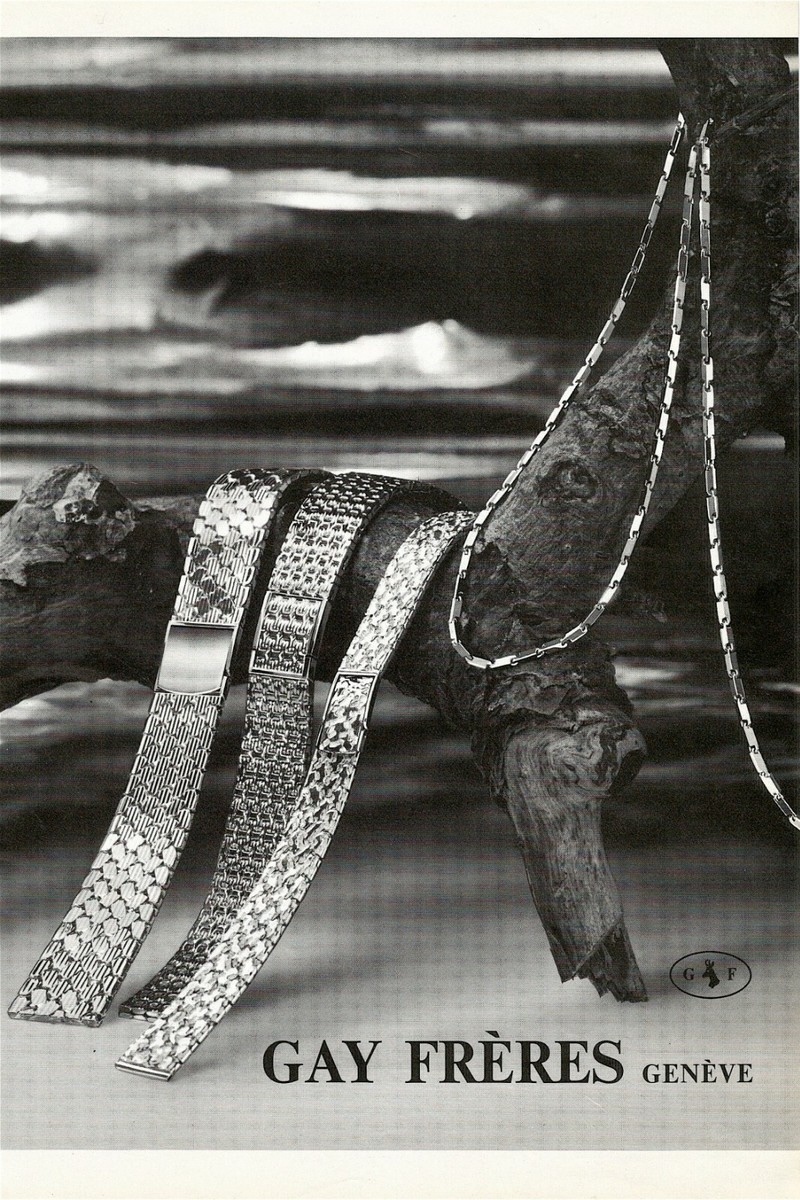
If one company deserves to be at the centre of the 20th-century bracelet story, it’s Gay Frères.
Founded in Geneva in 1835 by Jean-Pierre Gay and Gaspard Tissot, the firm began as a master chain-maker and jeweller, producing items such as lanyards for pocket watches.
That background mattered because bracelet making grew directly from the skills of chain construction, articulation and precious-metal finishing.

As stainless steel entered watchmaking in the early 20th century, Gay Frères adapted its expertise to the wristwatch era.
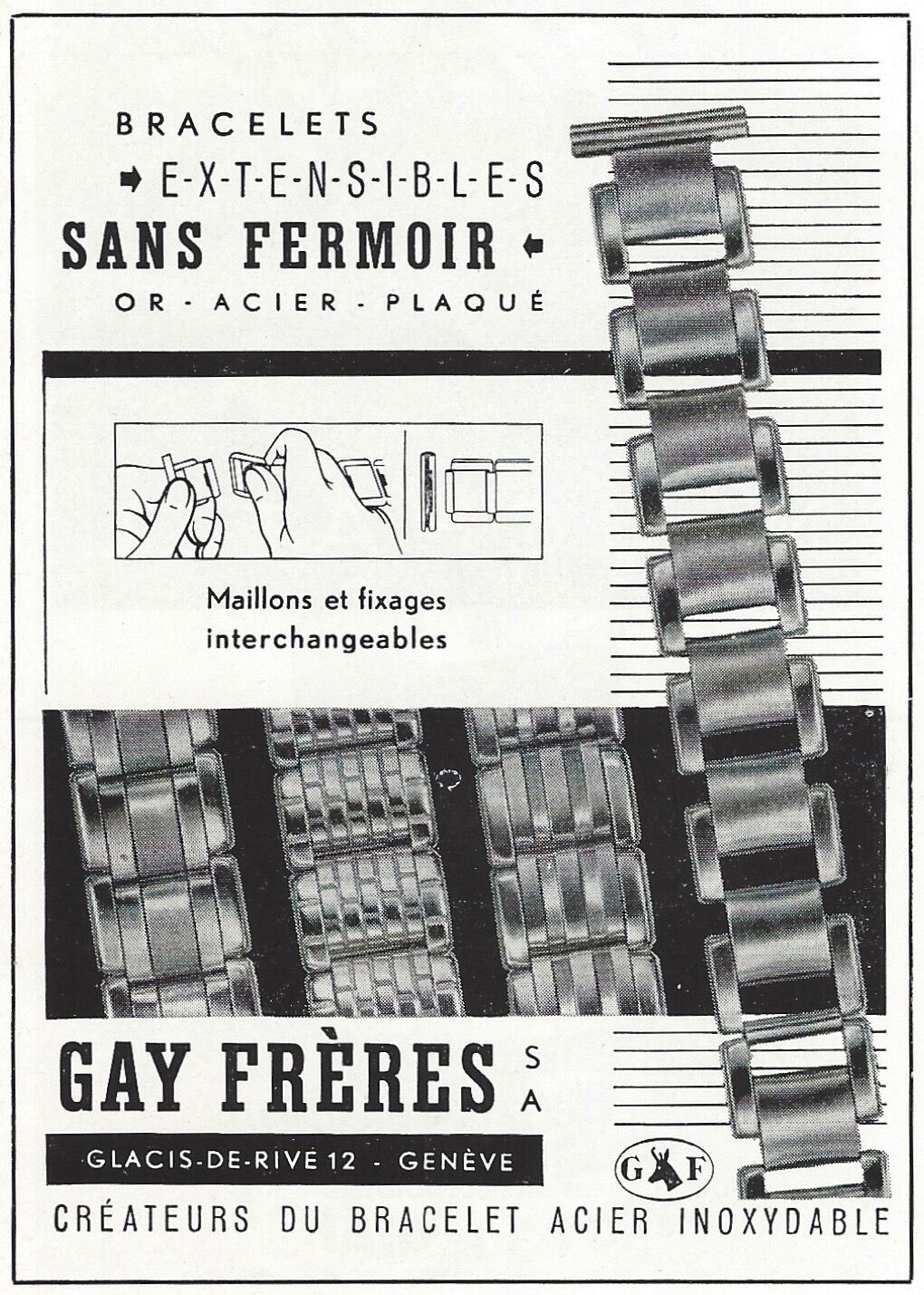
During the First World War, the company patented an expanding metal bracelet in 1916 for trench watches, often referred to as the Army bracelet.
Its sliding metal sections and internal springs made it durable and easy to fit over the wrist or over uniform sleeves.
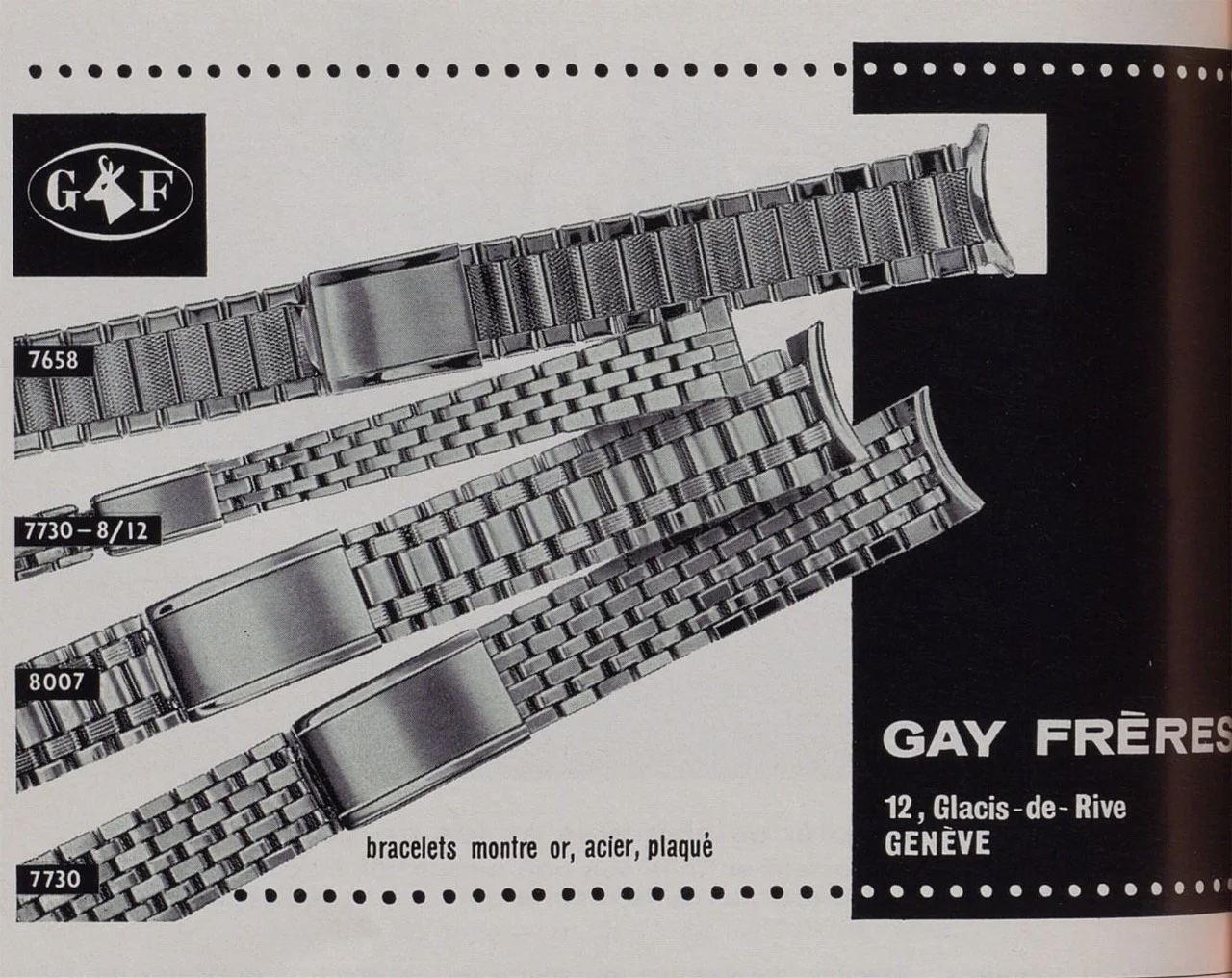
After the war, Gay Frères became a crucial designer and supplier for luxury watch brands.
Rolex was among its early customers, and Gay Frères later designed the riveted Oyster bracelet, with a patent granted to Rolex in 1947 and the bracelet released in 1948.
The earliest Oyster bracelet end links were straight, but by 1952 they curved around the Oyster case for a cleaner and more integrated fit.
The GMT-Master reference 6542 became the first Rolex to come standard with a flush-mounted Oyster bracelet, marking an important step in the sports-watch bracelet as we understand it today.
Gay Frères also developed the beads-of-rice bracelet, introduced in the early 1940s.
With rows of small, rice-shaped articulated links, it wrapped around the wrist with a suppleness that suited dress watches and chronographs alike.
Patek Philippe and Vacheron Constantin adopted the style, and Heuer chronographs of the 1960s helped push further variations with larger outer links and a sportier stance.
Even when other companies produced bracelets for regional markets, including C&I in the United States for Rolex, Gay Frères remained closely associated with the highest-quality executions.
How bracelets changed the identity of watches
The metal bracelet did more than solve a practical problem.
It changed the silhouette, feel and cultural meaning of the wristwatch.
A leather strap can make a watch look traditional or formal, while a bracelet often makes it feel more architectural, more durable and more complete as an object.
That shift is especially visible in the sports-watch category, where the bracelet became part of the watch’s identity rather than an interchangeable afterthought.
It also helped create a new standard for everyday luxury.
A bracelet could take a watch from office to water, from travel to dinner, while offering a sense of permanence that leather rarely provides.
Collectors now pay close attention to bracelet references, end-link shapes, clasp types, stretch and originality because these details affect both comfort and historical character.
For vintage watches, the right bracelet can transform how a watch wears and how authentic it feels.
For modern watches, it can be the difference between a good design and one that feels fully resolved.
The best metal bracelets are easy to overlook because they do their work quietly.
They disappear on the wrist, complement the case, and remind us that in watchmaking, the parts that seem most ordinary are often among the hardest to get right.