There are destinations where a cruise is simply a comfortable way to travel, and then there are places where the ship becomes essential to the experience.
Across polar wilderness, tropical archipelagos, rainforest rivers and glacier-carved fjords, travelling by water can unlock coastlines, islands and wildlife habitats that roads and airports barely touch.
These 10 cruise destinations stand out because the journey isn’t separate from the place. It’s how the destination reveals itself.

At a glance
- The world’s best cruise destinations often share one trait: they’re difficult, limited or less rewarding to explore by land alone.
- Small expedition ships, yachts and river vessels can reach remote fjords, reefs, islands, glaciers and rainforest waterways.
- Antarctica, the Galápagos, Svalbard, South Georgia and other wilderness regions are especially compelling by ship.
Remote coastlines made for small ships
The most satisfying cruise destinations tend to reward movement, particularly when the scenery changes by the hour and the best places are scattered across water.
In these regions, a vessel works less like a floating hotel and more like a travelling base camp.
10. The Kimberley, Australia
Australia’s Kimberley region is an immense wilderness of rust-coloured cliffs, ancient gorges, tidal rivers, waterfalls and largely untouched coastline in the country’s remote northwest.

Its scale is part of the challenge. Roads are scarce across much of the region, distances are vast and many of the most dramatic natural sights are reached most easily from the water.
Small expedition ships can move between isolated locations while guests explore by Zodiac, helicopter or on foot.
Highlights can include Horizontal Falls, Montgomery Reef, King George Falls and ancient Aboriginal rock-art sites hidden in the wilderness.

The Kimberley is also known for dramatic tidal movements, which continuously reshape the coast and make the region feel alive from one landing to the next.
9. Amazon River
The Amazon is different from most great cruise regions because the river itself is the route, the landscape and the reason to go.
The Amazon Basin spans several South American countries and contains a vast network of rivers, tributaries and flooded forests, many of them inaccessible by road.

Small expedition vessels offer one of the most comfortable ways to travel into this rainforest environment, particularly in the Peruvian Amazon from Iquitos into the Pacaya-Samiria National Reserve.
Excursions by skiff can enter narrow waterways beneath dense canopy, with opportunities to see pink river dolphins, monkeys, sloths, caimans and colourful birdlife.
Guided walks and visits to riverside communities add context to one of the world’s most important ecosystems, while the ship provides a rare degree of comfort in a deeply remote setting.

8. Southeast Alaska and the Inside Passage
Southeast Alaska is one of the clearest examples of a region where ships have a natural advantage.
The Inside Passage is a maze of forested islands, deep fjords, snowcapped mountains and glacier-carved waterways, with many communities along the route inaccessible by road.
Cruises may call at destinations such as Juneau, Sitka, Ketchikan and Wrangell, while smaller vessels and luxury yachts can add secluded anchorages and expedition-style activities.

Wildlife is central to the appeal, with possibilities including humpback whales, orcas, sea otters, bald eagles and bears.
Glacier viewing is especially powerful from the water, whether seen from the ship or during a smaller boat excursion.
7. Raja Ampat and Eastern Indonesia
Indonesia has more than 17,000 islands, and its eastern reaches show exactly why some archipelagos are best treated as seaborne journeys.

Raja Ampat, off West Papua, is a remote constellation of jungle-covered limestone islands, turquoise lagoons and some of the richest coral reefs on Earth.
Travelling independently between islands can mean complicated combinations of flights, ferries and local boats, while a small expedition ship or traditional Indonesian phinisi can move far more fluidly through the region.
Days here can revolve around snorkelling, diving, kayaking through hidden lagoons, climbing to panoramic viewpoints and visiting small communities away from Indonesia’s major tourist centres.

Farther south, the Banda Sea and other parts of eastern Indonesia add volcanic landscapes, historic spice islands, pristine reefs and local cultures to the same expedition-cruise logic.
Island worlds where wildlife leads the itinerary
For many travellers, the strongest argument for cruising is access to wildlife habitats that need careful, flexible and low-impact logistics.
In island chains and marine reserves, a small ship can reposition overnight and place guests close to a different ecosystem each morning.

6. Palau
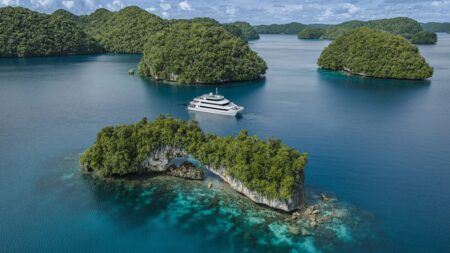
Palau is a tiny Pacific nation scattered across exceptionally clear turquoise water, with the famous mushroom-shaped Rock Islands forming one of the world’s most distinctive tropical seascapes.
It’s possible to stay on land, but a small expedition vessel changes the rhythm of the trip by moving between remote lagoons, beaches, dive sites and snorkelling locations.
Palau is especially renowned for its underwater world, including coral reefs, manta rays, sharks and a wide diversity of marine life.

Kayaking between jungle-covered limestone islands and into hidden lagoons reveals a quieter side of the country that suits small-ship exploration beautifully.
Here, the right vessel feels closer to a private yacht than a conventional cruise ship.
5. Greenland
Greenland is the world’s largest island, yet its settlements are small, scattered and not connected by roads.
That geography makes expedition cruising one of the most seamless ways to experience its vast coastline, remote Inuit communities, immense fjord systems and wilderness areas.
Ice is the defining spectacle.
Around Ilulissat, gigantic icebergs calve from one of the world’s most productive glaciers before drifting through Disko Bay, while East Greenland offers even more remote scenery of jagged mountains, huge fjords and tiny settlements.
Zodiac excursions, hiking and kayaking allow travellers to leave the ship and experience the landscape at water level, while summer brings long days beneath the Arctic sun.
4. South Georgia
South Georgia is one of the most remote islands on Earth and one of the world’s great wildlife destinations.
Located in the southern Atlantic Ocean, more than 1,000 miles east of South America, the mountainous island has no airport and no permanent civilian population, so leisure visitors generally arrive by expedition ship.
The wildlife density is staggering.
Hundreds of thousands of king penguins can gather on a single beach, while elephant seals and fur seals occupy shorelines beneath snow-covered mountains and glaciers.
South Georgia is also closely linked to Antarctic explorer Sir Ernest Shackleton, whose grave can be visited at Grytviken.
Most itineraries combine the island with Antarctica and sometimes the Falkland Islands, creating one of the world’s most ambitious expedition routes.
3. Svalbard, Norway
Svalbard sits deep inside the Arctic Circle, roughly halfway between mainland Norway and the North Pole.
The archipelago is defined by mountains, glaciers, sea ice and stark fjords, with Longyearbyen on Spitsbergen serving as the main gateway.
Beyond that settlement, there are few roads or conventional tourist facilities, which makes a small expedition ship the most rewarding way to travel.
Itineraries adapt to sea ice, weather and wildlife sightings, with Zodiac excursions and shore landings offering the chance to encounter walruses, Arctic foxes, reindeer, seabirds and seals.
Svalbard is also one of the few places where travellers may have the opportunity to observe polar bears in their natural environment, always from a safe distance.
In summer, the midnight sun stretches exploration late into the evening and adds to the sense of being far beyond the usual travel map.
The ultimate expedition cruise frontiers
The top two destinations on this list are not merely improved by cruising. They are almost defined by it.
Both are made up of remote landing sites, fragile ecosystems and wildlife encounters where the ship is the only practical thread connecting the journey.
2. Galápagos Islands, Ecuador
The Galápagos Islands are scattered across a vast area of the Pacific Ocean, and many of their most compelling wildlife sites are remote or uninhabited.
A small expedition vessel avoids the need to return to the same island each evening, sailing overnight so each day can begin in a different place.
Typical activities include guided nature walks, Zodiac rides, kayaking and snorkelling.
The wildlife encounters are the defining reason to go, with giant tortoises, marine iguanas, sea lions, penguins, blue-footed boobies and many other species among the archipelago’s major draws.
What makes the Galápagos especially memorable is how untroubled much of the wildlife can appear around humans.
Land-based trips are possible, but cruising allows travellers to experience a wider range of islands and ecosystems in a relatively short time.
1. Antarctica
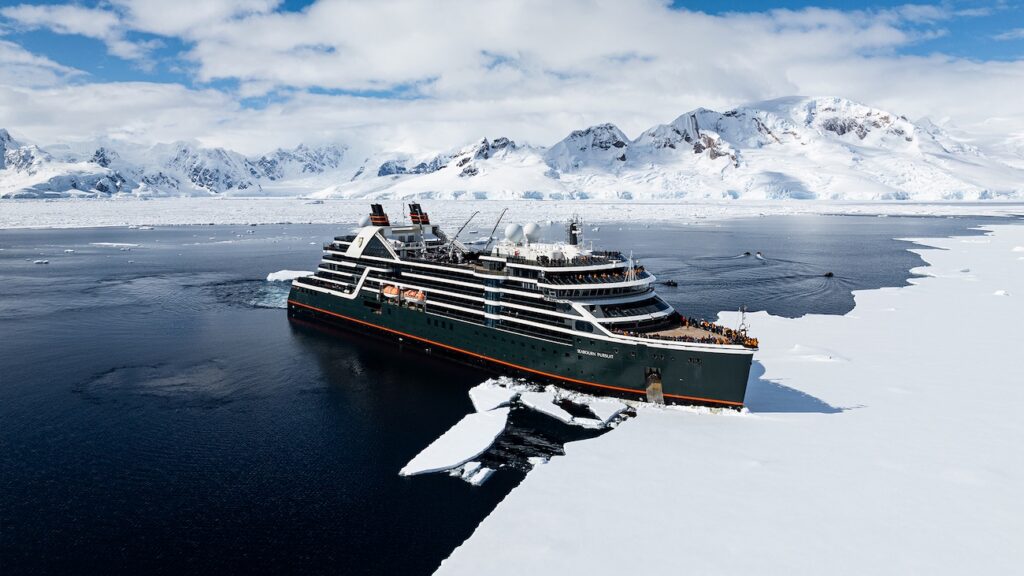
Antarctica is the purest expression of expedition cruising.
There are no conventional hotels, no road network linking highlights and virtually no independent way to explore the White Continent, so the ship becomes the journey’s foundation.
Most Antarctic cruises depart from Ushuaia in Argentina and cross the Drake Passage before reaching the Antarctic Peninsula.
Once there, days revolve around Zodiac excursions, wildlife encounters and shore landings, all shaped by weather and ice conditions.
Travellers may pass colossal icebergs, walk near penguin colonies, watch humpback whales feeding in icy bays and approach glaciers descending into the Southern Ocean.
Smaller expedition ships tend to offer the most immersive experience, particularly when equipped for kayaking and other activities away from the vessel.
A growing number of ultra-luxury expedition ships now bring suites, fine dining and spa facilities to the edge of the map, but Antarctica’s real power remains outside the window.
The best cruise destinations are not necessarily the easiest places to visit. They are the places where water is the access route, the viewpoint and the story itself.