The TAG Heuer Monaco didn’t become famous by trying to look like every other chronograph on the grid.
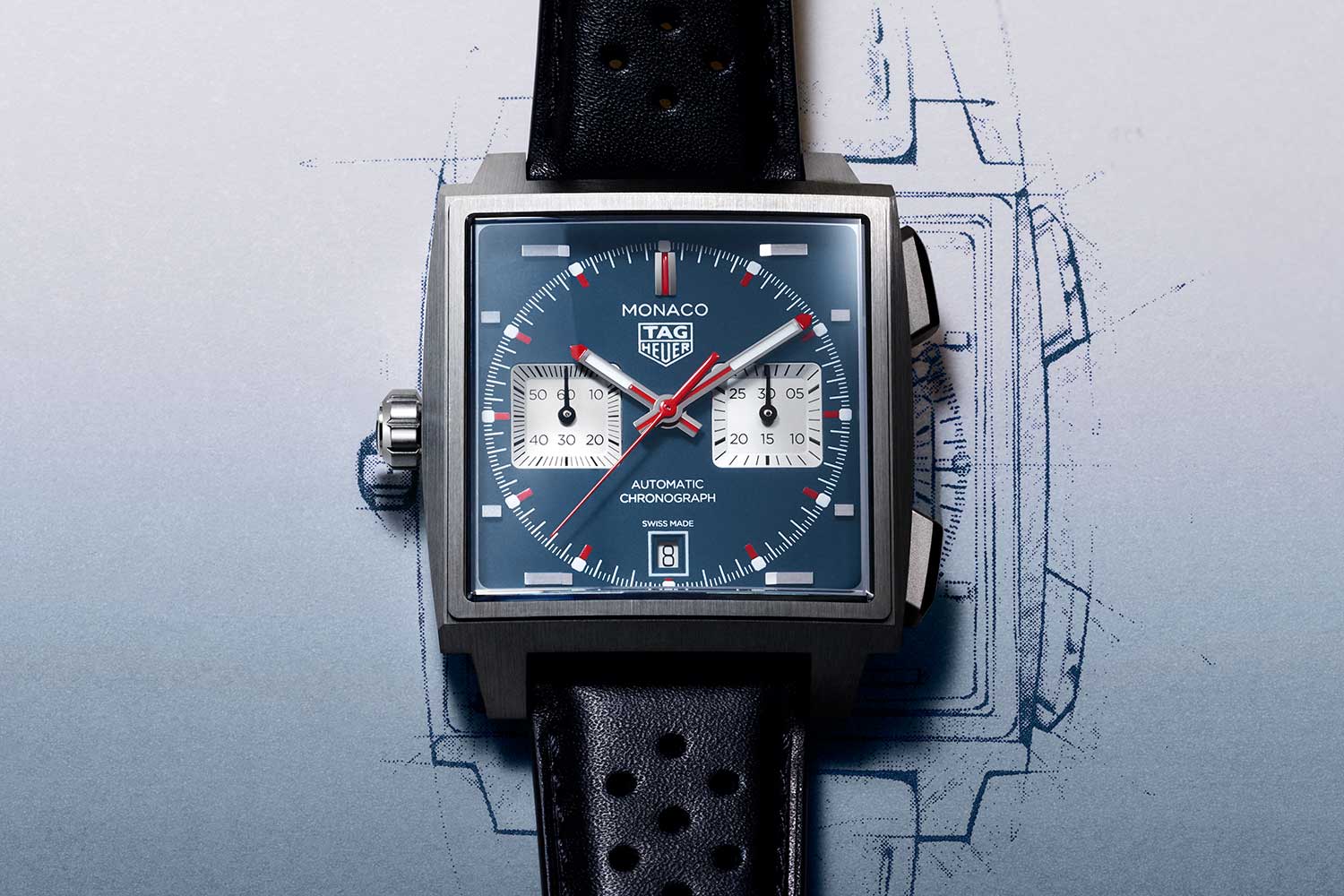
Introduced in 1969 as the Heuer Monaco, it arrived with a square case, a left-side crown, a vivid blue dial and a name tied to Formula 1’s most theatrical street circuit.
More than half a century later, it still feels unusually direct, partly because its design was never softened into convention.
At a glance
- The Heuer Monaco debuted in 1969 as a boldly square automatic chronograph with a clear motorsport identity.
- Its water-resistant case and Calibre 11 movement made it one of the defining chronographs of its era.
- The Ref. 1133B gained lasting cultural weight after Steve McQueen wore it in the 1971 film Le Mans.
Monaco gave the watch its attitude
The name Monaco was not a quiet choice.
In the late 1960s, the Monaco Grand Prix was already a test of nerve and precision, run through narrow Monte Carlo streets with barriers, buildings and the harbour never far from the racing line.
The circuit’s reputation mattered because Jack Heuer wanted the watch to carry a serious motorsport connection rather than a decorative one.
Heuer had already begun sharpening its racing presence through Swiss driver Jo Siffert, who wore Heuer branding on his overalls and a Heuer chronograph on his wrist.
The Monaco name gave the new watch a setting that matched its visual temperament, with glamour, danger and technical discipline packed into a few square kilometres of tarmac.
The square case was a technical decision as much as a visual one
Square watches existed before the Monaco, but square chronographs with proper water resistance were another matter.
That was the breakthrough made possible by case specialist Piquerez, whose patented construction used square gaskets and sealing methods that allowed the shape to move beyond dress-watch territory.
Jack Heuer secured the design for his new chronograph, giving the Monaco a case that was instantly different from the round sports watches that dominated the category.
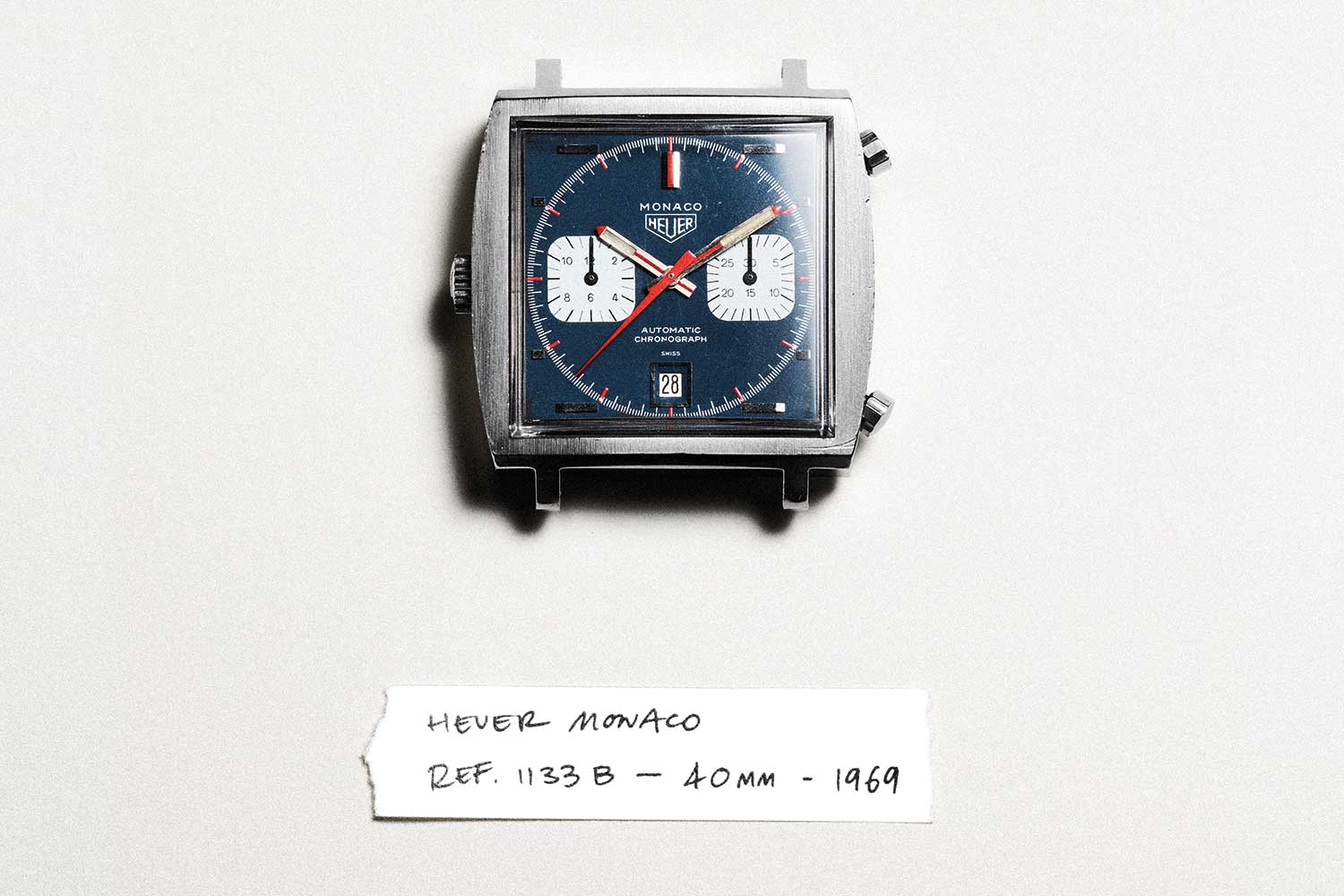
The original Ref. 1133B measured 39mm, which gave the watch a substantial presence for the period.
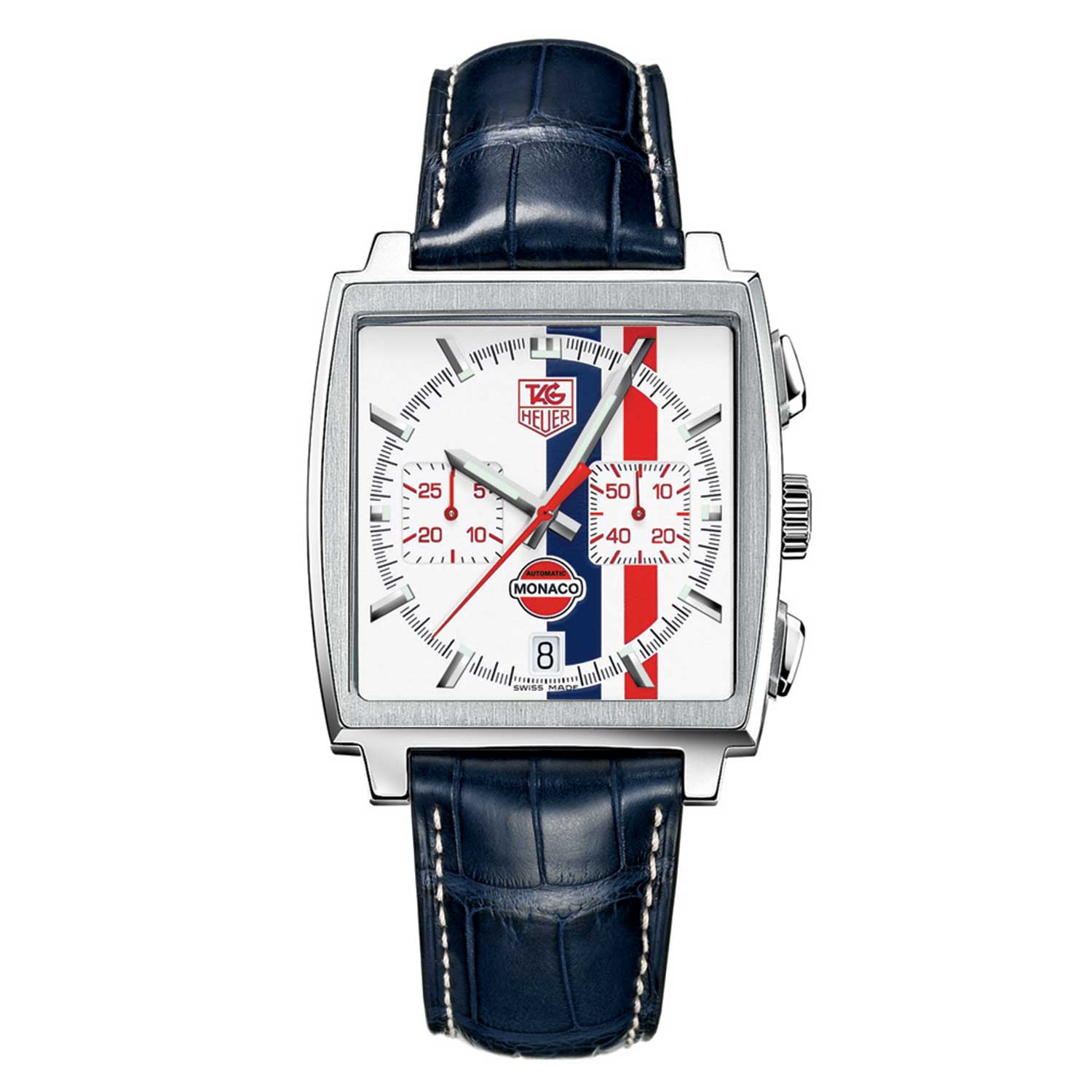
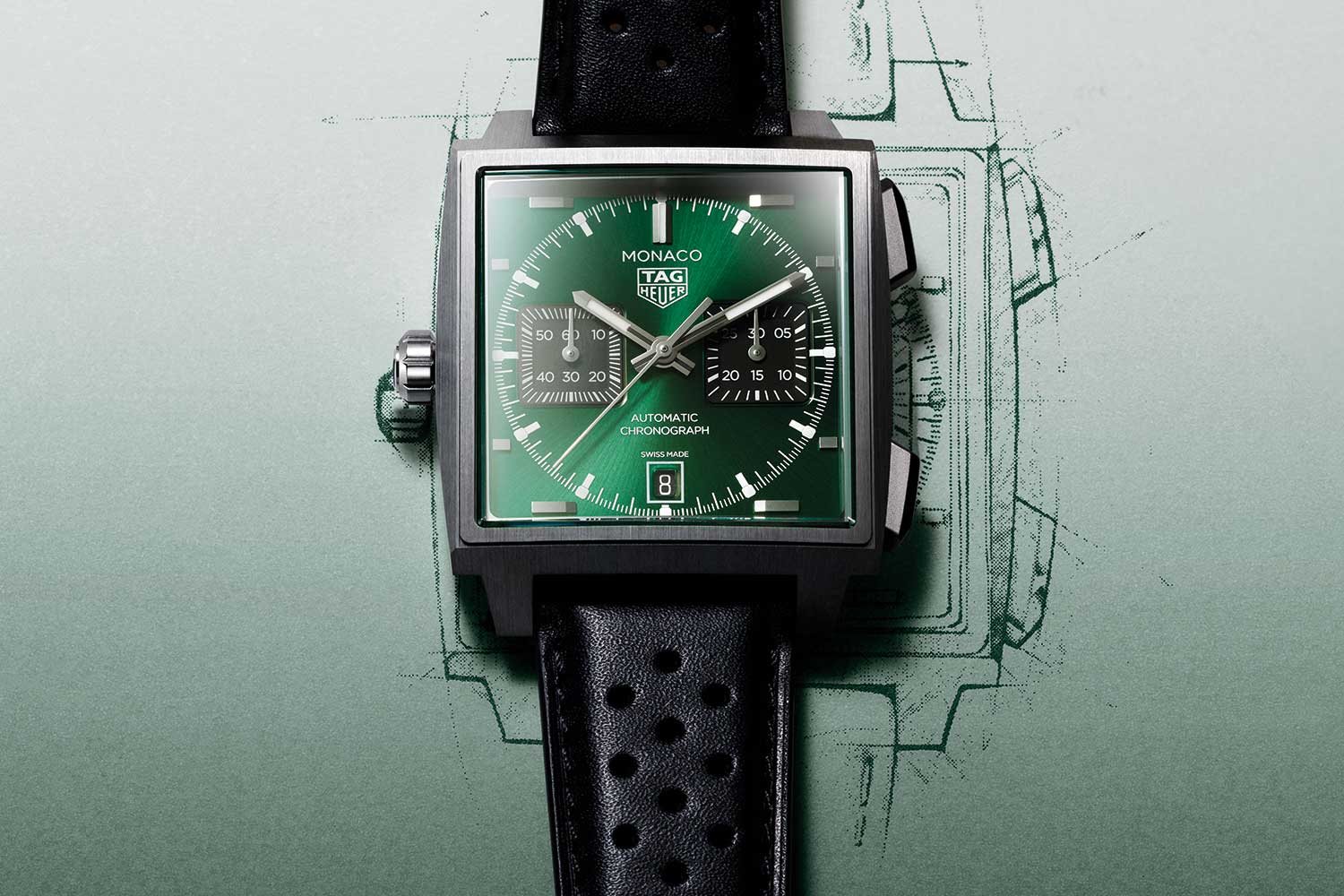
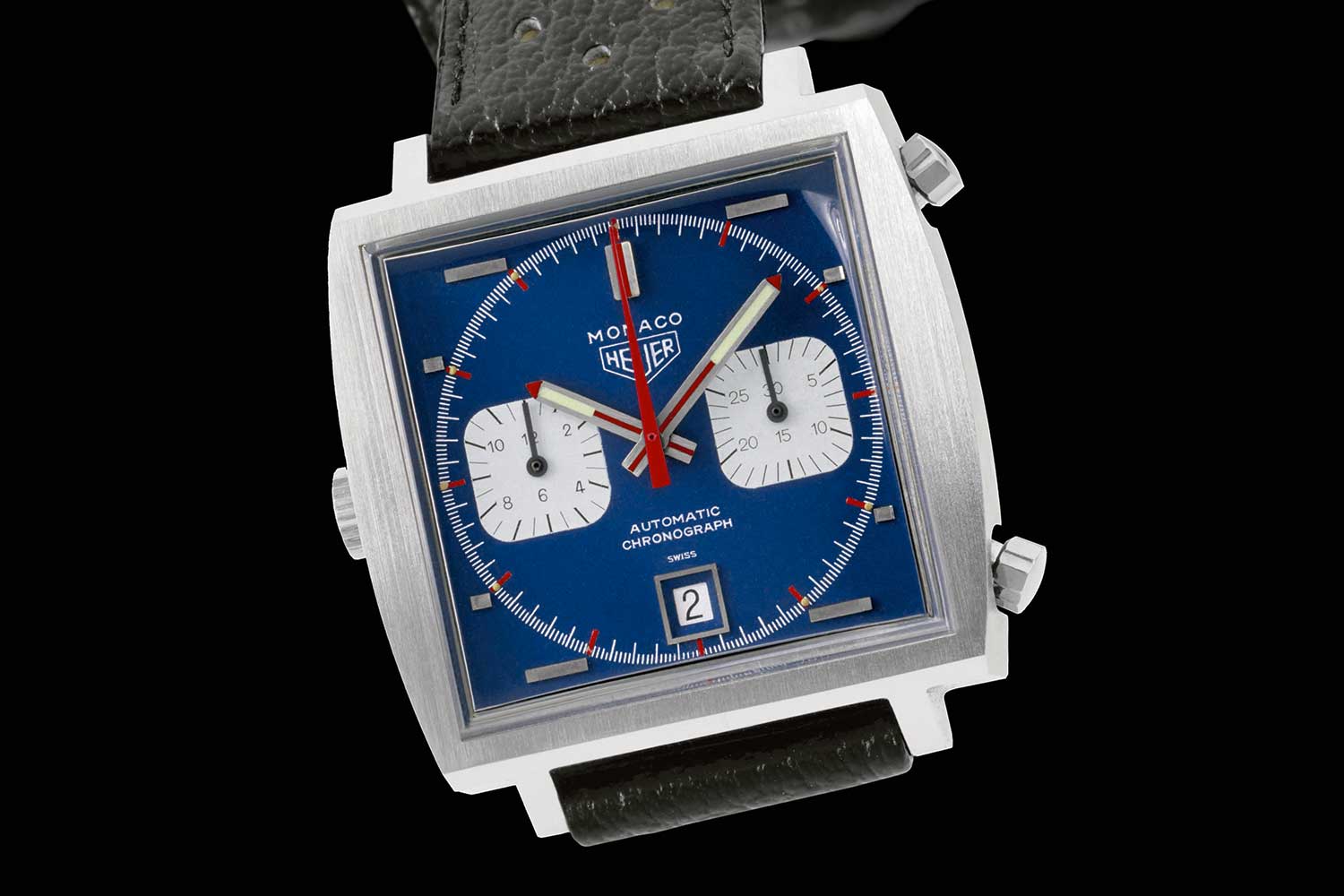
Its metallic blue sunburst dial, red chronograph hand, square-tipped tritium-filled hands and sharp case geometry made it look closer to industrial design than traditional horology.
Early examples carried the word “Chronomatic” above the Heuer shield, a name connected to the automatic chronograph movement project behind the watch.
Later dials shifted to “Automatic Chronograph” at 6 o’clock, a clearer description that also became part of the Monaco’s familiar visual balance.
Calibre 11 made the crown placement part of the message
The Monaco’s case may have caught the eye first, but the movement was the other half of the story.
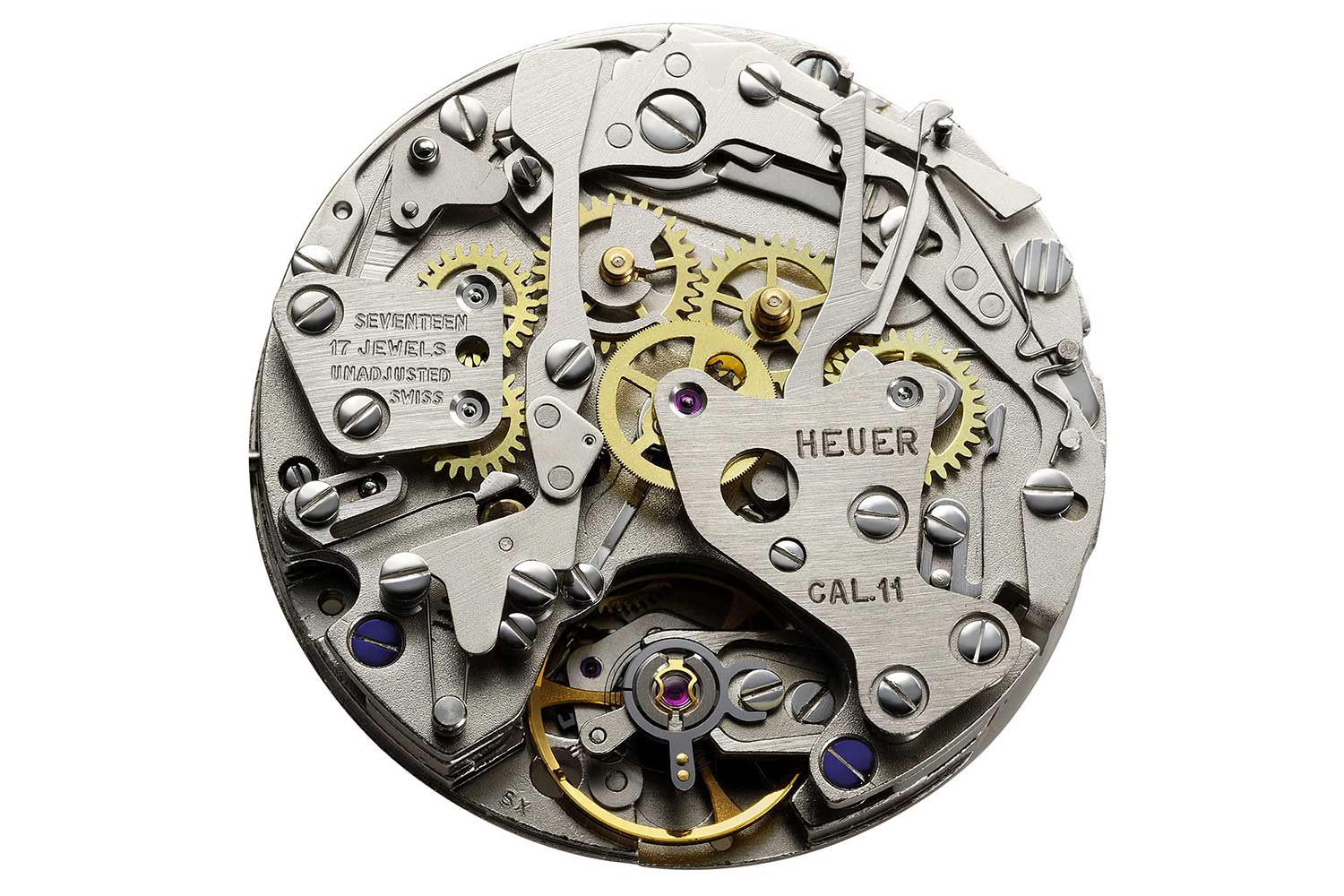
Inside was Calibre 11, developed through a collaboration involving Heuer, Breitling, Hamilton-Büren and Dubois-Dépraz.
The aim was to bring a self-winding chronograph to the wrist at a time when automatic watches were becoming increasingly important to buyers.
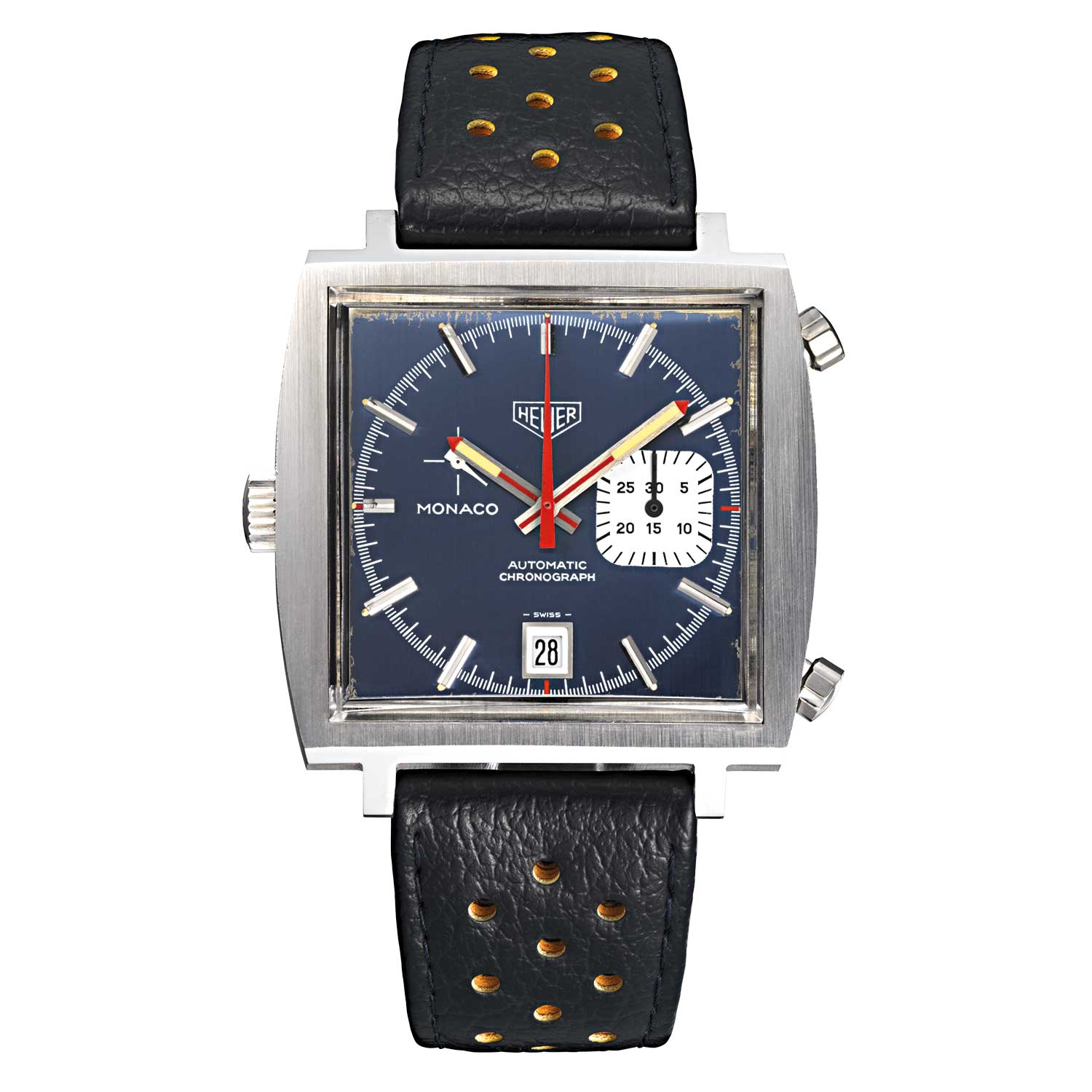
Calibre 11 used a Büren micro-rotor automatic base movement and a Dubois-Dépraz chronograph module mounted above it.
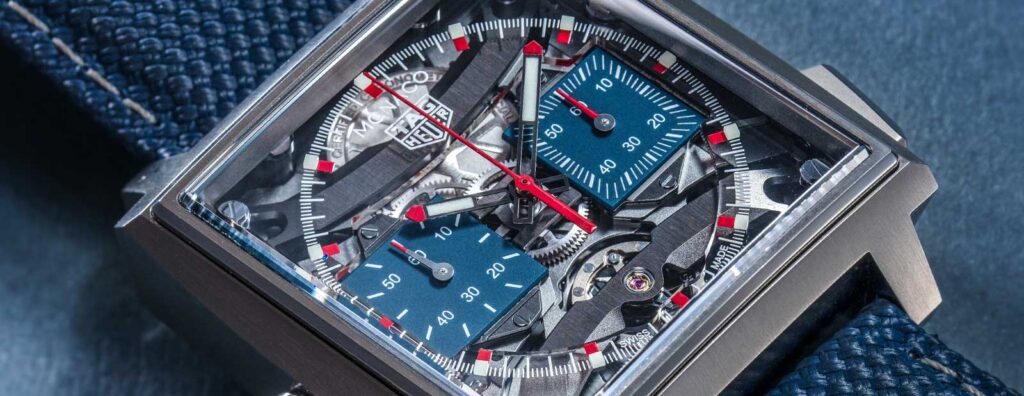
The layout created a bi-compax display, with a 30-minute counter at 3 o’clock, a 12-hour counter at 9 o’clock and a date at 6 o’clock.
It also placed the crown on the left side of the case, an unusual detail that Heuer cleverly framed as a sign that the watch didn’t need daily winding.
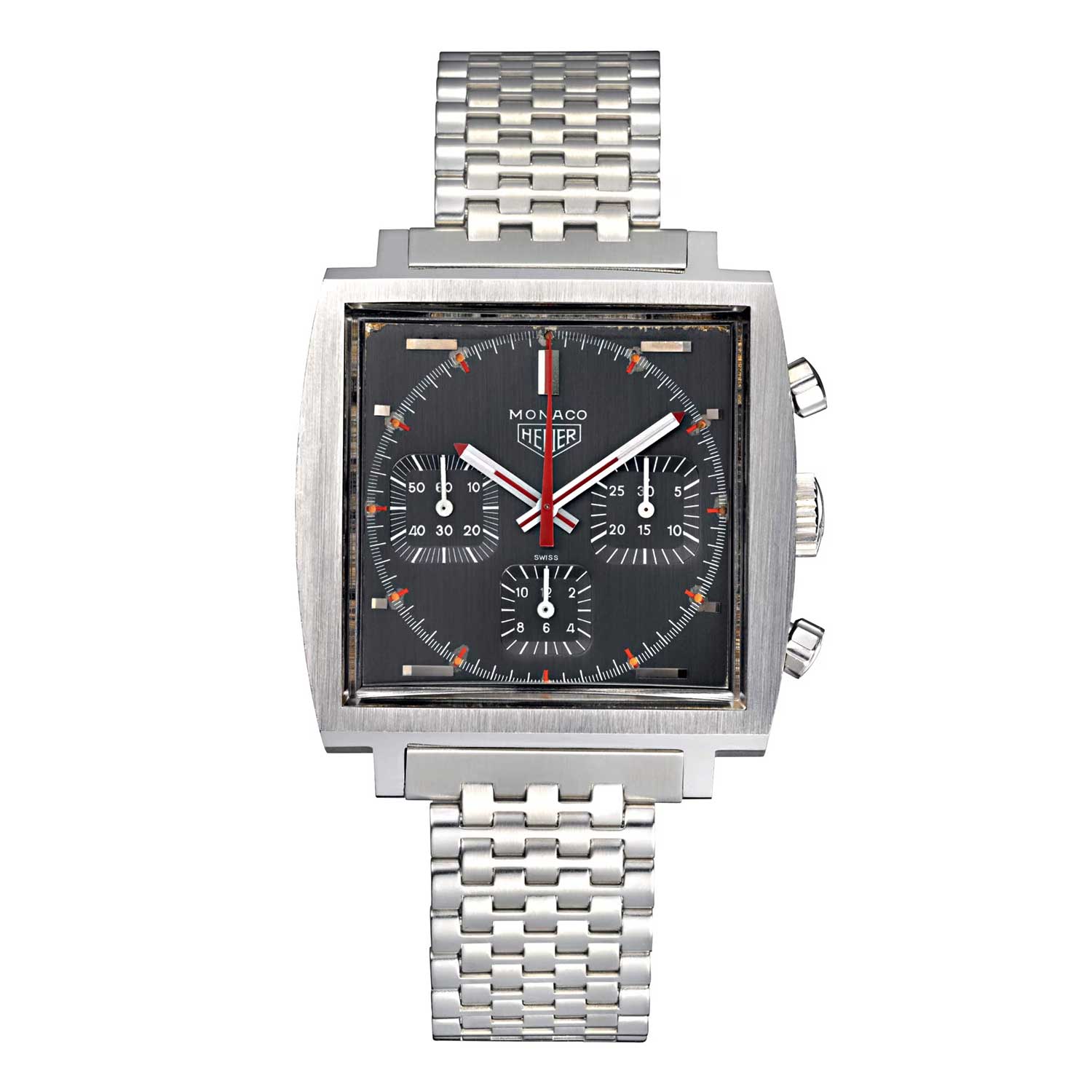
That asymmetry remains one of the Monaco’s defining traits, not a quirk to be corrected but a piece of functional storytelling.
Steve McQueen turned the Ref. 1133B into a screen icon
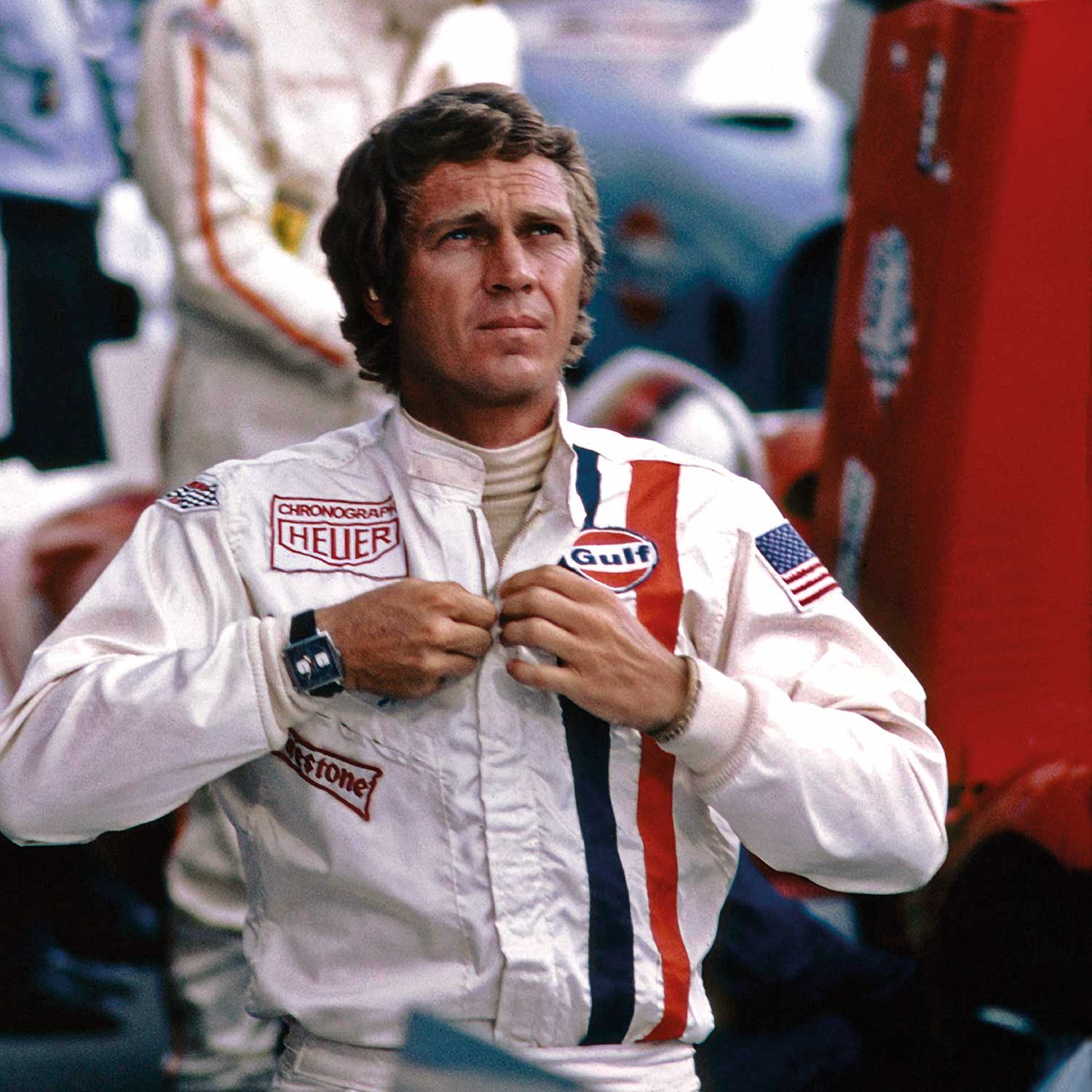
The Monaco’s cultural afterlife accelerated when Steve McQueen wore a Ref. 1133B in Le Mans, released in 1971.
McQueen had noticed the Heuer branding through Jo Siffert, whose racing look influenced the actor’s on-screen wardrobe.
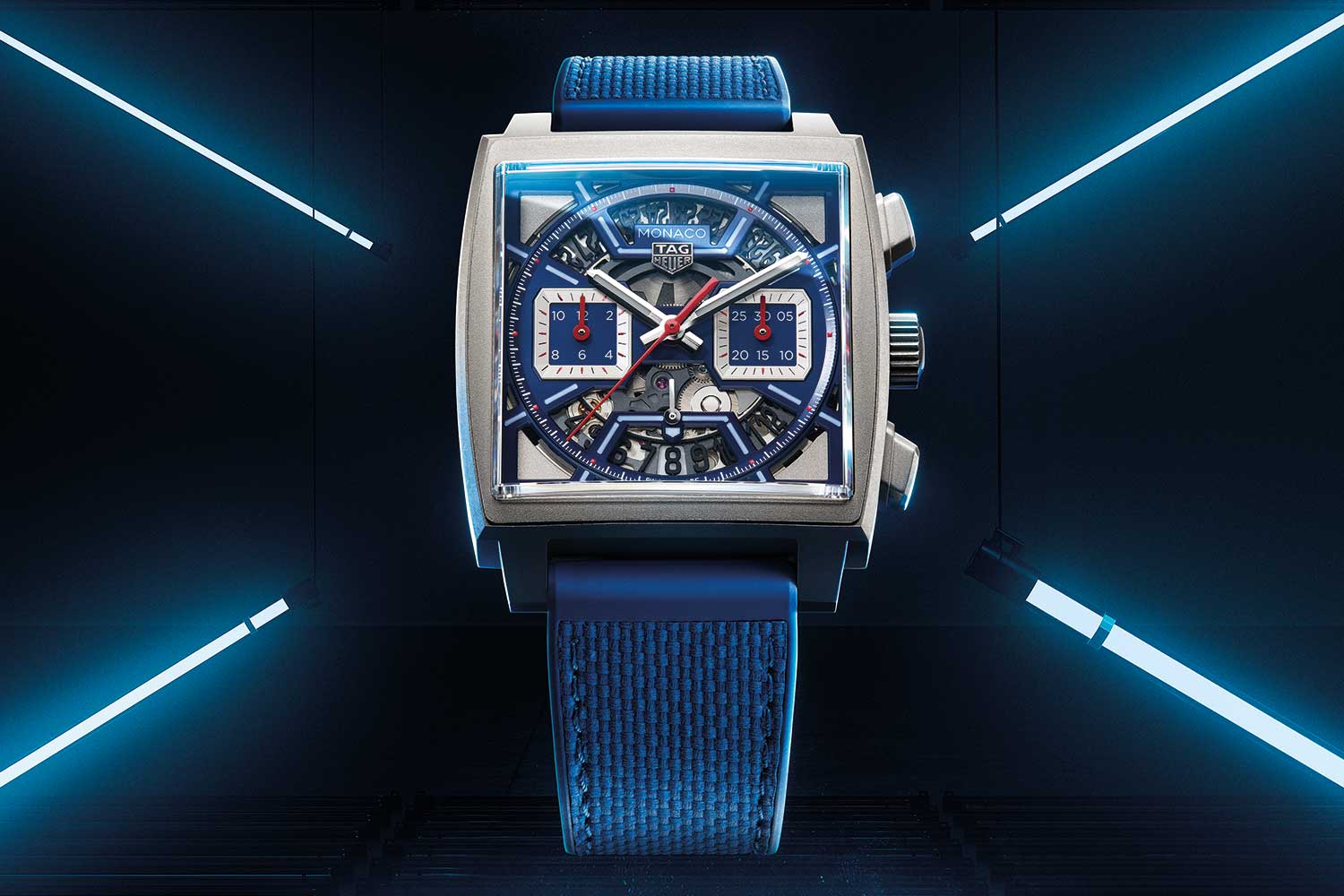
For his character Michael Delaney, McQueen chose the Monaco for its square shape, strong size and blue dial, giving the watch a visibility few chronographs ever receive.
The film version was subtly different from the earliest examples, with a matte blue dial and arrow-tipped hands accented in red.
Its appeal today is not simply celebrity association, though that undeniably helped.
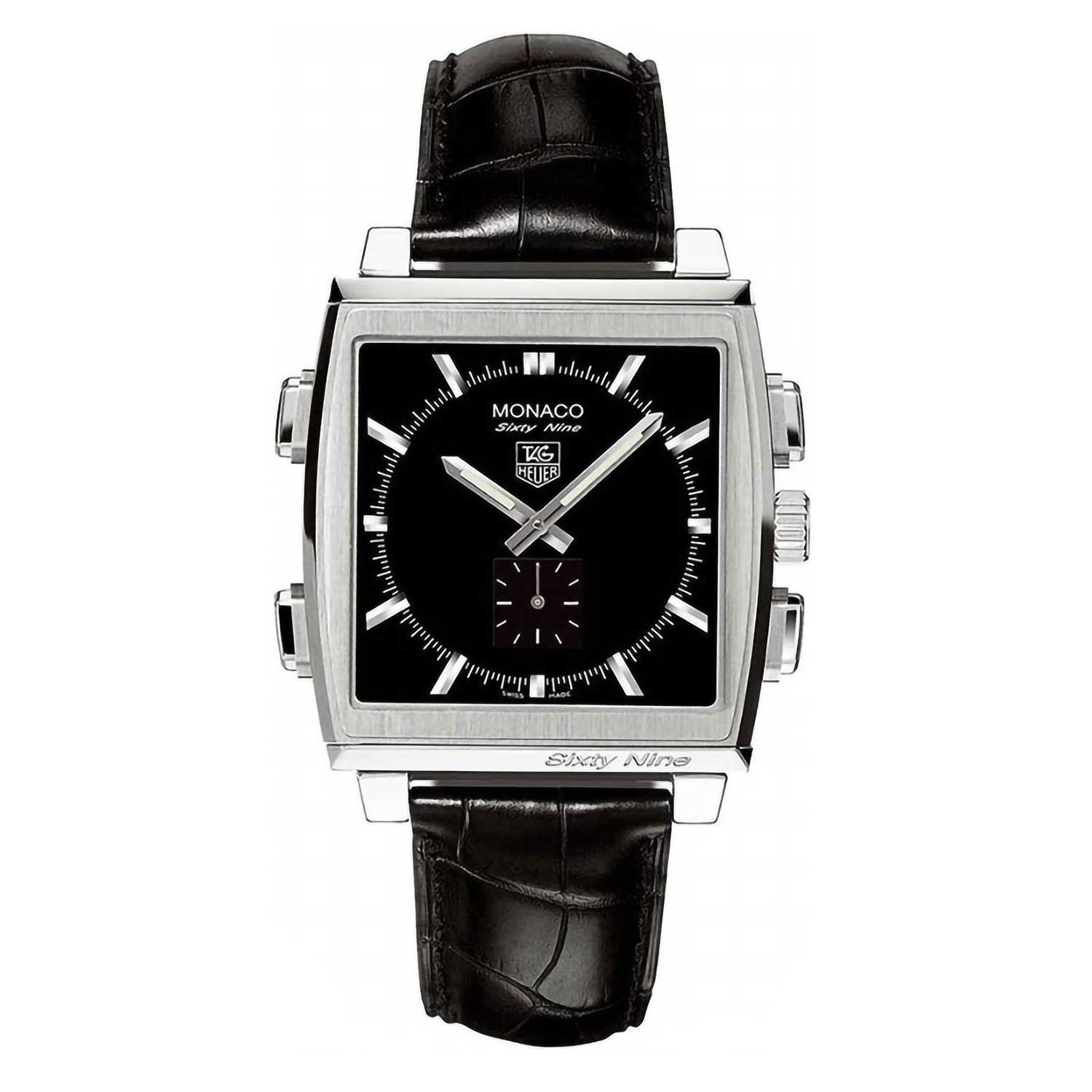
The Monaco endures because the watch already had the ingredients of an icon before cinema fixed it in the public imagination.
Details & Specifications
| Brand | Heuer, now TAG Heuer |
|---|---|
| Model | Monaco Ref. 1133B |
| Year introduced | 1969 |
| Case size | 39mm |
| Case style | Square water-resistant chronograph case |
| Dial | Blue, with red chronograph accents |
| Movement | Calibre 11 automatic chronograph |
| Movement architecture | Büren micro-rotor automatic base with Dubois-Dépraz chronograph module |
| Frequency | 19,800 vibrations per hour |
| Power reserve | 42 hours |
| Chronograph layout | 30-minute counter at 3 o’clock and 12-hour counter at 9 o’clock |
| Date | 6 o’clock |
| Crown | Left side of the case |
The TAG Heuer Monaco remains compelling because it was never designed as a safe watch.
Its square case, technical ambition and racing associations still speak with the confidence of 1969, when a chronograph could be both a timing instrument and a visual challenge to the rest of the field.