Sri Lanka’s Cultural Triangle deserves its reputation, especially for Sigiriya at first light, Dambulla’s painted cave temples and the ruins of Polonnaruwa.
But the island opens up in a different way once you move beyond that classic circuit, with quieter national parks, Tamil culture in the far north, long-distance tea-country walking and summer beaches that suit the east coast better than the south.
For travellers planning a second visit, or a first trip with more room to roam, these are the places that add texture to Sri Lanka rather than simply another stop on the map.
At a glance
- Sri Lanka’s lesser-visited regions offer a strong alternative to a Cultural Triangle-only itinerary.
- Highlights include east coast reefs, Gal Oya boat safaris, Wilpattu’s villus, the Pekoe Trail and Jaffna’s islands.
- Seasonality matters, with the east coast at its best from April to September and the south and west coasts generally best from December to March.
Plan around Sri Lanka’s two monsoons
The first thing to understand is that Sri Lanka doesn’t have a single simple weather pattern.
The southwest monsoon usually brings rain to the south and west coasts from around May to July, while the heavier northeast monsoon affects the north and east from roughly October to December.
That complexity is useful, because it means there’s usually somewhere on the island with good conditions at any time of year.
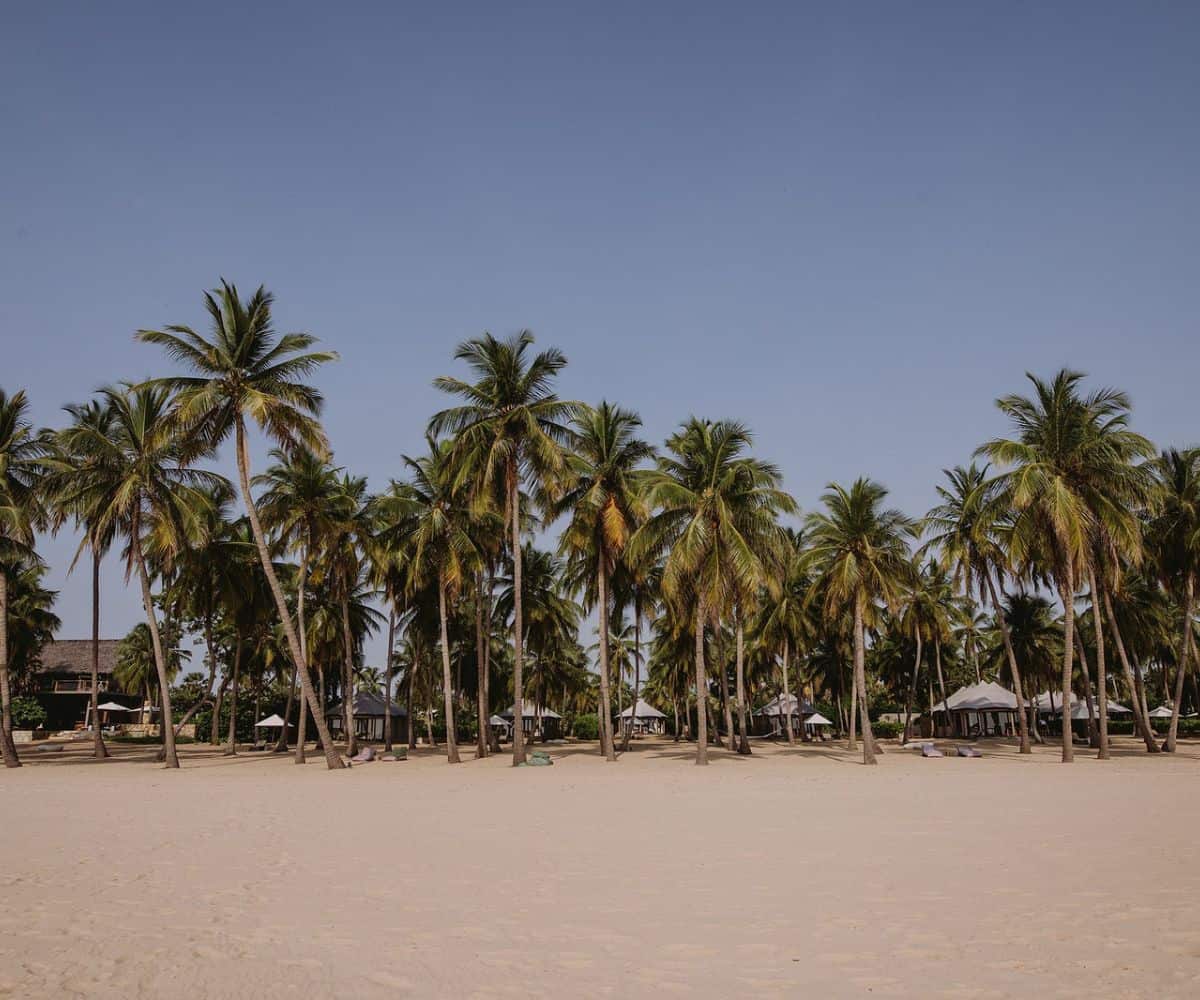
For beach time, the south and west coasts are generally strongest from December to March, while the east coast works best from April to September.
The hill country is often at its best from February to April, and its driest period is typically from June to August.
Between July and September, much of the island tends to see sunny weather with short, warm showers, though conditions can shift year to year.
Summer belongs on the east coast
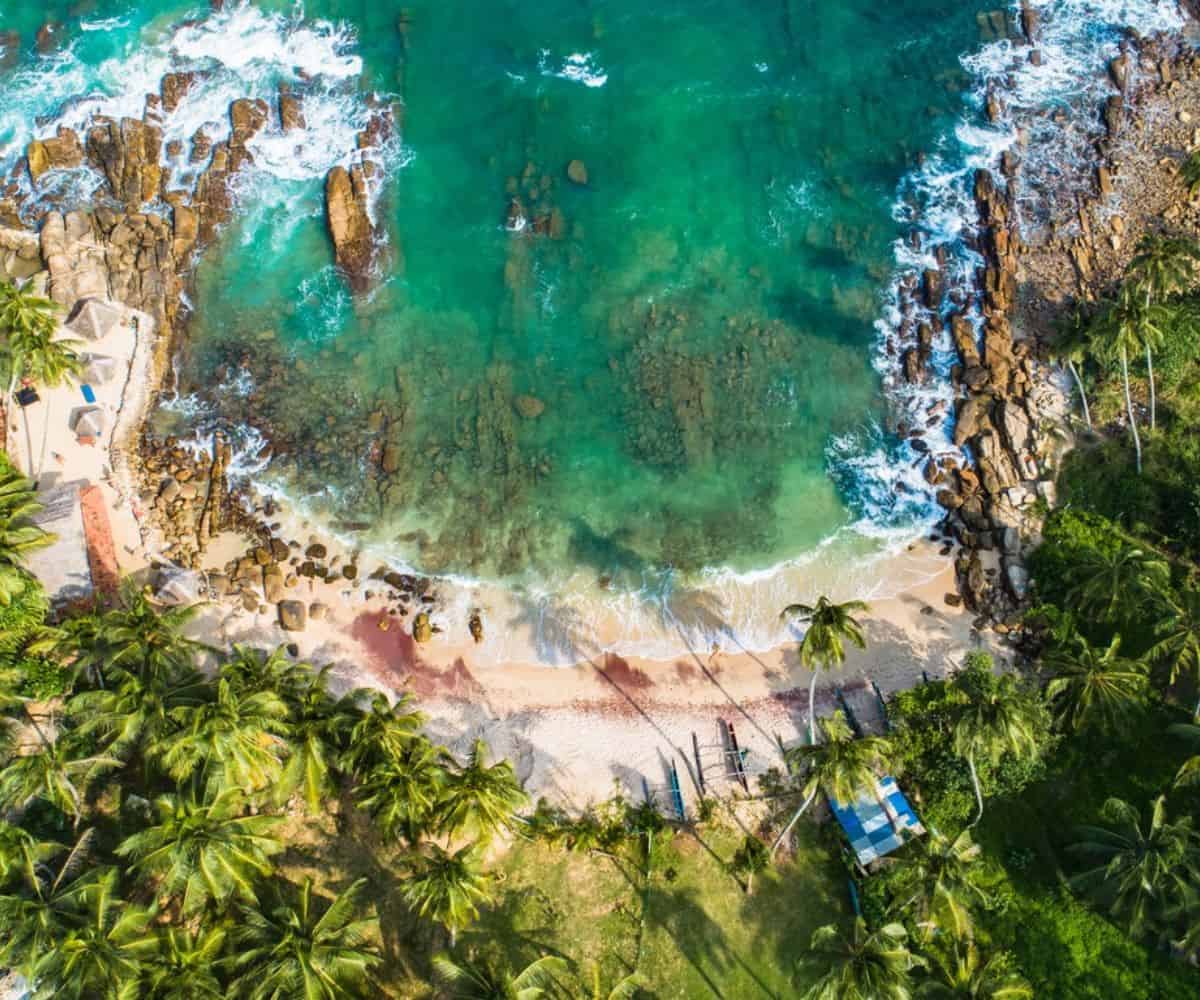
The east coast from Trincomalee down to Arugam Bay remains quieter and less developed than the south and west, and its calmer summer seas make it especially appealing for families and snorkellers.
Trincomalee’s natural harbour is overlooked by Koneswaram temple on Swami Rock, while nearby Nilaveli is the jumping-off point for boat trips to Pigeon Island.
Pigeon Island is known for coral snorkelling, and Kayankerni reef north of Pasikudah became a marine sanctuary in 2019.
At Kayankerni, visitors can snorkel with a local guide among coral, tropical fish and turtles, with a short coral walk often forming part of the experience.
Summer is also whale season off Trincomalee, with boat trips looking for blue whales and dolphins before returning through shallow water suited to swimming and paddleboarding.
On land, the east coast has cultural depth that’s easy to miss on a beach-focused trip.
Puli Kooththu, a folk dance found only on the east coast, tells local myths through music, drama and drumming.
Pasikudah is a practical base for this part of the island, helped by a shallow bay that avoids the stronger currents found on parts of the south and west coasts.
Wildlife without the Yala crowds
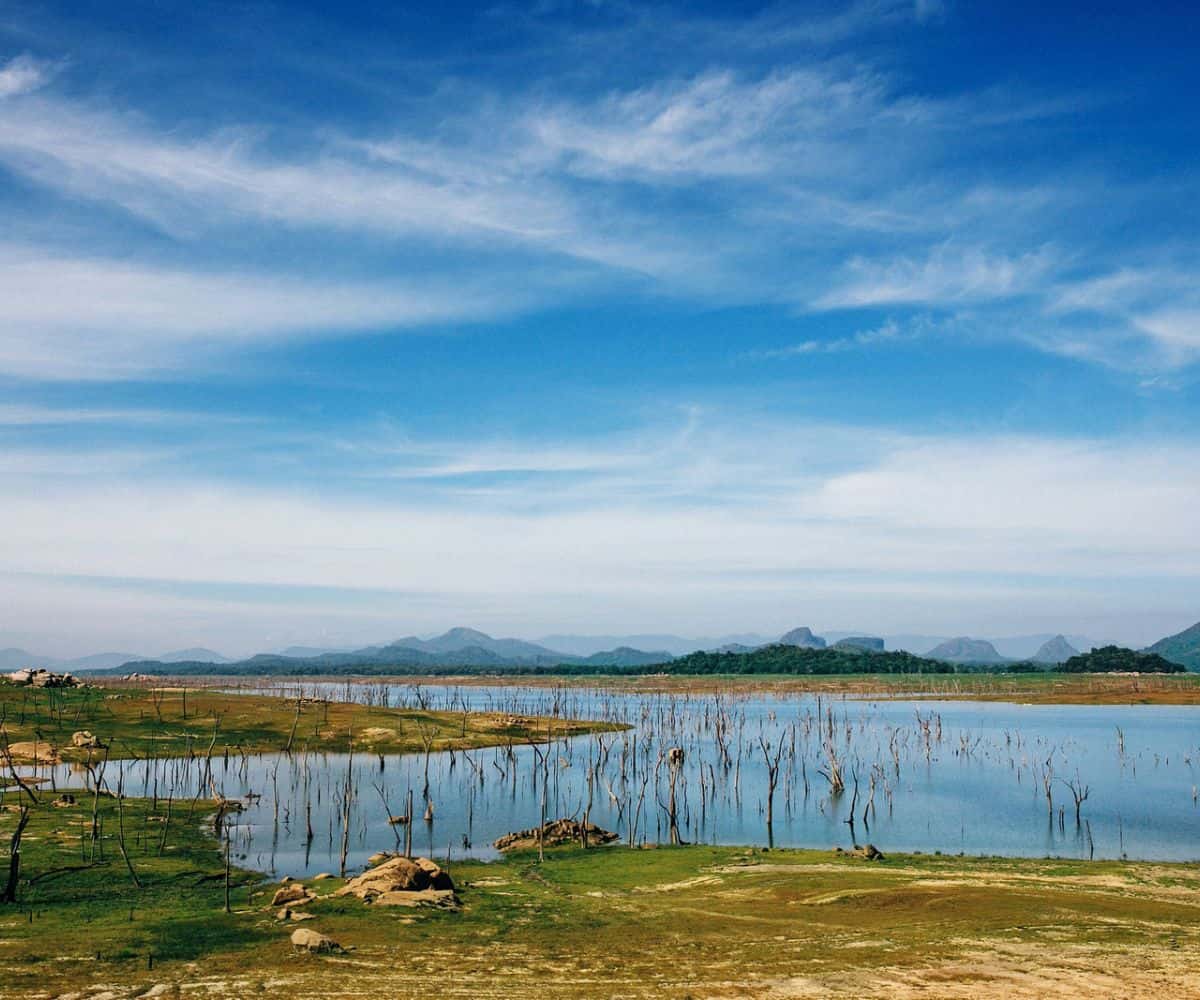
Gal Oya is one of Sri Lanka’s most distinctive wildlife areas because it centres on Senanayake Samudra, the country’s largest reservoir.
It’s also the only national park in Sri Lanka where boat safaris are possible, drifting past forested islands where elephants may be seen swimming from one island to another.
The park is remote, with the journey from Colombo taking more than six hours, which helps keep it peaceful.
It works particularly well as a pause between the hill country and the east coast.
Gal Oya Lodge sits on the edge of the park, with nine thatched bungalows and a family villa set in 20 acres of forest, using local materials and open-air bathrooms.
Travellers can also spend time with one of the remaining Vedda communities, Sri Lanka’s indigenous forest dwellers, learning about traditional hunting methods and wild honey gathering.
Kumana offers another alternative to the busier safari circuit.
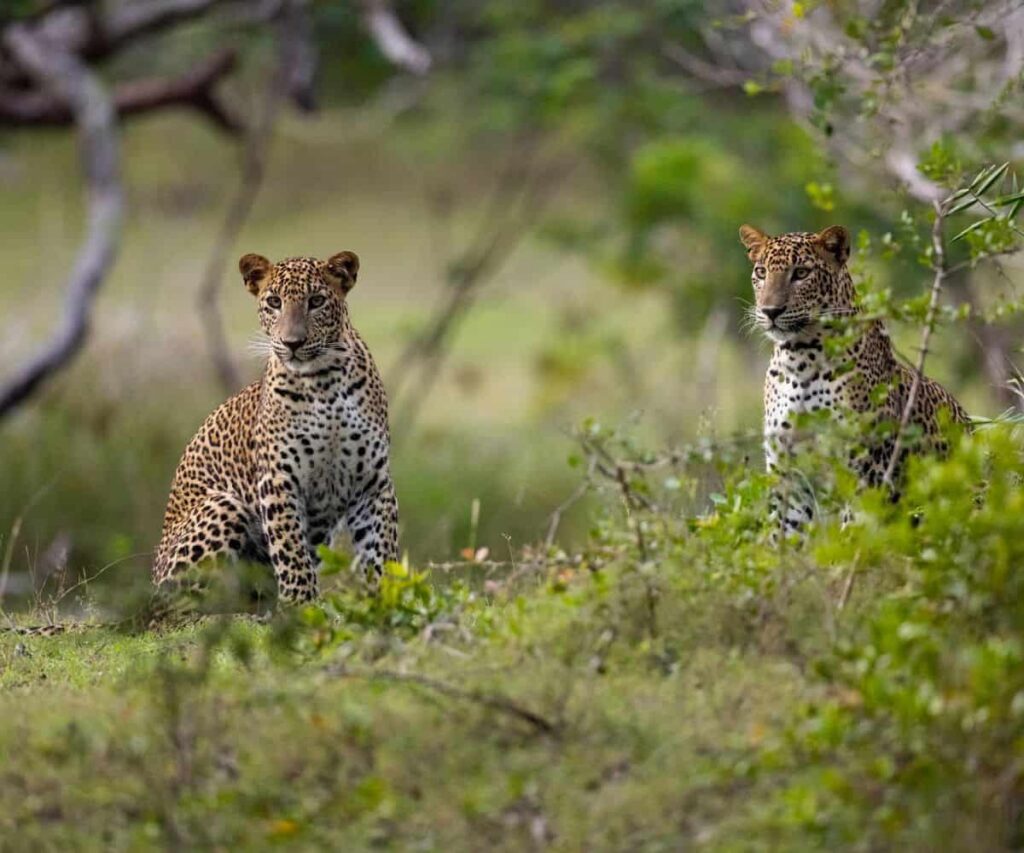
Once known as Yala East, it sits across the Kumbukkan Oya river and receives far fewer jeeps than Yala, while still offering the possibility of leopards and elephants.
Its strongest draw is birdlife, with around 255 recorded species.
In May and June, the 200-hectare Kumana Villu mangrove swamp fills with nesting pelicans, painted storks and spoonbills.
Kumana also lies close enough to Arugam Bay to add easily to an east coast summer itinerary, with the main gate near Okanda less than an hour away.
Wilpattu, in the northwest, is Sri Lanka’s largest national park, covering more than 1,300 square kilometres of forest and scrub.
Its name means land of lakes, a reference to the natural rain-filled villus spread across the park.
Those water sources attract wildlife, including leopards and sloth bears, with May to July considered a strong period for seeing sloth bears feeding on palu fruit.
Wilpattu was closed for much of the civil war and reopened in 2010, and its scale means even busy days can feel relatively empty.
That same size also demands patience, because animals are more dispersed than in some better-known parks.
Leopard Trails operates a luxury tented camp just outside the park, and its Junior Ranger programme is designed to get children tracking animals and identifying birds.
Wilpattu also pairs neatly with Anuradhapura, which is about 40 kilometres away.
Tea trails, ancient rock routes and the far north
Sri Lanka’s hill country is hardly unknown, and the Kandy to Ella train can be very busy in peak season.
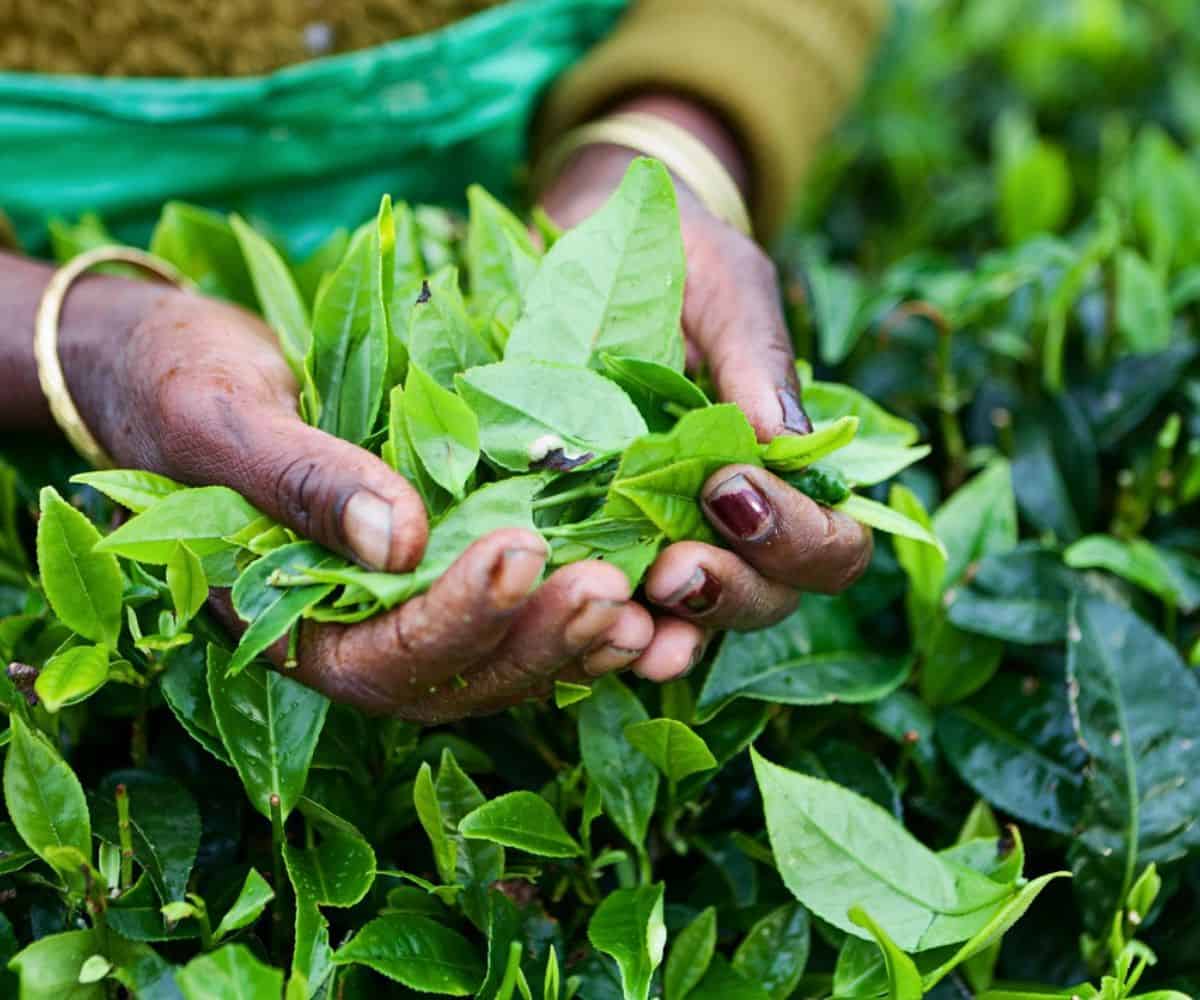
The Pekoe Trail gives the region a more intimate rhythm.
It was Sri Lanka’s first long-distance walking route, running for around 300 kilometres in 22 stages from the hills outside Kandy to Nuwara Eliya via Hatton, Haputale and Ella.
Much of the trail follows old paths once used to carry tea from estates to factories, passing through working plantations, villages and forest.
Stage two ends at Loolkandura, where James Taylor planted Sri Lanka’s first commercial tea in 1867.
Many travellers walk only one or two stages, which is often enough to shift the hill country from scenic backdrop to lived-in landscape.
Near Haputale, a more domestic encounter can be arranged through lunch with a Hindu family, picking vegetables from the garden, cooking over the fire and eating rice and curry from banana leaves.
Ceylon Tea Trails remains a standout base in this region, with five restored tea planters’ bungalows around Castlereagh Reservoir near Hatton in the Bogawantalawa valley.
It was the first Relais & Châteaux property in Sri Lanka, and the Pekoe Trail stages around Norwood and Bogawantalawa pass through the valley.
Closer to the Cultural Triangle, Wasgamuwa offers a quieter wildlife option than Minneriya.
About two hours by road from Sigiriya, it was first protected as a nature reserve in 1938 and became a national park in 1984.
Today, around 150 elephants live among its grasslands, swamps and forest.
Field researchers from the Sri Lanka Wildlife Conservation Society lead safari experiences here, with work focused on helping farming villages and elephants live alongside one another.
One approach has involved planting citrus trees as living fences, because elephants won’t raid them.
For older teenagers, the Trail to the Heavens at Dimbulagala is a more demanding proposition.
The route, about an hour and a half from Dambulla or Habarana, crosses ancient forest and bare rock to narrow ledges where monks once meditated.
Only a small number of people walk it each year, and it is considered suitable for those aged 15 and over.
Then there is Jaffna, the heart of Sri Lankan Tamil culture in the far north.
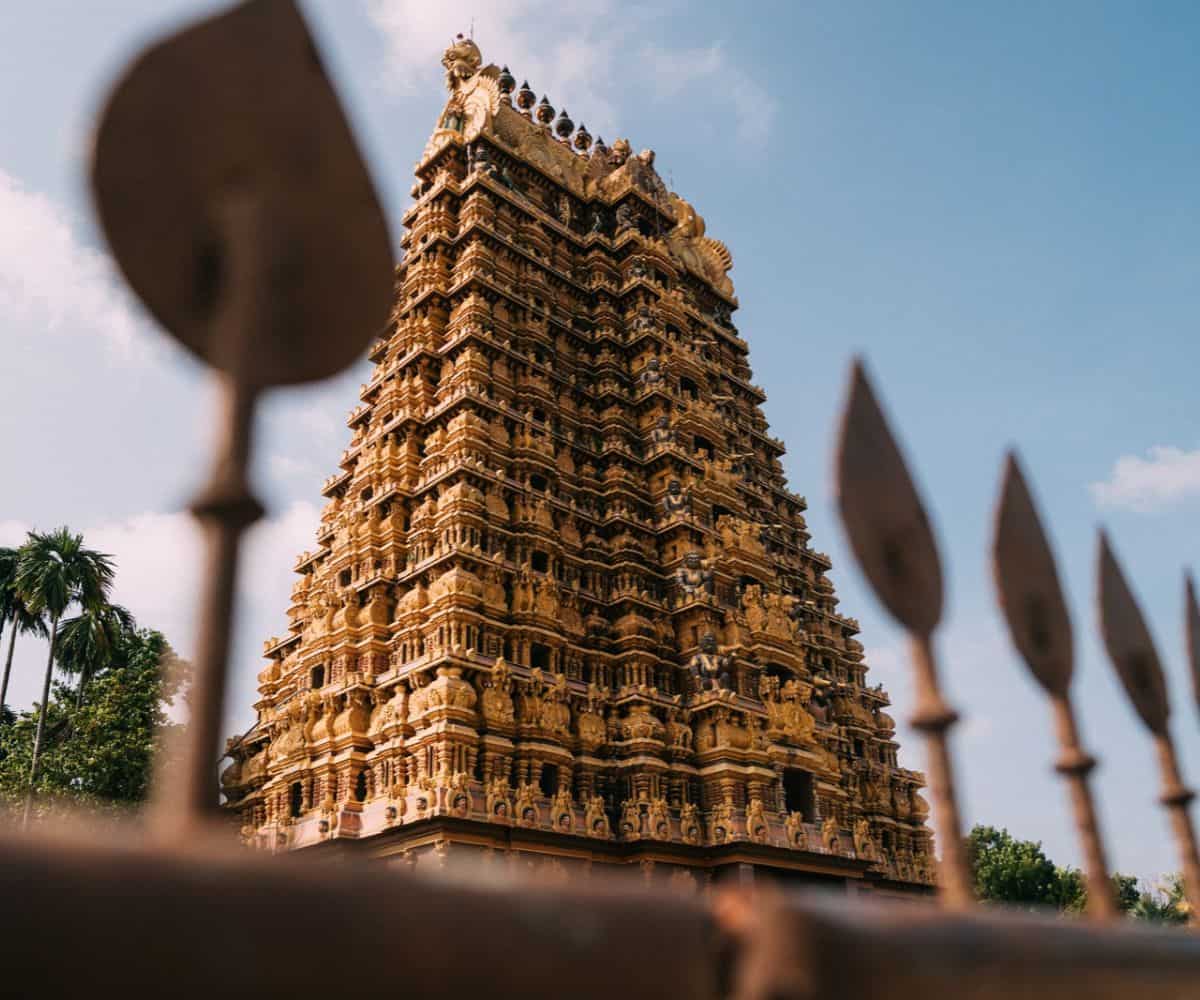
Few first-time visitors reach this part of the island, and the city feels markedly different from the south, west and central highlands, with Hindu temples appearing throughout its streets.
Delft is one of the most memorable excursions, a remote island reached by private boat and known for coral stone walls, wild horses linked to the Portuguese period and a baobab tree said to have been a gift from Arab traders.
On the peninsula, an outrigger canoe trip on the lagoon can be paired with Jaffna crab curry prepared by local women using the fresh catch.
Jetwing Jaffna is a comfortable city base, with a rooftop bar overlooking the lagoon.
How to connect the journey
The best Sri Lanka itineraries don’t have to choose between the classic ancient cities and the quieter edges of the island.
A thoughtful route might begin with Sigiriya, Dambulla or Polonnaruwa, then continue to Wilpattu, Gal Oya, the east coast or Jaffna depending on the season.
The main planning mistake is underestimating travel times.
Distances can look modest on a map, but slow roads mean the order of travel matters, especially when connecting remote lodges and national parks.
A private chauffeur guide can make the experience smoother, both for navigating long drives and for breaking them with worthwhile stops.
Small lodges can have only a handful of rooms, so school-holiday trips need early planning.
Sri Lanka rewards that extra thought with a journey that feels less like a checklist and more like an island seen in full colour, from reefs and reservoirs to tea paths, Tamil temples and forests where the roads finally fall quiet.