L’Epée 1839 has never treated the clock as a passive object, and the Belly Tank Racer is one of its more characterful arguments for that approach.
It sits somewhere between kinetic sculpture, desk object and miniature racer, built for collectors who like their horology with a dose of petrol and Bonneville dust.
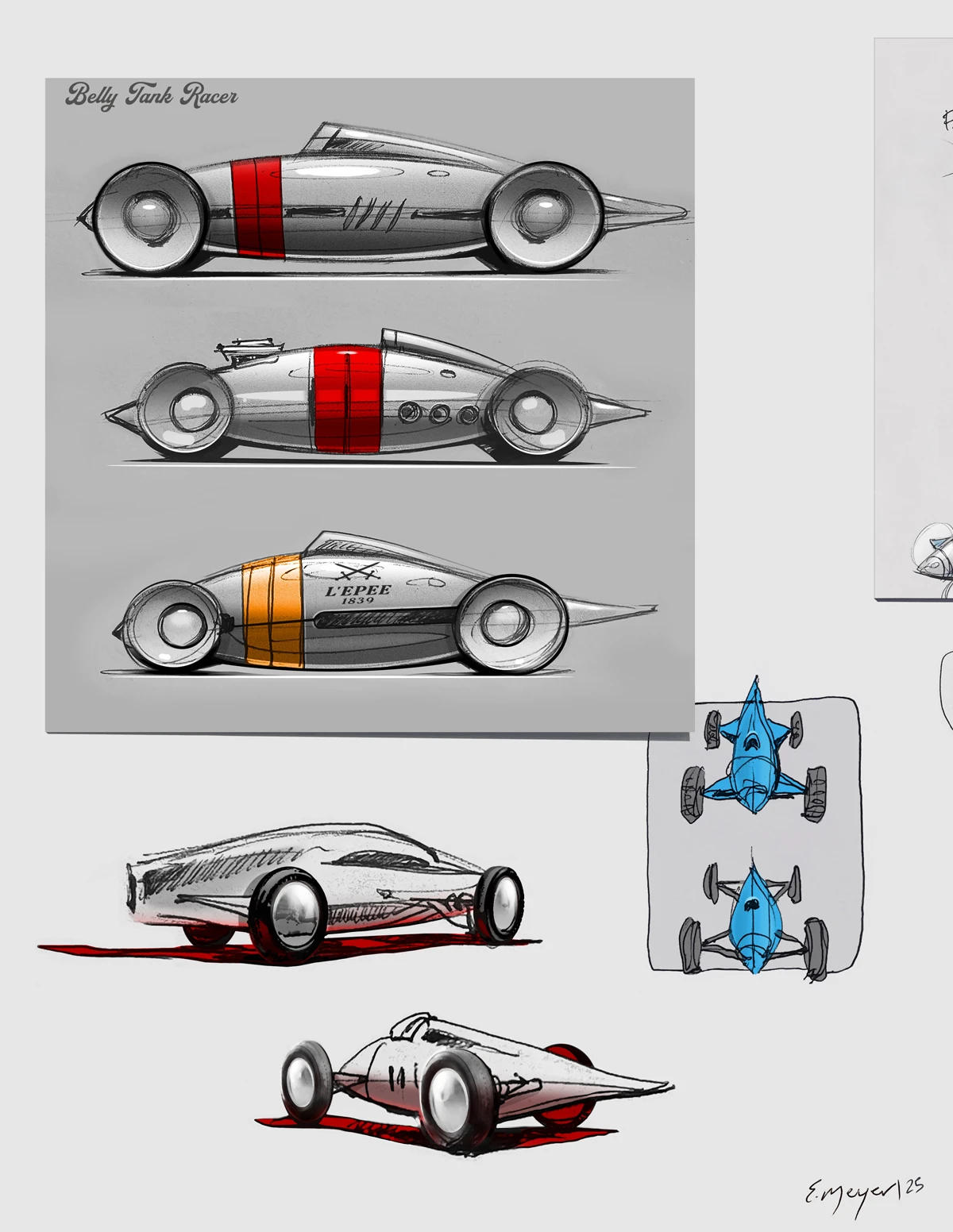
The piece takes its shape from the stripped-back machines created from wartime aircraft fuel tanks, then translates that functional aerodynamic language into a mechanical timekeeper.
At a glance
- L’Epée 1839’s Belly Tank Racer is a car-inspired mechanical table clock shaped around post-war land-speed racing culture.
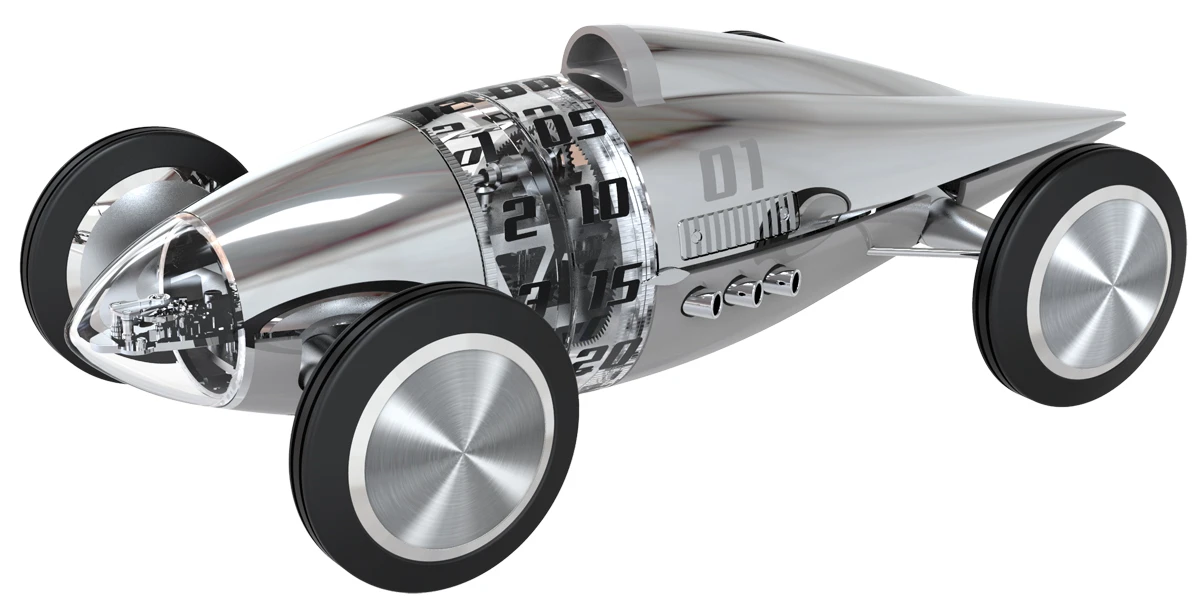
- Its transparent discs show hours and minutes, while an acrylic nose reveals the balance and Incabloc shock-protection system.
- The clock uses a 2.5 Hz movement with 11 jewels and an eight-day power reserve, wound by pulling the car backwards on a flat surface.
A land-speed shape with wartime roots
The Belly Tank Racer draws on one of the more inventive chapters in American speed culture.
After the Second World War, surplus aircraft drop tanks became tempting raw material for racers chasing speed on dry lake beds.
The tanks had been designed to carry extra fuel beneath aircraft such as the Lockheed P-38 Lightning, with a form intended to cut through air with minimal drag.
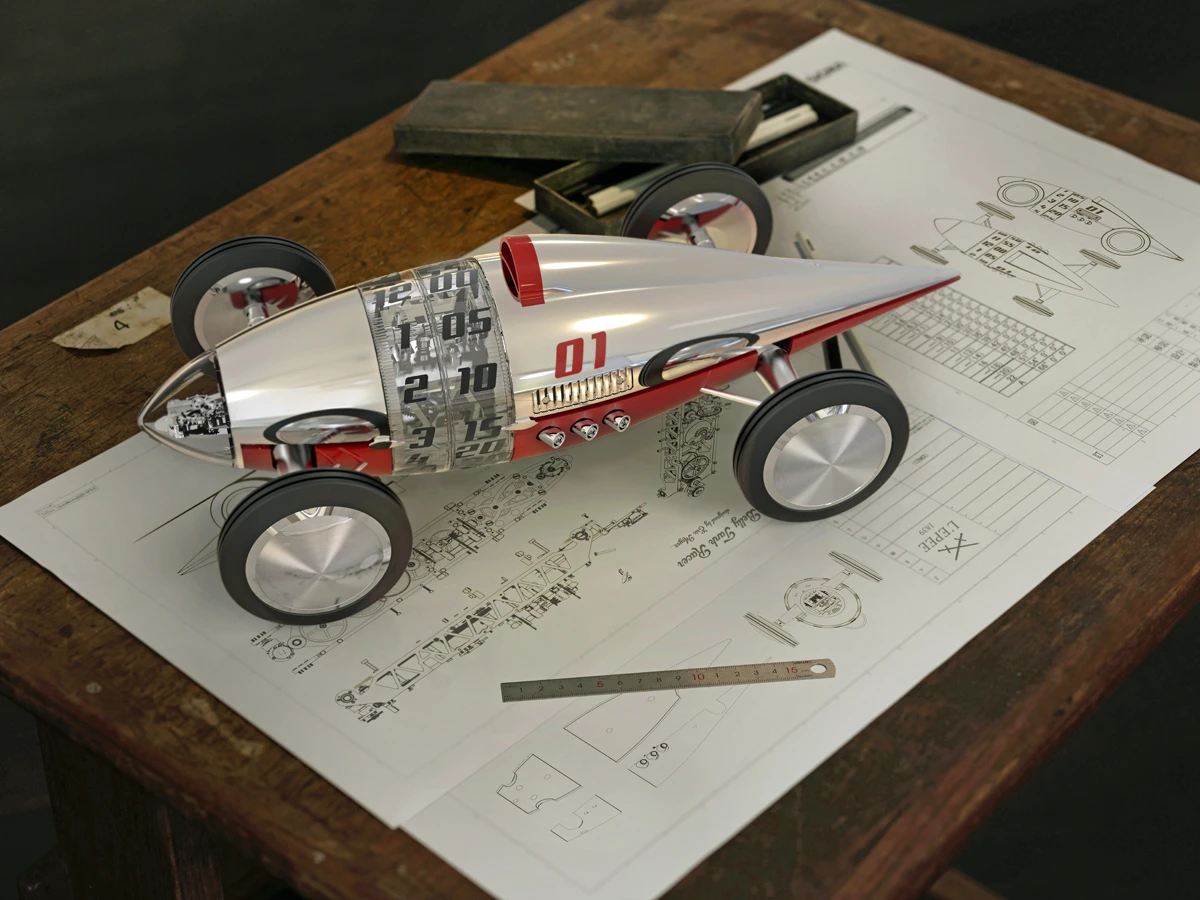
Once repurposed, those teardrop shells were fitted with engines, wheels and just enough space for a driver to squeeze in.
Comfort and safety were secondary to the cleanest possible shape and the highest possible speed.
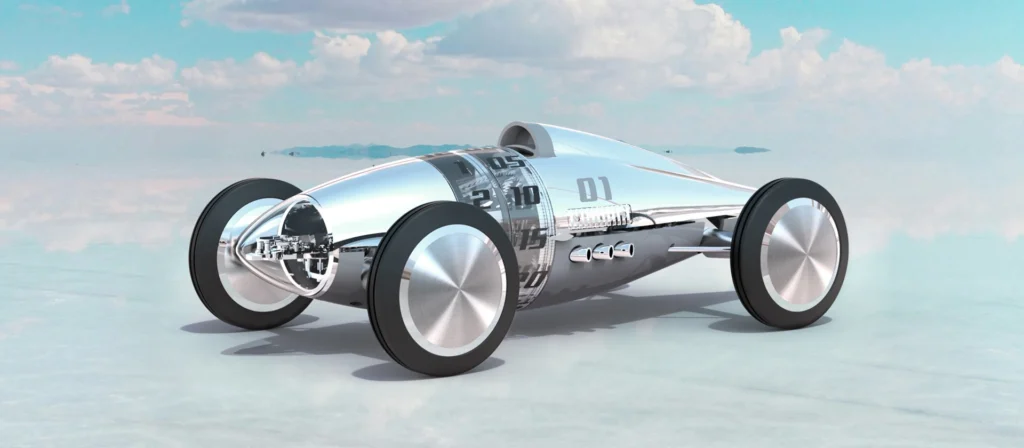
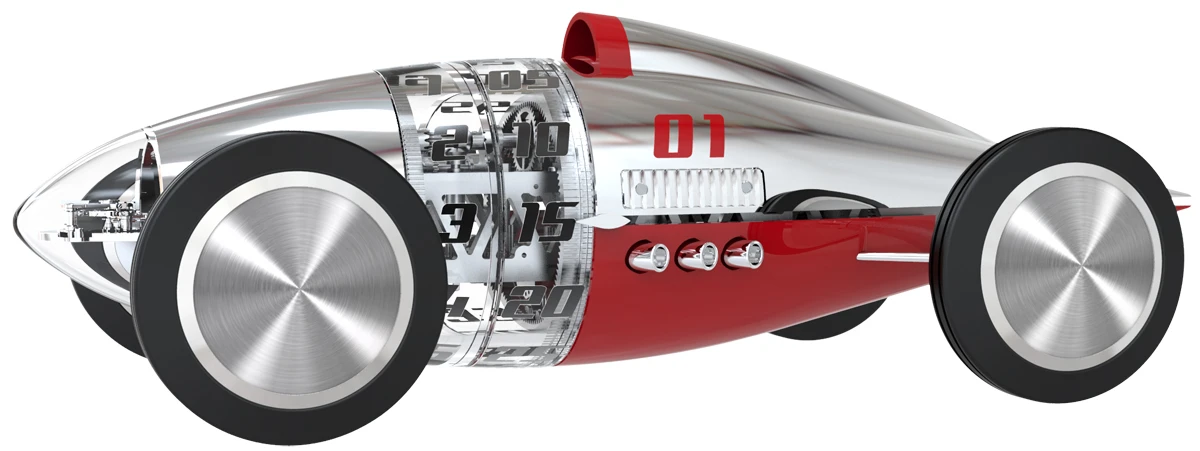
L’Epée’s interpretation keeps that long, tapered silhouette, with a bullet-like nose and narrow stance that make the object read instantly as a speed machine rather than a conventional clock.
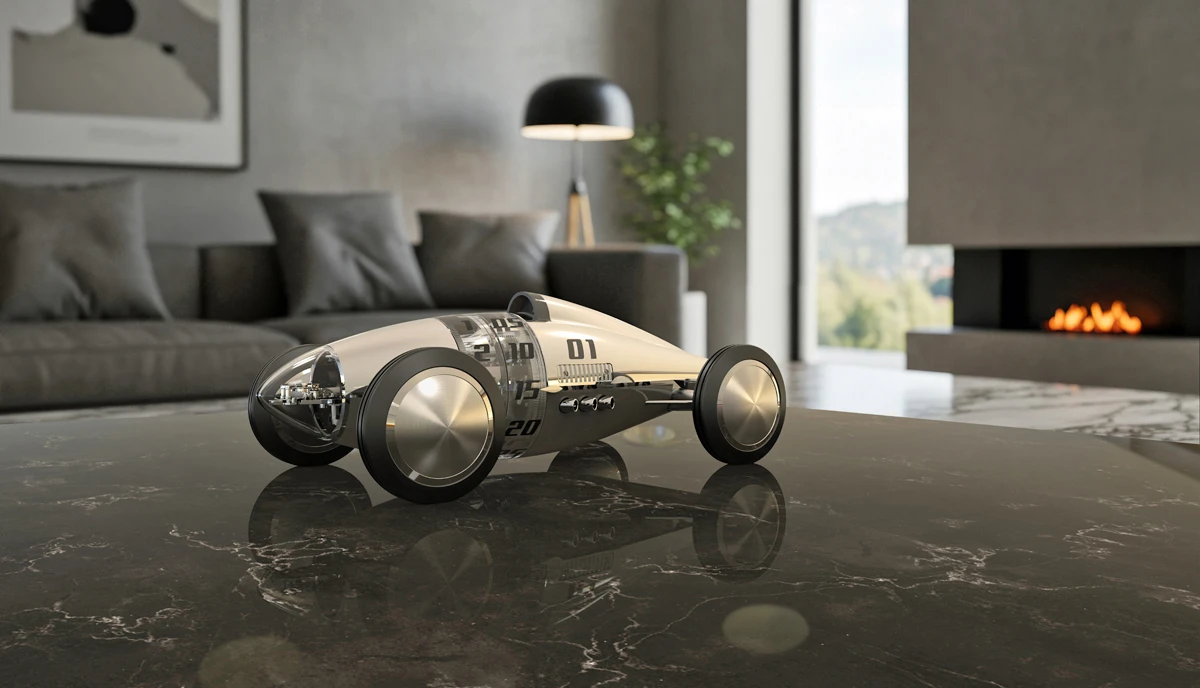
Eric Meyer’s miniature racer for L’Epée 1839
The Belly Tank Racer was conceived by Eric Meyer, a Swiss-based designer with experience across consumer goods and watchmaking.
His past client list includes MB&F, Swatch Group, Rolex and Nespresso, which helps explain the clock’s blend of product-design clarity and horological theatre.
This isn’t nostalgia rendered as decoration.
The model works because it understands the proportions of the machines that inspired it, then makes room for L’Epée’s mechanical language inside that compact body.
The acrylic front section exposes the balance wheel as it oscillates, with Incabloc shock protection visible above it.
That detail is more than visual interest, as it gives the clock a convincing mechanical centre of gravity in a design that could otherwise be read simply as a collectible model car.
Transparent time display and pull-back winding
Time is shown by two transparent rotating discs for the hours and minutes.
An index positioned near three stylised exhaust pipes marks the current time, while large Arabic numerals give the display a modern, graphic edge.
There’s no crown or separate key to manage.
To set the time, the owner turns the minute disc clockwise.
To wind it, the car is placed on a flat surface and pulled back, a playful interaction that suits the object perfectly without feeling like a gimmick.
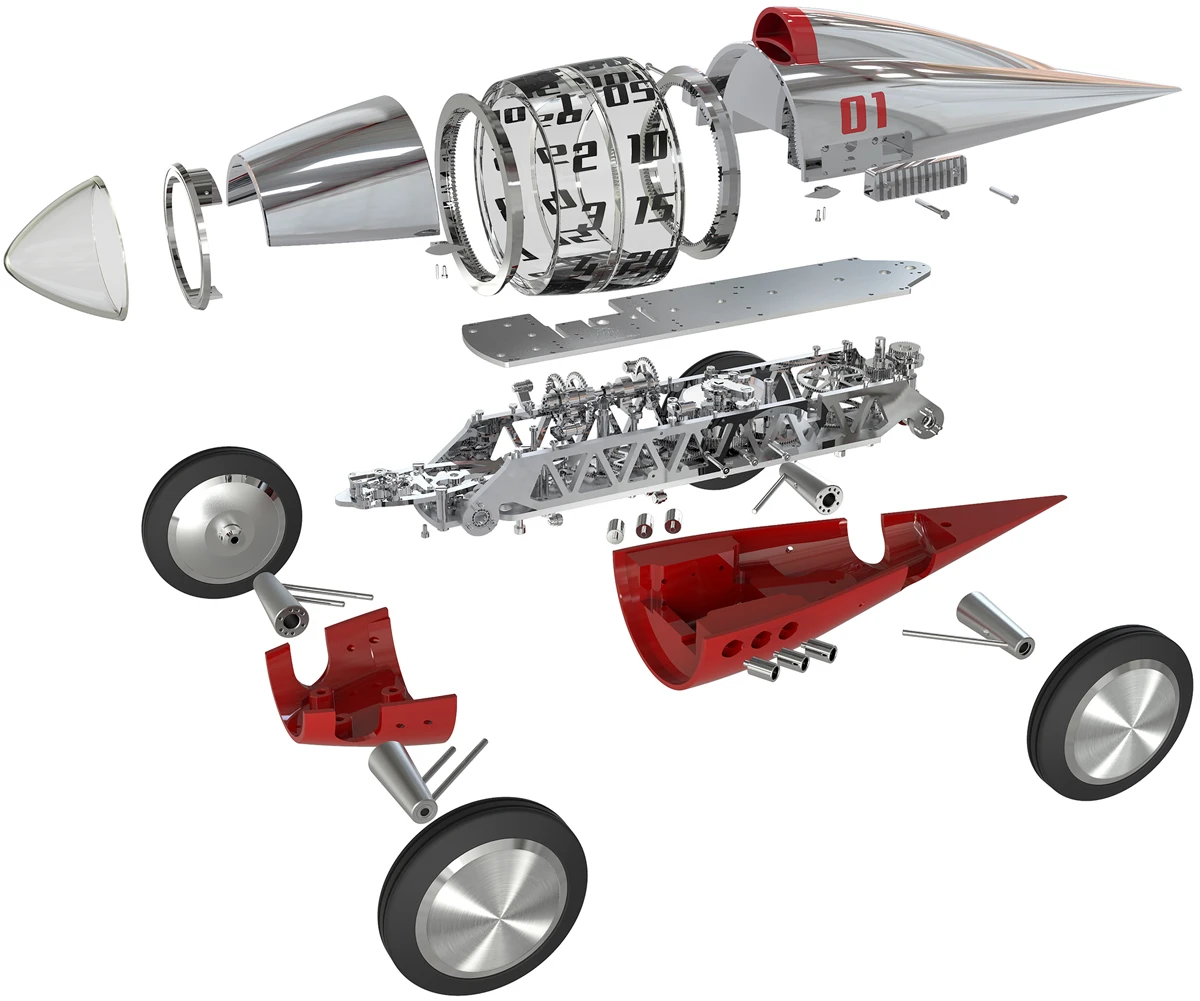
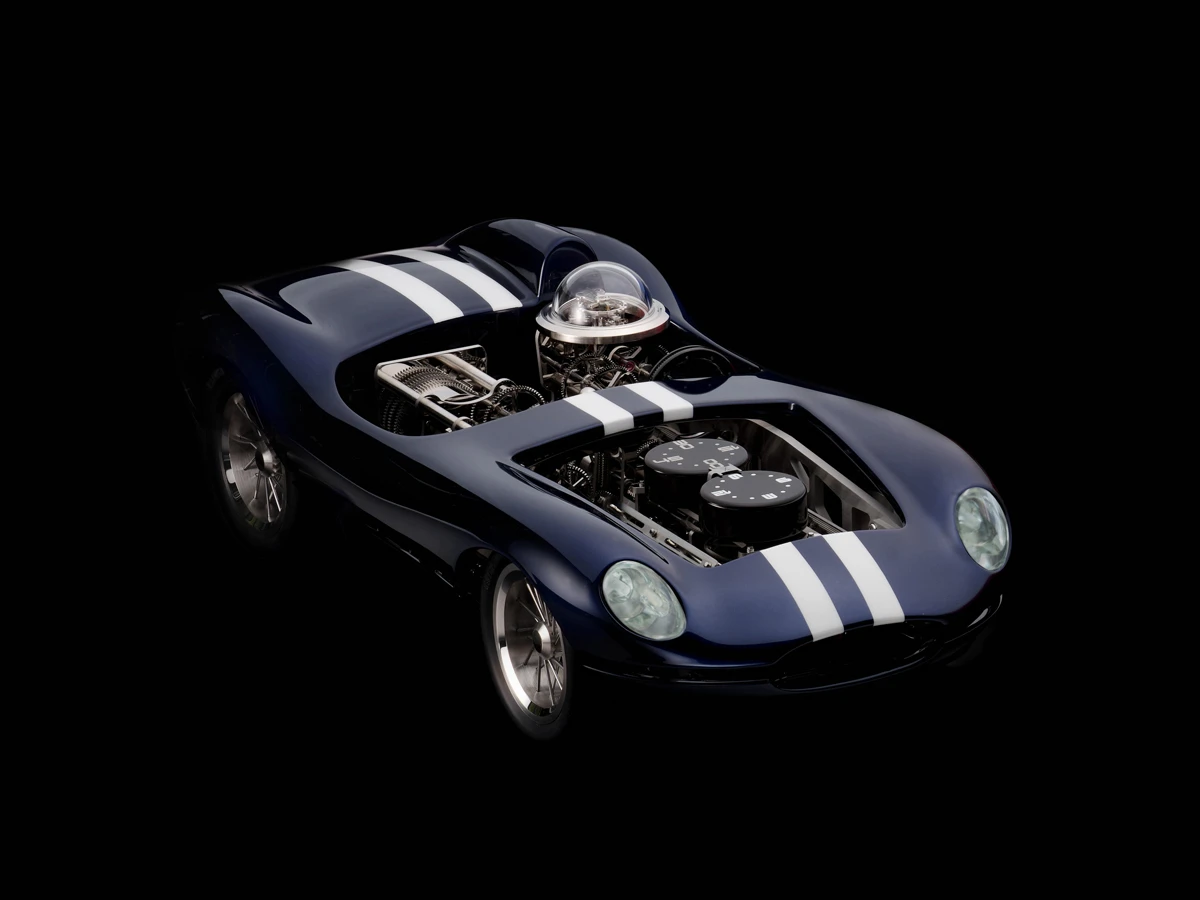
Through the display, the space-frame structure and gear-train wheels are visible, making the clock feel open and engineered rather than sealed away.
The four wheels use steel rims with soft rubber tyres, and their exaggerated narrowness reinforces the land-speed racer stance.
Aluminium bodywork and in-house finishing
The bodywork combines aluminium upper and lower sections with the acrylic nose that reveals the mechanics.
The lower body can be finished in blue, green, metallic grey, red or black.
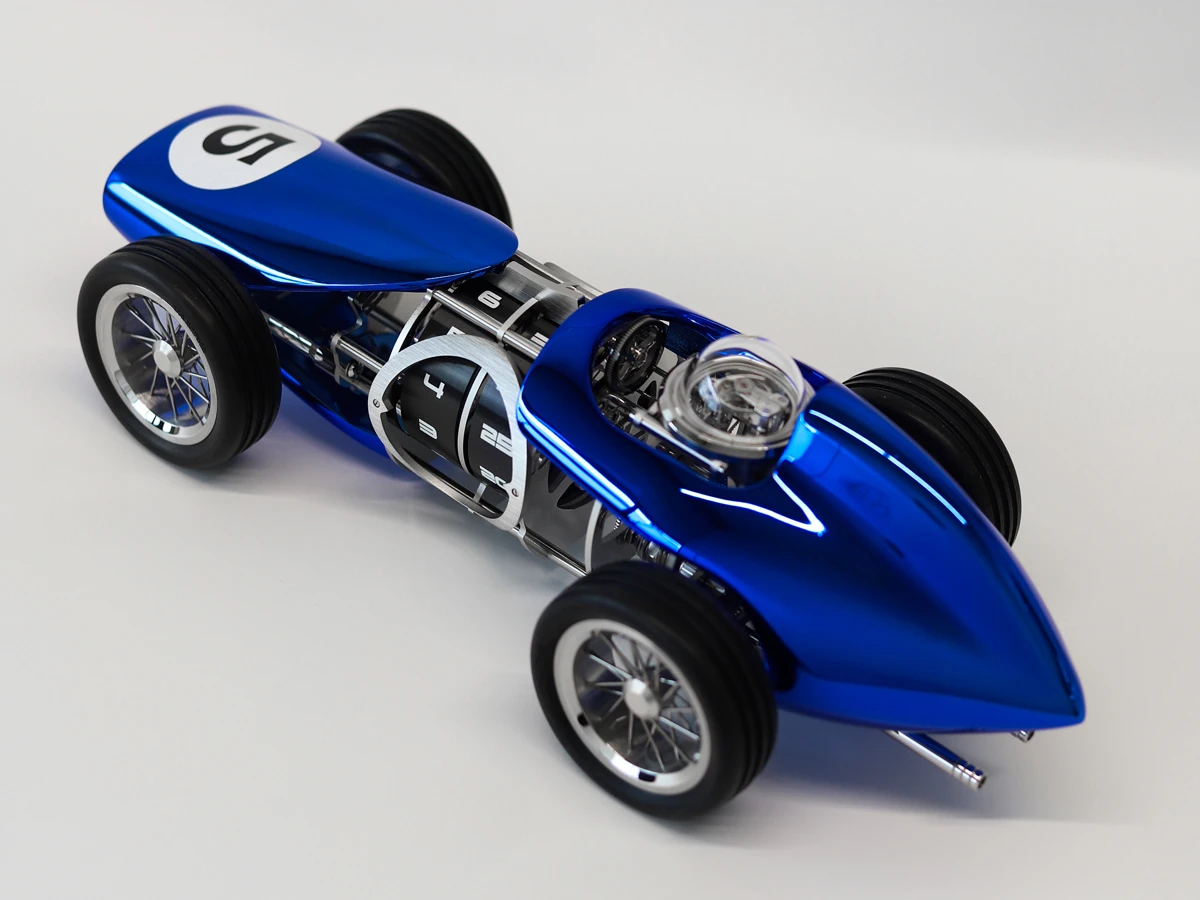
Each colour is applied in-house in a dedicated paint studio, giving the clock an automotive connection that goes beyond its shape.
Materials include palladium-plated brass, polished stainless steel and acrylic glass, a mix that suits L’Epée’s habit of treating table clocks with the seriousness normally reserved for high-end watchmaking.
The result is a piece that should appeal to collectors who enjoy mechanical objects with personality, especially those who see a link between traditional horology and old-school motorsport.
Details & Specifications
| Brand | L’Epée 1839 |
|---|---|
| Model | Belly Tank Racer |
| Type | Mechanical table clock |
| Designer | Eric Meyer |
| Inspiration | Post-war belly tank land-speed racers |
| Display | Transparent rotating hour and minute discs |
| Movement frequency | 2.5 Hz |
| Jewels | 11 |
| Power reserve | 8 days |
| Winding | Pull-back winding on a flat surface |
| Time setting | Minute disc turned clockwise |
| Materials | Aluminium, acrylic glass, palladium-plated brass and polished stainless steel |
| Body colours | Blue, green, metallic grey, red or black |
| Wheels | Steel rims with soft rubber tyres |
| Manufacture | Delémont, Switzerland |
The Belly Tank Racer is at its best when viewed as both clock and machine.
It tells time, certainly, but its real charm lies in the way L’Epée 1839 compresses a whole culture of speed, improvised engineering and mechanical display into one sharply judged tabletop object.