Jaeger-LeCoultre’s Polaris has always been the brand’s sportiest answer to the everyday steel watch, even if Le Sentier is better known for Reversos, complications and dressier watchmaking.
The new Polaris Date 40mm makes that proposition easier to understand.
By trimming the case from 42mm to 40mm and reducing thickness to 12.9mm, Jaeger-LeCoultre has given the Polaris Date a more broadly wearable profile without stripping away the collection’s defining details.

At a glance
- Jaeger-LeCoultre has introduced the Polaris Date in a smaller 40mm stainless steel case.
- The watch keeps the blue gradient lacquer dial, internal rotating bezel, 200m water resistance and automatic calibre 899 movement.
- Reference Q9128981 is priced at £9,250 on a blue canvas strap with a double-folding buckle.
A more wearable Polaris case
The shift from 42mm to 40mm may sound modest on paper, but it changes the character of a watch like the Polaris Date.
For many collectors, 42mm remains the point where a sports watch can start to feel more assertive than versatile, particularly as enthusiasm for smaller vintage-leaning proportions continues to shape buying habits.
At 40mm, the Polaris Date moves closer to the sweet spot for a modern daily watch.

The reduced thickness matters as much as the diameter.
The 40mm model measures 12.9mm thick, down from 13.92mm on the larger version, which should help the watch sit flatter and feel more balanced on the wrist.
It remains a proper sports watch rather than a slim dress piece, but the proportions now look better aligned with the collection’s everyday ambitions.

The blue lacquer dial keeps its Polaris identity
Jaeger-LeCoultre hasn’t used the smaller case as an excuse to simplify the dial.
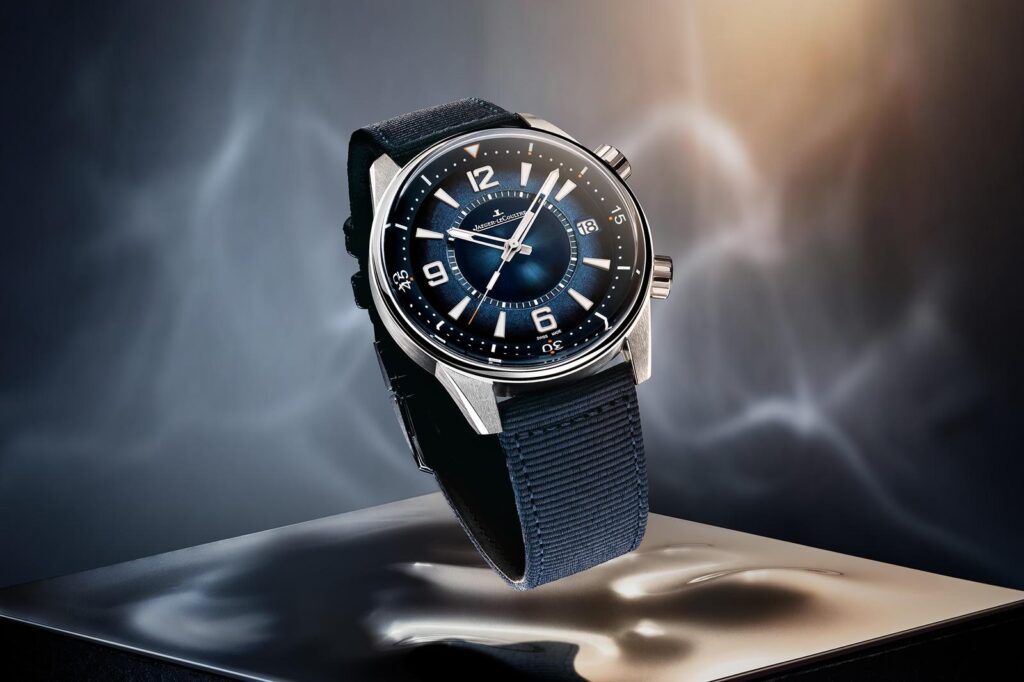
The Polaris Date 40mm keeps the collection’s layered look, built around a dark blue gradient lacquer finish with a central disc, minute scale and outer hour ring.
It’s a layout with real sporting clarity, helped by oversized Arabic numerals at 12, 6 and 9, with the date window placed at 3 o’clock.
The internal rotating bezel is still controlled by one of the two crowns, a signature Polaris feature that gives the watch a more distinctive silhouette than a conventional external dive bezel.
The lacquer work is also important here.
Even in one of Jaeger-LeCoultre’s sportier watches, the dial carries the kind of finishing detail that reminds you this is still a manufacture with serious decorative craft in its vocabulary.

Calibre 899 and a lower entry point
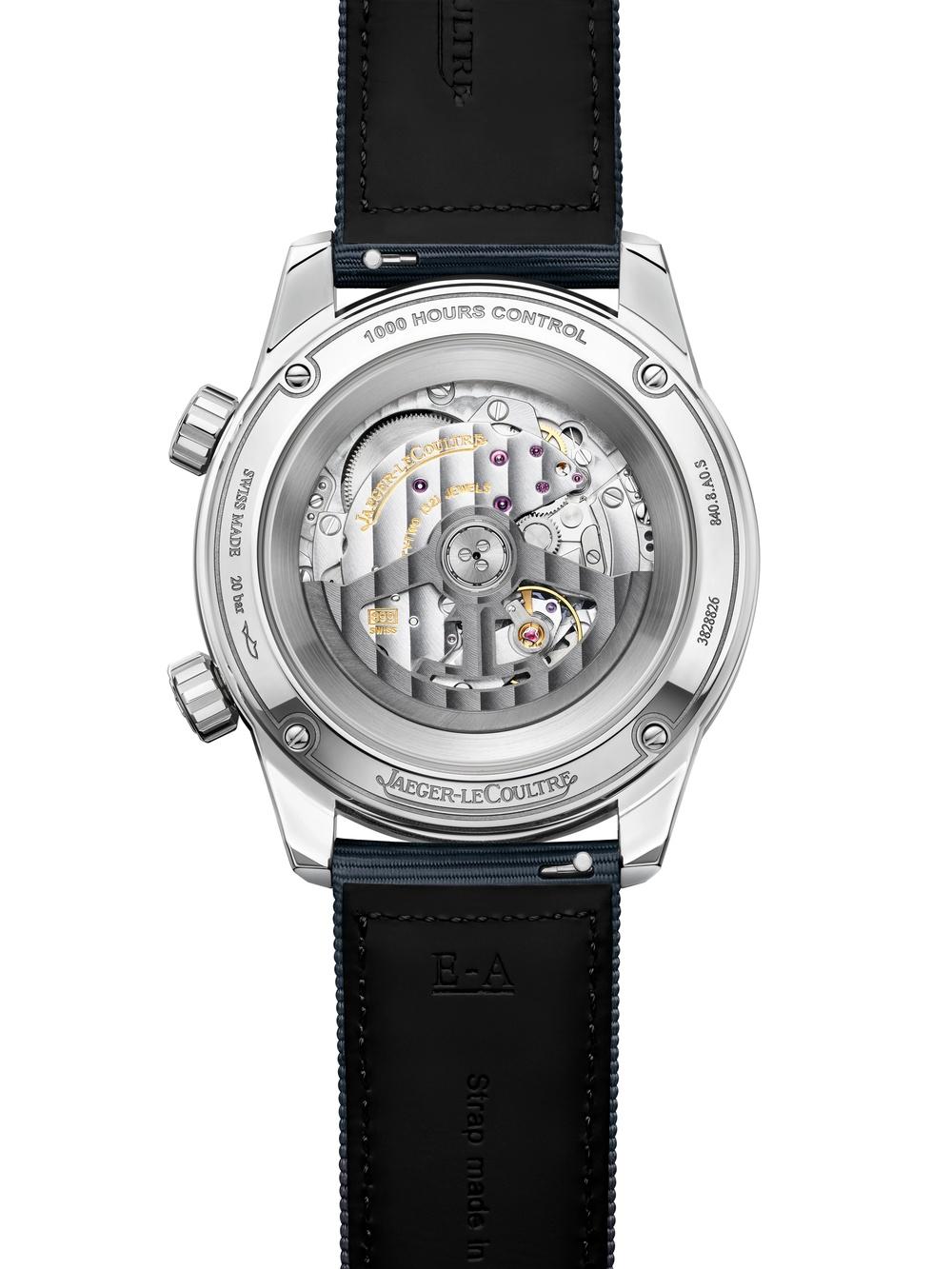
Inside is Jaeger-LeCoultre’s calibre 899, an automatic movement with a 70-hour power reserve and a 28,800 vph operating frequency.
The movement is visible through an exhibition caseback, with Côtes de Genève decoration and a partially skeletonised rotor finished in a darker anthracite tone.
The 40mm Polaris Date is priced at £9,250, which places it below the comparable 42mm fumé lacquer dial version listed at £11,200.
Some of that positioning may reflect the blue canvas strap rather than a rubber strap, but the difference still makes the new model feel especially relevant within the Polaris range.
For buyers who liked the idea of the Polaris but found the larger case a little too broad, this is the version that makes the collection easier to wear and easier to recommend.
Details & Specifications
| Brand | Jaeger-LeCoultre |
|---|---|
| Model | Polaris Date |
| Reference | Q9128981 |
| Case size | 40mm diameter x 12.9mm thickness |
| Case material | Stainless steel |
| Dial | Dark blue gradient lacquer |
| Movement | Jaeger-LeCoultre calibre 899 automatic |
| Frequency | 28,800 vph, 4 Hz |
| Power reserve | 70 hours |
| Functions | Hours, minutes, seconds, date, internal rotating bezel |
| Water resistance | 200m, 20 bar |
| Strap | Blue canvas strap with double-folding buckle |
| Price | £9,250 |
The Polaris Date 40mm doesn’t reinvent Jaeger-LeCoultre’s sport watch, and that’s exactly the point.
It refines the formula into a size that should appeal to more wrists, while preserving the dial architecture, movement credentials and water resistance that made the Polaris Date stand apart in the first place.