Palma is too often treated as a convenient landing point before the “real” Mallorca begins.
That’s a mistake, because the island’s capital has enough architecture, food and quiet urban rhythm to justify a full day of your attention.
The smart move is to base yourself somewhere calmer outside the centre, then come in with a plan that leaves room for wandering.
At a glance
- Palma works beautifully as a focused day trip, especially if you start early and avoid treating the cathedral as a quick photo stop.
- The city’s strongest moments are its layered old town, serious restaurants, Santa Catalina market and the rooftop view from Bellver Castle.
- Book lunch and dinner ahead, particularly in summer, and accept that the evening runs on Spanish hours.
Start beneath La Seu before going inside
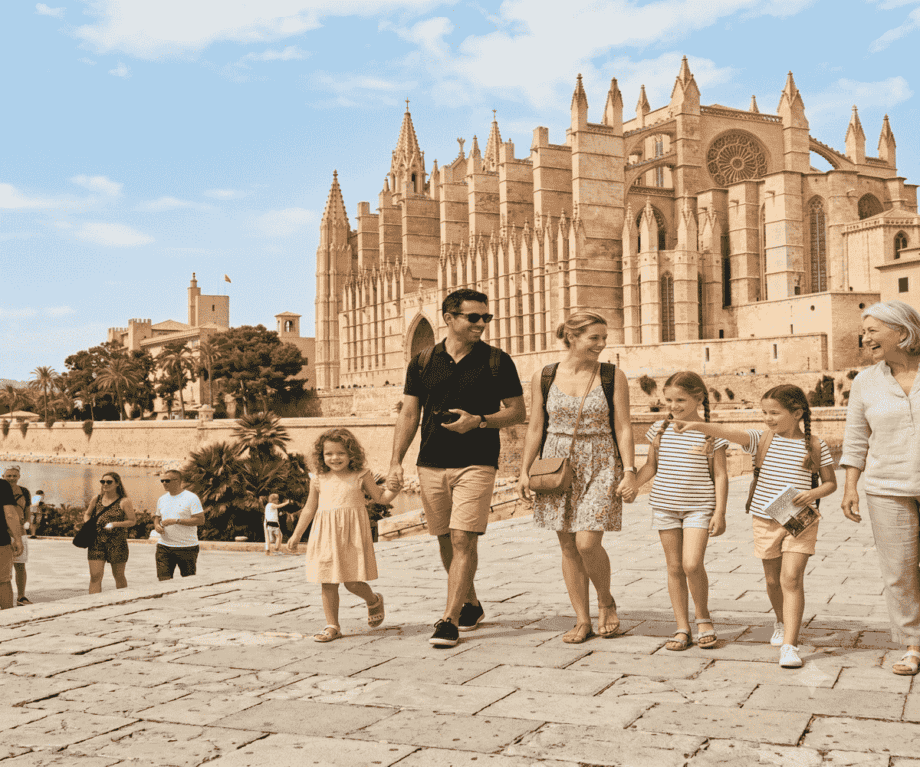
Begin at the seafront below Palma Cathedral, not on the esplanade where most visitors instinctively gather.
La Seu was built to dominate the bay, and its scale only really makes sense when you stand below the walls and look up from the water’s edge.
Once inside, give yourself a proper hour rather than drifting through with the crowd.
The detail to look for is Antoni Gaudí’s early 20th-century intervention, which included moving the choir stalls from the centre of the nave to the sides and suspending a huge wrought-iron crown of thorns above the altar.
It still divides opinion, which is part of what makes it worth seeing carefully.
The old town is better without a map
From the cathedral, let the old town take over.
This part of Palma was the city’s Jewish quarter until the 15th century, and its best architecture is often half-hidden behind heavy doors and shaded entrances.
Look for patios with stone staircases, orange trees and the sort of quiet courtyards that make the city feel more private than its visitor numbers suggest.
Some are visible from the street, while others reveal themselves only if a door happens to be open.
On Carrer Serra, the Arab baths sit inside the garden of a private house, and the sign is easy to miss.
They date to the 10th century and are an original hammam rather than a later reconstruction, which makes the small detour feel disproportionally rewarding.
After that, walk west to Passeig des Born.
Laid out in the 19th century over a former watercourse, it’s flanked by buildings that have shifted from palaces to banks, shops and cafés without losing their grandeur.
Walk it in both directions, then sit down for coffee and let the city move around you.
Santa Catalina is Palma’s lunch neighbourhood
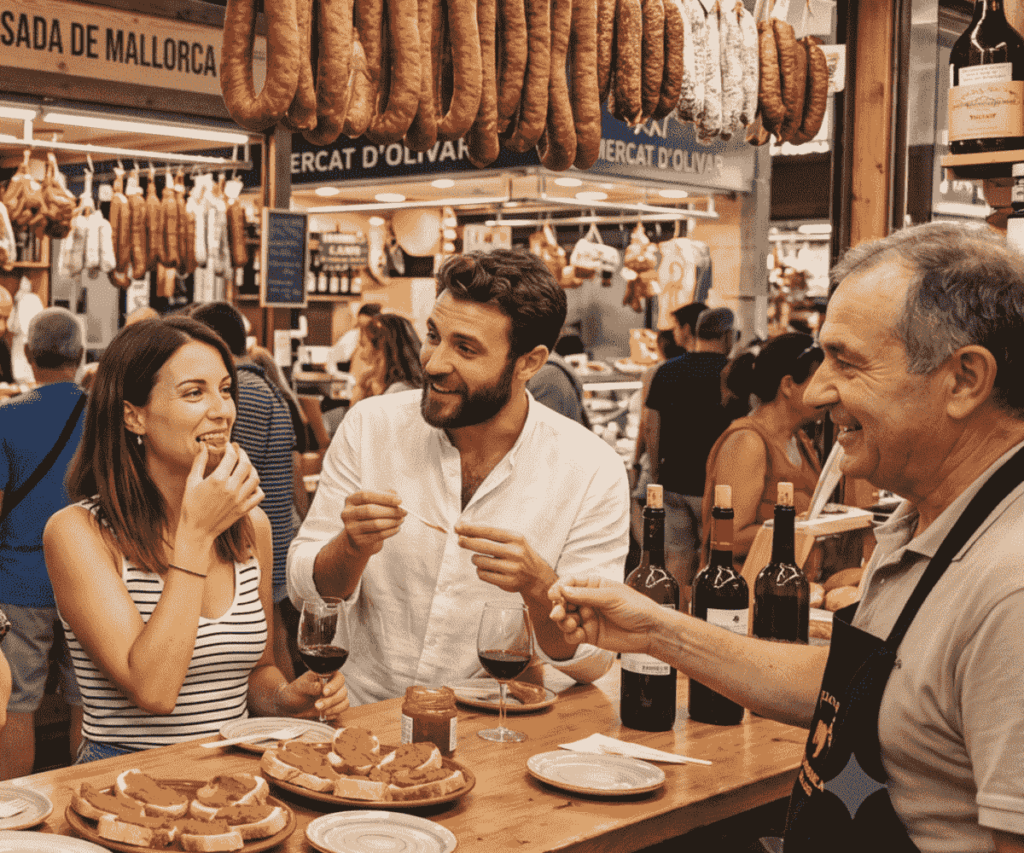
By late morning, move toward Santa Catalina, where the market gives Palma’s food culture its clearest everyday expression.
The stalls are loaded with fish from the overnight catch, local charcuterie and vegetables that look as if they were picked for that morning’s service.
Even if you’re not buying anything, it’s one of the most useful stops in the city for understanding what ends up on the plates later.
The neighbourhood around the market has become one of Palma’s most reliable places to eat, especially if you’d rather avoid dining where the tourist route naturally funnels everyone.
For a polished lunch, Marc Fosh remains a strong choice inside Convent de la Missió, an 18th-century convent turned hotel with a calm, restrained dining room.
The restaurant holds a Michelin star and serves modern Mediterranean cooking with the sort of consistency that matters more than theatrics.
DINS Santi Taura at El Llorenç takes a more personal route, shaping Mallorcan culinary history into a tasting-menu format.
It’s especially appealing if you want the island to taste like itself rather than like a generic Mediterranean postcard.
If the reservation books don’t cooperate, Sa Llotja near the old exchange building is the simpler answer.
Go for seafood, order what looks best from the boats, and don’t overcomplicate it.
Bellver, Portixol and dinner on Spanish time
Bellver Castle is the afternoon stop that many people skip because the old town has taken longer than expected.
Make the effort.
It’s roughly 15 minutes west of the centre by taxi, and the rooftop view across Palma Bay is among the city’s best payoffs.
The castle itself dates to the 14th century and was built on a circular plan, unusual then and still striking now.
The museum is compact enough not to drain the afternoon, while the rooftop is the real reason to go.
Back near the centre, the route from Passeig des Born toward the marina brings Palma’s shopping into focus.
The Mallorcan shoe industry deserves more attention than it gets, with Camper having started here and other island manufacturers still producing pieces that rarely appear elsewhere.
Carrer Jaume II is a useful area to browse if you’re interested in local footwear rather than another international storefront.
Late afternoon belongs by the water.
Walk the marina slowly, then continue east along the seafront toward Portixol, a quieter residential neighbourhood about 20 minutes from the old town on foot.
It’s popular with the international crowd that has made Palma a more permanent base, and it’s good for an unstructured half hour before dinner.
For the evening, don’t fight the clock.
La Lonja fills properly from around nine, and the small bars along Carrer Apuntadors are at their best when they’re loud, busy and not trying too hard.
If you want a more formal dinner, Zaranda at Hotel Es Princep brings a Michelin-starred approach to creative, locally sourced cooking, with a summer terrace that adds to the appeal.
Adrián Quetglas on Passeig Mallorca offers inventive tasting menus in a sleek room and tends to attract diners who care enough to have opinions.
Both are serious bookings, and neither is the place to arrive at 7pm hoping to beat a queue that hasn’t formed.
In July and August, the better reservations in Palma often require more than a casual online search, so plan ahead if dinner matters to the day.
Palma doesn’t need to be stretched into a week to make its case, but it does need to be given the day properly.
Start at the water, walk slowly, eat well, climb to Bellver before the light drops and leave the city late enough to understand why a stopover never quite does it justice.