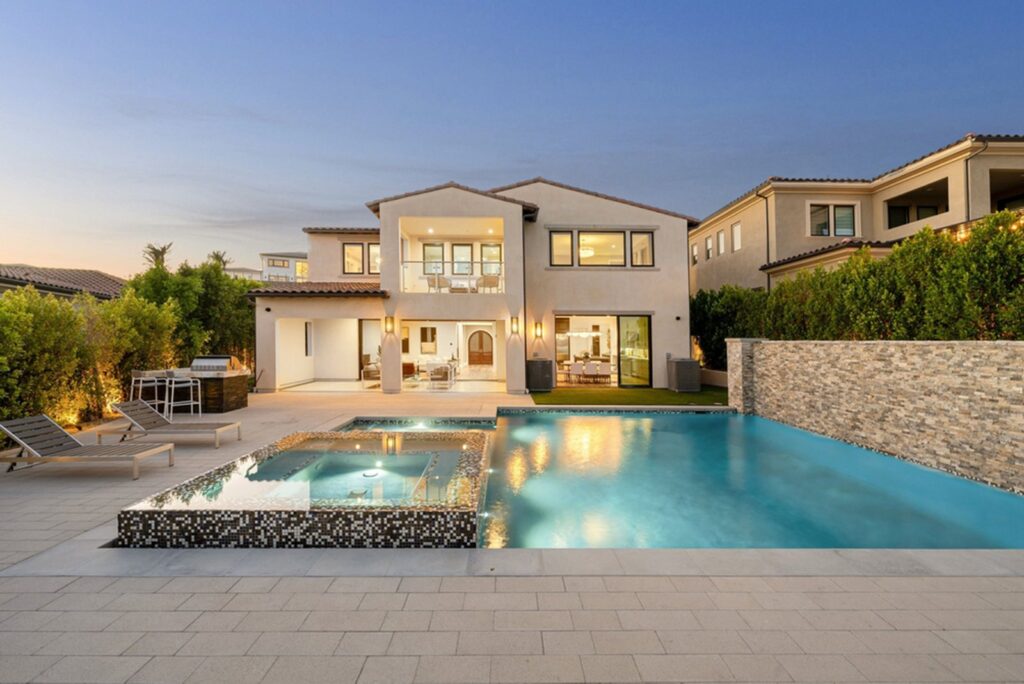
Selling a high-value home is a different exercise from putting a standard property on the market.
The buyer pool is smaller, expectations are higher and first impressions carry real weight, especially when recent US market data suggests homes are taking around 49 days to sell.
For owners preparing to list, the work starts well before the photography appointment.
At a glance
- A stronger sale price starts with realistic valuation, careful timing and a clear pricing strategy.
- Staging, photography, video and detailed marketing should highlight the home’s most valuable features.
- Luxury properties can take longer to sell, so owners should track buyer response before making pricing changes.
Build the price around evidence, not aspiration
The first decision is also the most consequential.
Set the price too high and the home risks sitting on the market, but set it too low and there may be little room to recover the value later.
Luxury homes can be difficult to compare directly because architecture, lot size, views, acreage, finishes and private amenities vary so widely.
Rather than relying on one figure, sellers should think in terms of a value range shaped by recent sales, current listings, price per square foot, condition, location and the features that make the property distinct.
Search behaviour also matters.
A home listed at $1,999,000 can appear in searches capped at $2 million, while a property listed at $2,050,000 may miss that buyer entirely.
That doesn’t mean every listing should sit just below a round number, but price brackets on major property platforms should be part of the conversation.
A specialist agent can help interpret those thresholds without reducing the home to a simple online filter exercise.
Look for someone who regularly sells properties in the same price tier, and ask direct questions about recent sales, average days on market, and the gap between original asking prices and final sale prices.
The right adviser should also know how to evaluate features that standard comparisons often fail to capture, including guest houses, pools, waterfront access, private gates, elevators, substantial acreage and custom architecture.
Stage the rooms buyers remember
Luxury buyers are not just purchasing square footage.
They’re assessing how the home feels, how it entertains and whether it suits the life they imagine living there.
That makes staging a practical tool rather than a decorative afterthought.
National Association of Realtors figures show living rooms are viewed as the most important spaces to stage, followed by primary bedrooms and kitchens, at 37%, 34% and 23% respectively.
Those numbers offer a useful guide for sellers deciding where to invest time and budget.
There is also a commercial reason to take presentation seriously.
Around 29% of agents have seen staged homes receive offers 1% to 10% higher, while nearly half have seen staging shorten time on the market.
The best staging doesn’t make a home feel dressed for a showroom.
It clarifies scale, improves flow and helps large spaces such as formal dining rooms, home theatres, great rooms and outdoor entertaining areas feel considered rather than crowded.
Furniture should suit the architecture and volume of the property.
Oversized rooms need enough structure to feel warm, while smaller rooms need restraint so buyers can move through them comfortably.
Make standout features easy to understand
High-value homes often lose impact when their strongest details are described too vaguely.
Terms such as “luxury kitchen” or “resort-style outdoor area” rarely tell a serious buyer enough.
Specifics are more persuasive.
A kitchen may deserve attention because it has marble countertops, premium appliances, custom cabinetry, a large island or a separate prep kitchen.
An outdoor space may stand out because of landscaped grounds, panoramic views, waterfront access, a pool, covered dining areas or private gates.
The same principle applies to wine cellars, elevators, guest accommodation, professional-grade appliances and custom built-ins.
Buyers in this market are often comparing very different properties, so details help them understand where the value sits.
Location should be treated with the same care.
Access to private schools, golf clubs, restaurants, business districts and transport links can all influence desirability, particularly for buyers relocating from another city or state.
Prepare the marketing before launch
A luxury listing should not go live while key materials are still being assembled.
Photography, video, floor plans and the property description should be ready from day one, because the first wave of attention is often the most important.
Listing photos are considered highly important by about 73% of buyers’ agents, and strong visual presentation has become a basic expectation at the upper end of the market.
Depending on the property, aerial photography, twilight images, a polished property film and detailed floor plans can all help communicate scale and setting.
Marketing should also be built around the most likely buyer.
For some homes, that means broad exposure through MLS, luxury property websites and targeted online advertising.
For others, it may mean agent networks, private introductions and more discreet outreach.
Privacy is part of the strategy.
Some owners prefer limited exposure, while others want the widest possible audience, and the right approach will depend on the home’s value, location and seller preferences.
Once the property is live, set a clear review point.
Track online views, inquiries, showings, repeat visits and offers rather than reacting to a quiet week in isolation.
Luxury homes often take longer to sell because the right buyer pool is narrower.
Still, if comparable homes are generating stronger interest while yours is not, it may be time to reassess the price, photography, staging or marketing strategy.
If a price change is needed, make one deliberate adjustment guided by current competition and recent sales rather than a series of hesitant reductions.
Securing the best price is rarely about one dramatic move.
It comes from accurate positioning, confident presentation and marketing that reaches qualified buyers while giving them a clear reason to act.