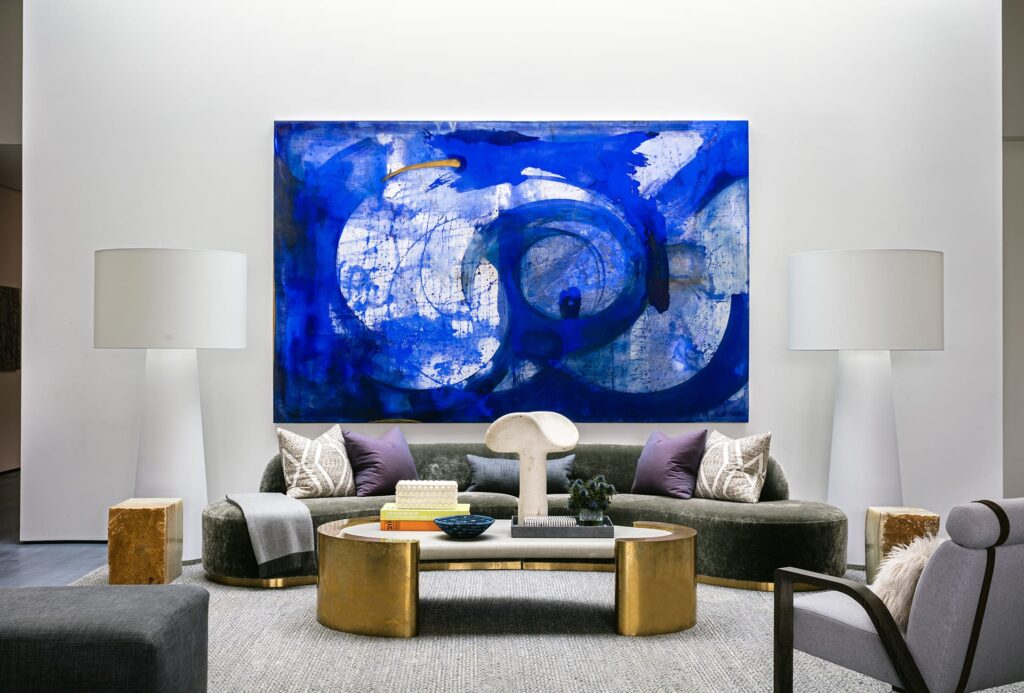
Art can change the character of a modern home faster than almost any piece of furniture, but the best choices are rarely made by following trends alone.
The right work should feel connected to the room, the architecture and the people who live there, while still having enough presence to stand on its own.
Begin with the feeling you want the room to have
Before thinking about size or framing, decide what you want the artwork to do emotionally.

A bedroom may call for quiet tones and softer compositions, while a living room can often carry a larger, more expressive piece.
Home offices tend to benefit from clarity and focus, so photography, restrained abstracts or minimalist prints can work particularly well.
Dining areas can take warmth, texture and stronger colour because they are social spaces rather than places of retreat.

It helps to ask a few simple questions before buying.
- Do you prefer abstract, figurative, landscape or photographic work?
- Are you drawn to calm neutrals, strong colour or monochrome contrast?
- Should the room feel restful, dramatic, playful or composed?
- Is the piece something you would still want to look at in five years?
Scale decides whether a piece feels intentional
One common mistake is choosing art that is too small for the wall or furniture around it.
In modern interiors, a single confident piece often works better than several undersized works competing for attention.

As a practical guide, artwork hung above a sofa, console or bed usually feels most balanced when it spans around two-thirds of the furniture width.
Large empty walls can take oversized canvases, framed photographic works or a carefully arranged gallery wall.
Smaller walls, narrow hallways and compact corners are better suited to medium pieces, paired works or a restrained grid.

Measure before you buy, and use painter’s tape on the wall to test the proportions before committing.
Colour should connect with the interior without copying it
Artwork does not need to match a room perfectly, and in many cases it is more interesting when it does not.
The aim is connection rather than duplication.
A painting might pick up a tone from a rug, a chair or a cushion, while also introducing a contrasting accent that gives the room energy.
For minimalist interiors, monochrome works, muted abstracts and black-and-white photography remain especially versatile.
They bring structure and atmosphere without making the room feel visually crowded.
If the furniture and walls are neutral, one bolder artwork can become the focal point that prevents the space from feeling flat.
Framing changes the way art lives in a room
A strong frame can make a modest print feel considered, while the wrong frame can make even a good piece feel disconnected from its surroundings.
Thin black frames suit crisp contemporary interiors, natural wood adds warmth, white frames keep the look light and floating frames often work well with modern abstracts.
Bespoke framing is worth considering when the artwork has unusual proportions, sentimental value or a prominent position in the home.
It also allows for practical upgrades such as anti-reflective glass, UV protection, floating mounts and deeper profiles.
These details matter because art is not only displayed, it is preserved.
Mix styles with discipline rather than caution
A modern home does not have to contain only contemporary art.
Traditional paintings, vintage photography, typography, prints and newer abstract works can sit together beautifully when the composition is controlled.
The key is to create a visual link, whether through colour, subject, frame finish or spacing.
Gallery walls are especially effective in hallways, staircases and informal living areas, where a more personal arrangement can add character.
For main rooms, fewer pieces with more breathing space often feels more elegant.
Quality matters more than quantity, and building a collection slowly usually produces a more personal result than filling every wall at once.
Choose art that you respond to, size it properly, frame it thoughtfully and give it enough space to be seen.
When those elements come together, artwork becomes part of the architecture of daily life rather than an afterthought.