A private yacht charter on Turkey’s Turquoise Coast is often sold through images of blue water and sunlit decks, but the real appeal is quieter and far more specific.
The coastline between Bodrum, Gocek and Fethiye is full of coves that have no road access, no beach club and no easy land route, which means the sea becomes the only proper way in.
Gokova begins where Bodrum gets quiet
Bodrum has the summer energy, the restaurants and the historic backdrop, with the Castle of St. Peter still watching over the harbour and the ancient theatre above town.

For charter guests, though, the more interesting chapter starts after departure, as the peninsula gives way to the sheltered waters of the Gokova Gulf.
Here the pine forest runs down to the waterline, anchorages sit well away from the main roads and even in high season some bays may hold only a handful of yachts overnight.
This is where a good captain matters, because the best cove is not always the best cove at every hour of the day.

Why the Turkish gulet still makes sense
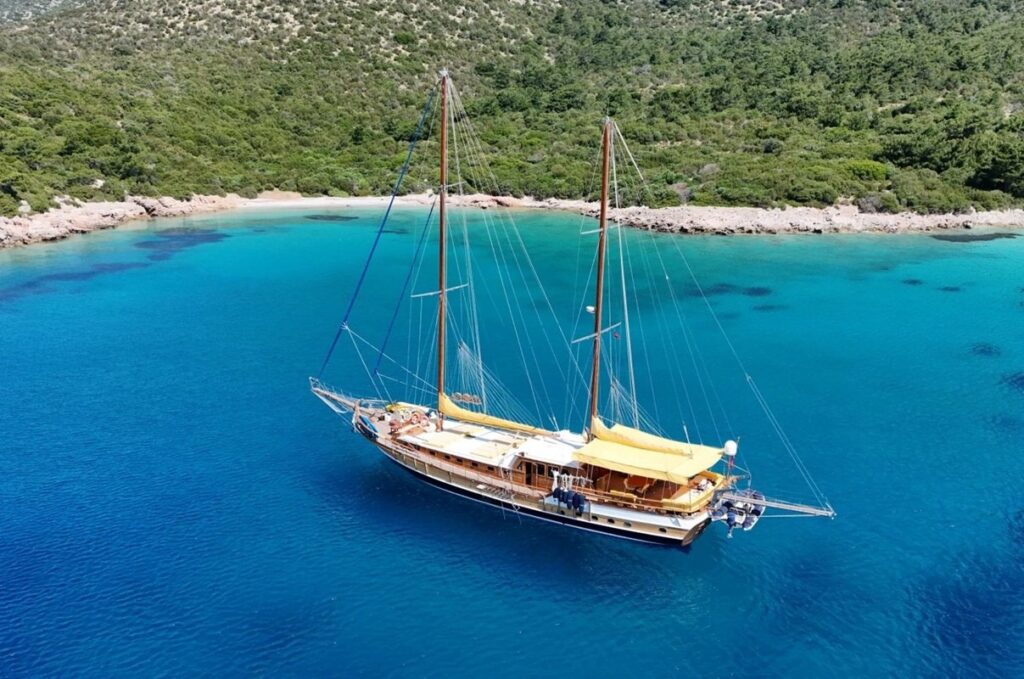
The traditional gulet remains one of the defining vessels of this coast, with its wooden construction, generous deck space and easygoing pace.
Modern gulets are much more comfortable than their working ancestors, yet they keep the same emphasis on open-air living, long meals and simple movement between sheltered anchorages.
A 30-metre gulet can typically sleep 10 to 12 guests in private cabins with bathrooms, while still leaving room for a dining table, shaded lounging areas and a stern platform for swimming.

They are not built for rushing across open water, and travellers who want speed, stabilisers and longer passages may prefer a contemporary motor yacht.
For families or groups who want the week to unfold slowly, the gulet’s deliberate rhythm is part of the point.
Gocek turns short distances into a major advantage
Gocek has a different character from Bodrum, with a quieter marina town atmosphere and quick access from Dalaman airport.

Its strength is geography, as twelve islands sit offshore in a loose protective arc, creating calm water and short hops between anchorages.
That makes the area especially appealing for families with younger children, first-time charter guests and anyone who wants privacy without committing to long days at sea.
One day might mean swimming beside a rocky islet with no one else nearby, while the next begins in a sandy cove where turtles surface close to the hull.
The onboard rhythm matters more than the itinerary
Days on board tend to settle into a pattern that sounds simple until you are inside it.
Mornings might begin with a swim before breakfast, followed by Turkish cheese, olives, tomatoes, honey, bread and eggs served slowly enough to reset the pace of the day.
By mid-morning the captain moves the yacht to another anchorage, and the passage itself becomes part of the experience, with changing coastline, occasional dolphins and Lycian tombs cut into cliff faces above the water.
Lunch is shaped by what was fresh at the market, often grilled fish, meze, salads with olive oil and seasonal fruit.
Afternoons are intentionally loose, with kayaking, paddleboarding, reading, napping and the occasional walk ashore replacing any fixed programme.
Evenings can be spent in a silent bay under the stars or tied up in a harbour town for a walk after dinner.
This kind of charter suits groups who actually want to spend time together, from extended families to old friends marking a birthday or leadership teams looking for a private setting away from meeting rooms.
The sailing season runs from late April to early November, though May, June, September and October are often the sweet spot for gentler temperatures, fewer yachts and softer evening light.
Dalaman airport serves Gocek, Fethiye and Marmaris, while Milas-Bodrum airport is the natural gateway for the Bodrum Peninsula, with marina transfers usually taking under an hour.
The important distinction is that this is not a cruise with crowds, schedules and entertainment decks.
It is a private week on the water, shaped by the people on board, the judgement of the crew and a coast that reveals its best places only when approached slowly.