Independent watchmaking has rarely felt more alive, and Rexhep Rexhepi sits near the centre of that shift.
His watches now appear in the same collecting conversations as work by Philippe Dufour, F.P. Journe and Roger W. Smith, yet his path belongs to a younger generation with a different visual language and a different sense of urgency.
What makes Rexhepi compelling isn’t only the beauty of the watches, but the speed with which he turned a difficult beginning into one of modern horology’s most closely watched independent houses.
At a glance
- Rexhep Rexhepi has emerged as one of the defining figures of contemporary independent watchmaking through Akrivia and his own-name pieces.
- His route runs from a teenage apprenticeship at Patek Philippe to BNB Concept, F.P. Journe and the launch of Akrivia in his mid-20s.
- The 2018 Chronomètre Contemporain I brought major recognition, winning the men’s watch category at the Grand Prix d’Horlogerie de Genève.
From Kosovo to a Patek Philippe bench
Rexhep Rexhepi was born in Kosovo in 1987 and moved to Switzerland in 1998 to escape the Kosovo War.
Switzerland was not entirely unfamiliar to the family, as his father had regularly travelled there for work, but the move still left Rexhepi in a new country where he did not speak French.
Watchmaking became more than a profession in waiting.
It was a route into Geneva, a way to learn the codes of a city whose identity is inseparable from the bench, the atelier and the quiet discipline of mechanical craft.
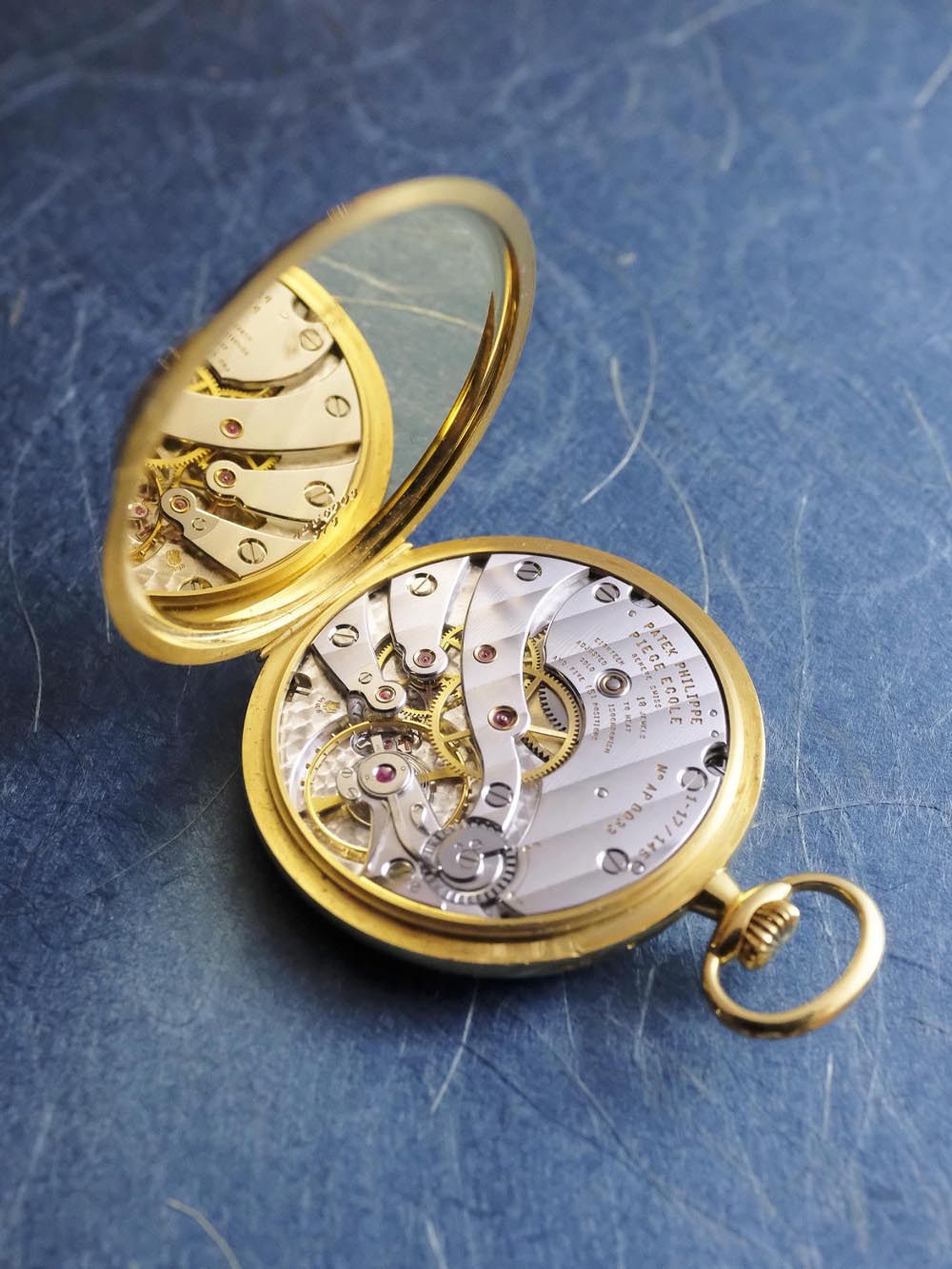
At 14, he took the entrance exam for an apprenticeship at Patek Philippe.
The choice mattered because Patek’s apprenticeship structure offered exposure across different workshops, from movement development to finishing, rather than limiting a young watchmaker to one narrow task.

That broad technical foundation would become one of the defining traits of Rexhepi’s later work.
His watches are often discussed for their presence and proportion, but underneath that exterior appeal is a maker shaped by early immersion in the complete language of high watchmaking.
The years before Akrivia
After completing his apprenticeship, Rexhepi did not remain at Patek Philippe.

He joined BNB Concept, the respected movement developer founded by Mathias Buttet, Michel Navas and Enrico Barbasini.
There, he worked on complications for a range of brands, including chronographs and flying tourbillons.
Within a year, he was leading a team of 15 watchmakers, an unusually fast rise that placed him close to both the technical and managerial pressures of serious movement work.
BNB Concept also exposed him to independent watchmakers as clients, and that experience appears to have stayed with him.
After three years there, he moved to F.P. Journe, one of the central figures in the modern independent movement.
Journe offered a different kind of education.

If Patek Philippe gave Rexhepi discipline and BNB Concept gave him complexity, F.P. Journe showed him what it meant to build a watchmaking house around a personal point of view.
The two-year period at Journe gave him insight into brand identity, authorship and the weight of putting a watchmaker’s name on a dial.
Akrivia and the difficult first act
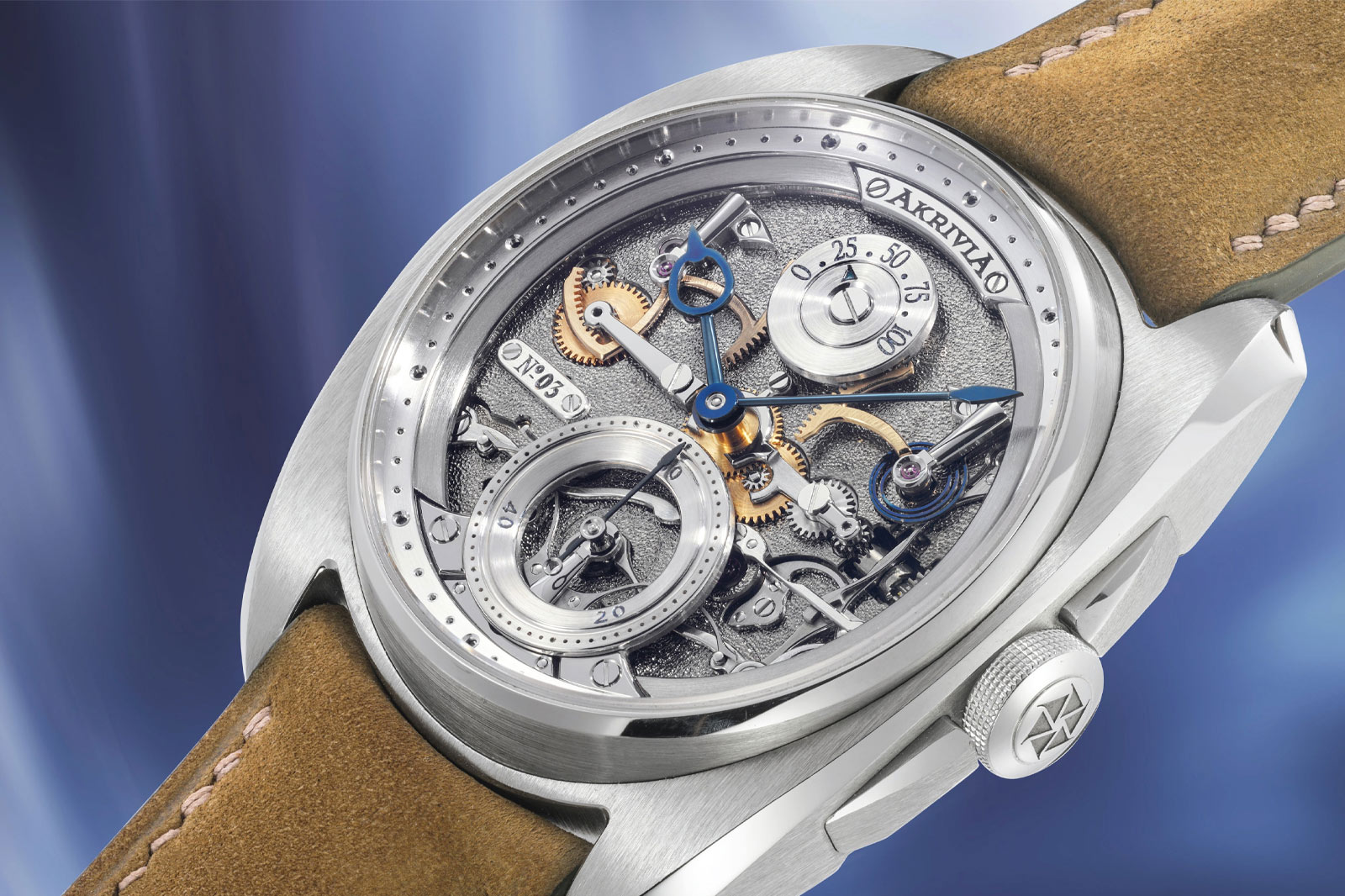
Rexhepi founded Akrivia in 2012 and presented the AK-01 at Baselworld 2013, when he was just 25.
It was a bold debut, but it was not an immediate commercial success.
The AK-01 was a steel watch priced at CHF 160,000 and used a third-party base movement, a combination that was difficult for collectors to accept from an unproven young watchmaker at the time.
It reportedly took two and a half years before a collector committed to the brand.
That slow beginning is now an important part of the Rexhepi story, because it underlines how far the perception of his early work has moved.
The same AK-01 that initially struggled to sell has since been reassessed, with examples noted at auction in the $610,000 to $1.23 million range.
Akrivia’s breakthrough began to form around the AK-06.
Smaller and more symmetrical, with an open dial and elaborate decoration, it gave collectors a clearer view of the aesthetic and technical vocabulary Rexhepi was building.
The watch also caught the attention of Michael Tay of The Hour Glass, a retailer with deep standing in independent watchmaking and a history that includes being the first retailer to sell Philippe Dufour watches.
The Chronomètre Contemporain changed the frame
Tay encouraged Rexhepi to do something he had not yet embraced, which was to put his own name on the dial of a classically round watch.
For Rexhepi, that was not a simple branding decision.
He was still a young watchmaker trying to earn credibility among traditional Swiss houses, and he had reportedly questioned whether collectors would respond to an Albanian name on a dial.
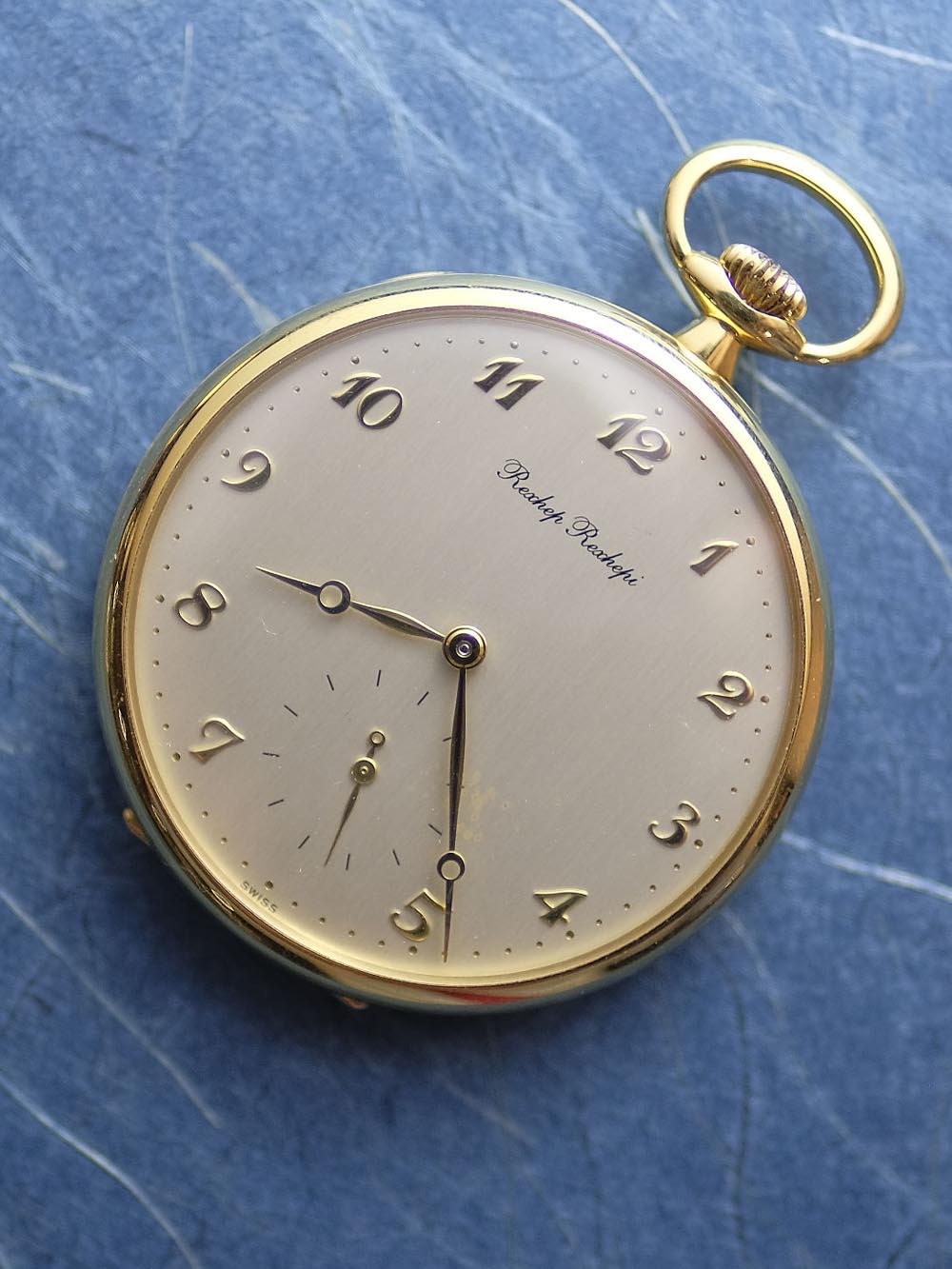
The Chronomètre Contemporain I arrived in 2018 under the Rexhep Rexhepi name and changed the scale of his reputation almost immediately.
That same year, it won the men’s watch category at the Grand Prix d’Horlogerie de Genève.
The watch worked because it did not feel like a forced pivot into classicism.
It distilled the different chapters of Rexhepi’s formation into something coherent, drawing on traditional Genevan finishing, independent-minded identity and the restraint of a watchmaker who had learned when not to overstate an idea.
Since then, Rexhepi has continued to work across both Akrivia’s more contemporary and complicated pieces and the more classical watches bearing his own name.
He has also collaborated with Louis Vuitton on the LVRR-01 Chronographe à Sonnerie, a project connected to La Fabrique du Temps, where BNB Concept founders Michel Navas and Enrico Barbasini are now associated.
That arc gives his career a satisfying symmetry, but it also points to why collectors pay attention.
Rexhepi’s world is not built on nostalgia alone, even when the watches draw from classical forms.
His rise has become a reference for younger watchmakers because it shows that independence can be built through technical fluency, personal conviction and a willingness to endure years when the market does not yet understand the work.
Still in his 30s, Rexhep Rexhepi has become more than the founder of a coveted independent brand.
He has become proof that the next chapter of high watchmaking can come from outside the expected lineage, provided the watches are strong enough to carry the name on the dial.