Most analogue watches speak the same visual language, with hours and minutes stacked at the centre and, often, seconds following the same axis.
It’s a remarkably durable format, with a lineage that reaches back to the shadow path of ancient sundials, but watchmaking has never been at its best when it simply repeats itself.
Move a hand away from the centre, split the indications, or make a hand snap back across an arc, and the dial suddenly becomes both more technical and more theatrical.
At a glance
- Regulator and retrograde displays offer two of the most important alternatives to conventional central hands.
- Regulators separate hours, minutes and seconds, while retrograde hands travel along an arc before jumping back to the start.
- These formats appeal to collectors who enjoy historical watchmaking, unusual dial architecture and mechanical personality.
The regulator dial began as a precision instrument
The regulator layout wasn’t born as a stylistic flourish.
It came from large pendulum clocks used by watchmakers from the 18th century into the early 20th century, when accuracy was essential for setting and checking pocket watches after production or maintenance.
These master clocks placed the minute hand in the most prominent position at the centre, while the hour and seconds indications were moved to separate sub-dials.
That separation made practical sense in a workshop, where minutes mattered most when multiple watches were being adjusted within the same hour.
Regulator clocks were also used in railway stations, post offices and observatories, places where timekeeping wasn’t a decorative concern but a public and operational necessity.
Early examples could be accurate to around ten seconds per month, a serious achievement at a time when ordinary clocks might lose several minutes in a week.
George Graham and the pursuit of steadier time
The invention of the regulator clock is associated with George Graham, the English clockmaker often called the father of precision time.
In 1715, Graham helped define the form through work that went far beyond dial layout.
His deadbeat escapement improved efficiency by stopping the escapement completely at each pendulum swing, avoiding the recoil found in the older anchor escapement.
He also developed a mercurial temperature-compensated pendulum, using mercury in the pendulum weights to counteract the expansion of metal as temperatures changed.
As the pendulum rod lengthened in warmer conditions and would otherwise slow the clock, the mercury rose and helped offset the effect.
Before the arrival of advanced alloys resistant to expansion, this kind of mechanical compensation helped regulator clocks remain the most trusted timekeepers for well over a century.
Today, the master-clock role belongs to coordinated atomic time, with Caesium-133 vibrations underpinning the time automatically received by phones and computers.
Mechanical regulators no longer set the world’s clocks, but their visual logic still carries the authority of the workshop.
Chronoswiss made the regulator a wristwatch signature
The regulator layout entered modern wristwatch culture most decisively through Chronoswiss.
Founded in Munich in 1983 by Gerd-Rüdiger Lang, the brand introduced the first serially produced regulator-style wristwatch in 1987.
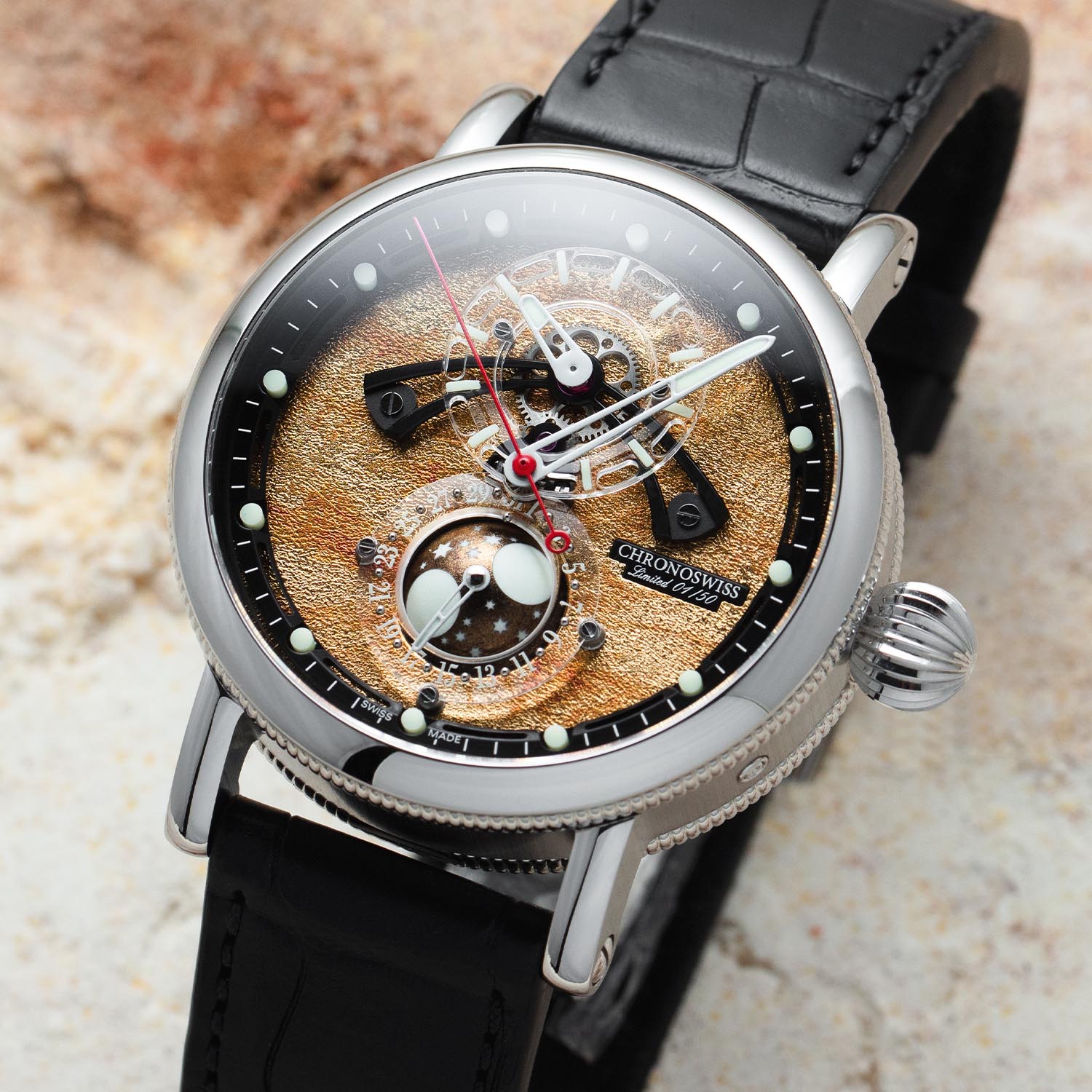
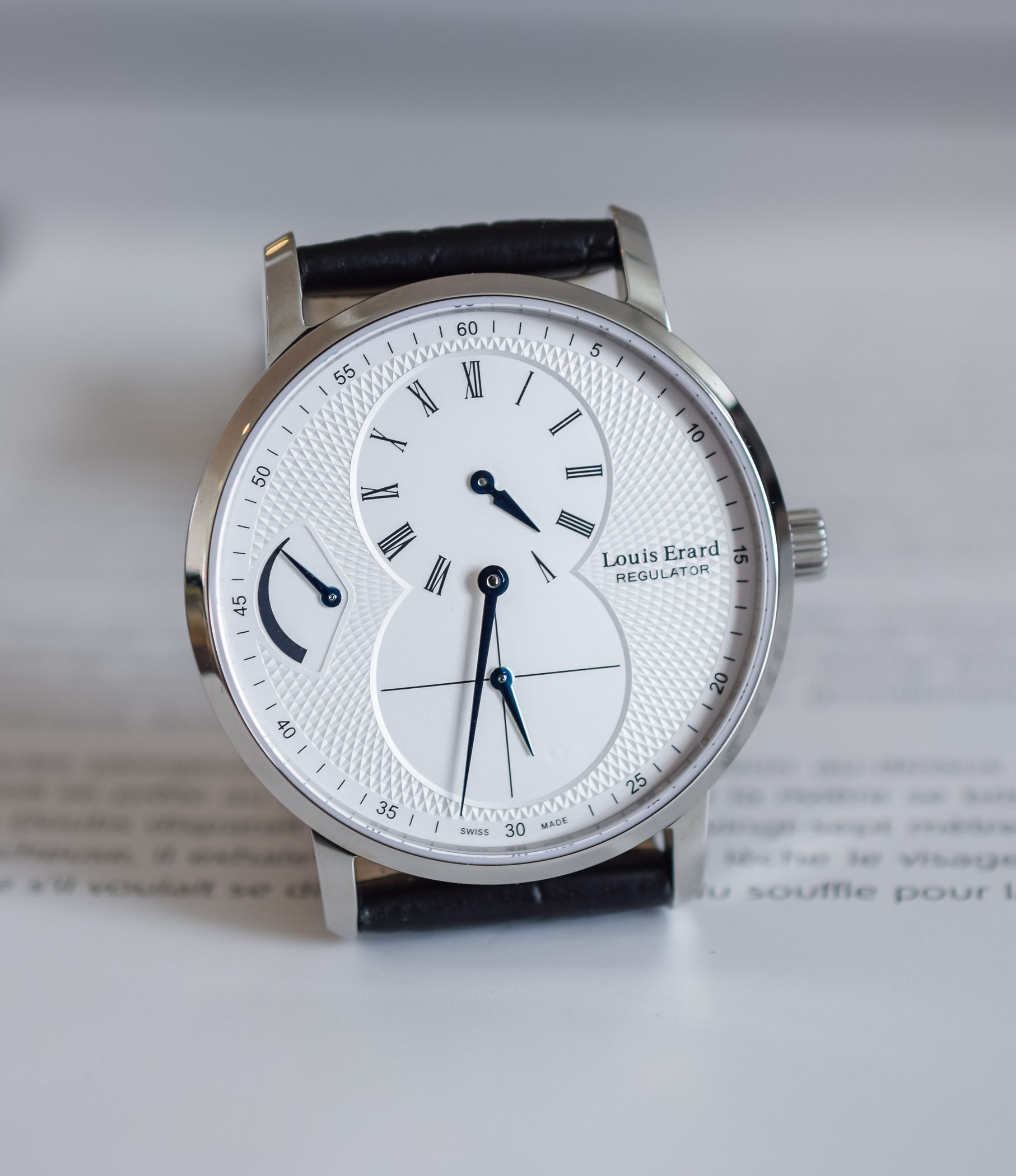
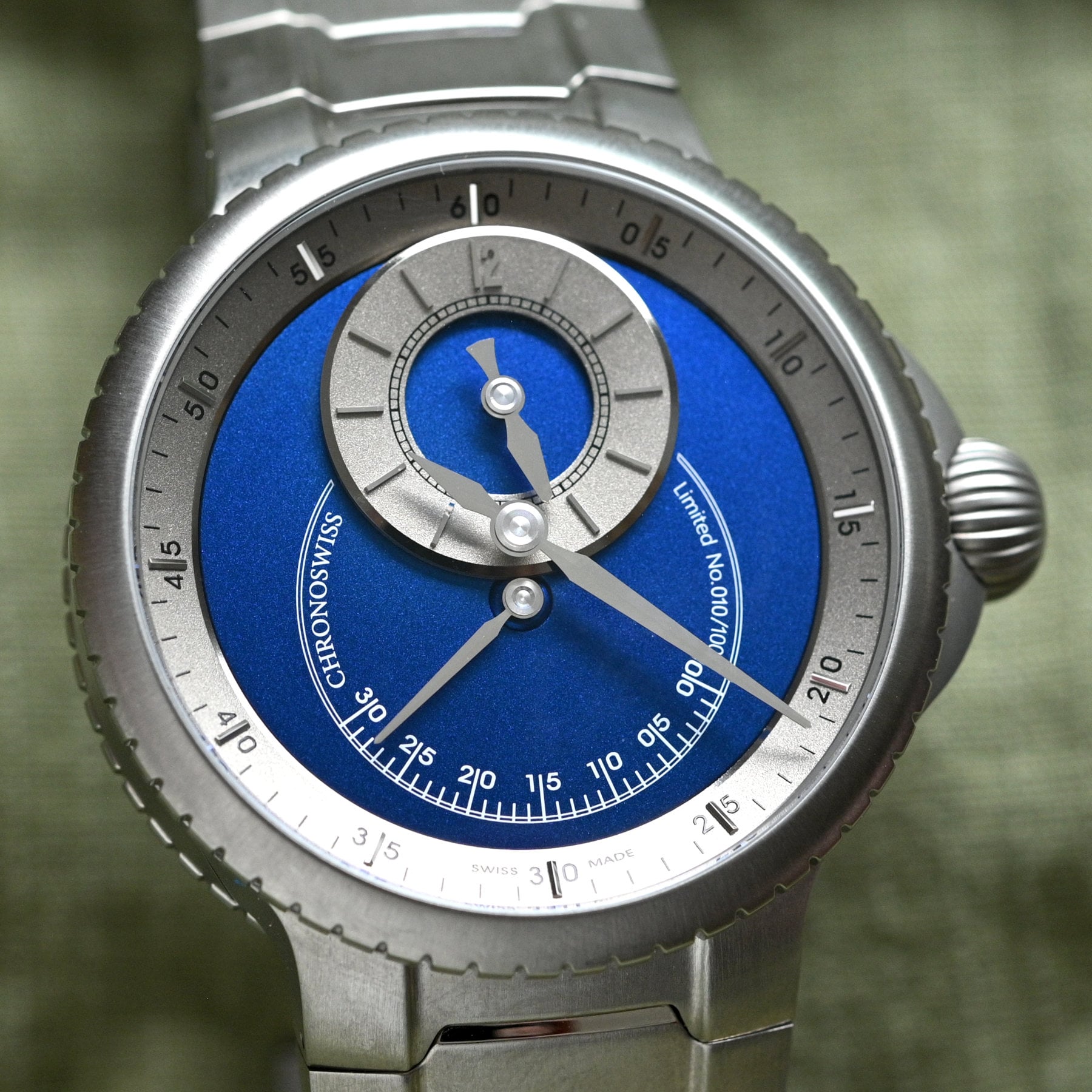
The Chronoswiss Régulateur gave the central position to the minute hand, placed the hour indication in a sub-dial at 12 o’clock and moved the running seconds to 6 o’clock.
Its outer minute track used Arabic numerals from 5 to 55, while the hour display used Roman numerals, giving the watch a layered, instrument-like character.
Although the brand name suggests Switzerland, Chronoswiss remained German until 2012, when Oliver Ebstein acquired the company and moved it to Lucerne.
The watches had used Swiss movements from the beginning, but regulators became the design language most closely tied to the marque.
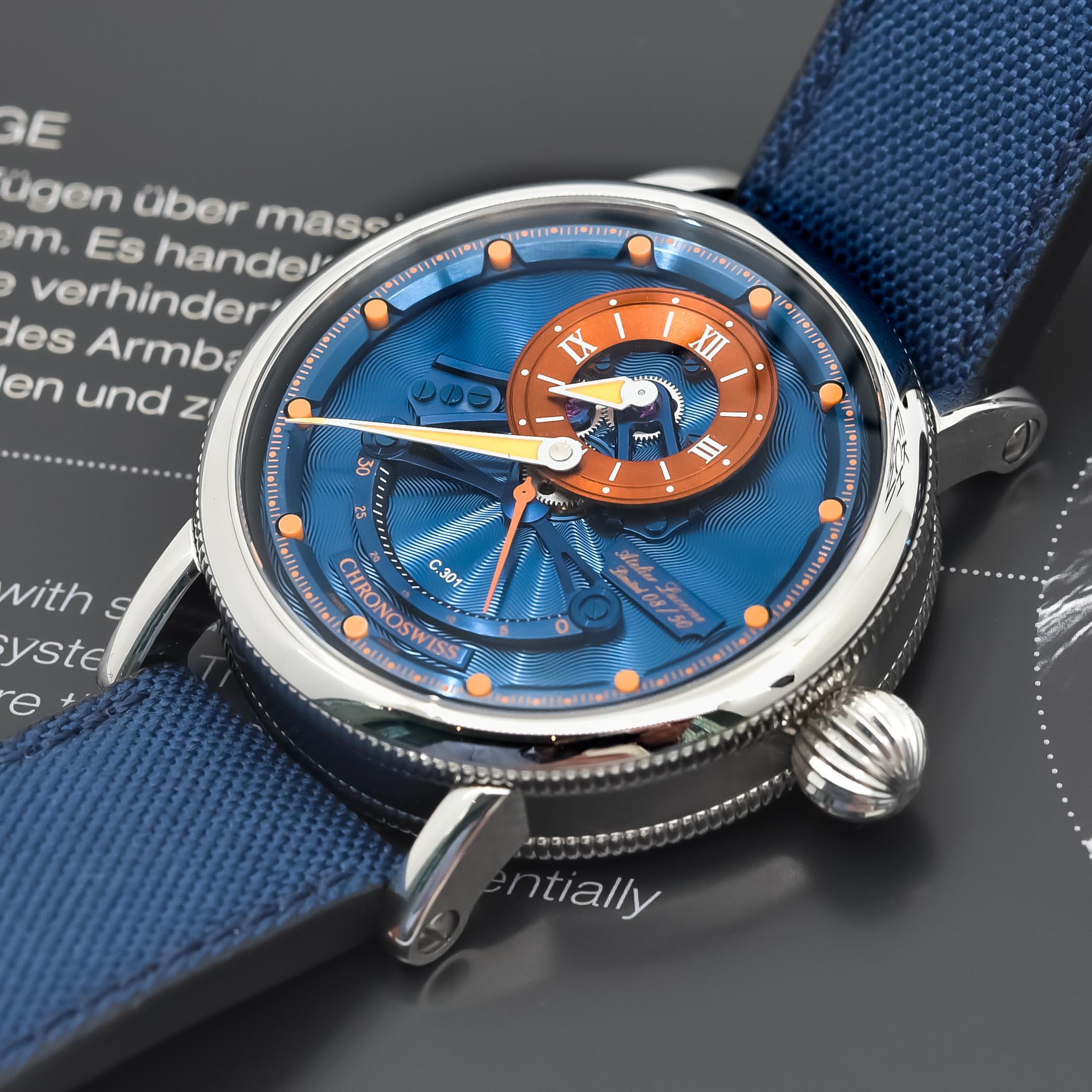
More recent models, including the ReSec with retrograde seconds and multi-dimensional guilloché work, show how far the concept can be pushed without losing its core identity.
Chronoswiss isn’t alone in exploring the format.
Louis Erard has built a wide regulator catalogue of its own, including collaborative pieces with Konstantin Chaykin and Alain Silberstein, while Patek Philippe, Glashütte Original, Chopard and Junghans have each interpreted the layout in distinct ways.
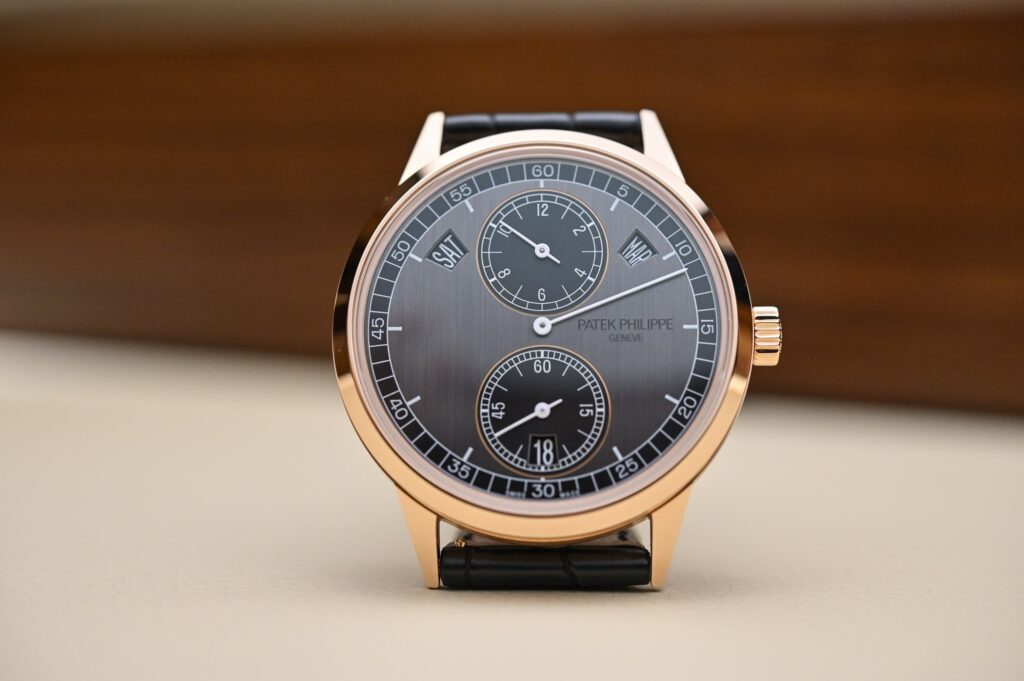
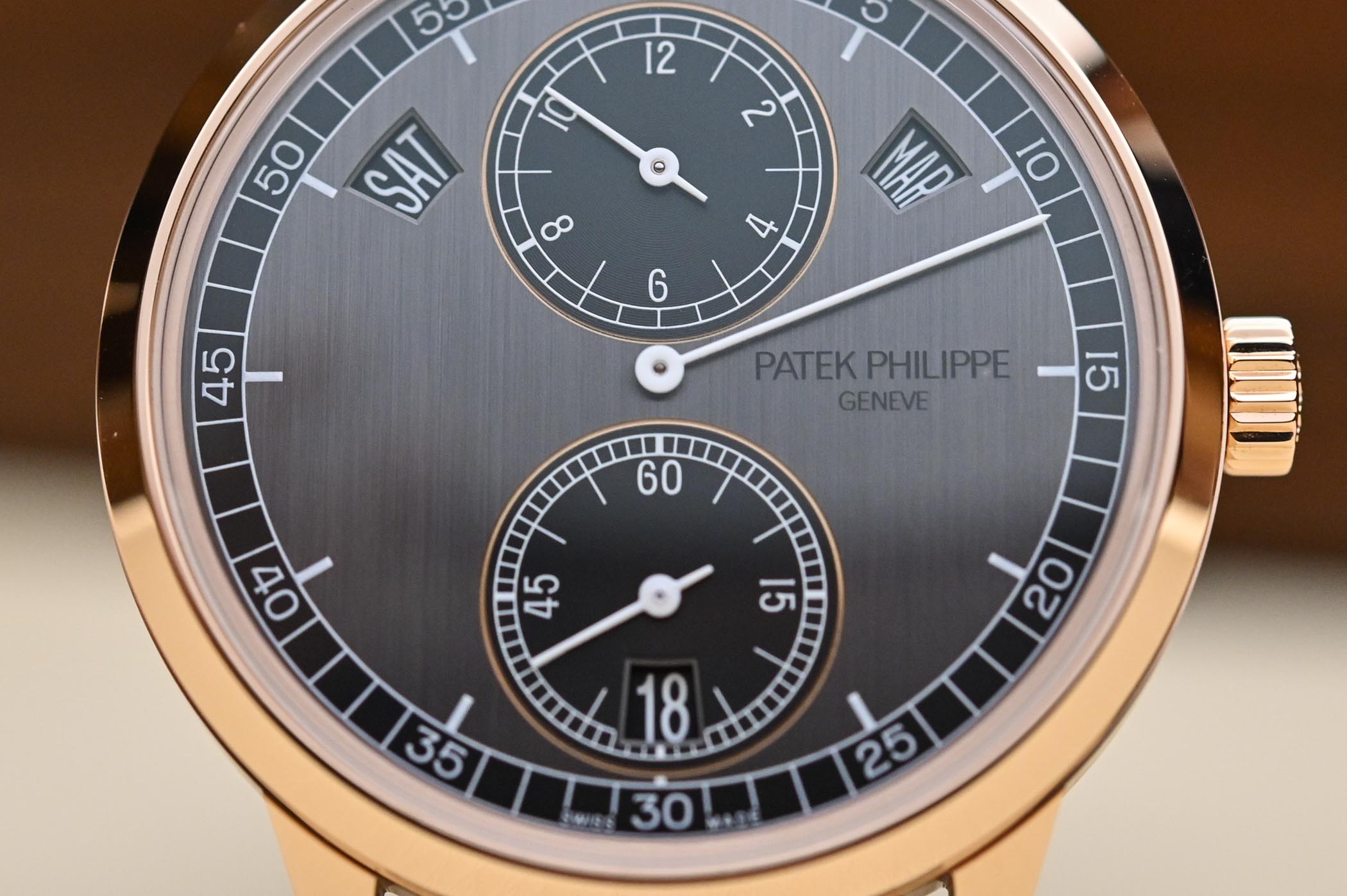
Patek Philippe’s ref. 5235R, for example, pairs an 18k rose gold case with a graphite and black dial and adds an annual calendar through discreet apertures for the day, month and date.
At the other end of the design spectrum, Junghans has used the regulator arrangement within its restrained max bill language, proving that the same display can feel either ornate, architectural or almost minimalist depending on the hand of the designer.
Retrograde hands add drama without abandoning hands
Retrograde displays offer another route away from the standard central-hand system.
Instead of completing a full 360-degree rotation, a retrograde hand moves across a shorter scale, then jumps back to its starting point when it reaches the end.
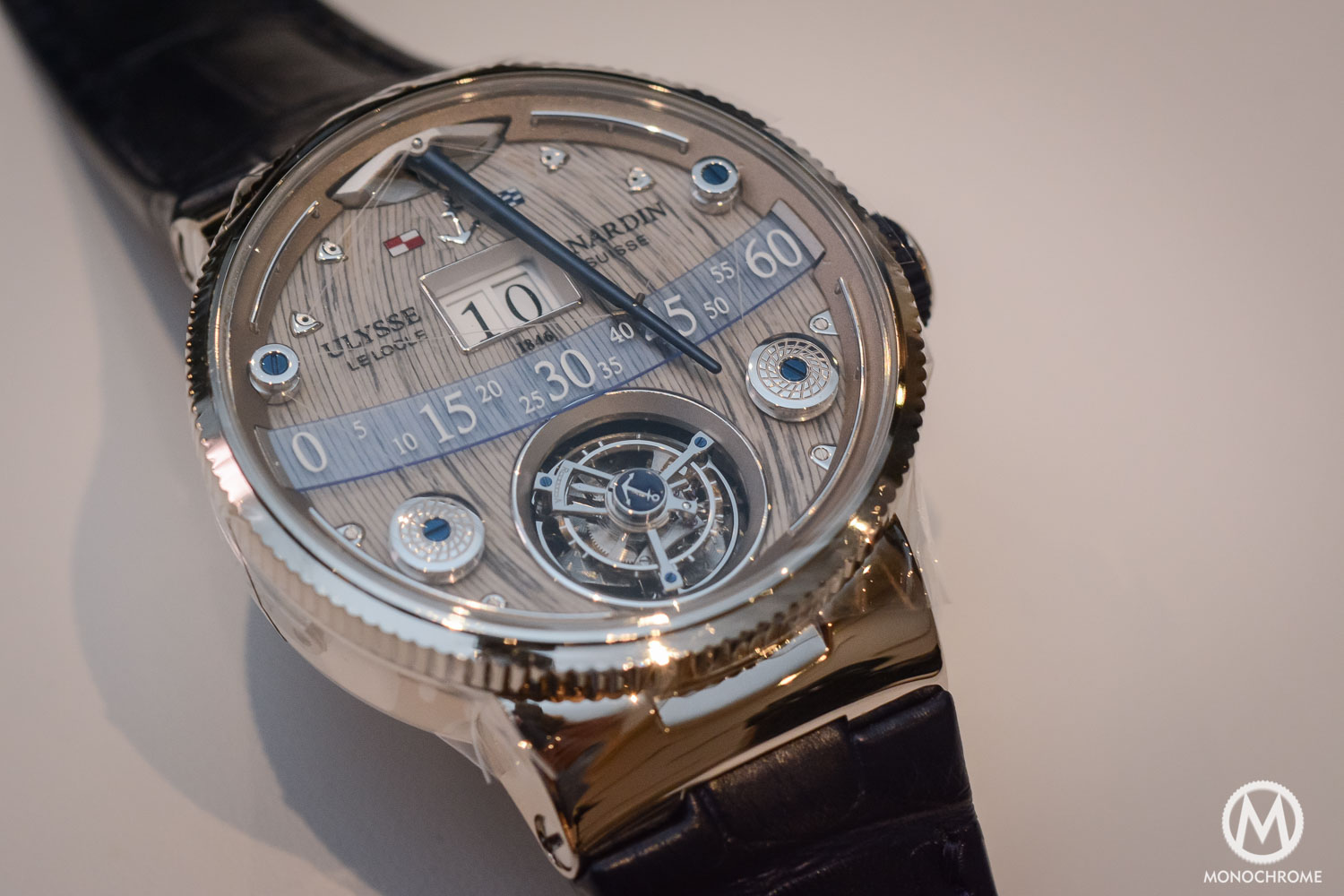
The arc can be broad or compact, with examples often using 180 degrees or less, and the effect is instantly different from the steady circular sweep of a conventional hand.
The idea reaches back to experimentation by clock and pocket watch makers in Germany and France during the 17th century.
Scientific clocks were among the earliest places where the concept appeared, before it later found its way into pocket watches.
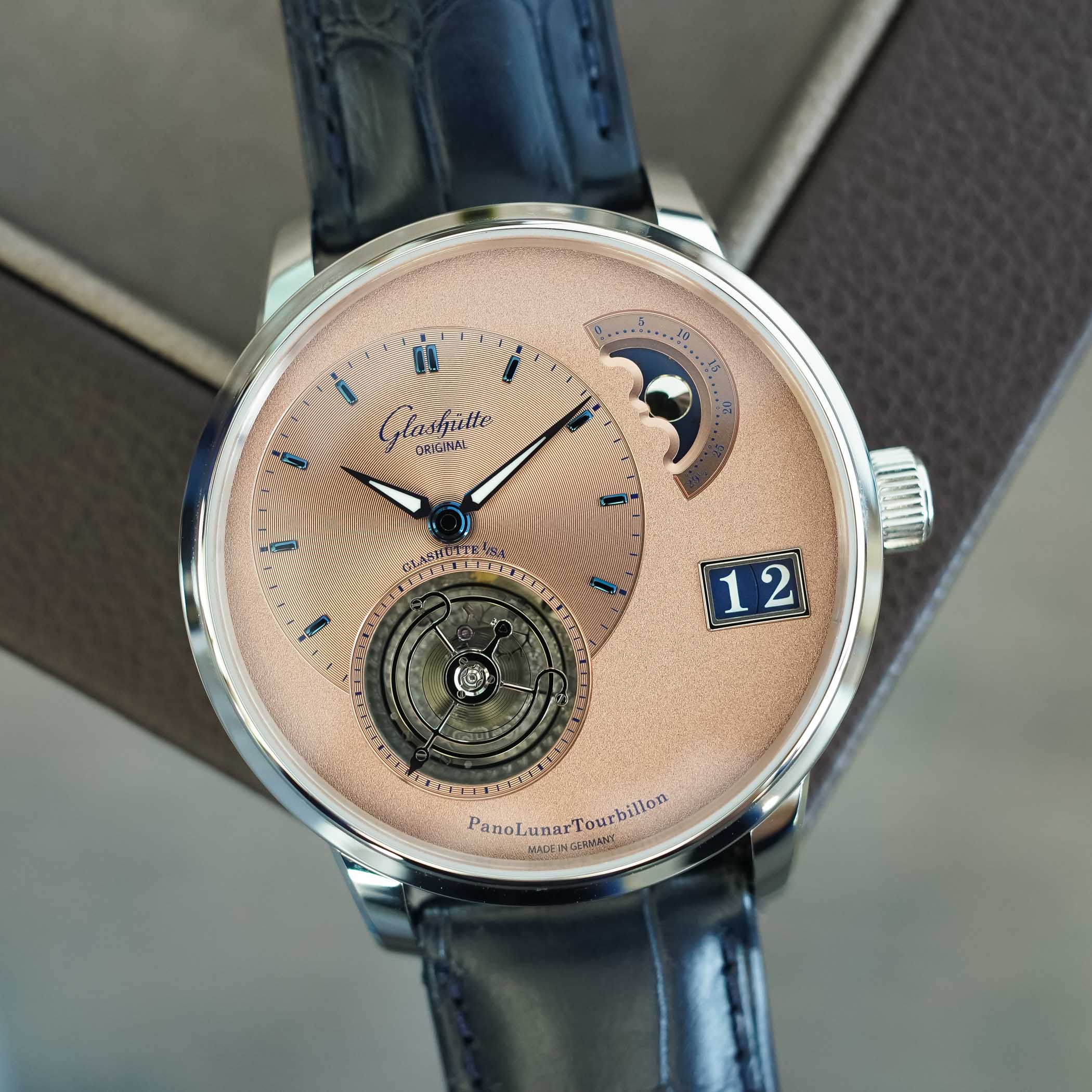
Jean-Antoine Lépine created an early pocket watch with a retrograde hour hand in 1791, while a recorded German pocket watch mechanism with a retrograde date predates it by roughly four decades.
What makes the retrograde display compelling is not just the layout, but the action.
A hand advances with purpose, reaches the edge of its scale, then returns in an instant, turning a basic indication into a small mechanical event.
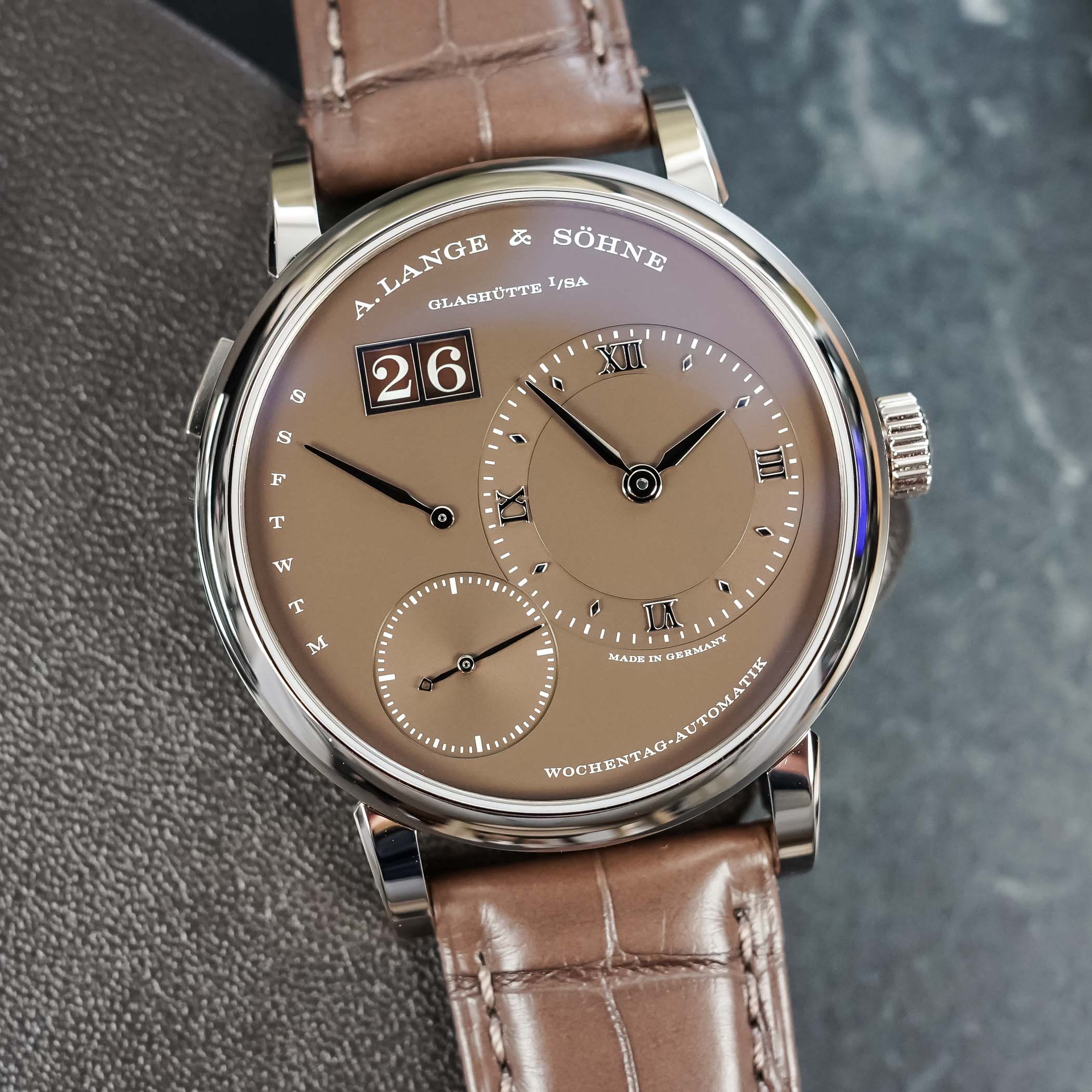
That motion can be practical, especially when it frees space on the dial or clarifies a specific indication, but it also gives the watch a more animated personality.
Like the regulator, the retrograde display keeps faith with analogue watchmaking while refusing to let the centre of the dial dictate every decision.
These alternatives aren’t necessary in the strictest sense, and that’s part of their charm.
A conventional three-hand watch remains one of the clearest objects in design, but regulator and retrograde displays remind us that clarity isn’t the only measure of a great dial.
For collectors drawn to mechanics, history and a little visual mischief, moving the hands away from the obvious place can make time feel newly considered.