Few integrated-bracelet sports watches carry their history as quietly as the Girard-Perregaux Laureato.
For its 50th anniversary chapter, the Laureato FIFTY Steel brings the collection back to the material language that helped define the genre, while placing a newer in-house automatic movement at the centre of the proposition.
It’s a watch for collectors who understand the Laureato as more than an alternative in a crowded category.
At a glance
- Girard-Perregaux has introduced the Laureato FIFTY Steel as part of the collection’s 50th anniversary story.
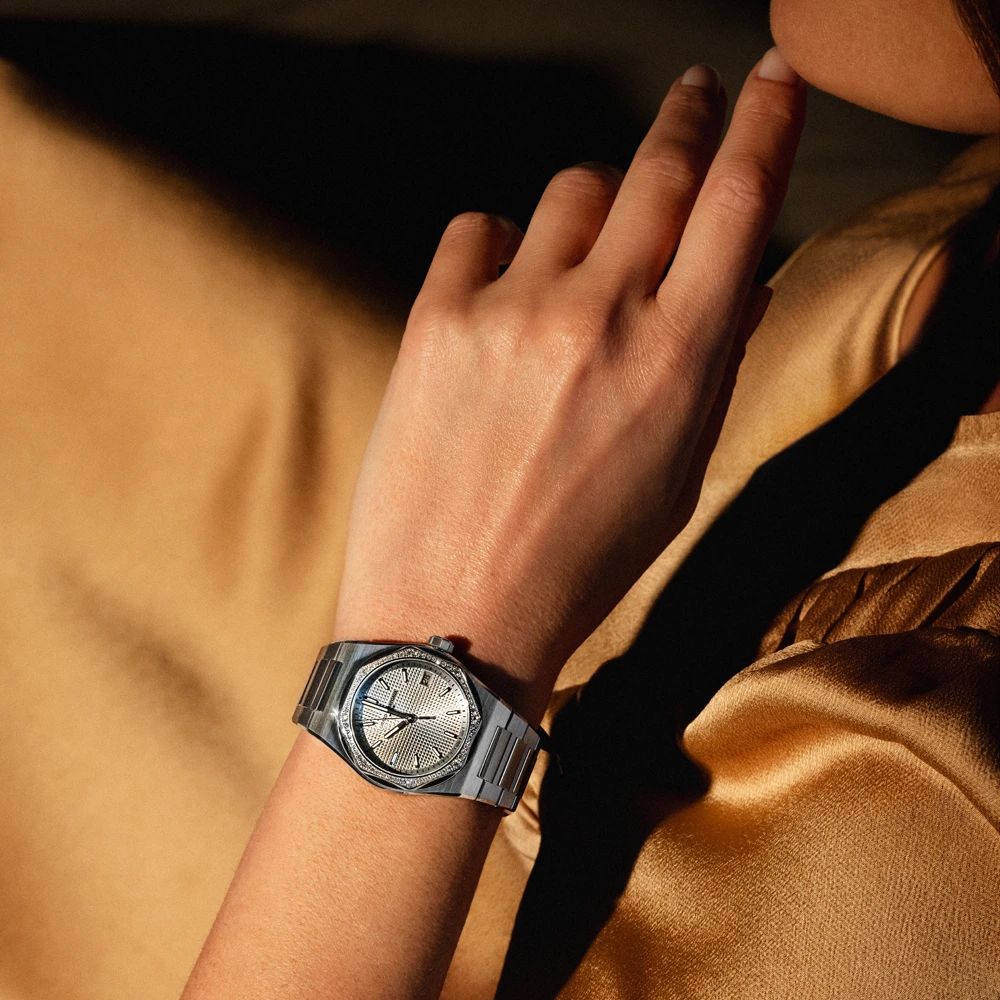
- The confirmed executions include a 39 mm steel model with a blue enamel dial and a 36 mm steel model with an 18k rose-gold dial.
- The watch follows the 200-piece two-tone Laureato FIFTY and uses the automatic Calibre GP4800.
A 1975 design with real horological weight
The Laureato began life in 1975, though not under the name by which it’s now known.
Girard-Perregaux introduced the watch as the Quartz Chronometer, a title that made perfect sense in the middle of the quartz era.
At that moment, quartz wasn’t shorthand for disposability or mass-market convenience.
It represented precision, modernity and a radical challenge to mechanical watchmaking.
Girard-Perregaux had already made a significant technical statement in 1971 with the GP 350, a serially produced quartz movement operating at 32,768 Hz.
That frequency later became the industry standard for quartz wristwatches, giving the Manufacture an unusually strong claim in one of the most consequential technical shifts in watch history.
The 1975 watch paired that technical confidence with a design that immediately felt of its decade.
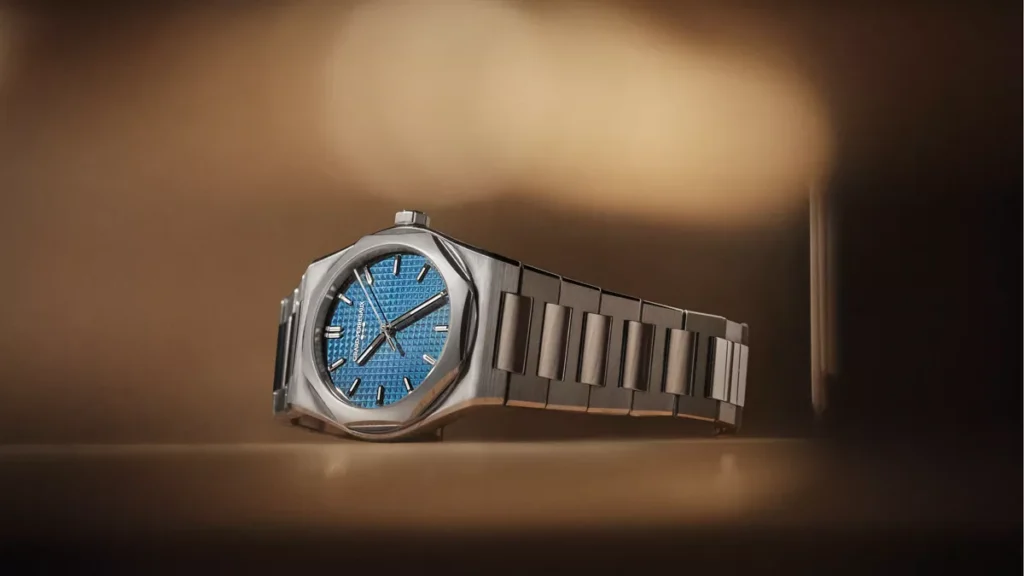
An octagonal bezel sat on a circular base, which in turn rested on a tonneau-shaped case, creating a layered geometry that gave the Laureato its own identity among luxury sports watches.
The integrated bracelet completed the architecture rather than simply attaching to it.
Italy, then a key market for Girard-Perregaux, helped give the model its lasting name.
Collectors adopted the nickname Laureato, meaning graduate in Italian, and the Maison eventually made it official.
The steel anniversary models sharpen the Laureato language
The Laureato FIFTY Steel matters because it doesn’t treat anniversary design as costume.
The best Laureato models tend to work through proportion, surface and light rather than obvious retro cues, and the steel anniversary executions follow that path.
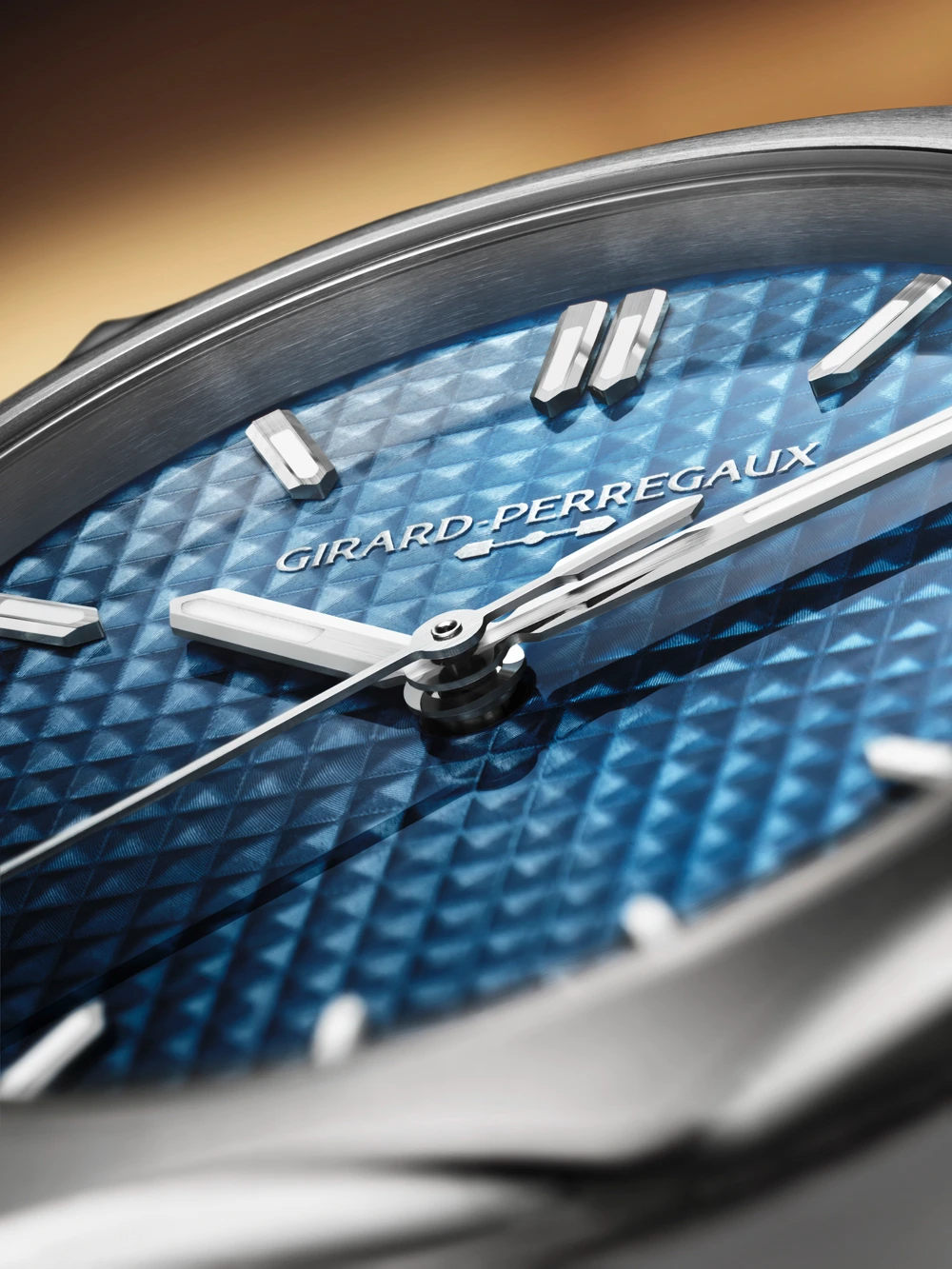
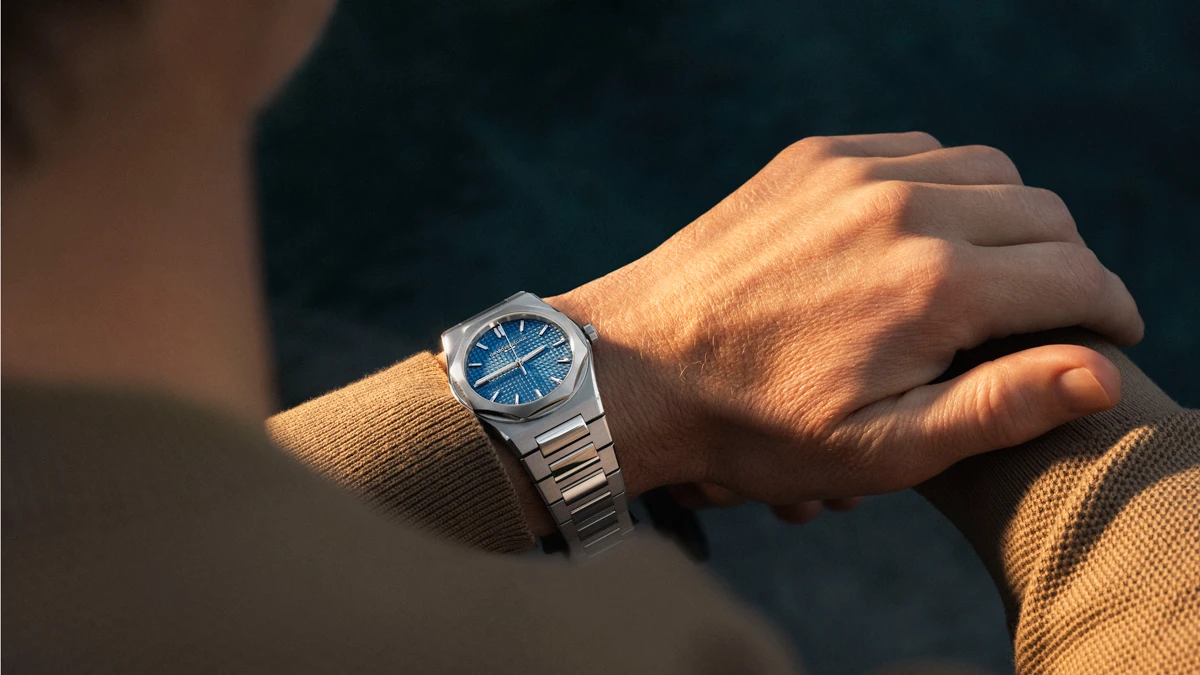
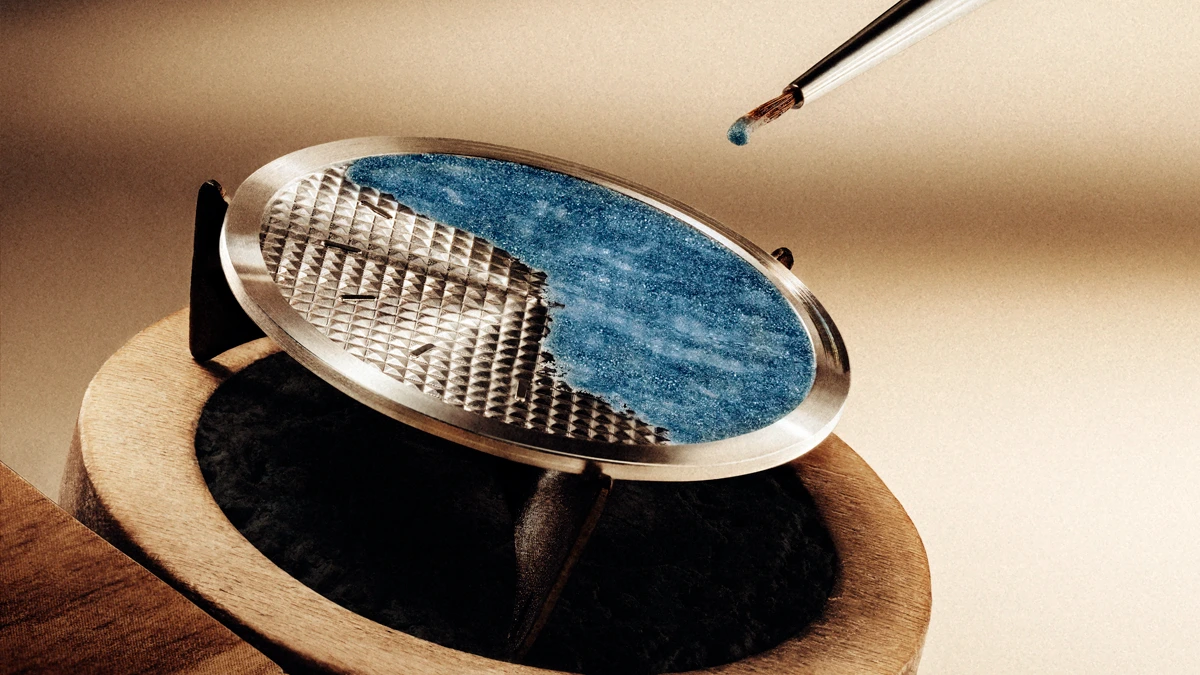
The 39 mm steel version with a blue enamel dial is the more classically sporty interpretation.
Blue has long suited the Laureato’s faceted architecture, especially when the dial finish brings depth against the crispness of the case and bracelet.
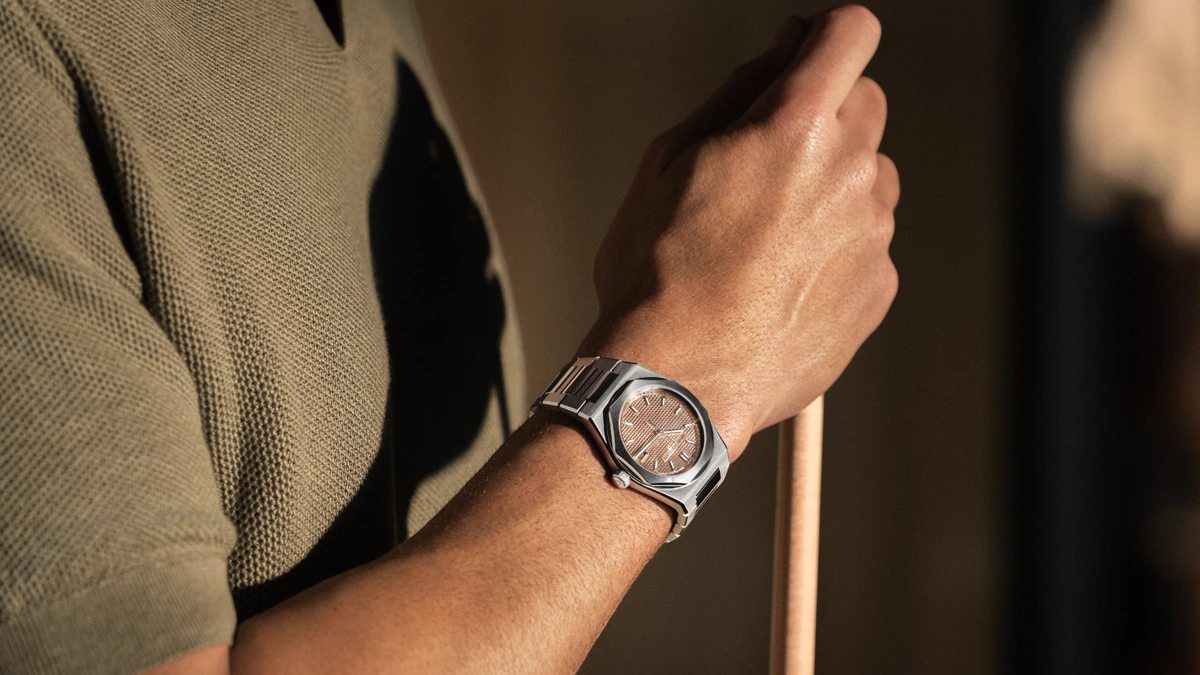
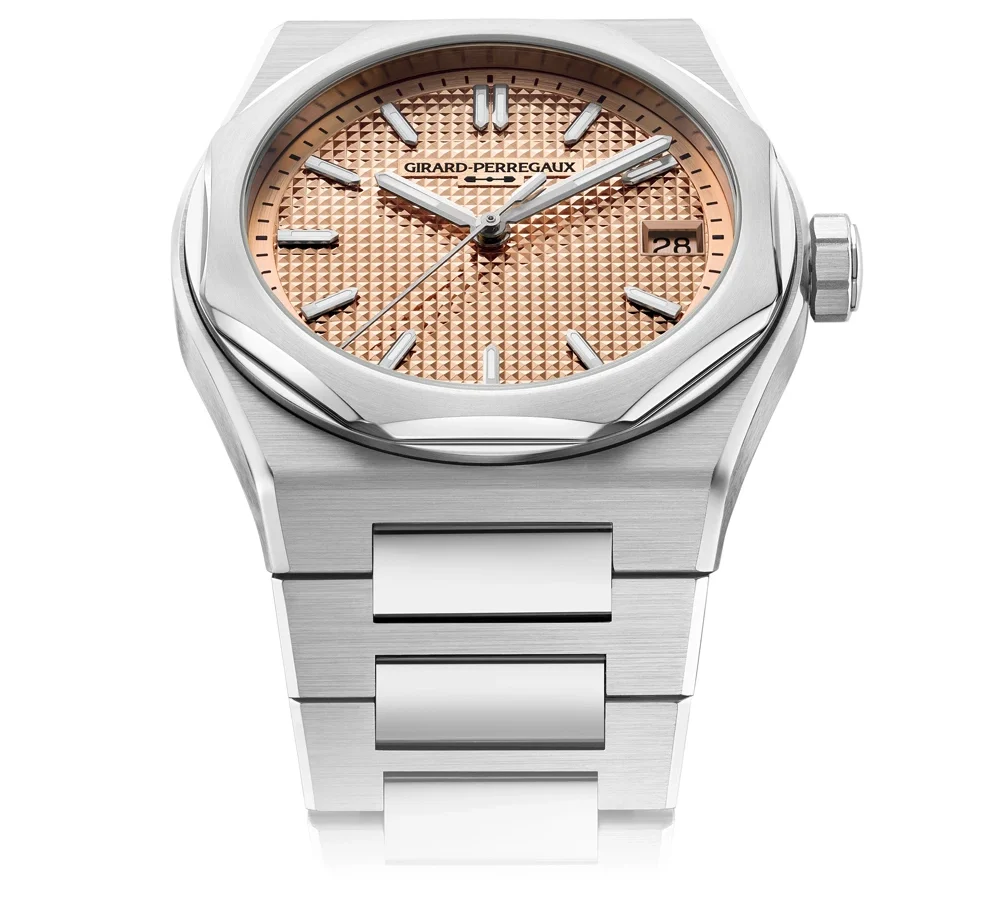
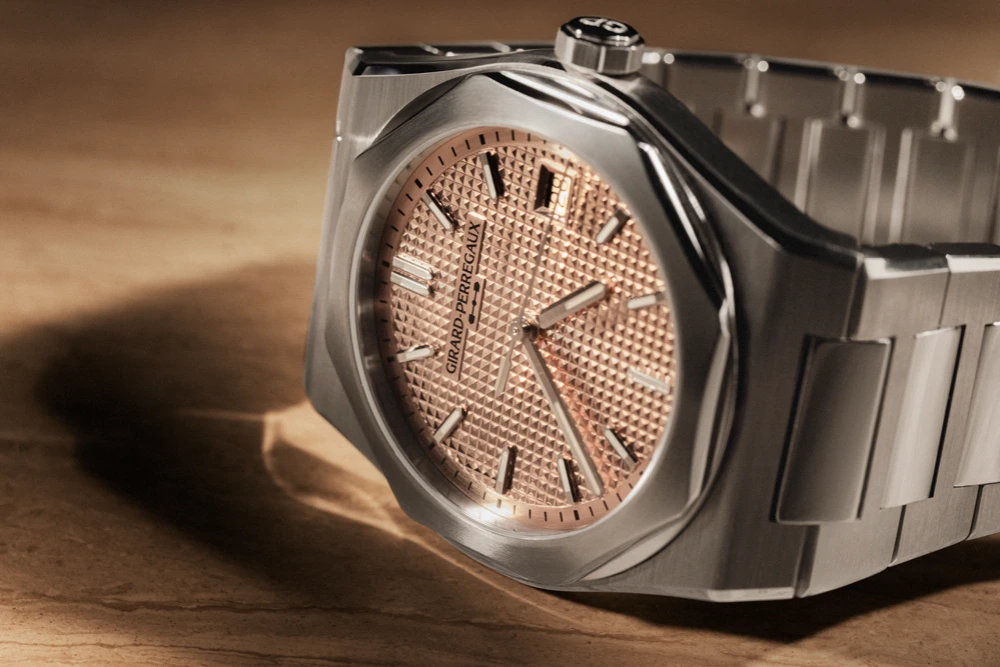
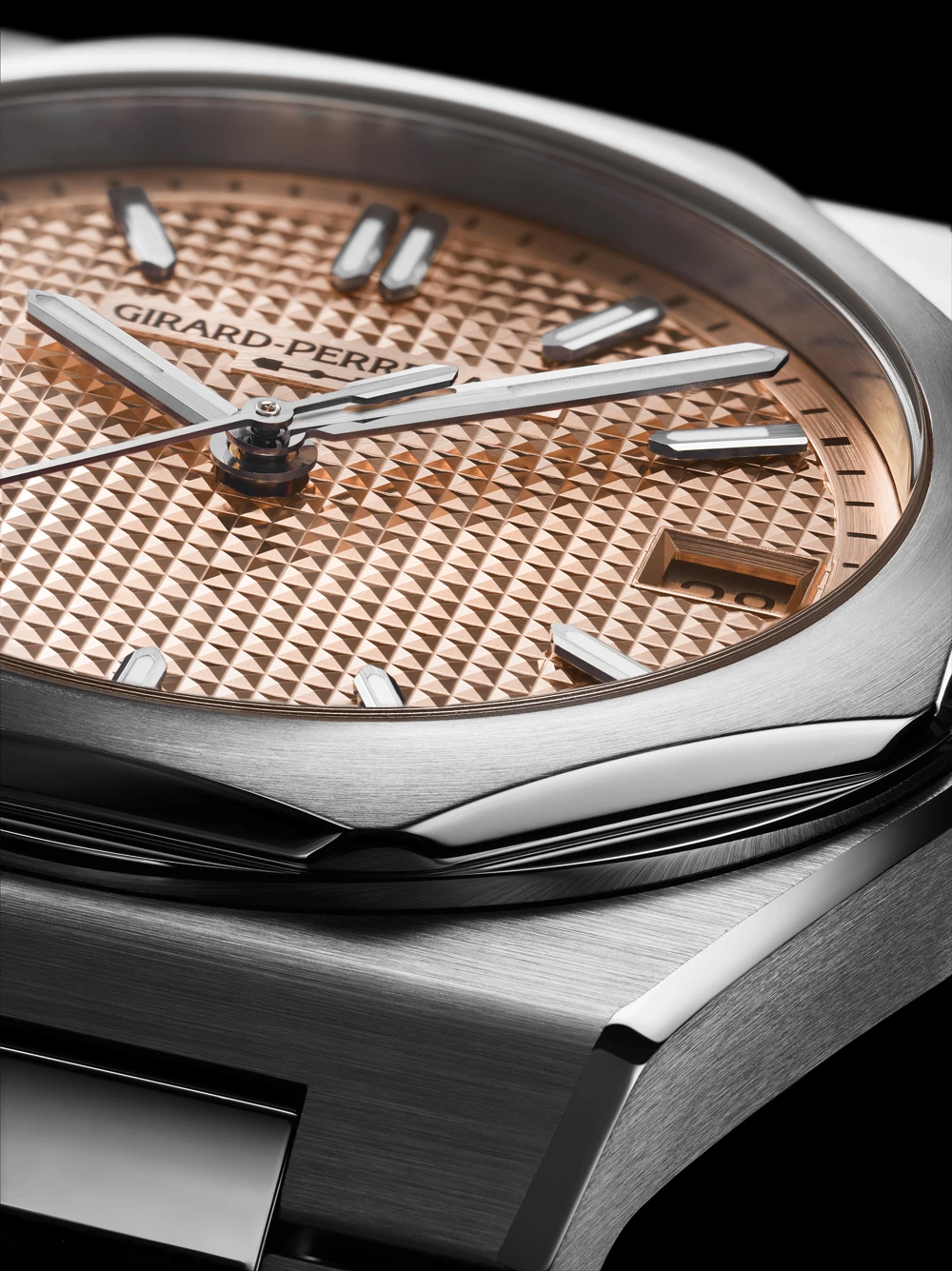
The 36 mm steel model with an 18k rose-gold dial offers a different reading of the same idea.
Rather than leaning on size for presence, it uses contrast and material warmth, giving the watch a more jewellery-adjacent elegance without abandoning the Laureato’s integrated-sports character.
Across the Laureato family, the design has always depended on the tension between hard geometry and refined finishing.
The octagonal bezel, circular plinth and tonneau case are not decorative afterthoughts, but the core of the watch’s visual rhythm.
That is why the Laureato has remained recognisable through changing case sizes, materials and dial treatments.
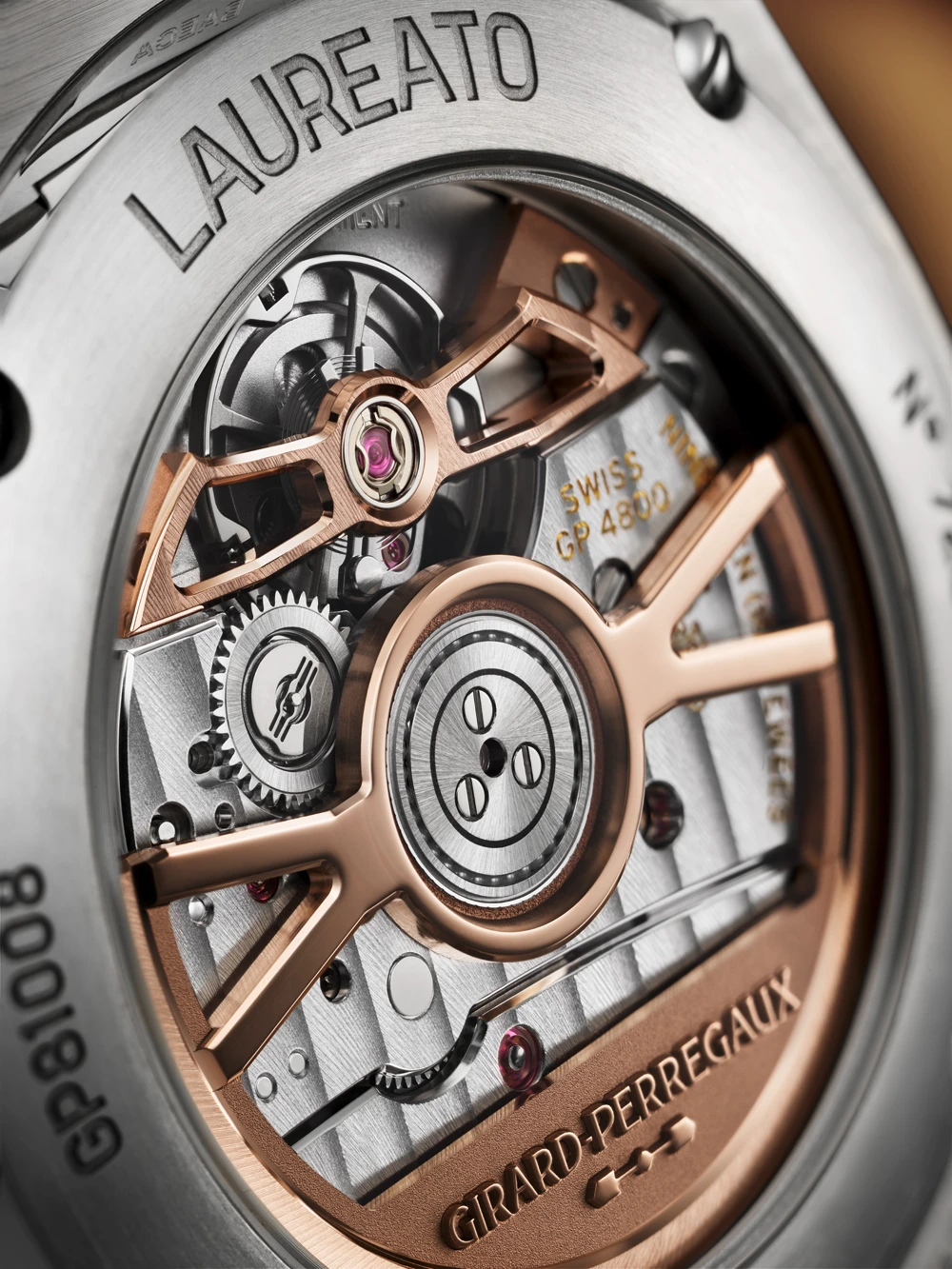
Calibre GP4800 brings the anniversary into the present
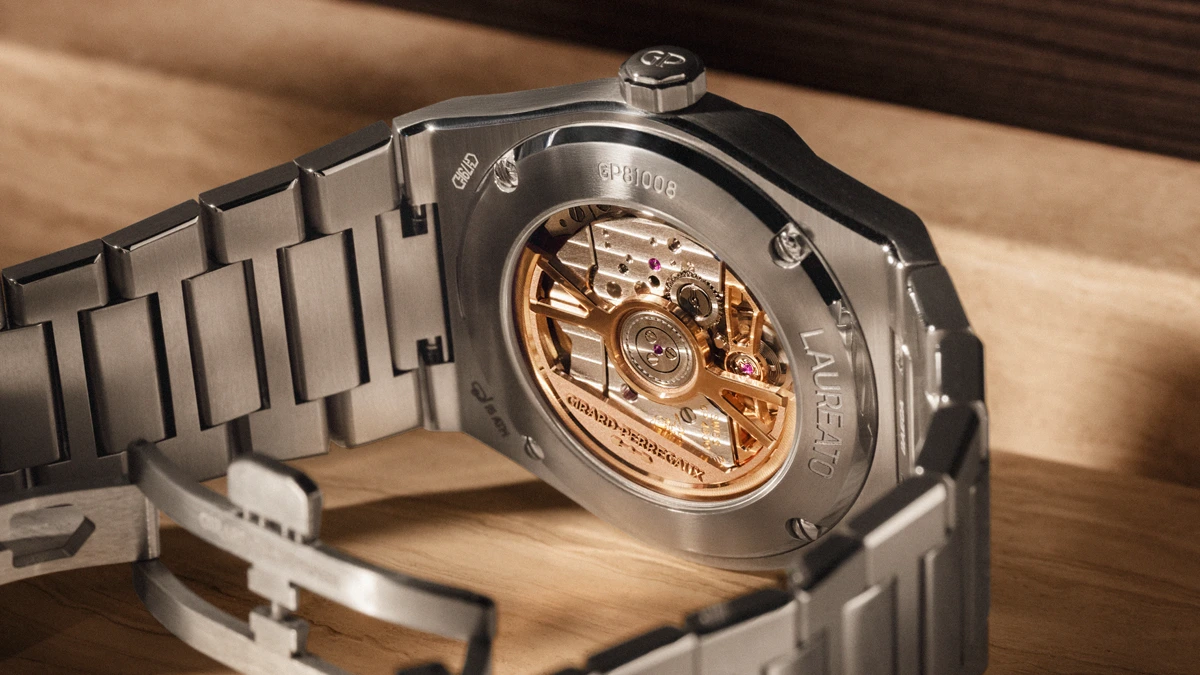
The key mechanical update is the automatic Calibre GP4800.
Girard-Perregaux introduced the movement in September 2025, before placing it inside the Laureato FIFTY anniversary line.
That matters because the Laureato’s history is unusually intertwined with movement technology.
The collection may now be firmly associated with mechanical watchmaking, but its first chapter was defined by the precision ambitions of quartz.

In 1995, Girard-Perregaux equipped the Laureato with a mechanical movement for the first time, using the GP3100 automatic calibre.
The collection then expanded into complications, including chronograph and tourbillon versions in 1997.
Seen in that context, the GP4800 is not just a component update.
It reinforces the idea that the Laureato should remain technically current while retaining the design grammar established in 1975.
The anniversary context
The steel models arrive after the Laureato FIFTY two-tone limited edition, which was launched in October 2025 in a run of 200 pieces.
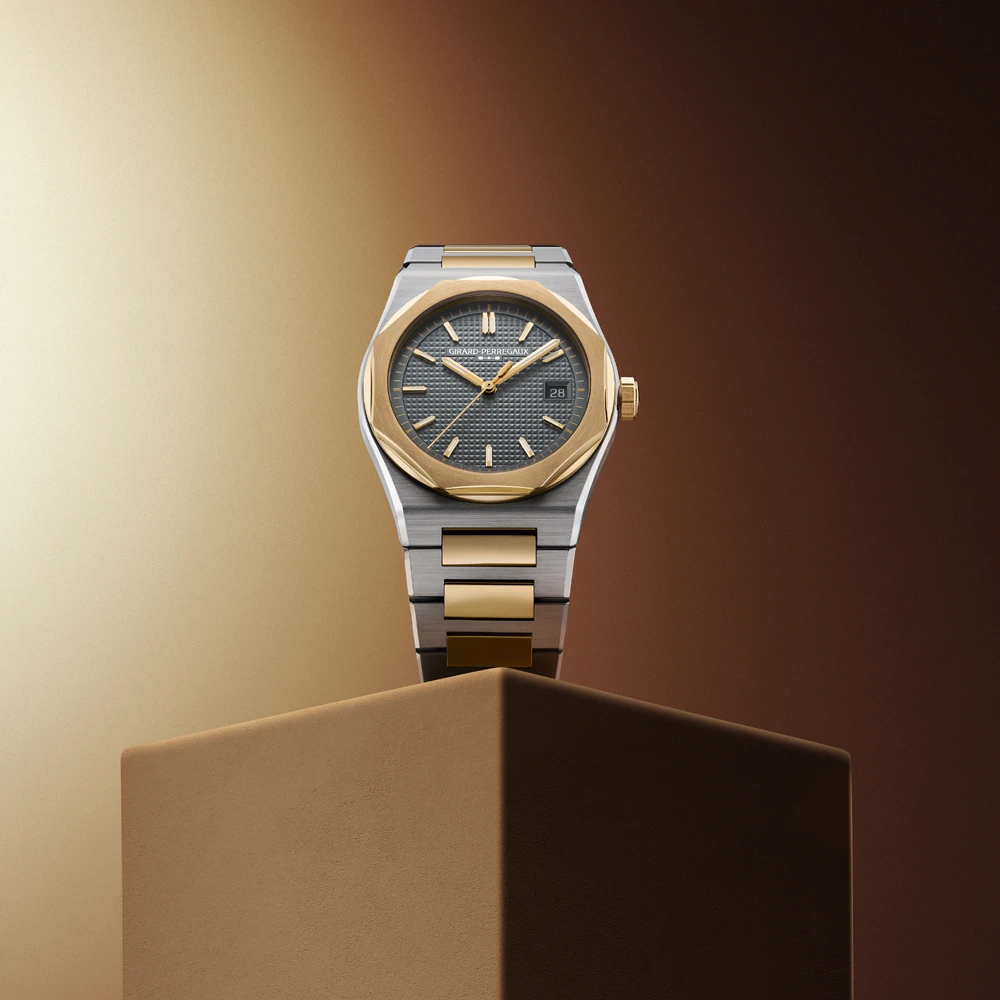
That earlier watch leaned into the steel-and-gold spirit associated with the first Laureato, while the steel editions give the 50th anniversary a cleaner and more versatile expression.
For collectors, the distinction is important.
The Laureato has never needed to be the loudest watch in the room, and in steel it tends to make its strongest argument as a daily watch with genuine historical standing.
It sits within a small group of luxury sports-watch designs from the period that still feel relevant without being constantly redesigned beyond recognition.
The Laureato FIFTY Steel should appeal to buyers who want the integrated-bracelet experience but prefer a watch with a slightly more independent personality.
It’s recognisable, but not overexposed.
Details & Specifications
| Brand | Girard-Perregaux |
|---|---|
| Model | Laureato FIFTY Steel |
| Case size | 39 mm and 36 mm confirmed executions |
| Case material | Steel |
| Dial | Blue enamel on the 39 mm model, 18k rose gold on the 36 mm model |
| Movement | Calibre GP4800 automatic |
| Collection origin | Laureato design introduced in 1975 as the Quartz Chronometer |
| Anniversary context | 50th anniversary Laureato model |
The Laureato FIFTY Steel works because it doesn’t flatten the collection’s history into nostalgia.
It connects Girard-Perregaux’s quartz-era confidence, its later mechanical evolution and the enduring strength of the Laureato case design in a watch that still looks made for regular wear.