For many watch collectors, the Omega Speedmaster is the easy answer and the hard question at the same time.
Its place in spaceflight history is secure, its design is instantly recognisable, and its catalogue is broad enough to turn a simple purchase into years of second-guessing.
In a new editorial video, Frank looks back on the long path that led him to his favourite Speedmaster after roughly 20 years of looking, trying, buying and reconsidering.
At a glance
- Frank’s new video traces a two-decade search for the Omega Speedmaster that finally felt right.
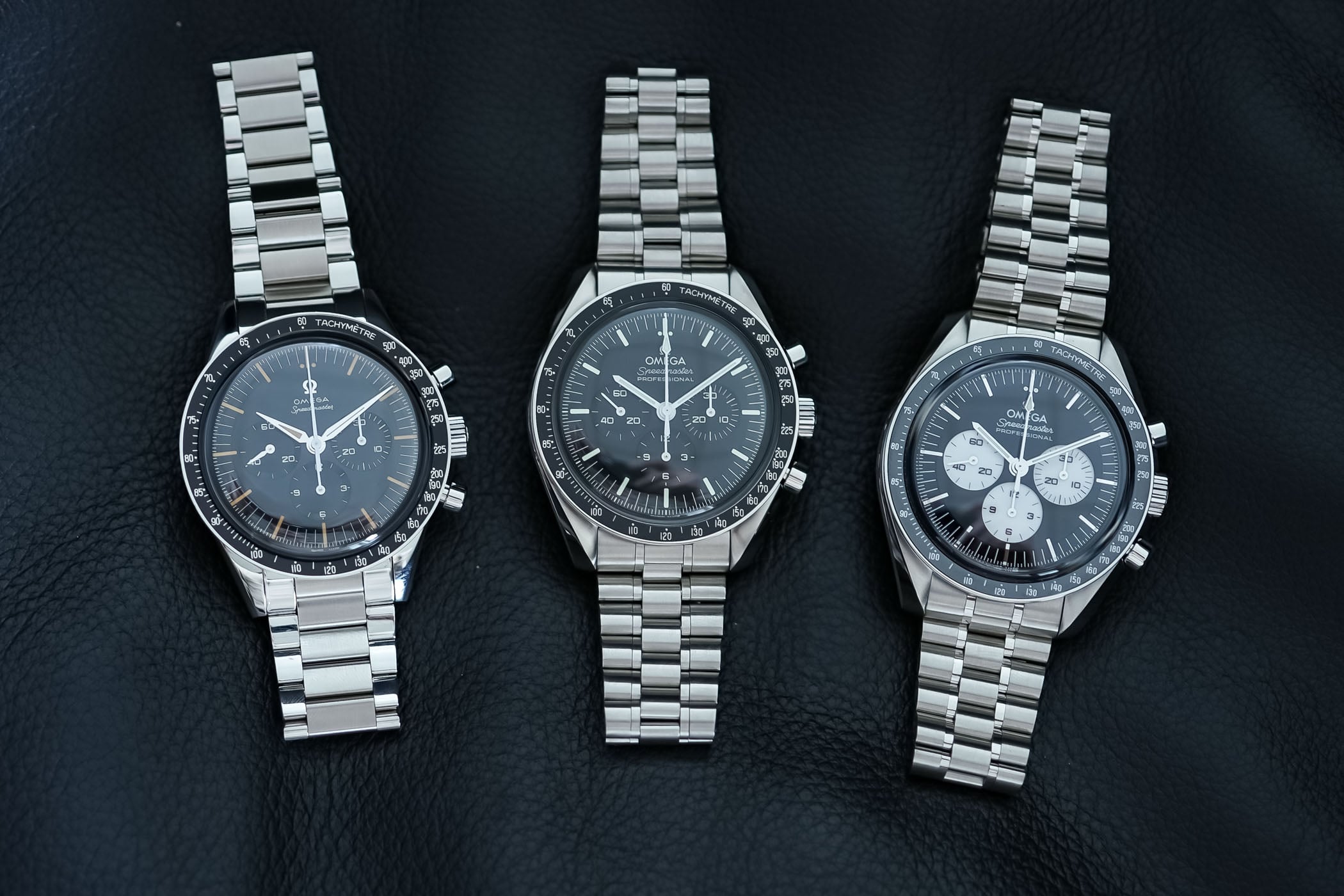
- The journey runs through the Moonwatch, vintage references, the First Omega in Space and modern calibre 321 models.
- The appeal lies in how one iconic chronograph can offer so many legitimate collecting paths.
Why the Speedmaster choice is rarely simple
The Speedmaster’s reputation is built on more than one attractive chronograph design.
In 1965, the Omega Speedmaster reference ST 105.003 was declared flight-qualified by NASA for all manned space missions after surviving the agency’s chronograph testing.
That association with the Moon programme still gives the watch a cultural weight few sports watches can match.
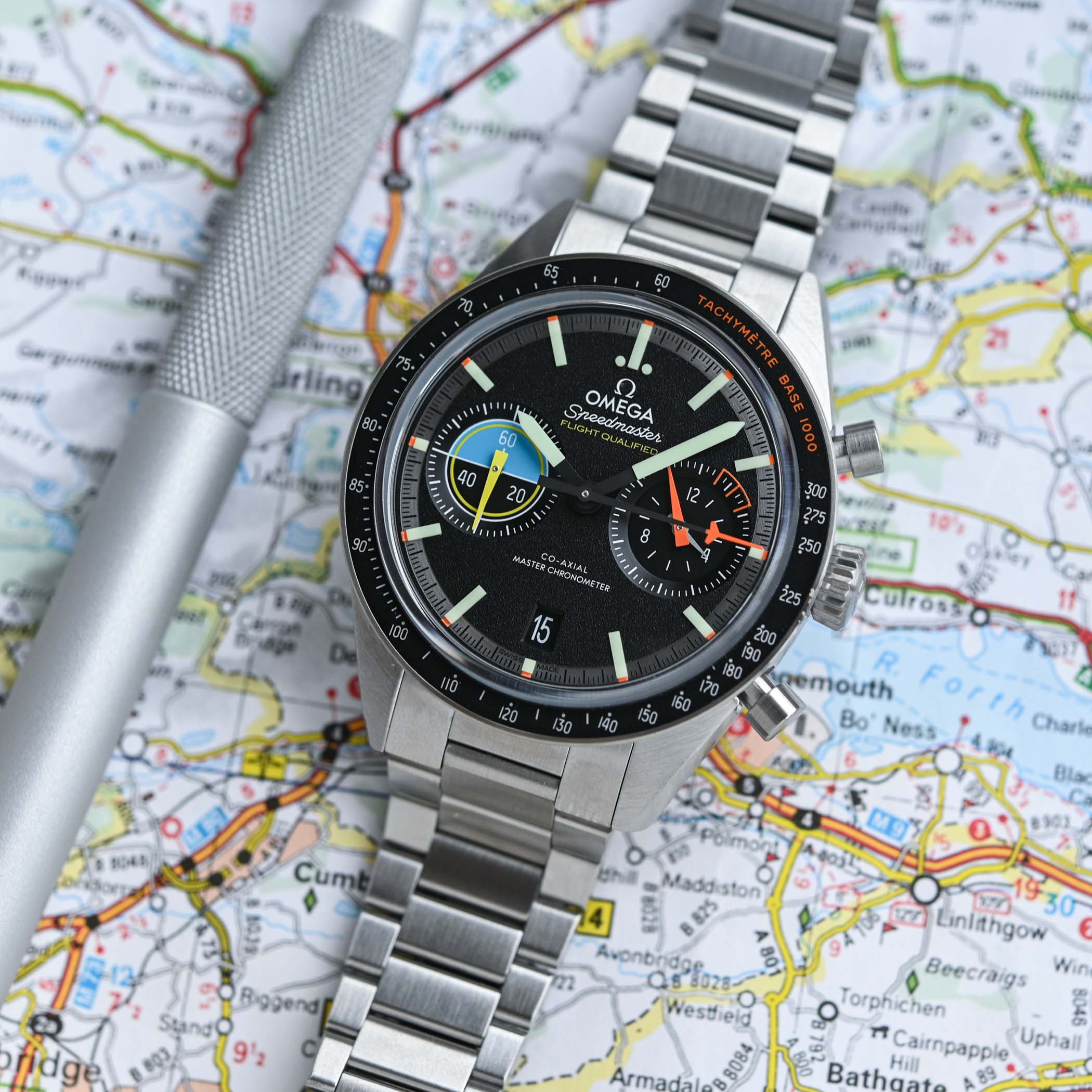
But the collection’s depth is also what makes it complicated.
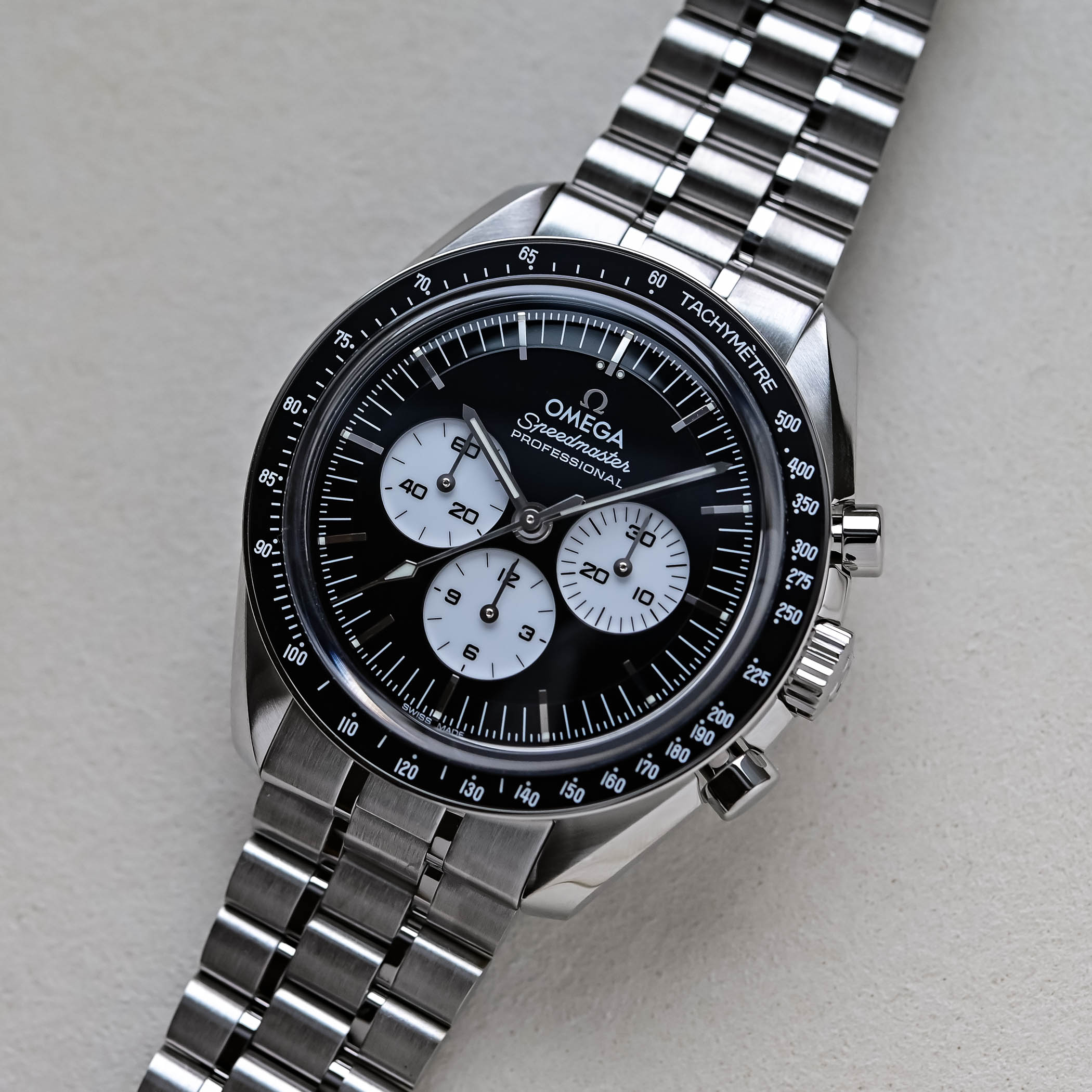
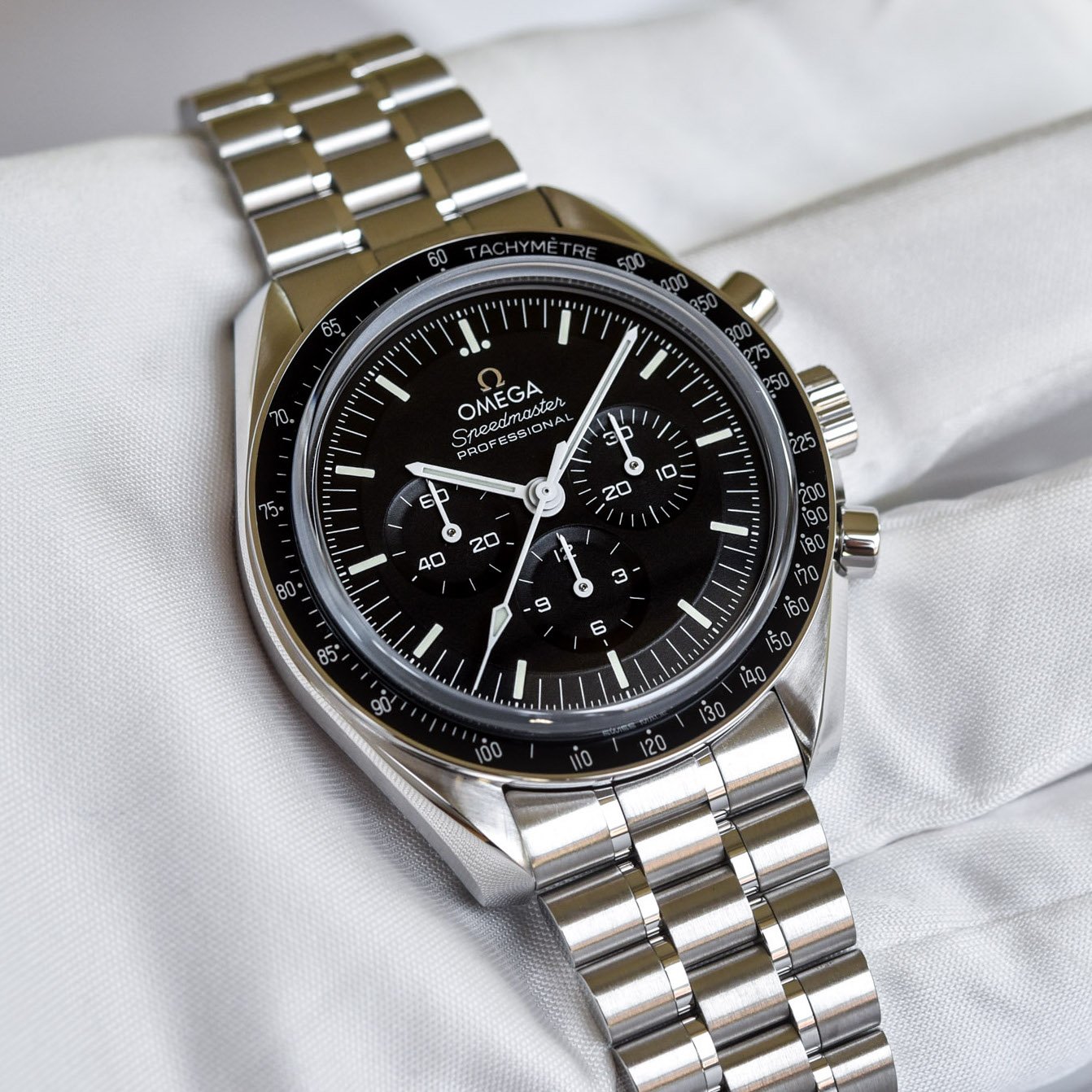
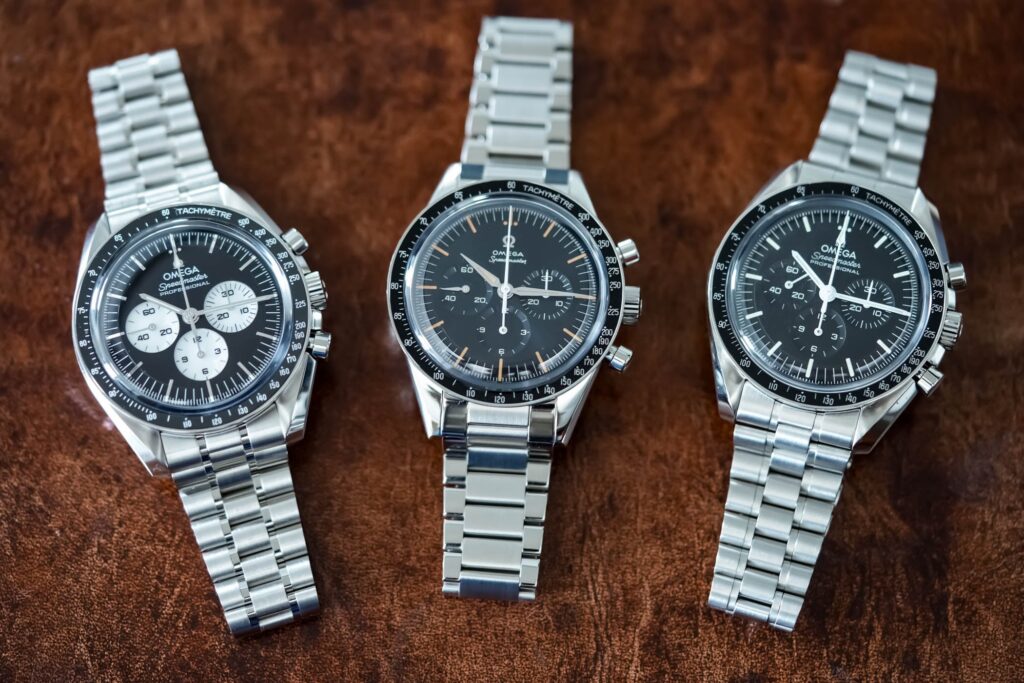
There are classic hand-wound Moonwatch models, vintage references, limited editions, straight-lug designs, modern automatic variations and precious-metal interpretations.
For a collector who cares about shape, proportion, movement, history and wearability, the choice can quickly become less about buying a Speedmaster and more about deciding which chapter of the Speedmaster story matters most.
The First Omega in Space detour
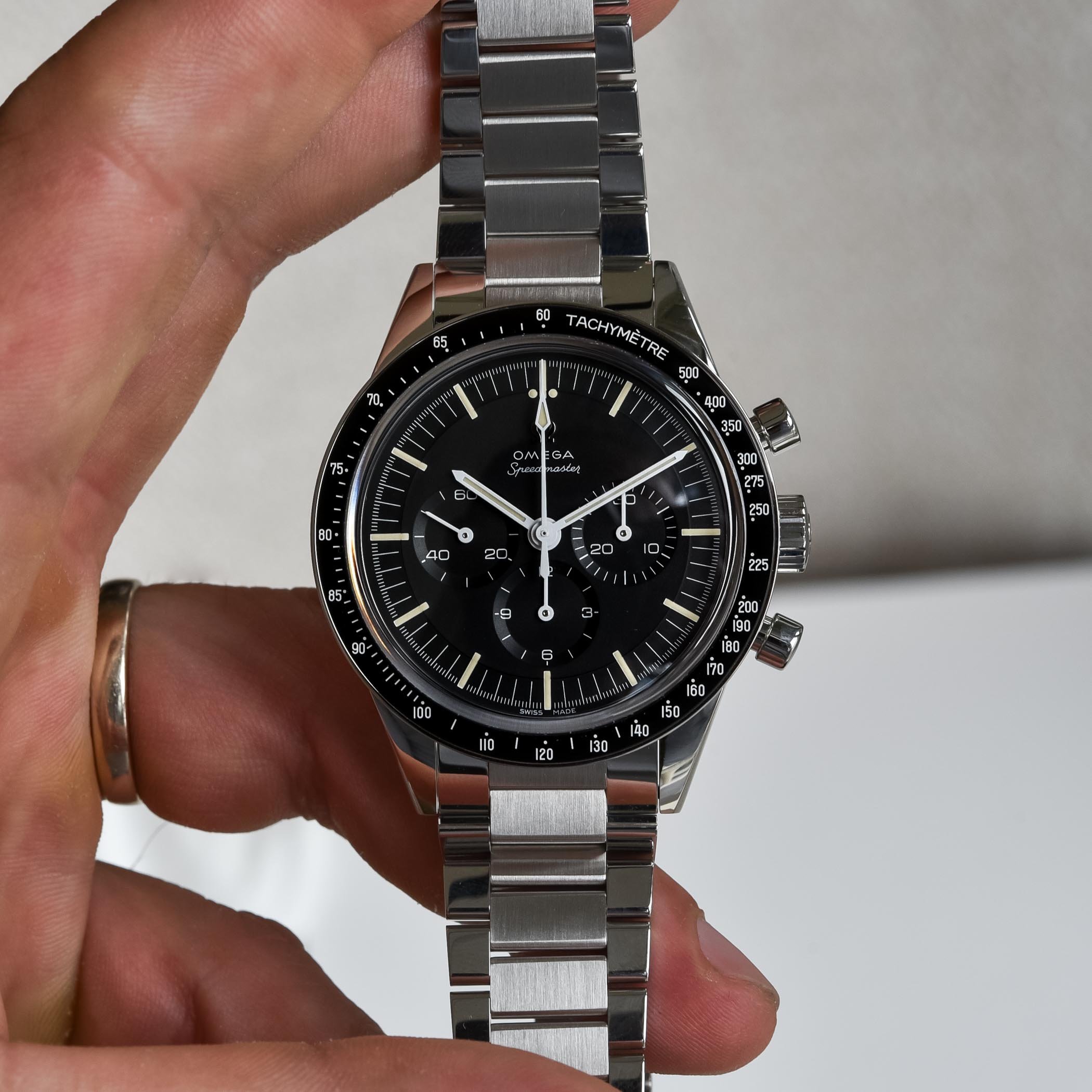
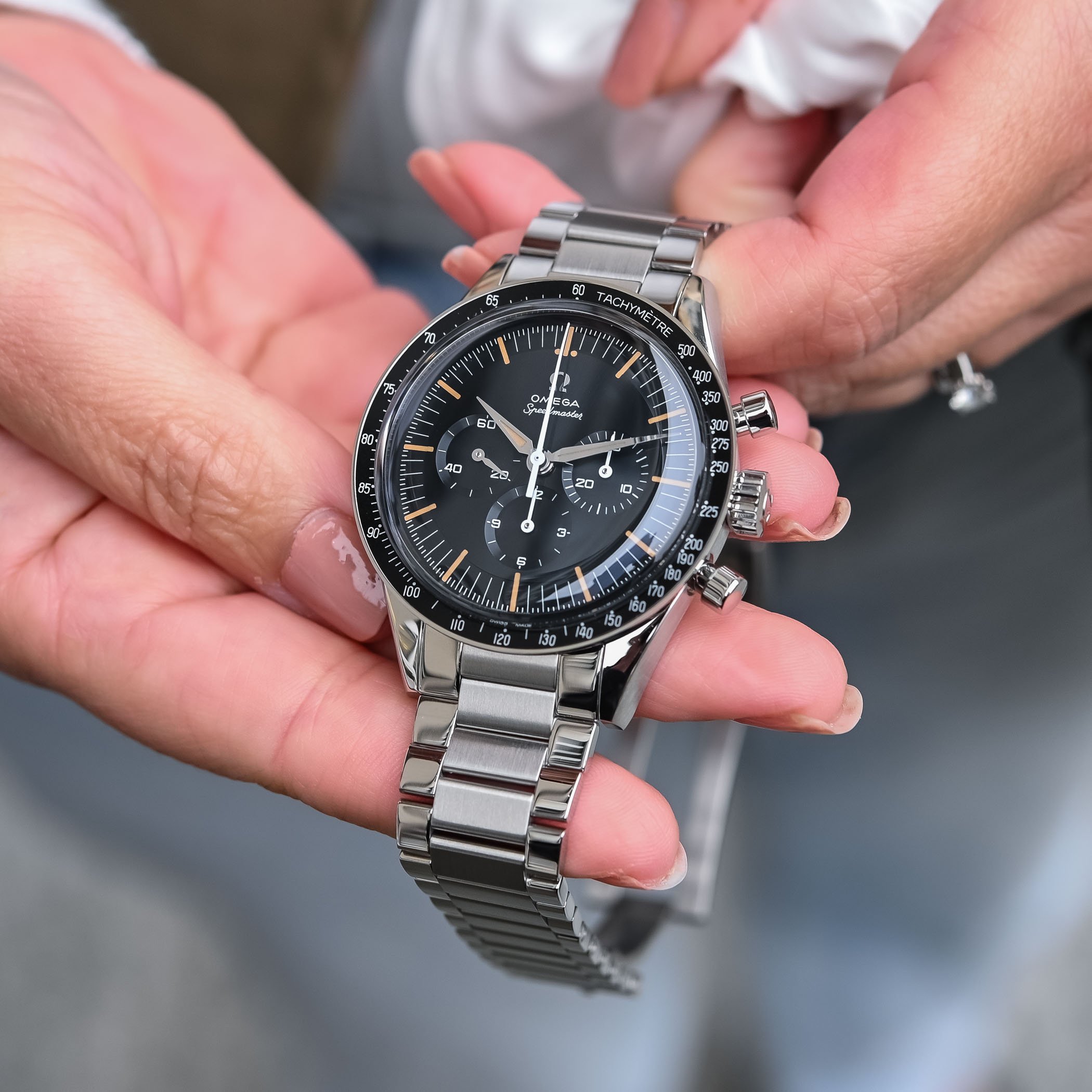
Frank’s first Speedmaster arrived in 2013 at the first Speedy Tuesday event in Noordwijk, The Netherlands.
It wasn’t the standard Moonwatch, but the first-generation Speedmaster First Omega in Space, often shortened by collectors to FOiS.
That model carried a particular charm because it revisited the CK2998, the watch astronaut Wally Schirra wore aboard the Sigma 7 capsule in 1962.
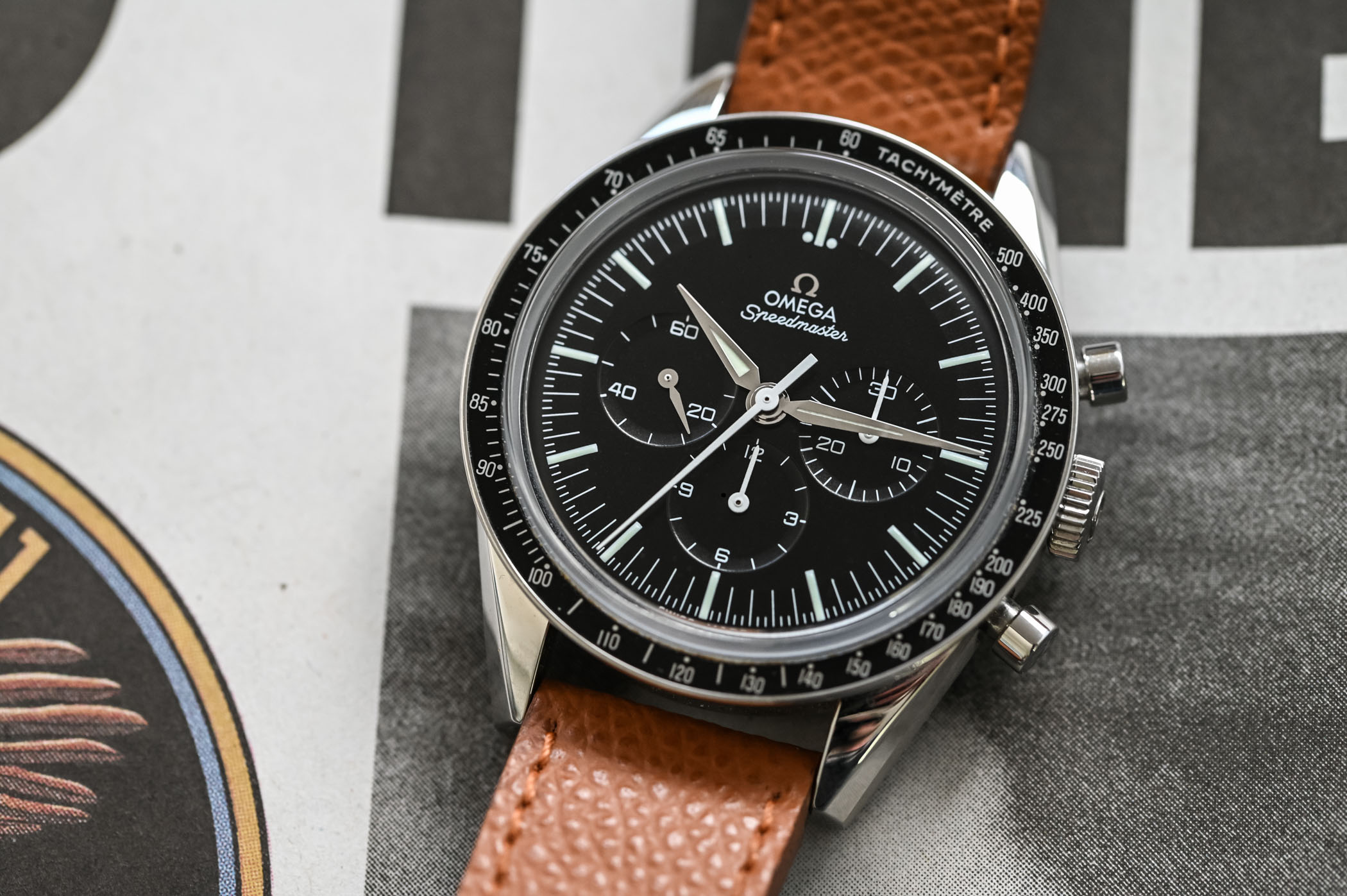
The FOiS also offered a different feel on the wrist from the familiar Moonwatch formula.
Its symmetrical case, lack of crown-guard asymmetry and leather strap gave it a cleaner, slightly more vintage-led presence.
For a while, that made it feel like the purest answer.
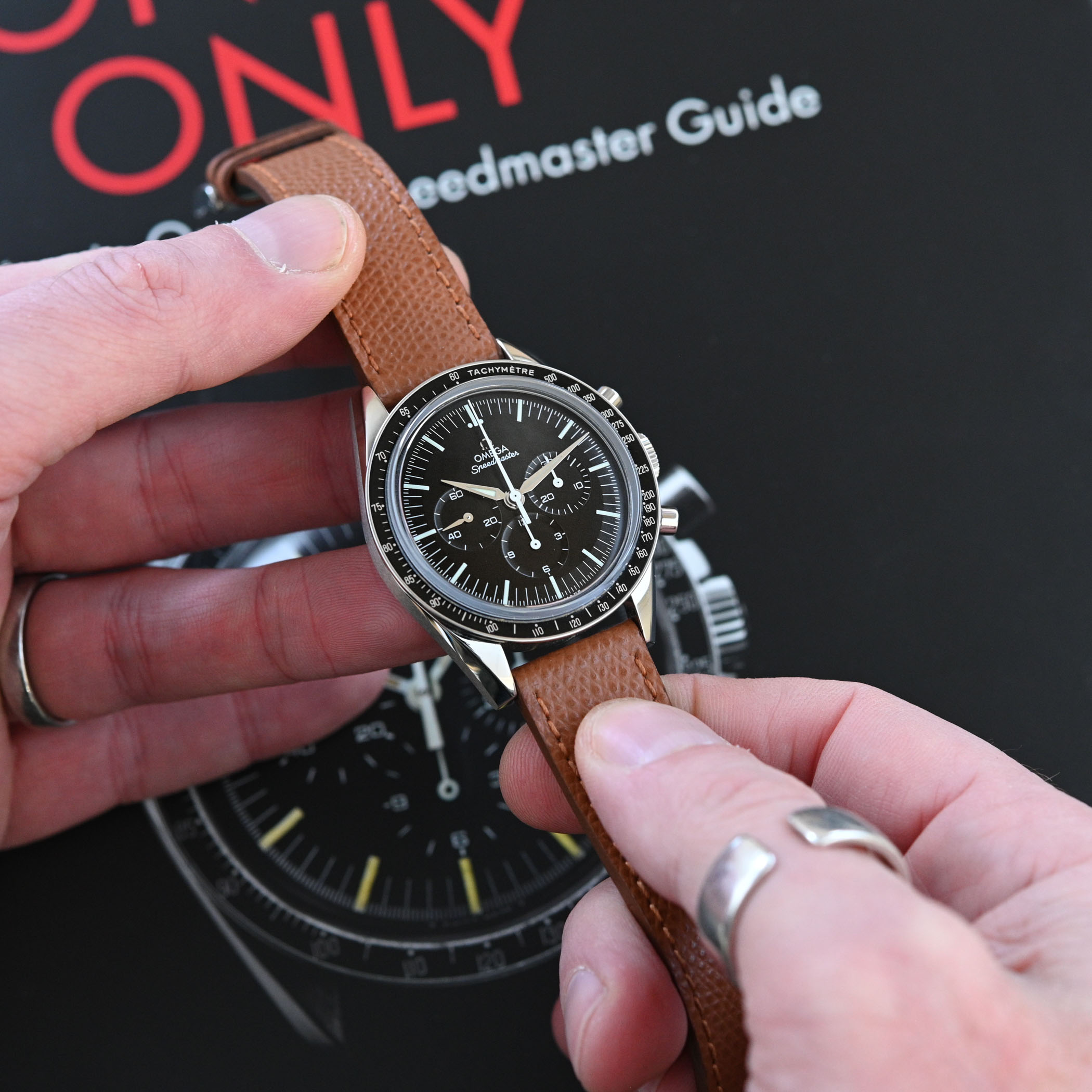
Then the obvious doubt returned, because the FOiS may be historically compelling, but it still isn’t the Moonwatch in the strictest sense.
Back to the Moonwatch question
Once the search narrowed to the actual Moonwatch family, the decision didn’t get easier.
The familiar fork in the road appeared quickly, with sapphire crystal or hesalite crystal, solid caseback or display back, modern practicality or period-correct atmosphere.
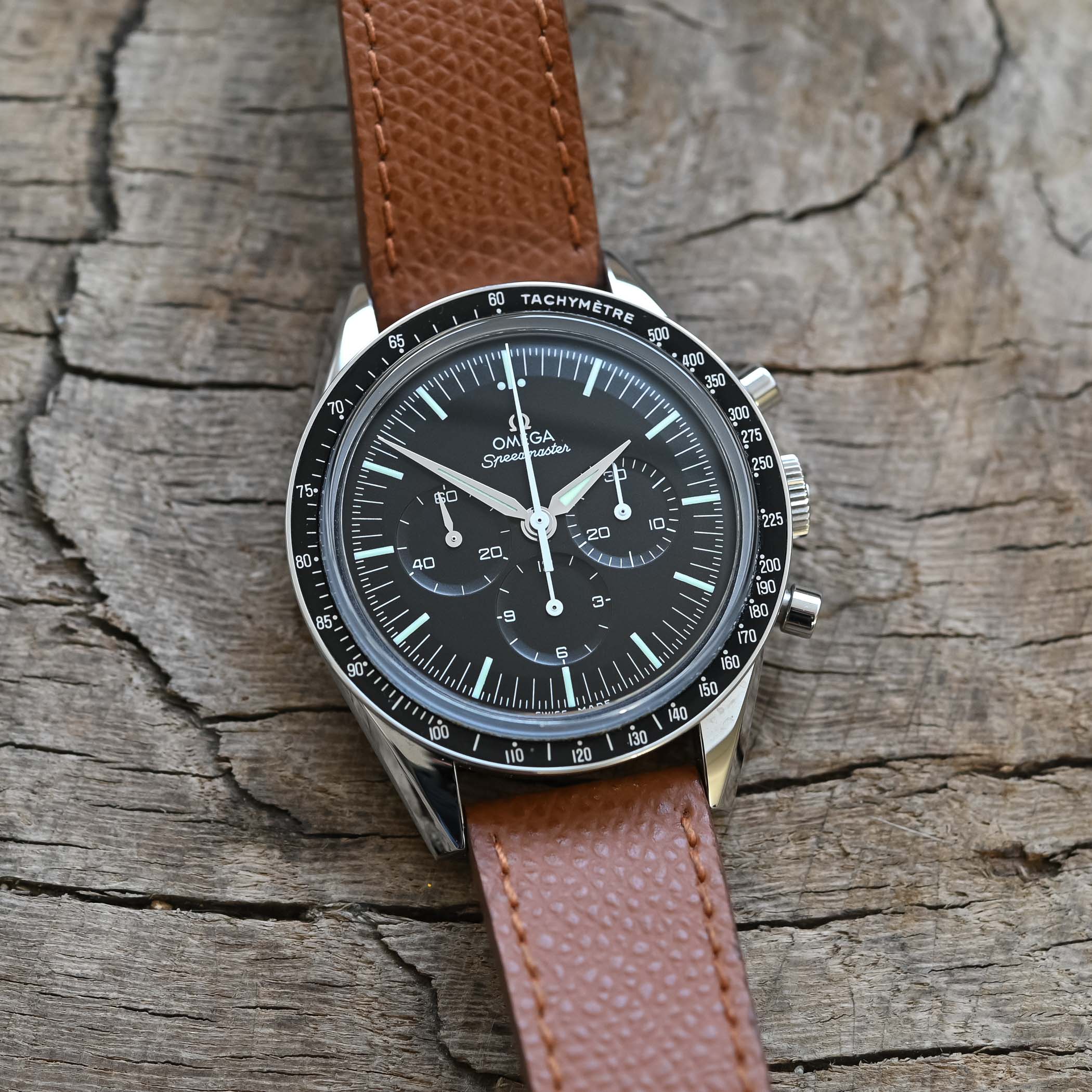
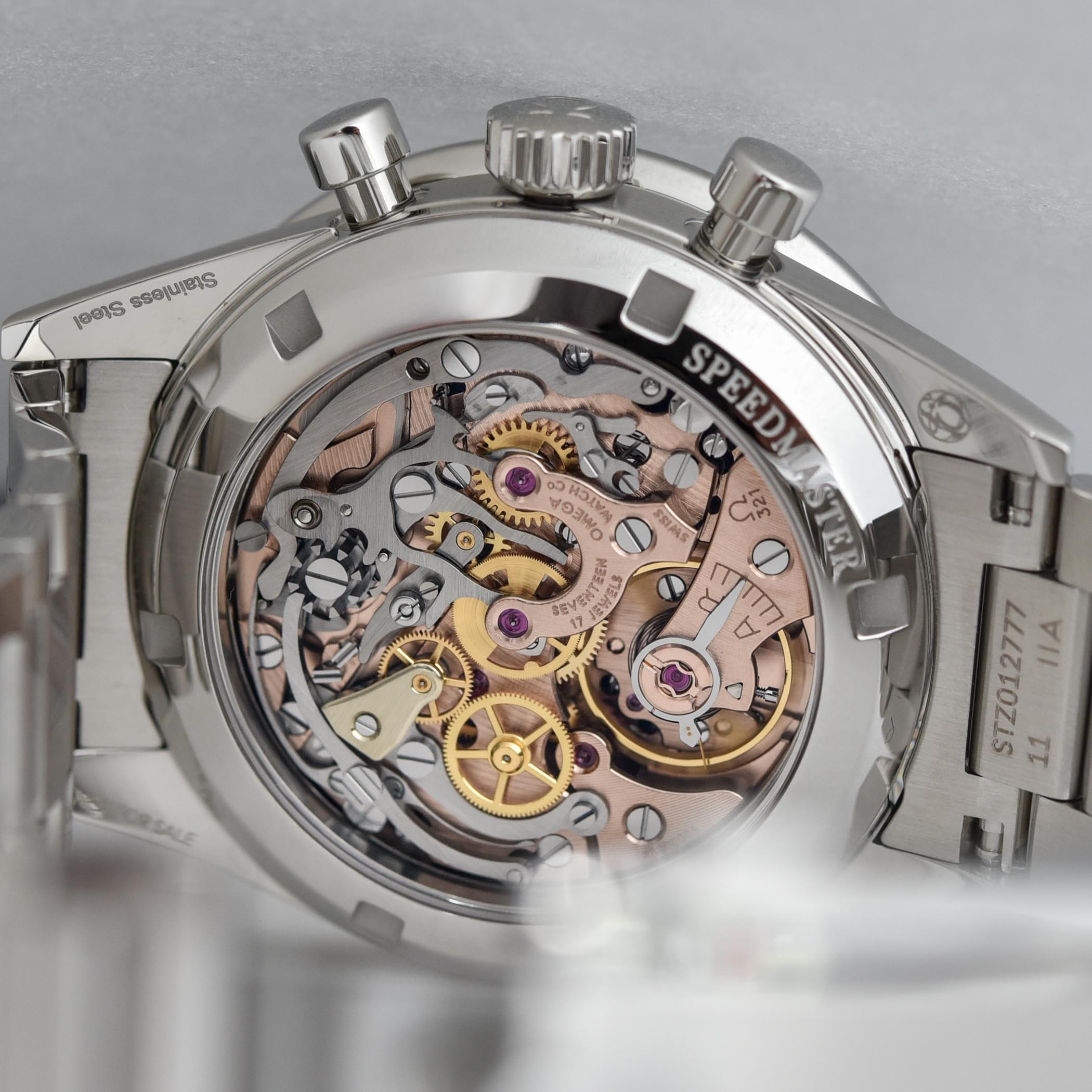
Then came the modern Ed White with Omega’s recreated calibre 321, a watch that speaks directly to enthusiasts who care about movement architecture as much as case shape.
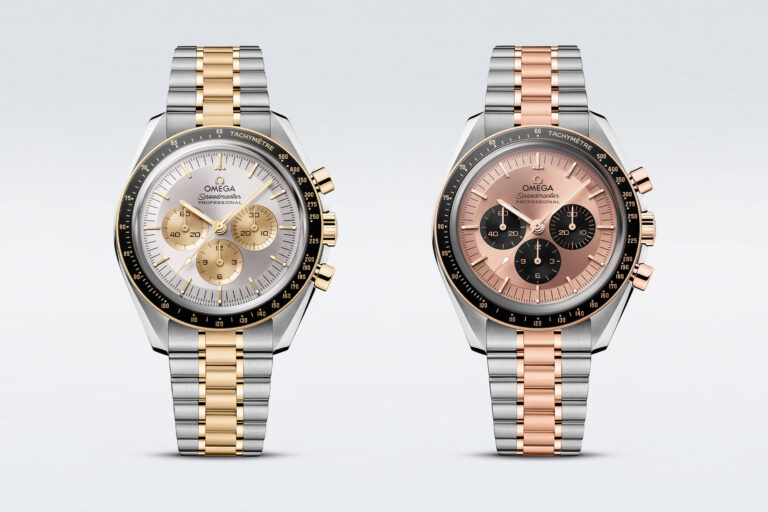
The Canopus gold version added another temptation, though its price put it in a very different collecting bracket.
Vintage remained a serious possibility too, particularly the idea of finding a complete birth-year Speedmaster with box and papers.
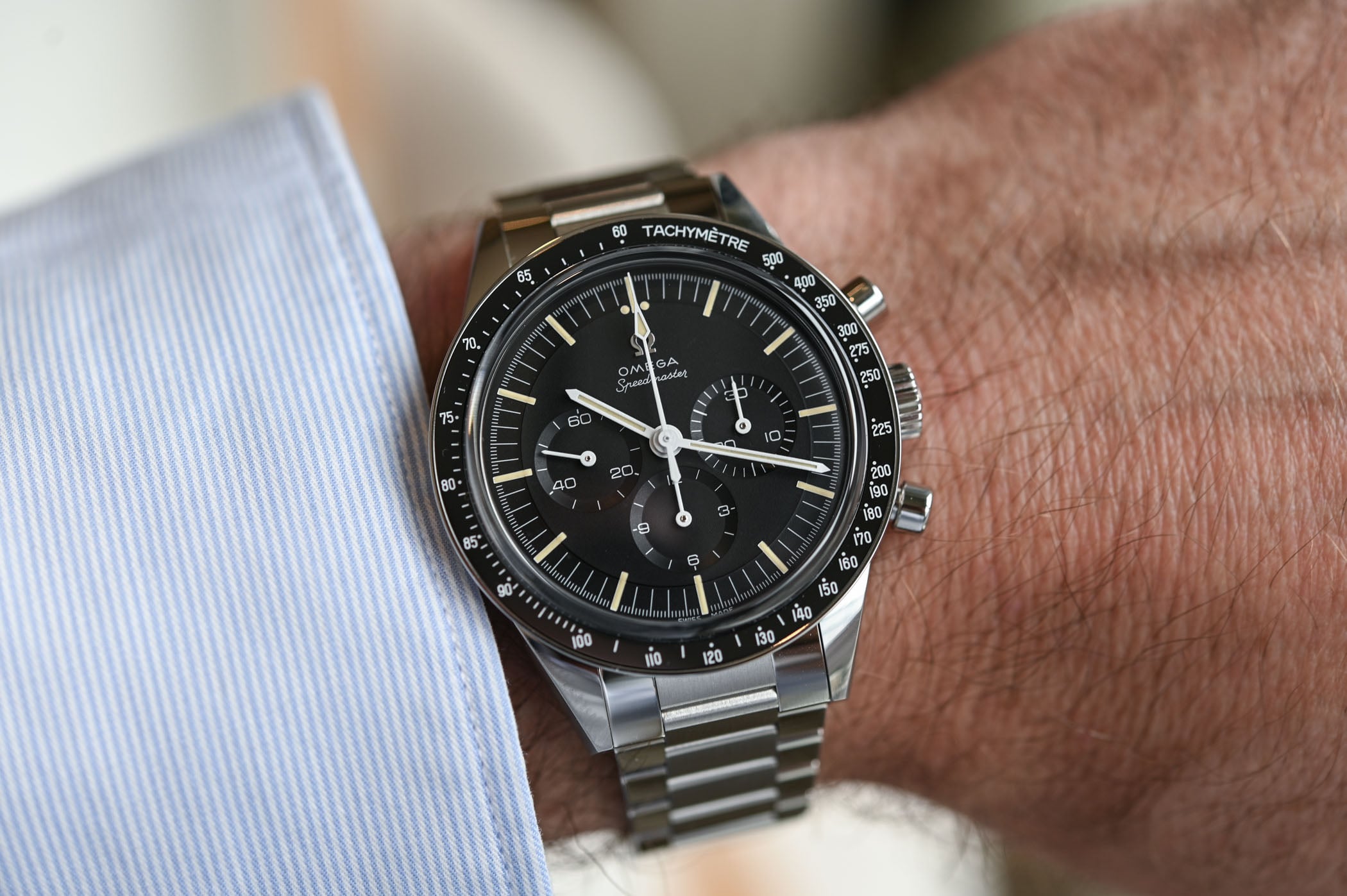
That kind of hunt has its own romance, but also its own frustrations, especially when condition, originality and completeness all matter.
Details & Specifications
| Brand | Omega |
|---|---|
| Collection | Speedmaster |
| Key historic reference | Speedmaster ST 105.003 |
| NASA qualification | Declared flight-qualified for all manned space missions in 1965 |
| First Omega in Space inspiration | CK2998 worn by Wally Schirra aboard Sigma 7 in 1962 |
| FOiS case style | Symmetrical case |
| Moonwatch case style | Asymmetrical case with crown and pusher protection |
| Notable modern option | Ed White model with recreated calibre 321 |
The Speedmaster that finally settled it
The decisive moment came when Omega introduced a new Speedmaster Moonwatch that immediately caught Frank’s attention.
After years of weighing vintage charm against modern execution, and historical purity against everyday wearability, this was the model that ended the search.
That’s what makes the Speedmaster such a satisfying collecting subject.
It can be approached as a NASA watch, a design icon, a movement story, a vintage chase or simply one of the most versatile chronographs ever made.
Frank’s journey is a reminder that the “right” Speedmaster isn’t always the most obvious one, and that sometimes the long route is the only way to know when a watch finally fits.