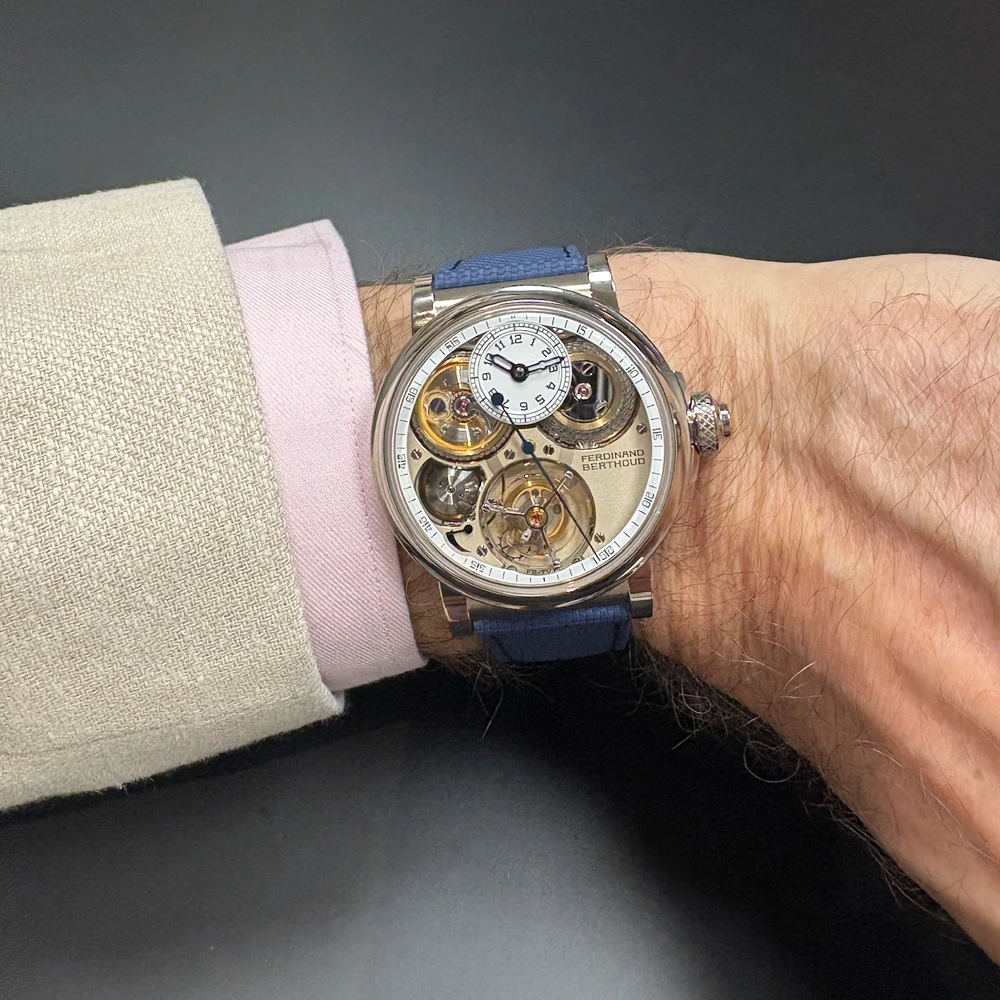
The Ferdinand Berthoud Chronomètre FB 2TV is the first watch in the new Mesure du Temps 1787 collection, and it places the brand’s chronometric obsessions directly on the dial side.
This is not a discreet exercise in heritage design, but a highly architectural watch that uses 18th-century marine chronometer thinking as a framework for contemporary haute horlogerie.
The 1787 idea behind the new collection
The Mesure du Temps 1787 name refers to Ferdinand Berthoud’s late treatise on measuring time, longitude clocks and their application to portable watches.
That historical reference matters here because the FB 2TV is concerned less with decoration for its own sake and more with the mechanical management of precision, power delivery and synchronisation.
Since the marque’s 2015 revival, Ferdinand Berthoud has built its identity around complex chronometer architecture, most notably with tourbillon movements, fusee-and-chain systems and unusual power-reserve displays.
An inverted display built around the seconds
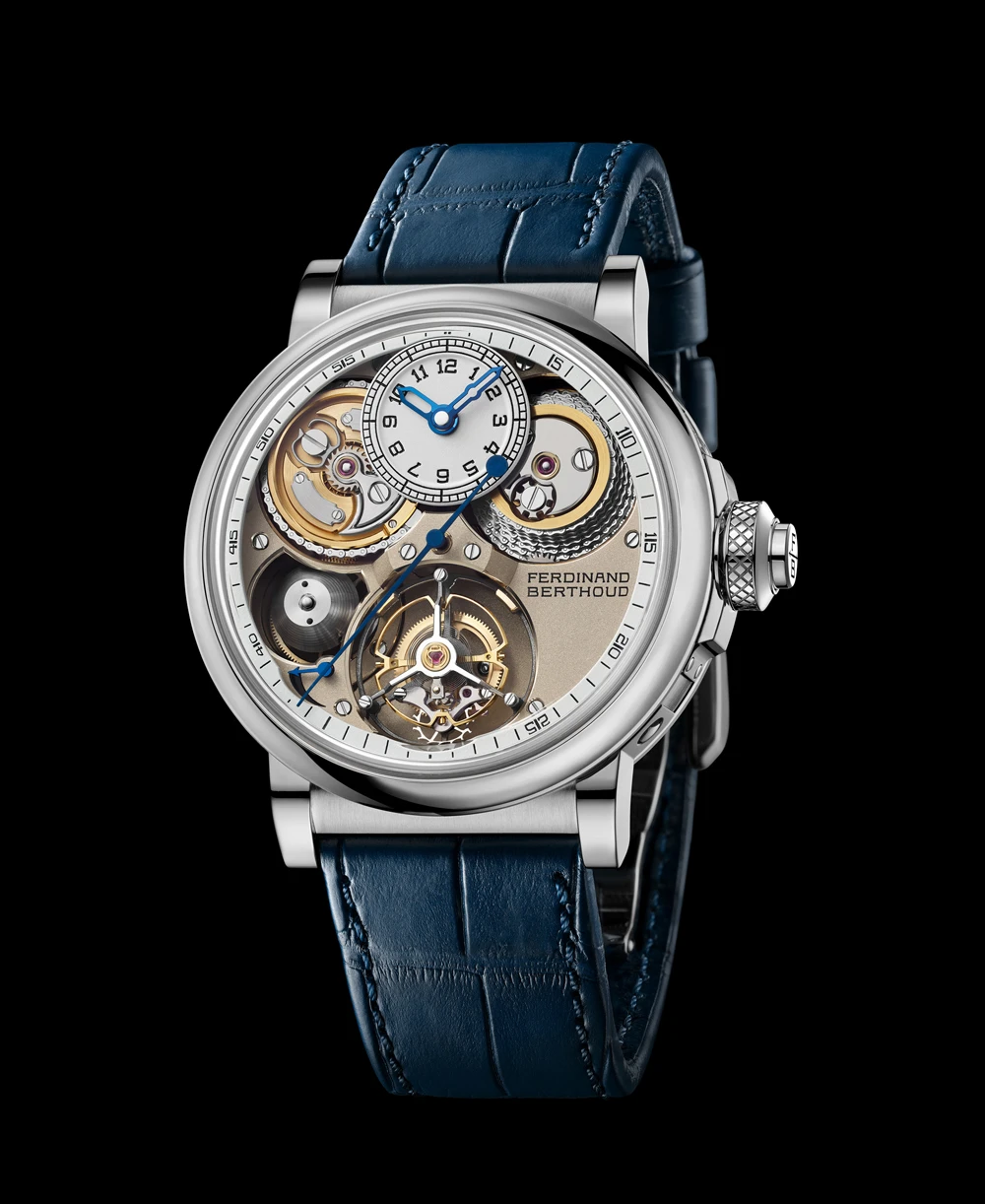
The FB 2TV turns much of its movement architecture toward the wearer, giving the watch a technical front-of-house character rather than hiding its mechanisms beneath a conventional dial.
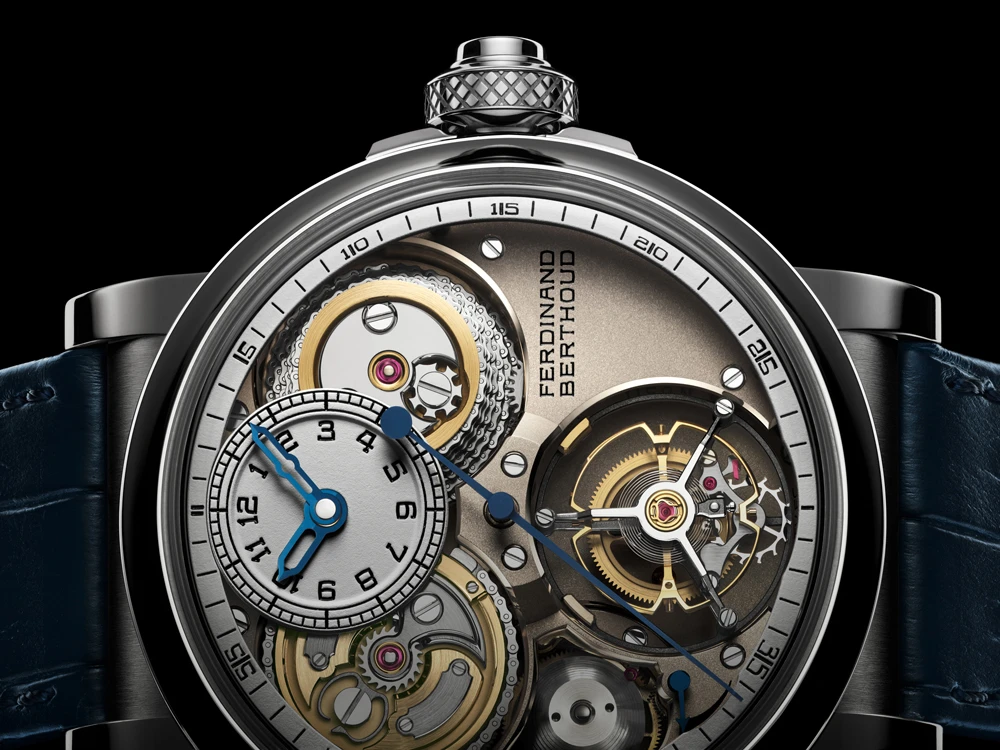
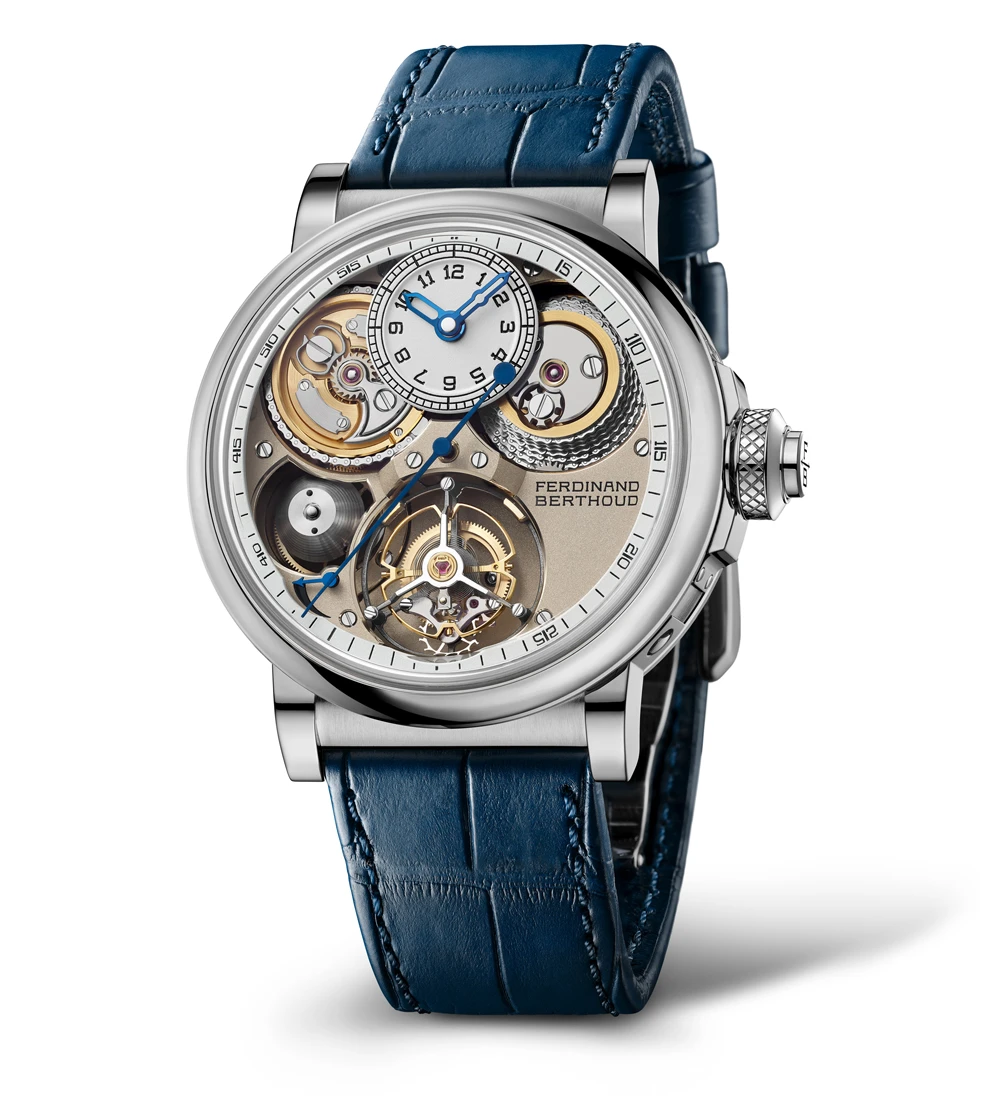
Time is read on a matte white off-centre display at 12 o’clock, using blue sword-shaped hands, Arabic numerals and a black chemin de fer minute track for clarity.
The central seconds hand is the visual anchor, a deliberate nod to marine chronometers where the seconds display had practical navigational importance rather than mere aesthetic value.
A power-reserve indication sits around 7:30 and uses the brand’s patented mobile cone concept, adding another animated element to an already kinetic composition.
A flying tourbillon with a serious stop-seconds function
The FB 2TV uses a flying tourbillon, which removes the upper bridge and leaves the cage supported from beneath.
The result is a clearer view of the regulating organ, the escapement and the balance spring, with the large tourbillon cage giving the complication the visual space it deserves.
More interesting than the view alone is the stop-seconds system, because it halts the entire tourbillon cage rather than simply interrupting the balance.
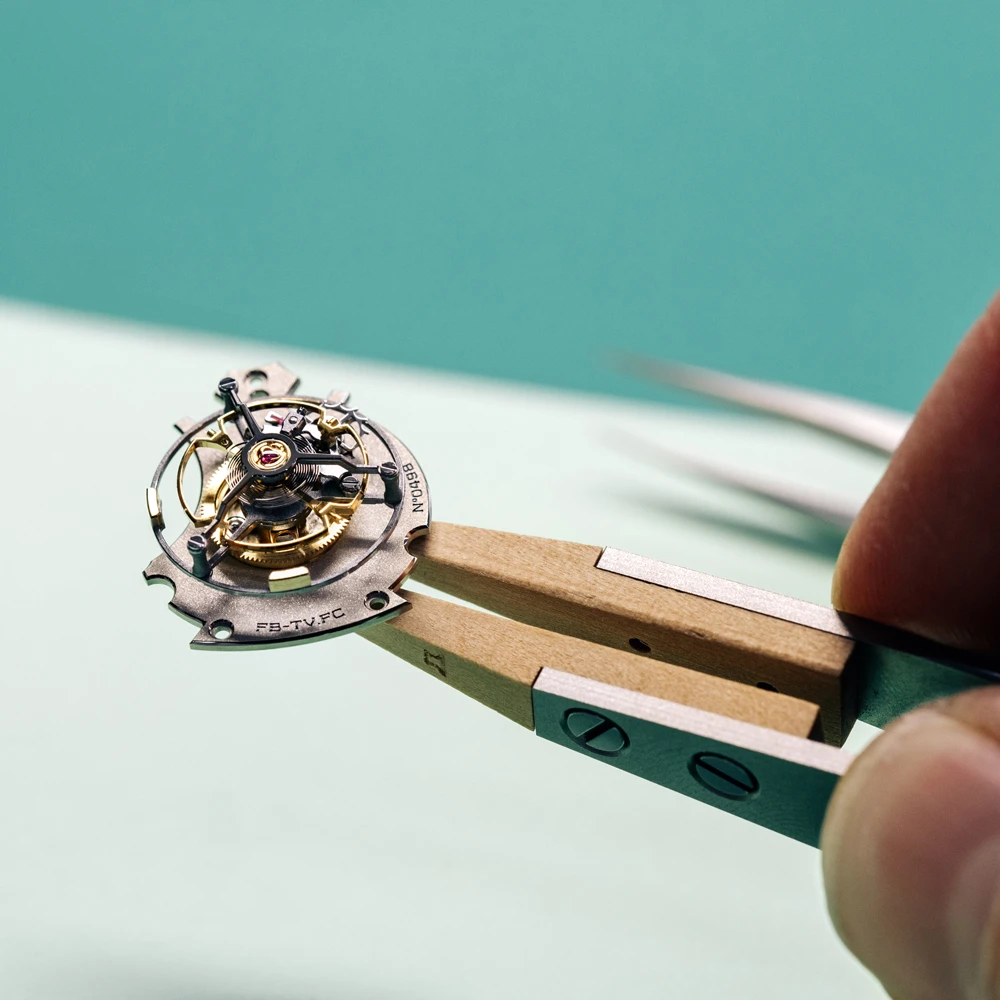
That makes the watch easier to synchronise precisely, which fits the chronometer-minded character of the piece far better than a tourbillon presented only as spectacle.
Fusee-and-chain constant force and flyback seconds
The FB 2TV also retains one of Ferdinand Berthoud’s defining mechanical signatures, a fusee-and-chain transmission designed to even out torque delivery as the mainspring unwinds.
In practical terms, the mechanism addresses rate stability by helping the escapement receive more consistent energy across the power reserve.
The watch adds another uncommon feature with its flyback central seconds, operated by a pusher integrated into the crown.
One press resets the seconds hand to zero and immediately restarts it, creating a useful synchronisation function that feels unusually coherent within a watch so focused on measurement.
The Chronomètre FB 2TV is aimed at collectors who want mechanical transparency with purpose, not just an openworked display.
It is demanding, technical and proudly niche, but that is exactly where Ferdinand Berthoud tends to be most convincing.