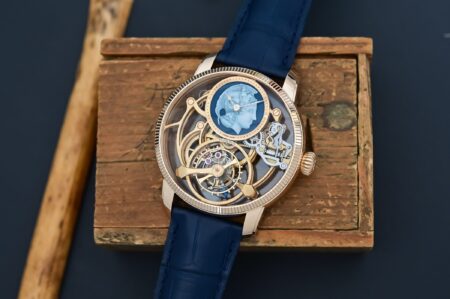
The Chopard L.U.C Quattro Revolution Re-edition arrives with the kind of quiet confidence that suits the L.U.C line best.
Its appeal isn’t built around spectacle, but around a movement idea that helped shape Chopard’s modern watchmaking identity at the turn of the millennium.
For collectors who follow independent-minded high horology, the Quattro name still carries weight because it solved a practical problem with real mechanical elegance.
At a glance
- Chopard’s L.U.C Quattro Revolution Re-edition revisits the four-barrel long-power-reserve concept introduced by the L.U.C Quattro in 2000.
- The watch is powered by Caliber 98.01-L, known for its stacked barrel architecture, Geneva Seal finishing and swan-neck regulator.
- Its 216-hour reserve and high-finish movement make it a collector-focused L.U.C piece rather than a trend-led dress watch.
A pivotal Chopard idea from the L.U.C era
When Chopard introduced the L.U.C Quattro Reference 16/1863 in 2000, the watch made a clear technical statement.
At a time when extended power reserves were far less common in elegant wristwatches, Chopard managed to deliver 216 hours of autonomy inside a case measuring just 38mm across and 9.54mm thick.
That balance between endurance and restraint is central to the Quattro story.
The model followed the L.U.C 1860, the 1997 watch that established Chopard’s Fleurier manufacture as a serious force in contemporary haute horlogerie.
Like that earlier landmark, the original Quattro combined COSC chronometer certification with the Geneva Seal, anchoring its technical ambition in traditional Swiss finishing standards.
The Revolution Re-edition taps into this lineage without needing to shout.

It belongs to a branch of watchmaking where the achievement is best understood through proportion, architecture and the way a calibre behaves over time.
The four-barrel architecture behind the Quattro name
The name Quattro comes from the Latin word for four, and the number matters here.
Inside the movement are four mainspring barrels arranged as two stacked pairs, coupled in series to create the long reserve.
The idea developed from Chopard’s work on Caliber 1.96, the micro-rotor automatic movement that used stacked barrels to help achieve strong autonomy in a compact format.
With the Quattro, Chopard effectively doubled down on the concept, using two sets of stacked barrels to keep energy delivery stable across a much longer running time.
The principle is not simply about making a watch run for longer after winding.

Each barrel contributes its useful portion of energy before torque drops too far, helping preserve amplitude and consistency rather than stretching one mainspring beyond its ideal operating window.
That detail is what separates the Quattro from a merely large-reserve watch.
Its 216-hour reserve is impressive, but the more interesting point is how the movement manages that energy with discipline.

Finishing that rewards a closer look
The Revolution Re-edition uses Caliber 98.01-L, the modern designation for the Quattro movement formerly known as Caliber 1.98.
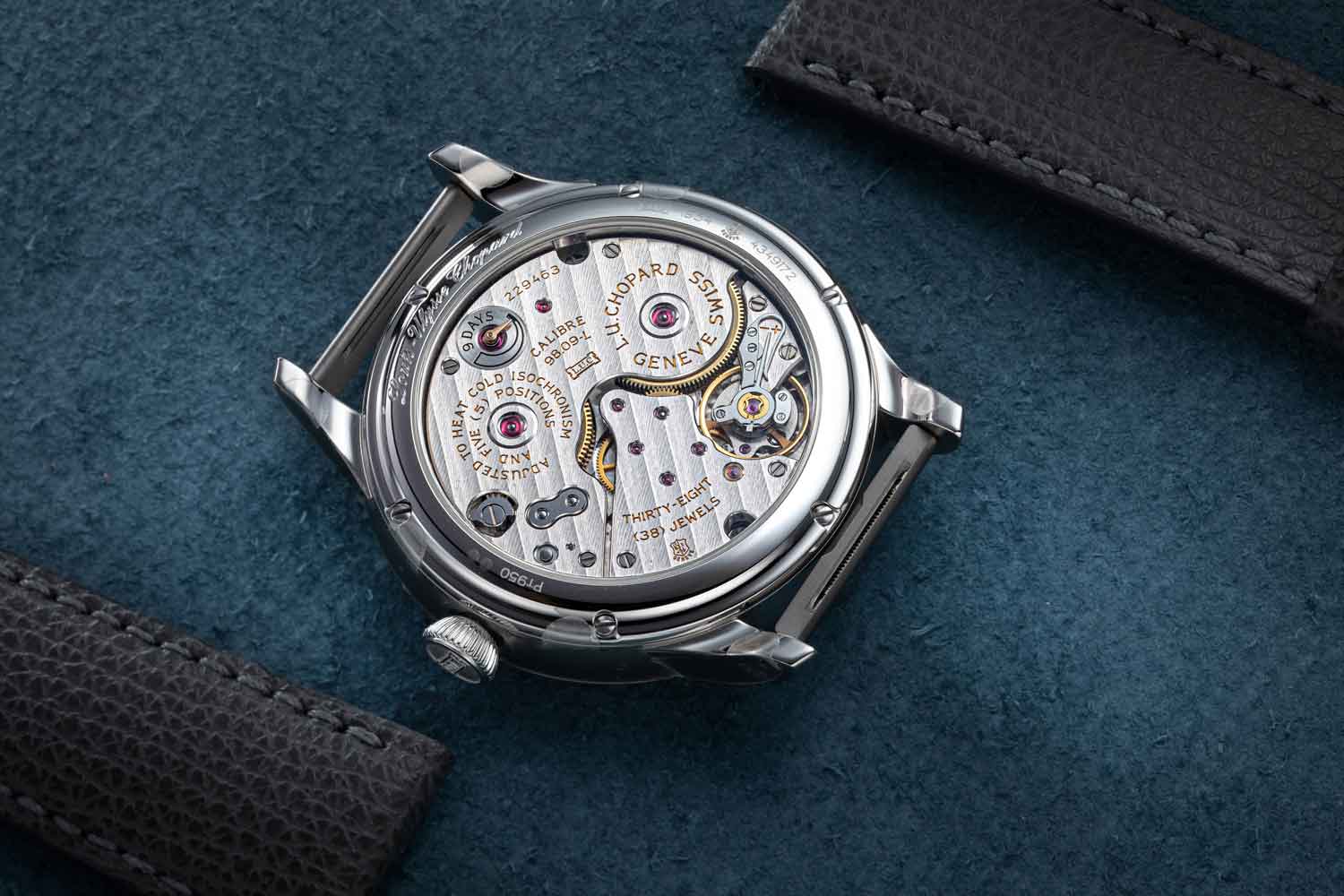
Seen through the sapphire caseback, it presents the classical L.U.C layout with a broad bridge covering the paired barrel stacks and a separate bridge carrying the gear train.
The Geneva Seal is visible on the movement, reinforcing the level of hand-finishing expected from this part of Chopard’s watchmaking.

Côtes de Genève, polished bevels and the black-polished steel swan-neck regulator give the calibre a formal beauty that feels properly mechanical rather than decorative for decoration’s sake.
The architecture is also easy to read.
The barrels dominate the visual field, the train bridge leads the eye toward the escapement, and the regulator provides a sharp, traditional counterpoint.

That clarity is one of the reasons the Quattro remains compelling more than two decades after its debut.
It doesn’t hide its purpose, and it doesn’t reduce watchmaking to a checklist of complications.
The Quattro’s place in Chopard’s modern collection
The broader Quattro family has remained a fixture within L.U.C because its concept has aged well.

Recent versions have refined the watch’s design language, including a 39mm case profile with a rounded mid-case, concave bezel and individually soldered lugs.
That direction brought more architectural softness to the model while keeping the emphasis on restraint.
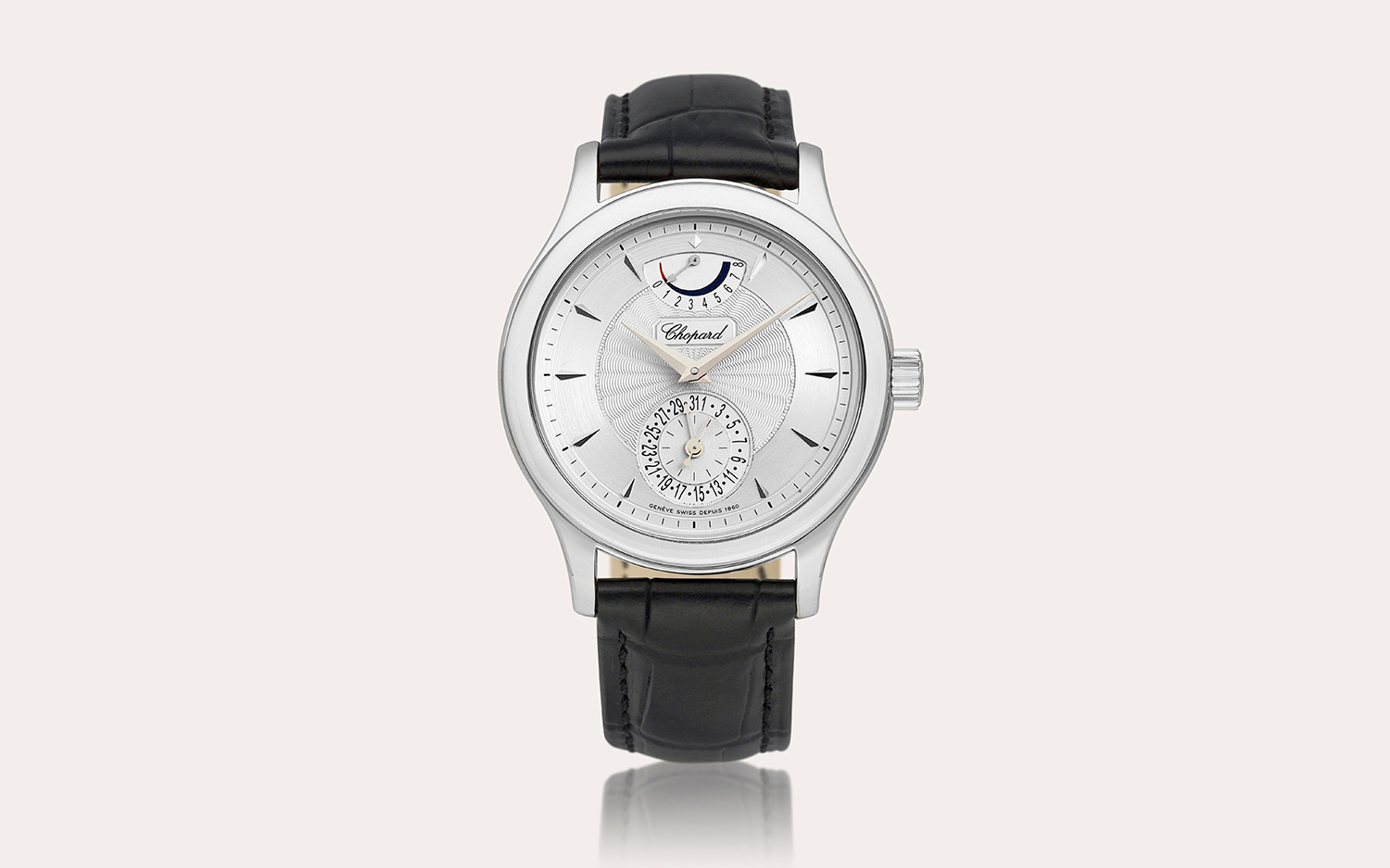
One important design move in the modern Quattro line was the relocation of the power reserve display to the back of the movement, leaving the dial cleaner and more focused.

It’s a decision that suits a watch like this.
The wearer still has access to the technical information, but the front of the watch isn’t forced to explain itself every time it’s seen.
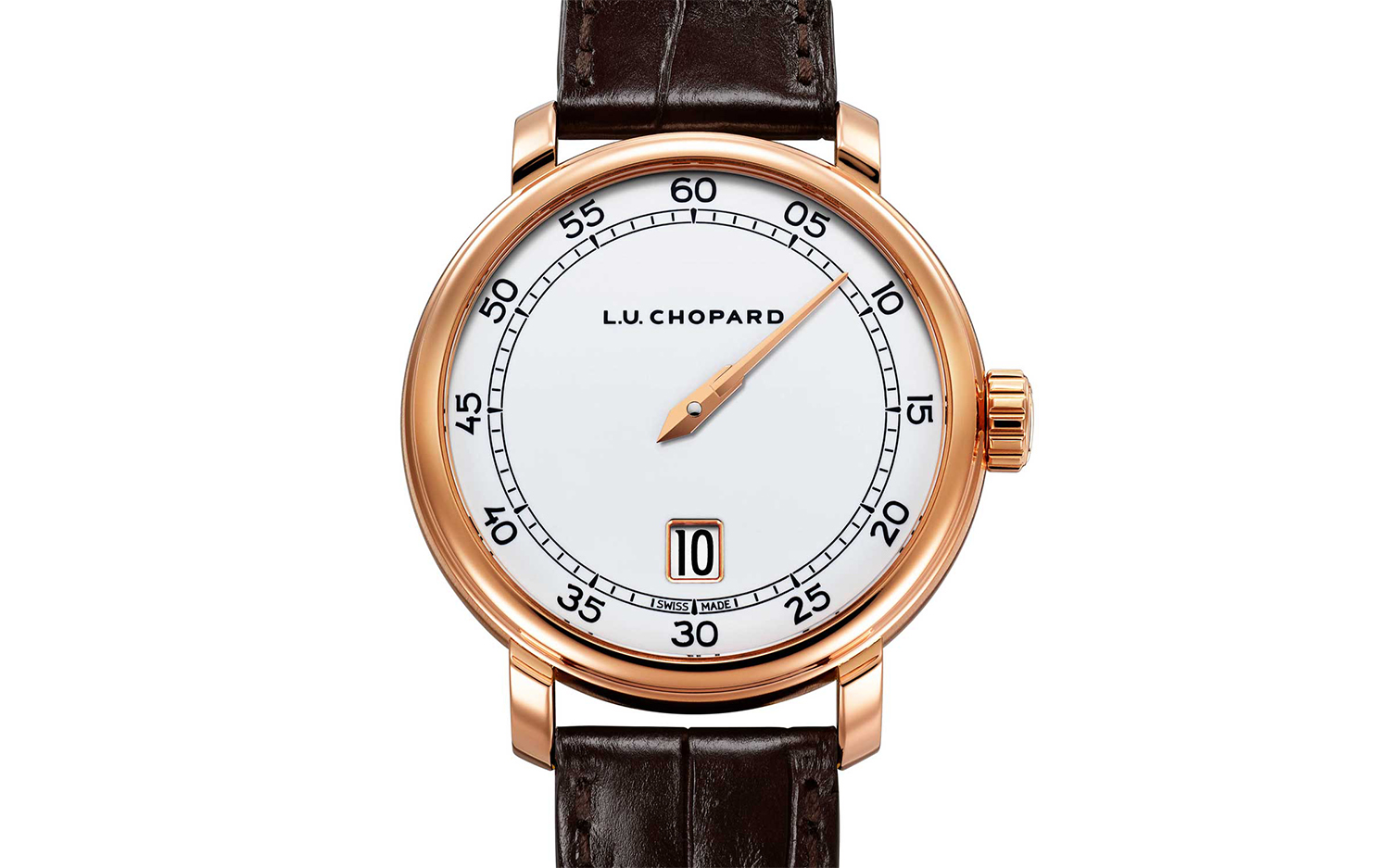
The same movement family has also supported the L.U.C Quattro Spirit 25, Chopard’s first jumping-hour watch, which combined the long-reserve calibre with a grand feu enamel dial.

That context matters because it shows how flexible the Quattro platform has become within the manufacture’s more artisanal work.
Details & Specifications
| Brand | Chopard |
|---|---|
| Model | L.U.C Quattro Revolution Re-edition |
| Collection | L.U.C |
| Movement | Caliber 98.01-L |
| Power reserve | 216 hours |
| Barrel architecture | Four barrels arranged in two stacked sets |
| Movement finishing | Côtes de Genève, polished bevels and Geneva Seal finishing |
| Regulation detail | Steel swan-neck regulator |
| Caseback | Sapphire display back |
The Chopard L.U.C Quattro Revolution Re-edition is most likely to speak to collectors who value mechanical solutions that remain useful beyond their anniversary moment.
Its long reserve, compact historical roots and high-finish calibre make it a reminder that Chopard’s strongest L.U.C watches are often the ones where engineering and elegance are treated as the same discipline.