Audemars Piguet and Swatch have unveiled the Royal Pop, an eight-piece Bioceramic collection that translates Royal Oak design cues into playful hand-wound pocket watches priced from USD 400.
Royal Oak codes freed from the bracelet
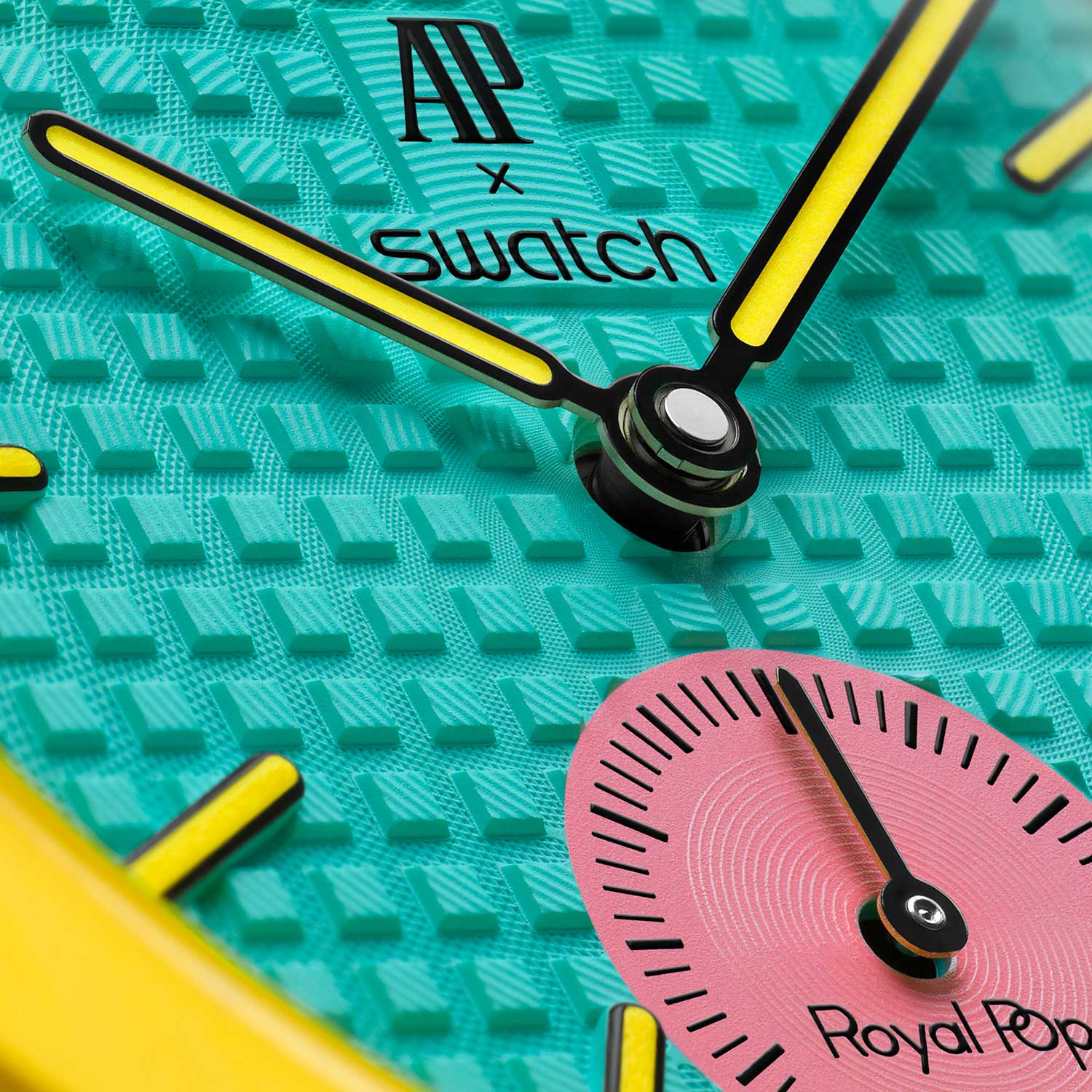
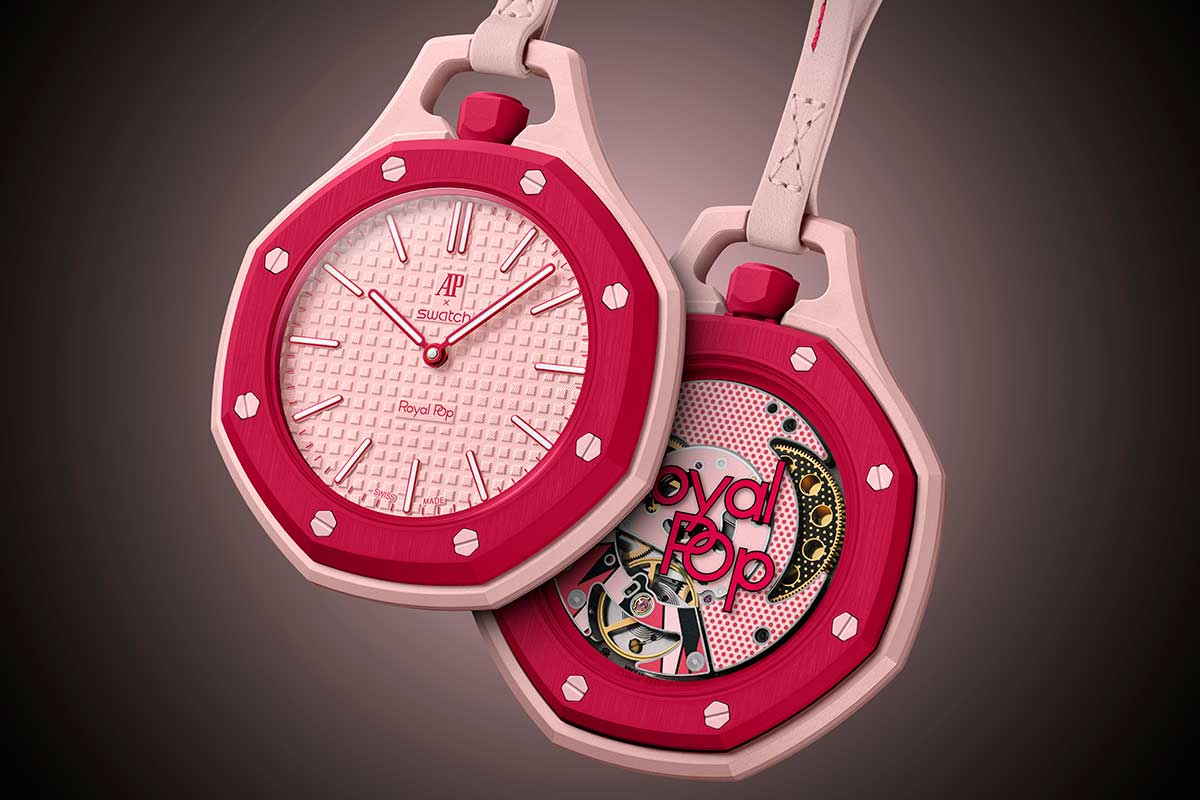
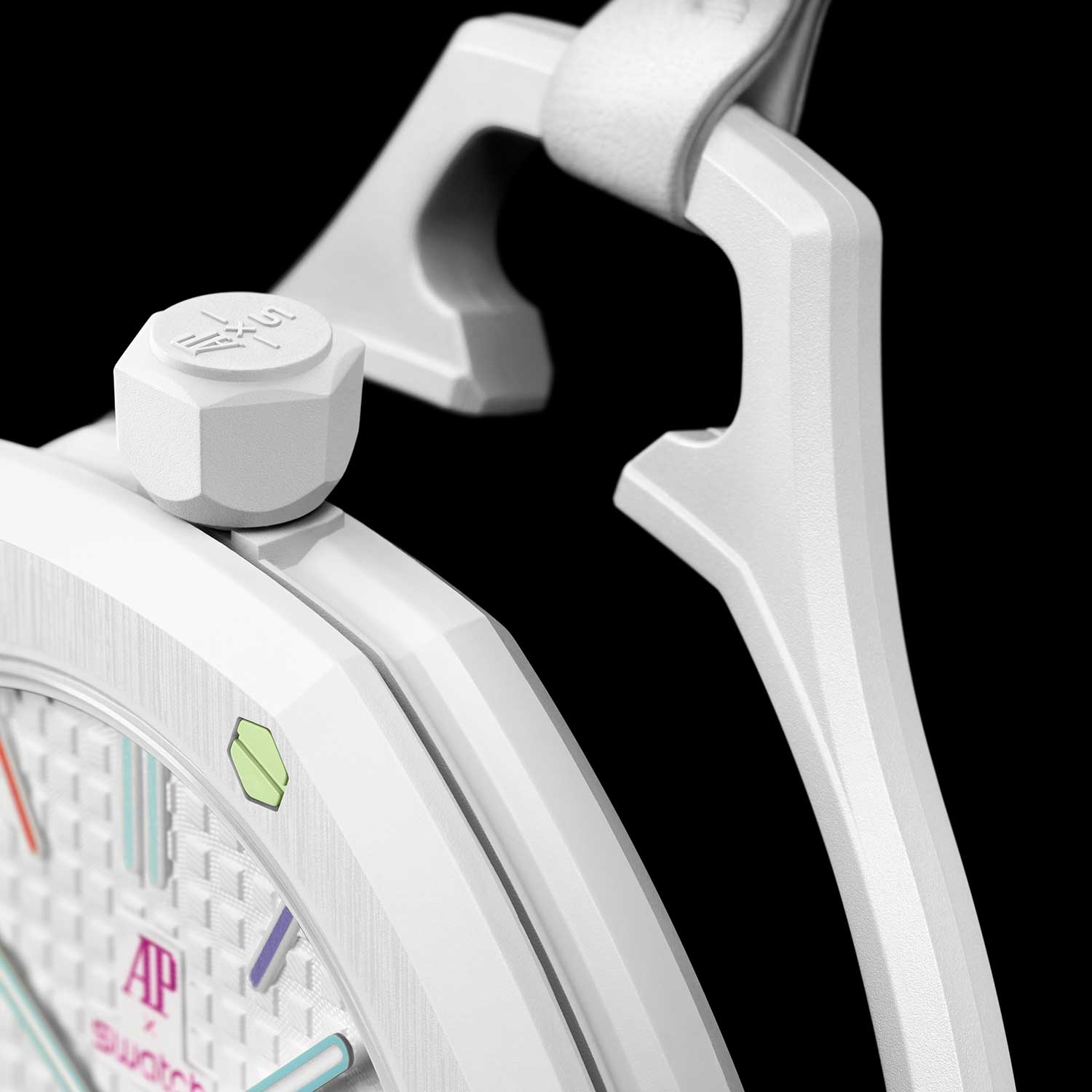
The Royal Pop keeps the octagonal bezel, eight visible screws and Petite Tapisserie-style dial language, but removes the integrated bracelet from the equation entirely.
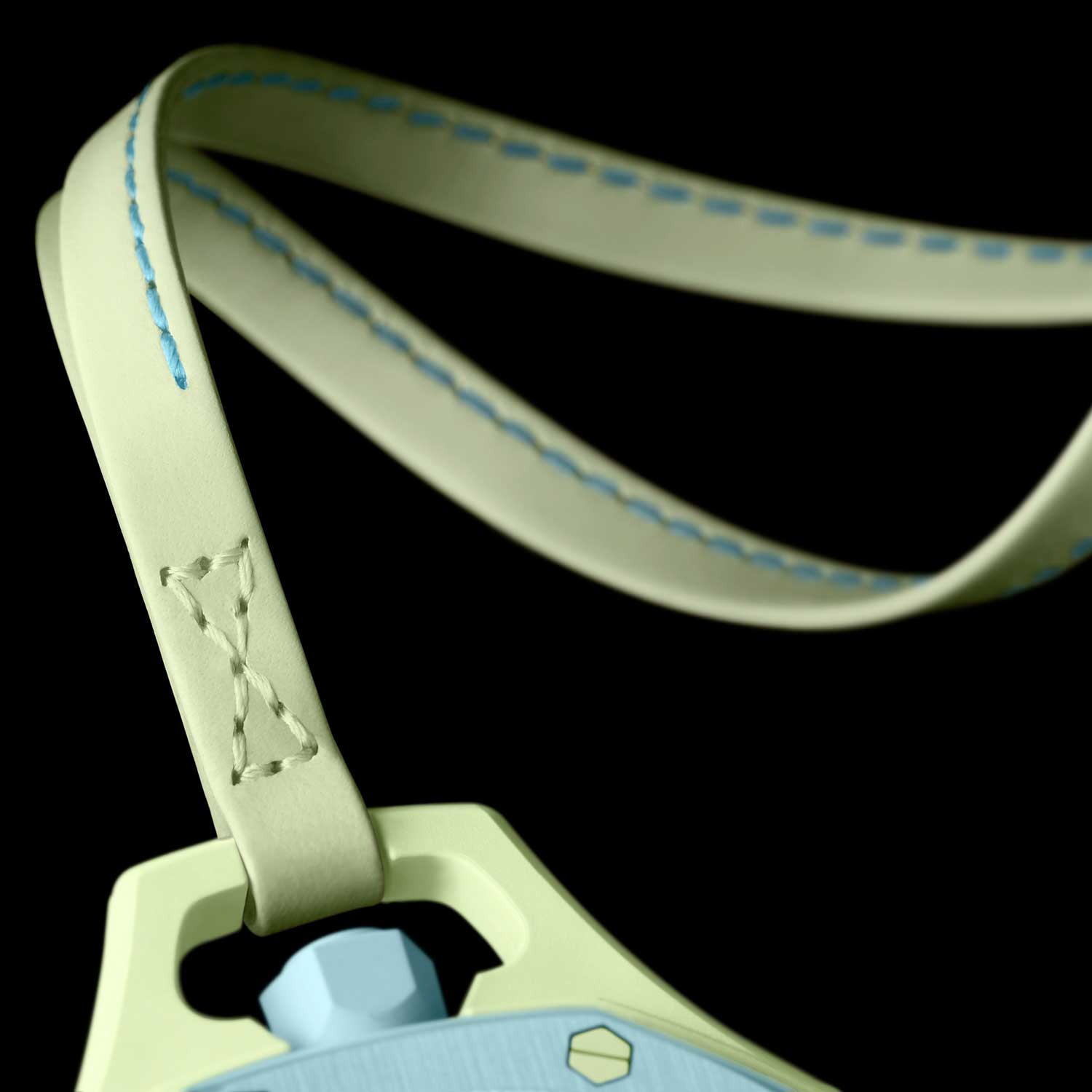
Each watch can be carried in a pocket, worn on its color-matched calfskin lanyard, clipped to a bag, placed on a desk or adapted in more experimental ways, with dimensions of 44.2mm by 53.2mm by 8.4mm when mounted on the clip and a 40mm case diameter without it.
Eight colorways and two pocket watch formats
The collection includes six Lépine-style two-hand models and two Savonnette-style versions with small seconds, spanning references named Otto Rosso, Huit Blanc, Green Eight, Blaue Acht, Orenji Hachi, Lan Ba, Ocho Negro and OTG ROZ.
Some executions lean into bright contrast, especially OTG ROZ and Huit Blanc, while Green Eight and Otto Rosso feel more tonal, all with AP × Swatch and Royal Pop dial markings plus Grade A Super-LumiNova on the hour markers.
A hand-wound Sistem51 with a useful twist
Inside is a new manual-winding Sistem51 calibre with 15 active patents, more than 90 hours of power reserve and a Nivachron balance spring, the titanium-based anti-magnetic alloy developed within the Swatch Group orbit with Audemars Piguet.
The barrel drum also works as a simple power reserve indicator, showing gray when the watch needs winding and gold when it is fully wound, while sapphire crystals front and back add welcome durability to the Bioceramic case construction and 20-meter water resistance.
Pricing, availability and the bigger purpose
The Audemars Piguet × Swatch Royal Pop will be available from May 16, 2026, at selected Swatch stores, priced at USD 400 for the Lépine-style models and USD 420 for the Savonnette-style small seconds versions.
Audemars Piguet will direct all of its proceeds from the project toward preserving and teaching watchmaking skills, adding a serious horological purpose to a collaboration that is deliberately colorful, accessible and notably presented as a one-off.
Collectors looking for a conventional Royal Oak will not find one here, but that is exactly the point, since Royal Pop treats one of watchmaking’s most familiar design languages as something portable, informal and open to a far wider audience.