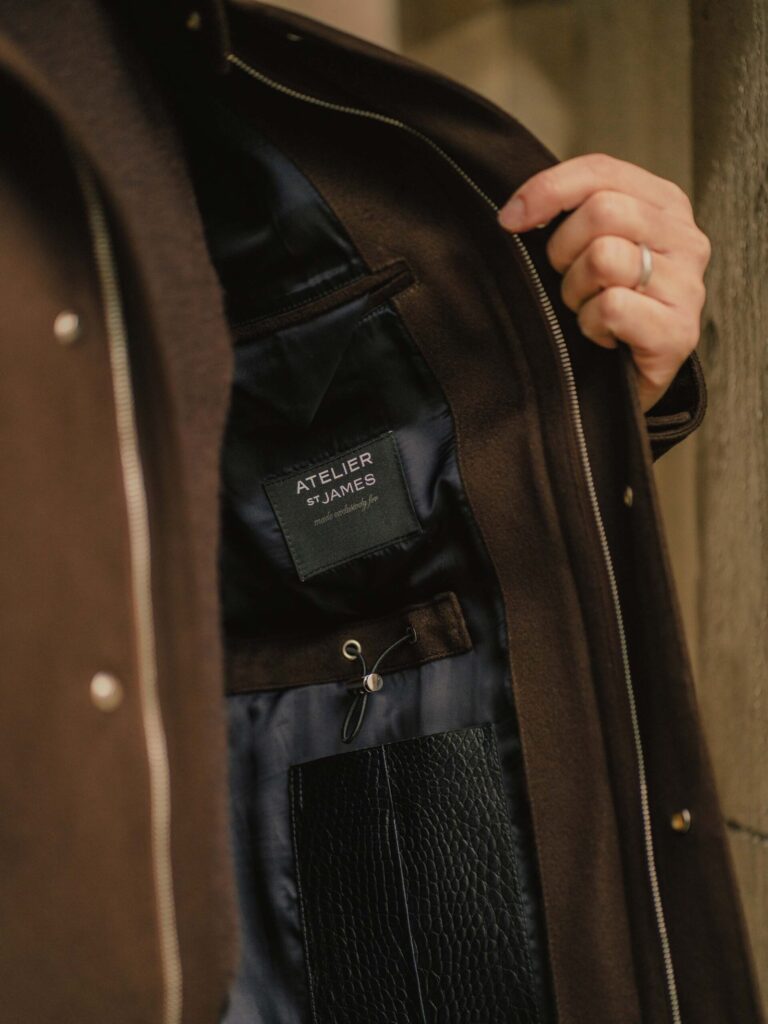
Luxury tailoring is having a quieter moment, and Atelier St James sits neatly within that shift.
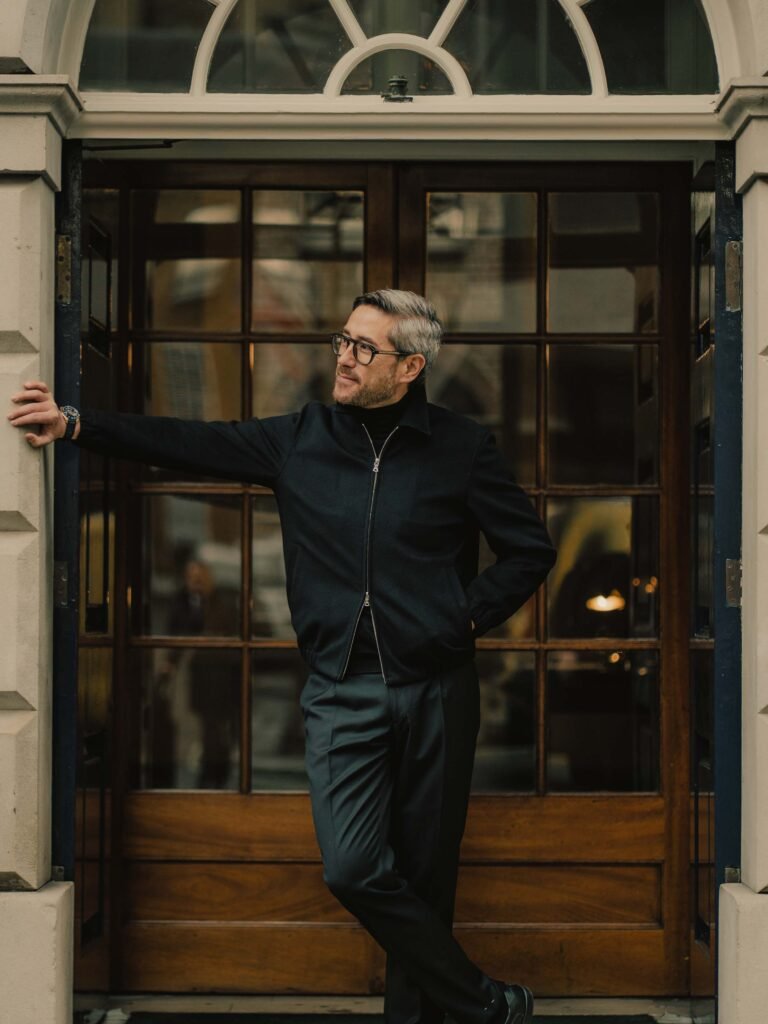
Founded in 2023 by Abel Gallasz, the London atelier approaches bespoke clothing as something more intimate than a display of status. Its focus is outerwear, tailoring and refined casual pieces shaped around the person who will actually live in them.
The appeal lies in the balance. English bespoke discipline meets a softer Italian sensibility, resulting in garments that feel precise without looking rigid.
At a glance
- Atelier St James is a London bespoke house founded in 2023 by Abel Gallasz.
- The atelier combines hand-drafted patterns, in-house construction and fine fabrics with a modern approach to tailoring, outerwear and elevated casualwear.
- Operating by appointment in St James’s, it serves clients seeking discreet, highly personal garments made with long-term wear in mind.
A London atelier built on restraint
Atelier St James is based in St James’s, one of London’s most historically significant tailoring districts.
Gallasz arrived at his own house after a career that began in menswear in Budapest and continued in the United Kingdom, where he spent nearly a decade with one of the world’s leading menswear houses.
That background shows in the atelier’s measured approach.
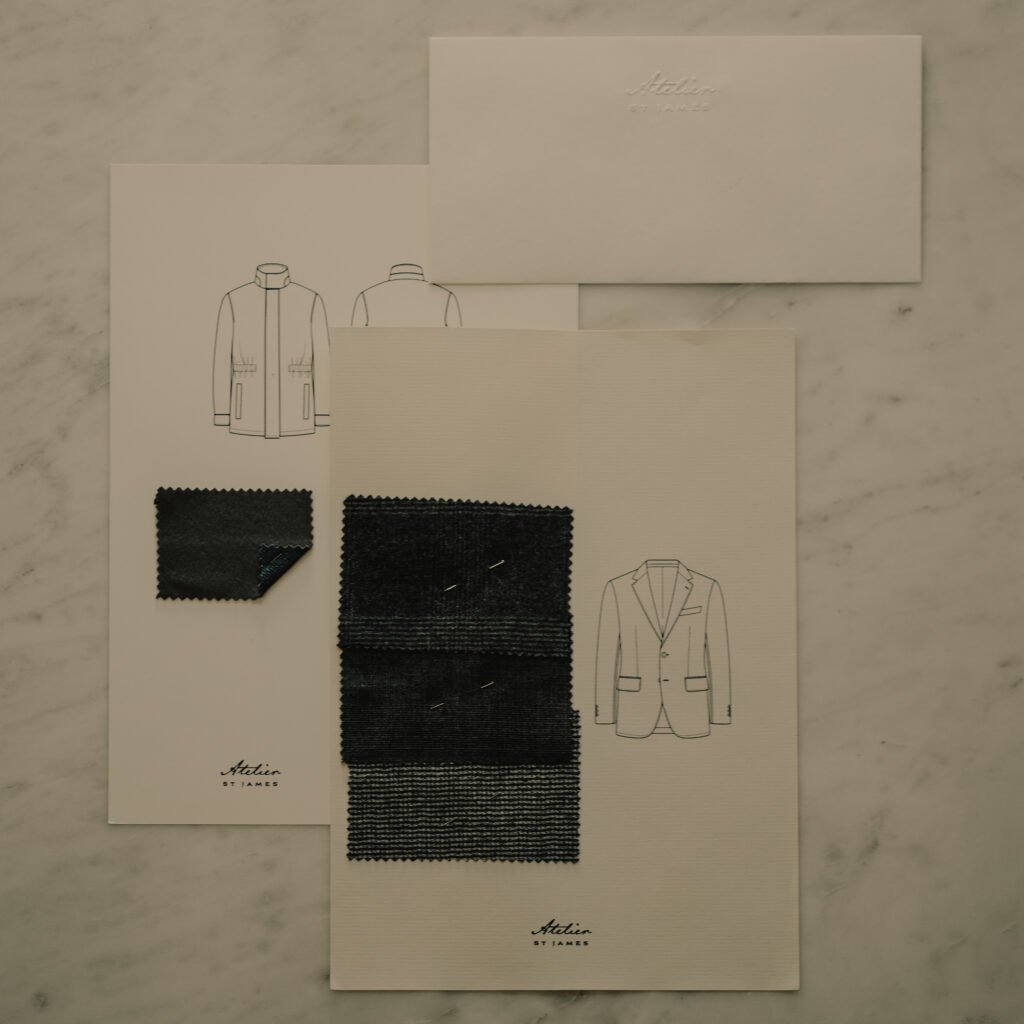
The clothing isn’t built around seasonal noise or conspicuous branding. It’s built around proportion, cloth, finish and the kind of fit that looks natural rather than forced.
There’s an old-world seriousness to the work, but the final garments are designed for contemporary wardrobes.
That means coats, jackets and relaxed tailored pieces that can move between travel, work, private events and everyday life without feeling like costume.

Bespoke begins before the tape measure
For Atelier St James, the first appointment is as much about understanding a life as taking dimensions.
Clients discuss how they dress, where they travel, what they already own and what a new commission needs to do.
“We believe the best customisation is considered, intuitive and personal,” says Gallasz.
That philosophy matters because bespoke tailoring can easily become technical before it becomes human.
Here, the technical work follows the personal brief.
Clients are guided through fabrics from respected heritage mills, with attention paid to handle, durability, texture and the way a cloth will behave over time.
Lining, trim and finishing details are chosen with the same restraint.
The objective isn’t novelty for its own sake, but a garment that feels specific to the wearer while remaining useful years later.
Hand-drafted patterns and in-house craft
Behind the calm appointment-only experience is a traditional making process.
Each commission receives its own paper pattern, drafted by hand rather than adapted from a generic block.
The garment is then cut and constructed in-house by master tailors using established bespoke techniques.
This is where the distinction from made-to-measure becomes clear.
Made-to-measure alters an existing template. True bespoke builds from the individual outward, accounting for posture, shoulder line, stance, movement and the small asymmetries that make a garment feel alive on the body.
Several fittings refine the work as it develops.
Adjustments are made gradually, allowing the maker to tune balance, structure and ease until the finished piece sits naturally.
The result should not announce the labour behind it.
At its best, the garment simply looks inevitable, as though it could only belong to one person.
Modern tailoring for private clients
The atelier works exclusively by appointment, a format that suits its slower and more personal model.
It also allows Gallasz to develop a closer understanding of each client’s habits and expectations.
That discretion has helped attract an international clientele that includes royalty, Nobel laureates, entrepreneurs and elite athletes.
They’re not necessarily looking for garments that shout across a room.
They’re looking for pieces with authority up close, the kind revealed through cut, cloth and how well something performs in real life.
Atelier St James is strongest when viewed through that lens.
It offers tailoring for people who want refinement without stiffness, individuality without gimmickry and craft without spectacle.
Gallasz describes his aim as creating “a house that combines traditional craftsmanship with the comfort, versatility and quiet sophistication of a modern wardrobe.”
That sentence captures the atelier’s position neatly.
Atelier St James isn’t trying to reinvent bespoke tailoring by making it louder. It’s making the case that the most persuasive luxury still depends on time, judgment and a garment made for one person alone.