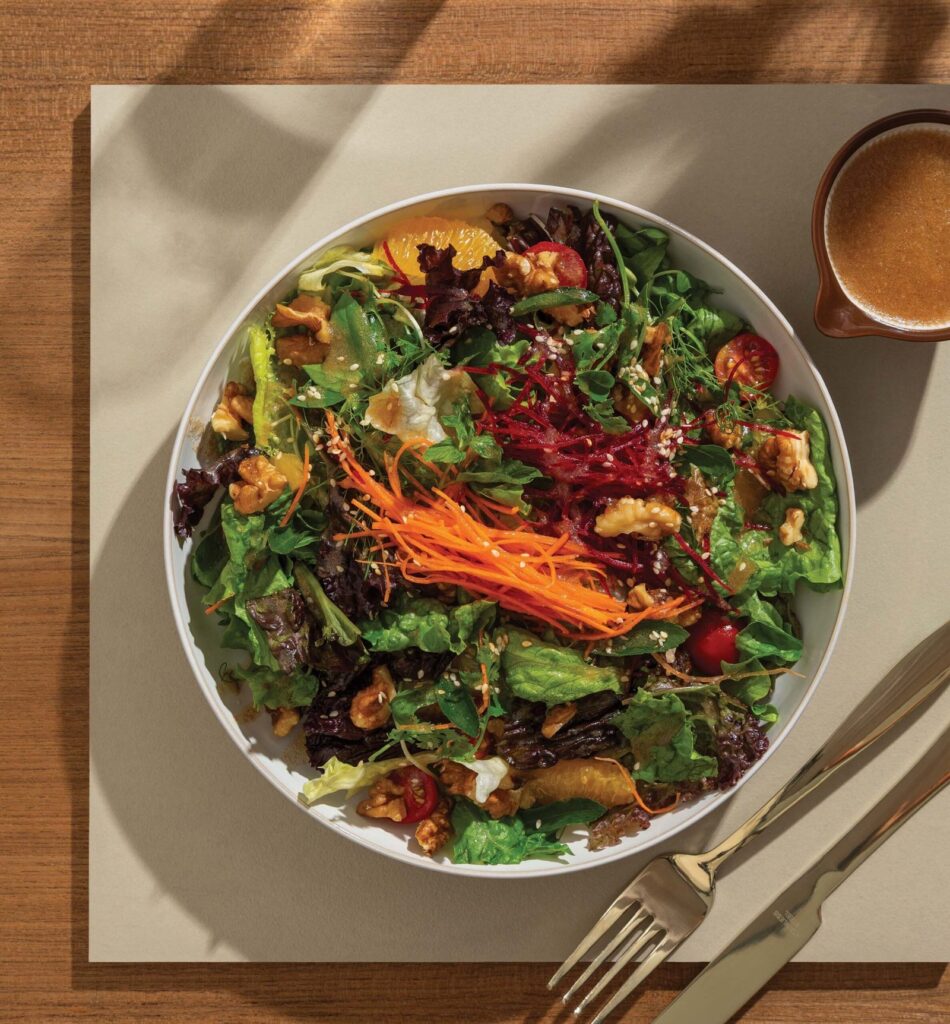
The way we eat has become strangely seasonless, with the same salads, smoothies and rich dinners appearing whatever the weather is doing outside.
Ayurveda offers a slower, more attentive idea, where food shifts with temperature, daylight and the body’s own constitution.
With The Healing Plate, Ananda brings that philosophy into the kitchen through recipes designed to move gently with the year.

At a glance
- Ananda has released The Healing Plate, its first culinary book devoted to Ayurvedic seasonal nourishment.
- The book connects recipes with Dosha, digestion and seasonal transitions, from autumn grains and gourds to winter legumes and warming spices.
- Its approach reflects Ananda’s Himalayan wellness programmes, where meals are shaped around individual constitution rather than one fixed menu.
Ayurveda as a seasonal kitchen language
At the heart of Ayurvedic eating is the idea that the body isn’t separate from its surroundings.
Seasonal shifts in heat, cold, humidity and light are understood to affect digestion, energy and appetite, so the plate changes in response.
Ayurveda also works with Dosha, the three constitutional energies known as Vata, Pitta and Kapha.

Rather than prescribing one ideal diet for everyone, it asks what a person needs at a particular moment and in a particular season.
Another useful idea is guna, meaning quality.
Summer may bring heat and dryness, while winter brings cold and heaviness, and food can either intensify those qualities or help bring them back into balance.
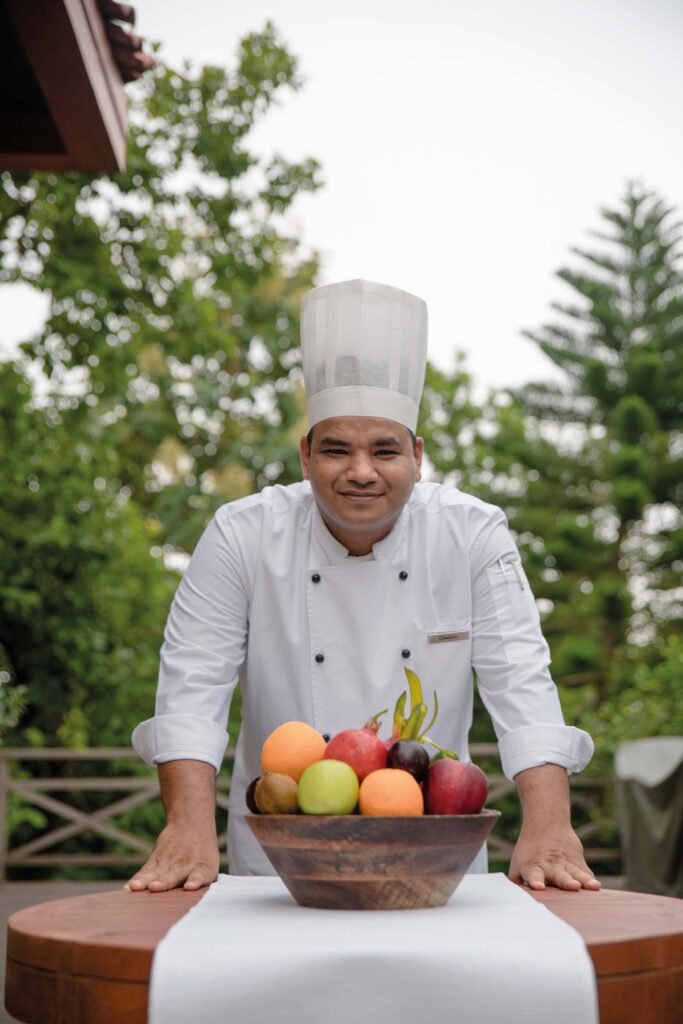
As Dr Sreelal Sankar, Head of Ayurveda at Ananda, puts it, “Eating in step with the seasons keeps the body’s own clock in sync with nature’s, food chosen not only to satisfy hunger but to nourish.”
What autumn asks from the plate
The Healing Plate is Ananda’s first culinary book, with concepts and recipes by Director Culinary Chef Diwaker Balodi.
Its autumn guidance centres on sharad ritu, a period when the body is understood to be recovering from the heat and heaviness of the preceding months.
In Ayurvedic terms, this is when Pitta can become unsettled, making cooling, grounding and steadying foods especially useful.
The book leans into seasonal fruits, pumpkins, gourds and whole grains, favouring dishes that settle rather than stimulate.
Its Miso Millet Bowl is designed with inflammation in mind, bringing a gentle warmth that suits the move towards colder weather without overwhelming digestion.

Fried, oily and heavily spiced foods are treated more cautiously in this part of the year, particularly during ritu sandhi, the sensitive transition between seasons.
The point isn’t austerity.
It’s a gradual recalibration, where warming dishes are introduced before the body starts asking for them more urgently.
Winter nourishment and digestive fire
By early winter, known as hemanta, the emphasis changes.
Ayurveda sees digestion as naturally stronger in this season, as the body works harder to maintain warmth.
Kapha begins to accumulate, while Vata is soothed by foods that are warm, moist and sustaining.
“Ayurveda regards this as the season for building strength, and the plate should reflect it in earnest,” says Dr Sreelal.
That can mean meals built around ghee, nuts, seeds, whole grains, lentils and root vegetables.
Ginger, cinnamon, turmeric and black pepper are used not as decorative spice notes, but as part of a warming logic that supports the season.
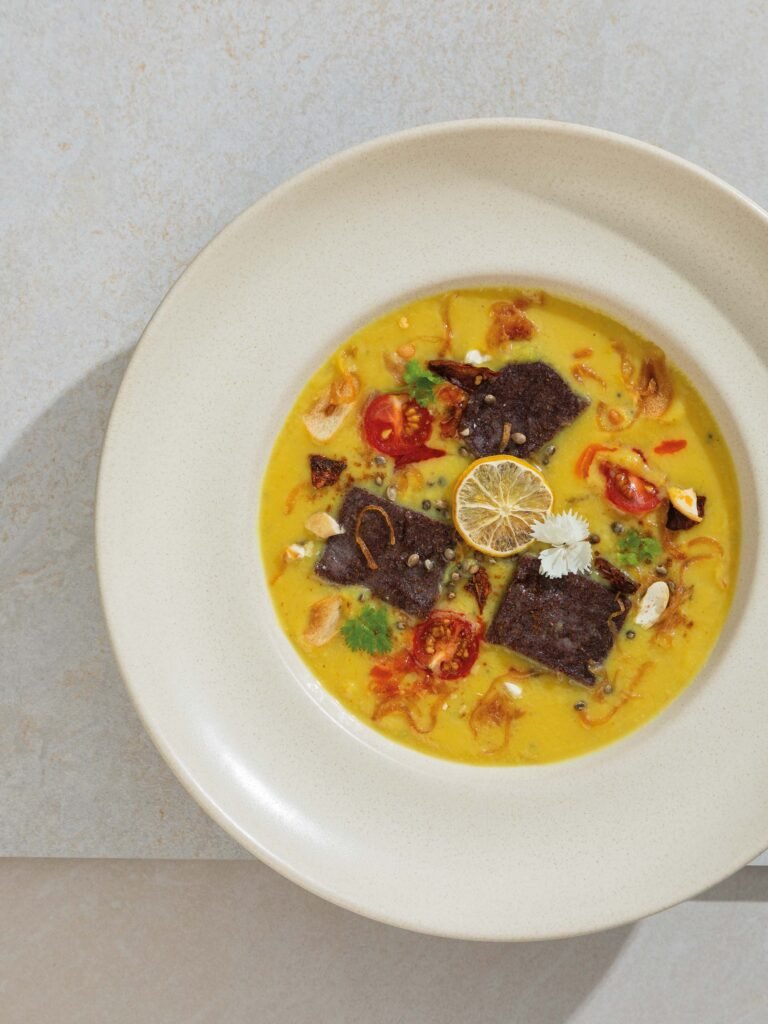
The Yellow Mung Bean Curry and Red Lentil Soup in The Healing Plate both follow this direction, using slow-cooked legumes and heat-giving spices to create depth without heaviness.
Ananda’s Vegan Vegetable Frittata offers a lighter option when digestion needs support rather than another demanding meal.
This is where the Ayurvedic concept of agni becomes central.
Often described as digestive fire, agni places digestion and absorption at the centre of nourishment, not just ingredients or calorie counts.
A rich dish that the body struggles to digest is less useful than a simpler meal eaten calmly and absorbed well.
Ayurveda links that well-supported digestion to ojas, the deeper vitality and resilience that good nourishment is believed to help maintain.
Dosha turns seasonal eating into something personal
The most interesting part of Ananda’s approach is that seasonality doesn’t override individuality.
Vata types, associated with dryness and quick, restless energy, tend to benefit from warm, moist and grounding foods such as soups, stews and ghee.
Ginger and cinnamon can support digestion here, while raw salads and excess caffeine may leave Vata feeling depleted.
Pitta types, marked by strong digestion and natural heat, are better suited to cooling and hydrating ingredients such as coconut, cucumber and mint.
Very spicy, fried or fermented foods can push Pitta towards acidity or irritation.
Kapha types, whose metabolism is understood as slower and steadier, often respond well to light, warming and stimulating choices.
Turmeric, ginger and black pepper can be useful, while heavy, oily or very sweet dishes are best kept occasional.
Timing matters too.
Ayurveda places value on regular meals and rhythm, suggesting that how and when we eat can be as important as what lands on the plate.
Ananda’s retreat philosophy for the home kitchen
Ananda has spent 25 years refining the meeting point between Ayurveda, nutrition science and gourmet cooking at its Himalayan wellness retreat.
Its menus are not treated as fixed templates, and its wellness programmes, including Panchakarma, Weight Management and Active-Fitness, layer specific dietary needs onto a guest’s Dosha.
That personalisation continues beyond the stay, with a three-month meal plan after departure.
The Healing Plate carries the same thinking into a more everyday setting.
It doesn’t ask for a dramatic overhaul or a kitchen full of unfamiliar rituals.
Instead, it makes the case for small adjustments, a warmer breakfast as the air cools, lighter meals when digestion feels slow, cooling herbs when heat rises, or steadier grains when the body feels unsettled.
That restraint is what makes the philosophy useful.
Seasonal eating, in Ananda’s hands, becomes less about rules and more about attention, one meal at a time.