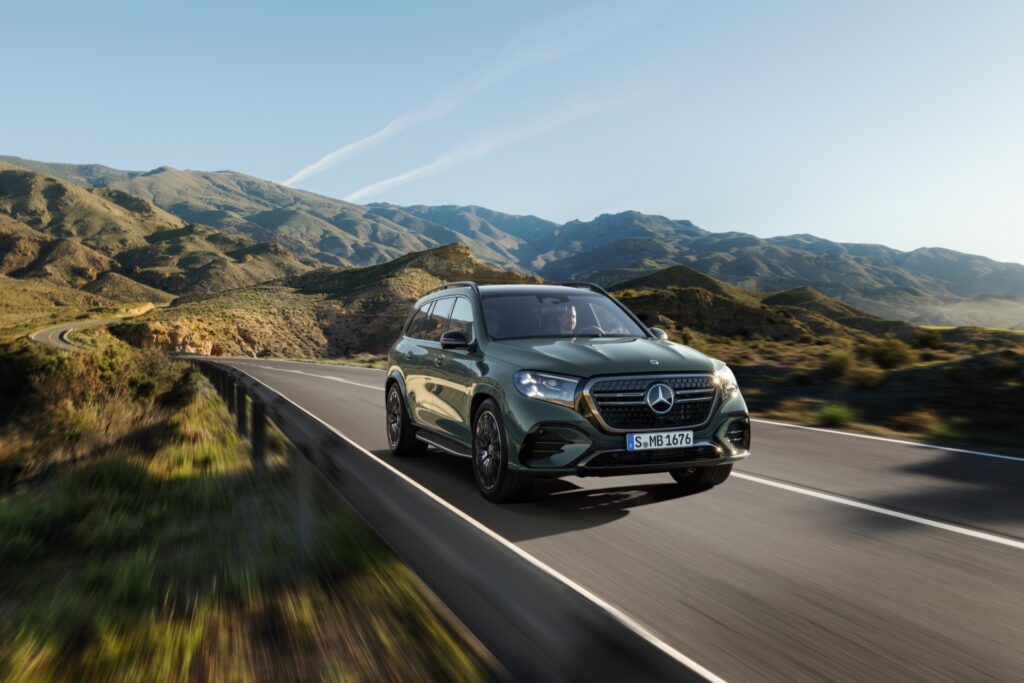
The 2026 Mercedes-Benz GLS facelift refines the brand’s largest SUV with updated styling, revised powertrains, extra sound insulation, new suspension intelligence and a standard MBUX Superscreen.
For buyers who want the space and seating position of a full-size SUV without giving up the ceremonial feel of a Mercedes flagship, this update makes the GLS more explicit about its role.
The bonnet star gives the GLS a more formal face
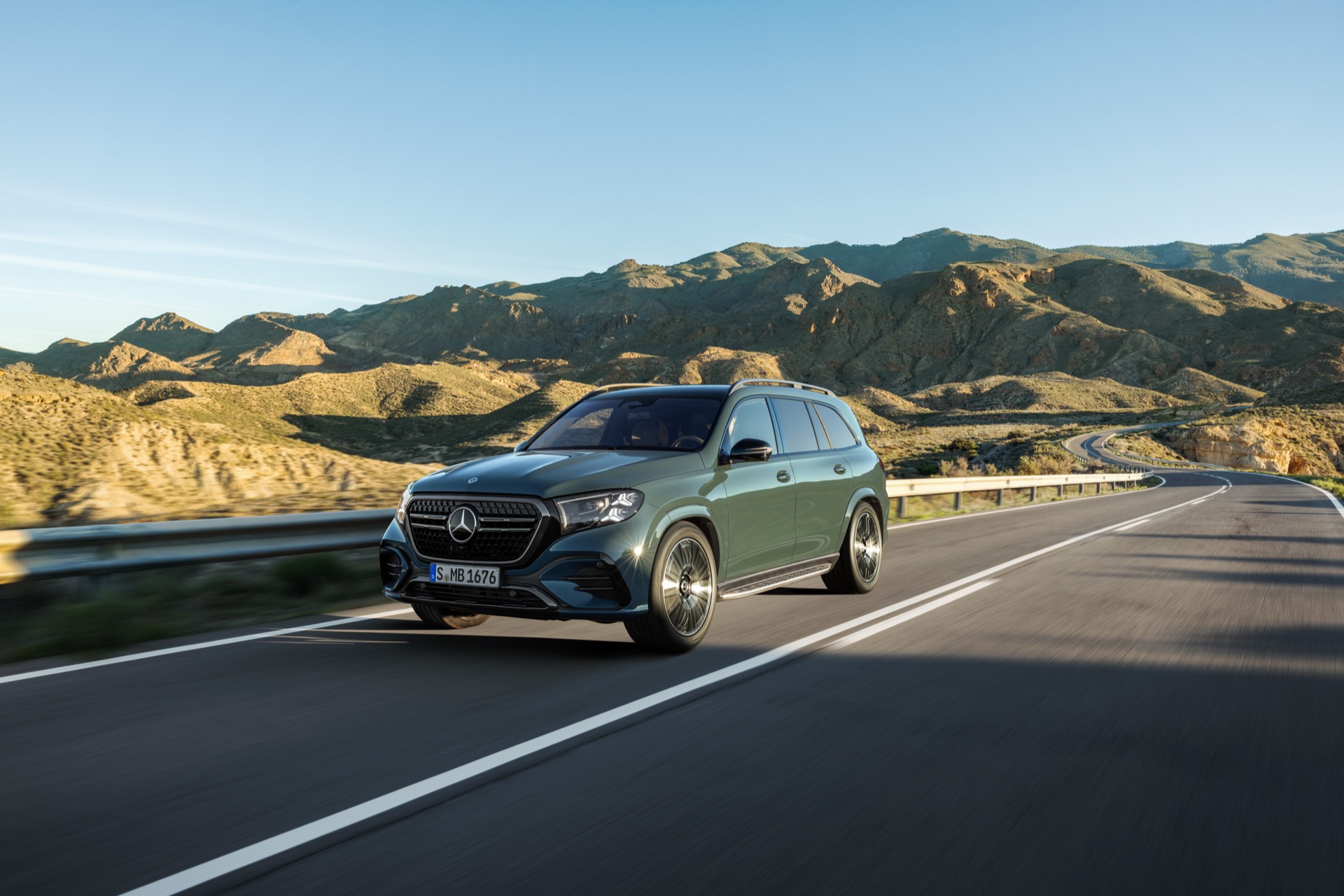
The visual changes are measured, but they shift the GLS further into traditional luxury territory.
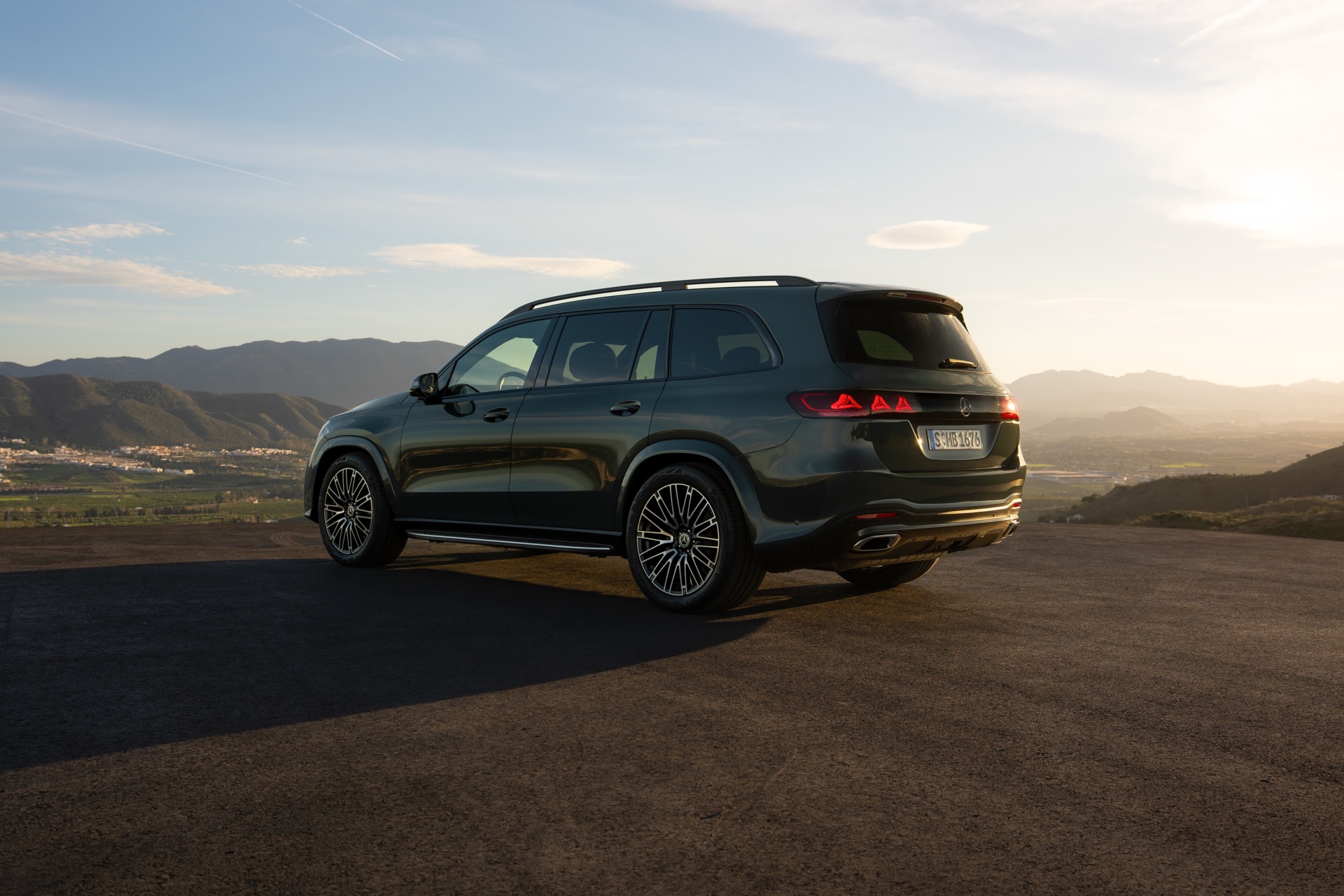
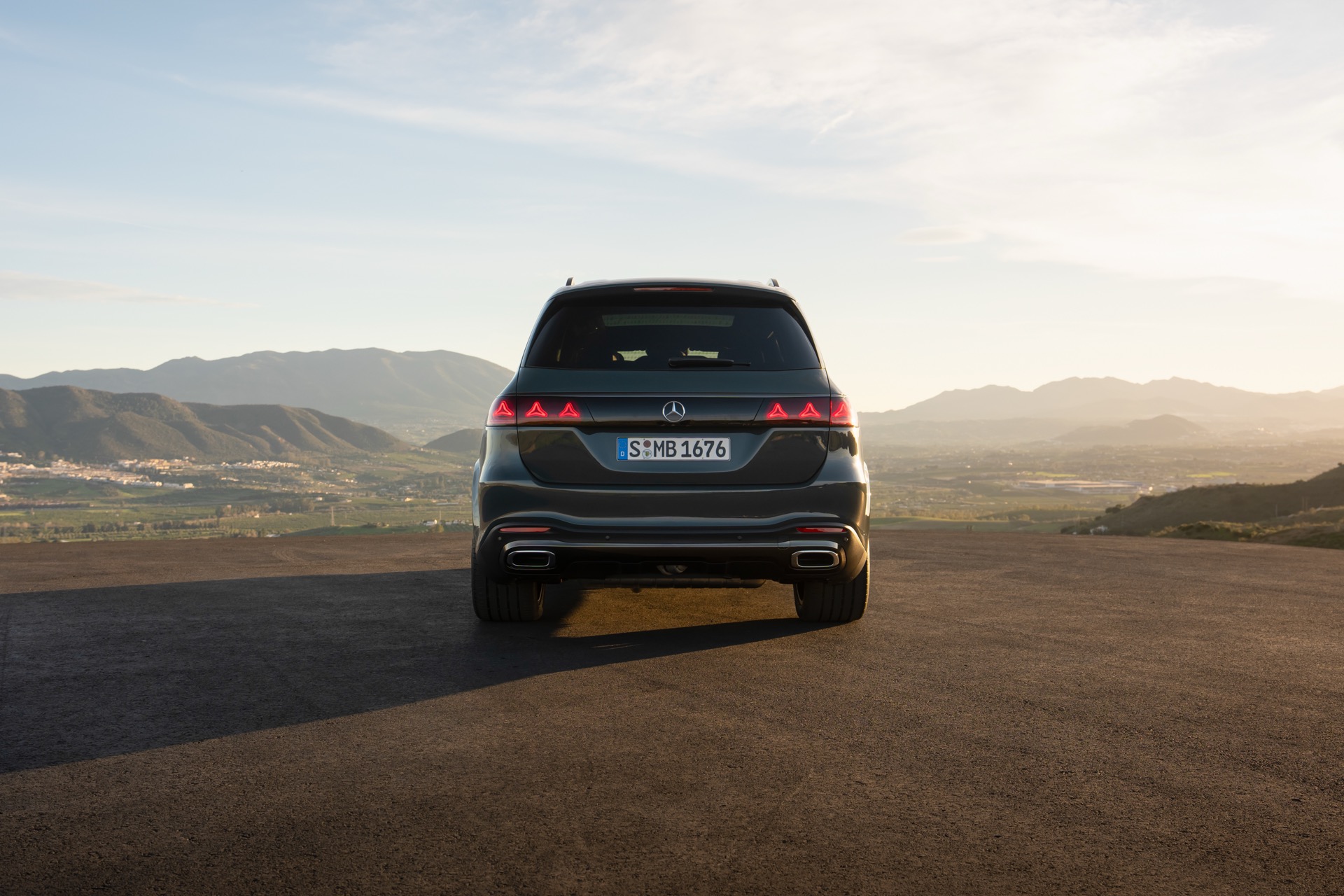
A larger chrome-framed grille now carries more visual weight, helped by contour lighting and new star-themed signatures in the headlamps and tail-lamps.
The most telling detail is the upright Mercedes star on the bonnet, a saloon-style flourish that gives the GLS a more formal, chauffeur-ready character.
Shown in Dark Petrol with MANUFAKTUR nappa leather in truffle brown, the 2026 GLS leans into a richer and more mature specification than the sportier look many large SUVs chase.
More torque and 48-volt smoothness across the range
The engine updates are aimed less at headline drama and more at refinement, response and emissions readiness.
At the top of the regular range, the GLS 580 4MATIC’s V8 now produces 395kW and 750Nm, with Mercedes focusing on smoother behaviour under lighter loads as well as stronger response.
The six-cylinder petrol GLS 450 also gains torque, while the diesel variants receive electrically heated catalysts and technical revisions intended to improve efficiency and drivability.
All engines now use integrated starter-generator technology and a 48-volt electrical architecture, bringing smoother stop-start operation, coasting capability and mild electric assistance when needed.
A flagship SUV should know when to stay quiet
Mercedes has also worked on the kind of refinement that doesn’t show up in a power figure.
Additional insulation around the transmission tunnel, bulkhead and engine cover is joined by acoustic foam in selected areas of the bodyshell, all with the goal of keeping engine, road and wind noise away from passengers.
That matters in the GLS because its appeal has always depended on making a very large vehicle feel calm, distant from effort and easy to live with over long distances.
Suspension tech aims to flatten the road ahead
Ride comfort remains central to the GLS brief, and the facelift adds another layer of predictive control.
The available E-ACTIVE BODY CONTROL system can manage each wheel individually to reduce pitch, roll and squat, while a new cloud-linked damper control function uses shared Car-to-X data to prepare the suspension for bumps before the car reaches them.
The idea is simple but difficult to execute, giving a tall and heavy SUV the composed body control of something lower and more road-focused.
The cabin becomes more screen-led
Inside, the biggest change is the standard MBUX Superscreen, which places three 12.3-inch displays beneath a single glass surface.
Mercedes’ MB.OS software architecture sits behind the experience, bringing over-the-air update capability and a more AI-driven interface as the car evolves through its life cycle.
That digital shift is important because the GLS is no longer just competing on leather, wood and seat comfort, but also on how seamlessly its cabin works for drivers and passengers.
The 2026 GLS facelift doesn’t reinvent the formula, and it doesn’t need to.
It makes Mercedes’ largest SUV more imposing, more insulated and more technologically current, which is exactly where a modern flagship SUV needs to be.