American independent watchmaking is having a more interesting moment than nostalgia alone can explain.
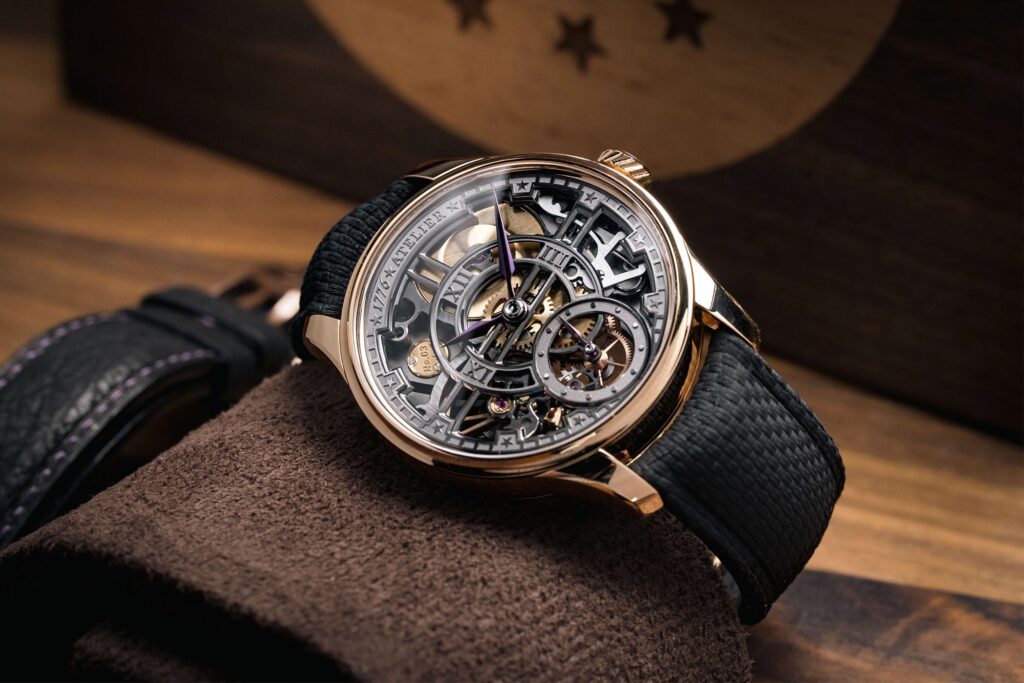
1776 Atelier, a young maker operating between Texas and Ohio, has entered that conversation with the Liberty 250, a limited rose gold watch created to mark the 250th anniversary of the United States.
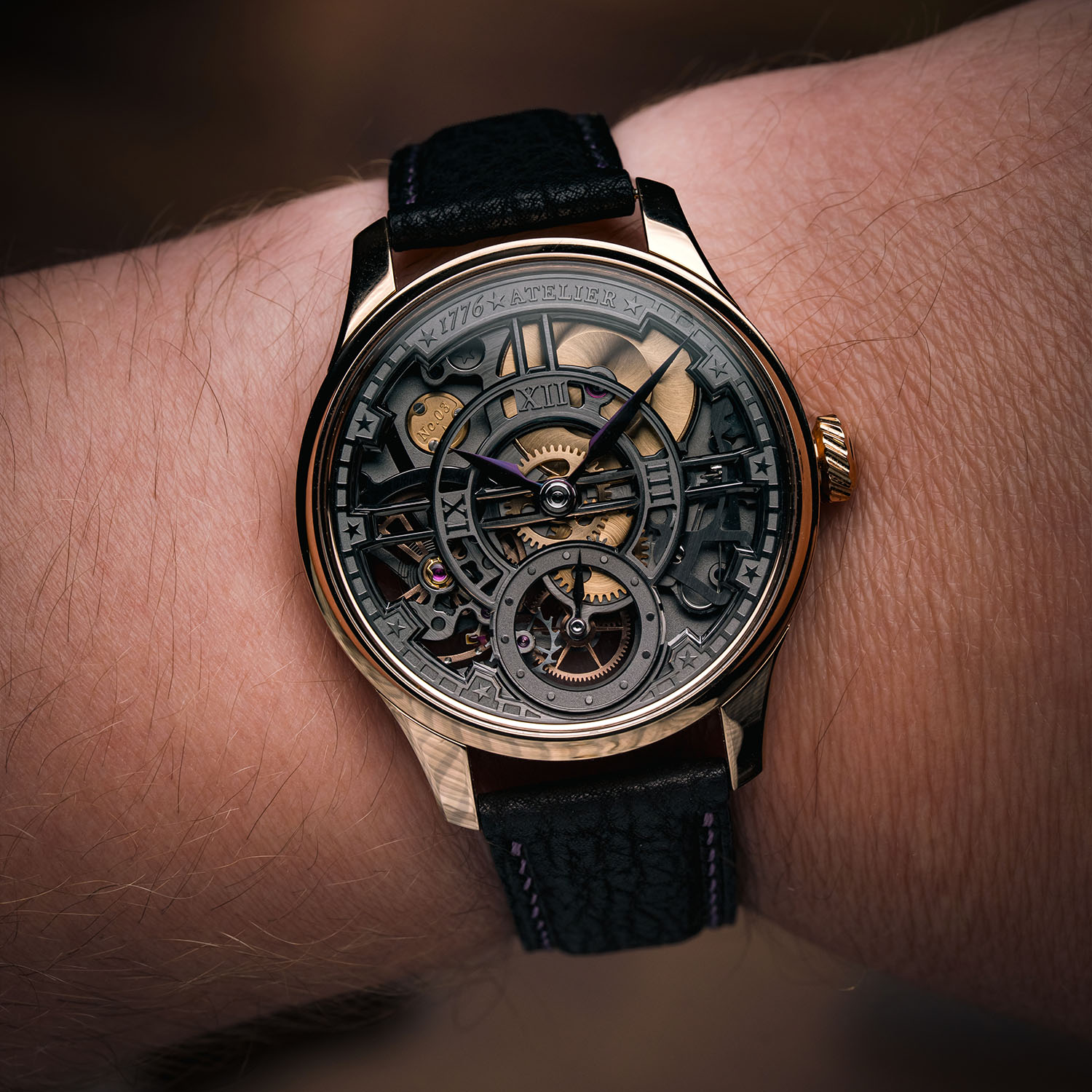
Rather than leaning on obvious patriotic colour codes, the watch puts its argument where collectors will actually look, inside a deeply hand-finished movement with American-made components and a view through the front crystal.
At a glance
- 1776 Atelier has unveiled the Liberty 250, a 25-piece commemorative watch for the United States’ 250th anniversary.
- The watch features an openworked Calibre L250 with more than 90 percent of its parts made in-house, including plates, bridges, wheels, screws, hands and regulating components.
- It is priced at USD 44,000 excluding taxes and will be sold directly by 1776 Atelier and through authorised retailers.
A new American independent with old-world ambitions
1776 Atelier was founded by Jason Lu and Zach Smith, two watchmakers taking a small-batch approach to American horology.
Lu came into the field through pocket watch restoration before being mentored by Donat Kornagel of DK Precision and Philippe Narbel, while Smith is a WOSTEP-trained independent watchmaker and precision machinist in Ohio.
The brand’s name makes its national point plainly, but the Liberty 250 is more subtle than that might suggest.
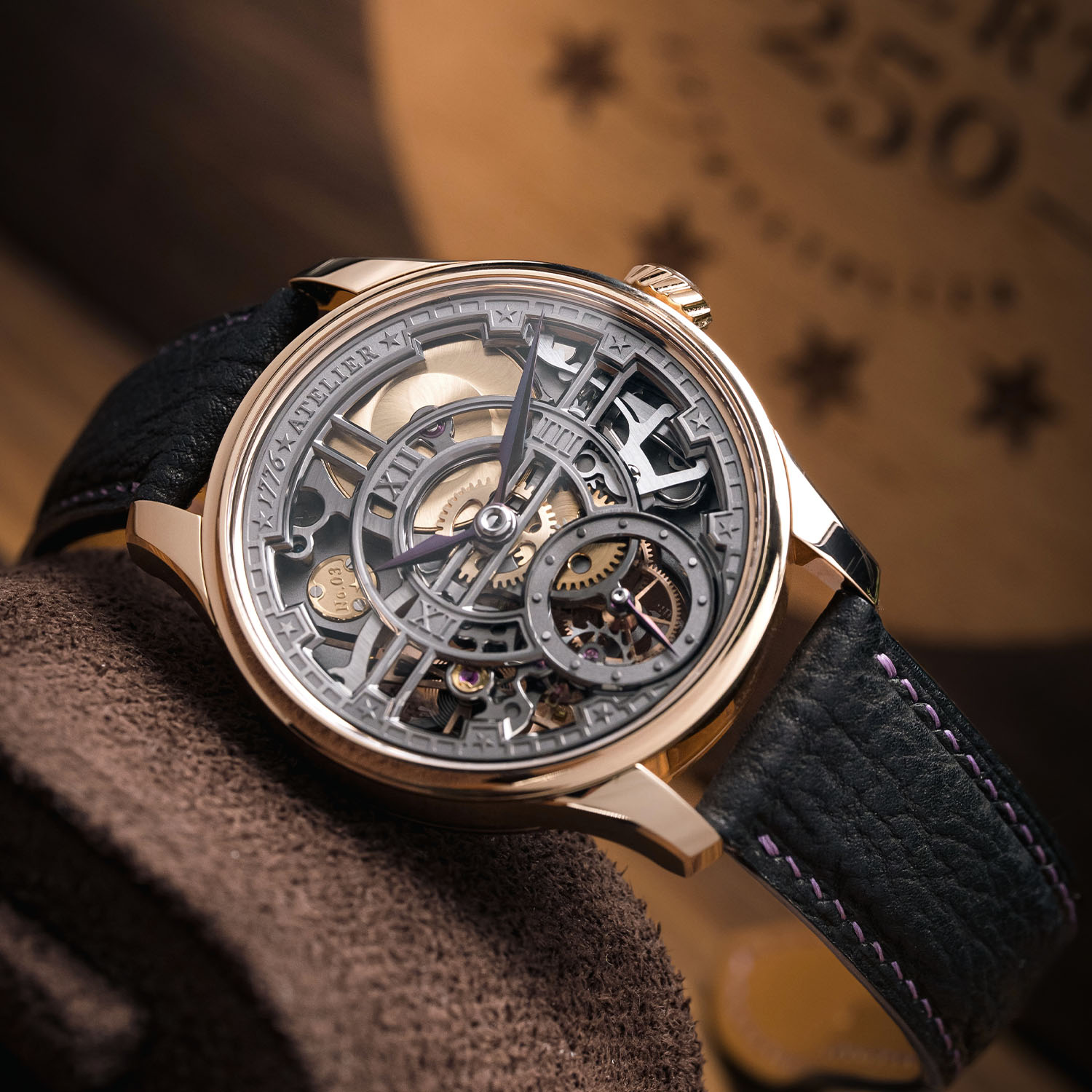
The 41mm case is made in 18k rose gold by RP Uhrgehäuse in Germany to 1776 Atelier’s specifications, with polished upper surfaces, satin-brushed flanks, a concave bezel, sapphire crystals front and back, and 50 metres of water resistance.
It’s traditional in proportion and finish, though the absence of a conventional full dial shifts attention immediately to the calibre.
The Liberty 250 keeps its symbolism restrained
Commemorative watches often struggle when symbolism overwhelms the object, but this one takes a quieter route.
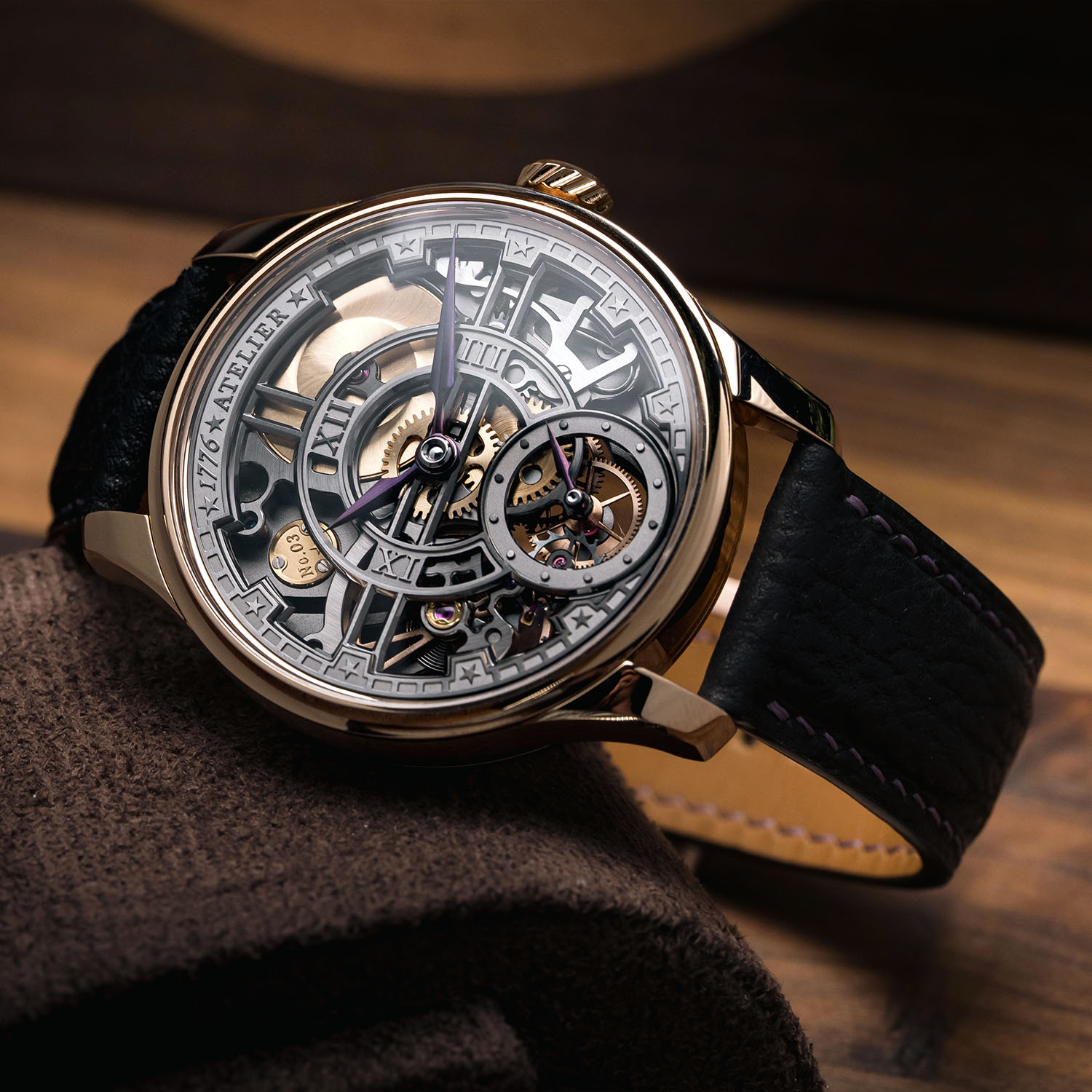
There are star-shaped hour markers, and the name carries the historical connection clearly enough, yet the overall impression is more atelier piece than flag-waving souvenir.
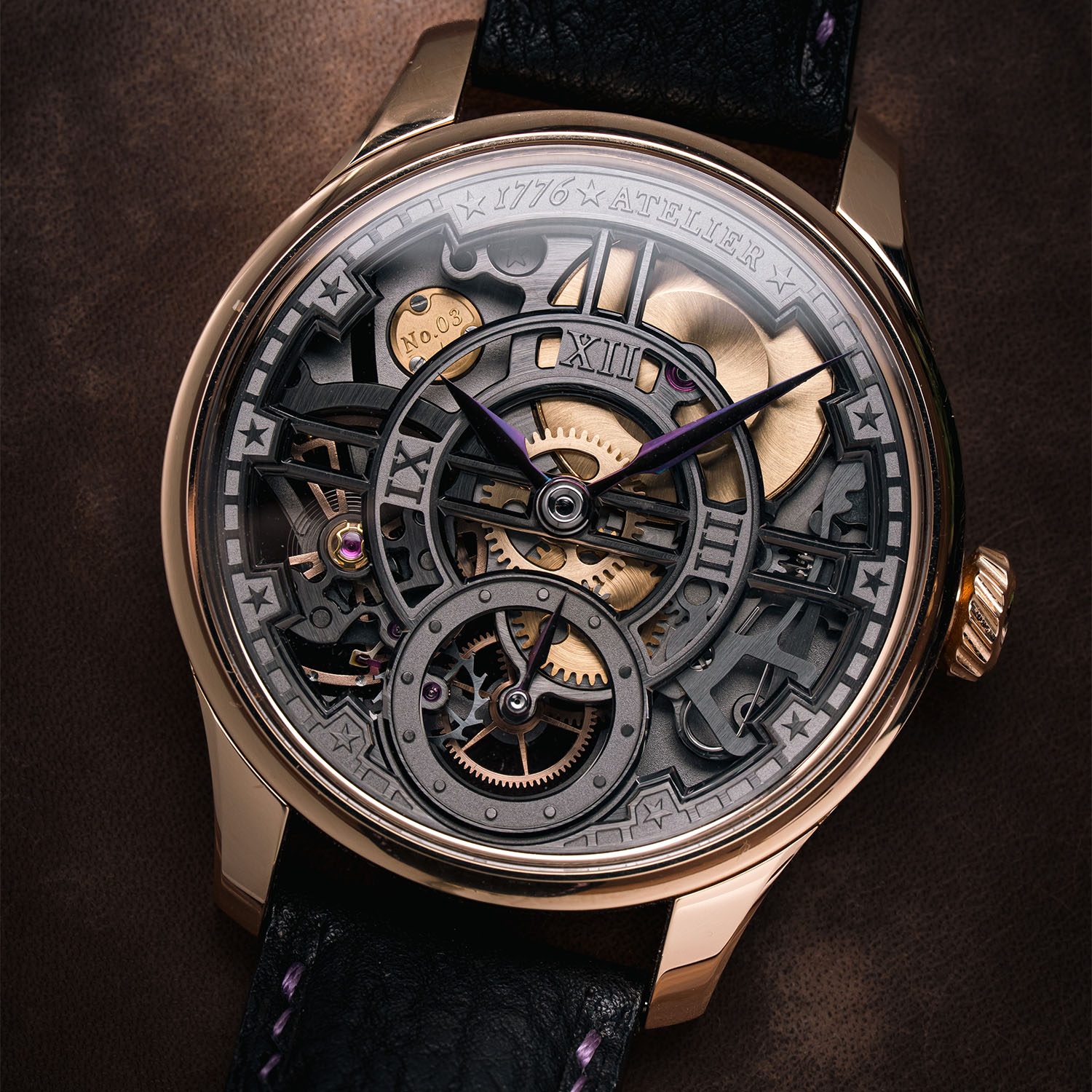
The dial element is a two-piece layered construction finished in black rhodium, with satiné circulaire on the upper surfaces, frosted recessed areas and 62 hand-finished internal angles.
The hands are made as two-piece components, shaped, fitted, polished, riveted and thermally coloured by hand in a plum tone.
Each watch is also delivered in a handmade wooden presentation box crafted by an artisan woodworker in Arizona.
Inside every box is a small authenticated piece of wood from a beam installed in Independence Hall in 1735, a detail that gives the anniversary theme a physical connection without altering the watch itself.
The Calibre L250 puts the craft on display
The hand-wound Calibre L250 uses the Unitas 6498 pocket watch architecture as its mechanical foundation, a familiar starting point for independent watchmakers working at this scale.
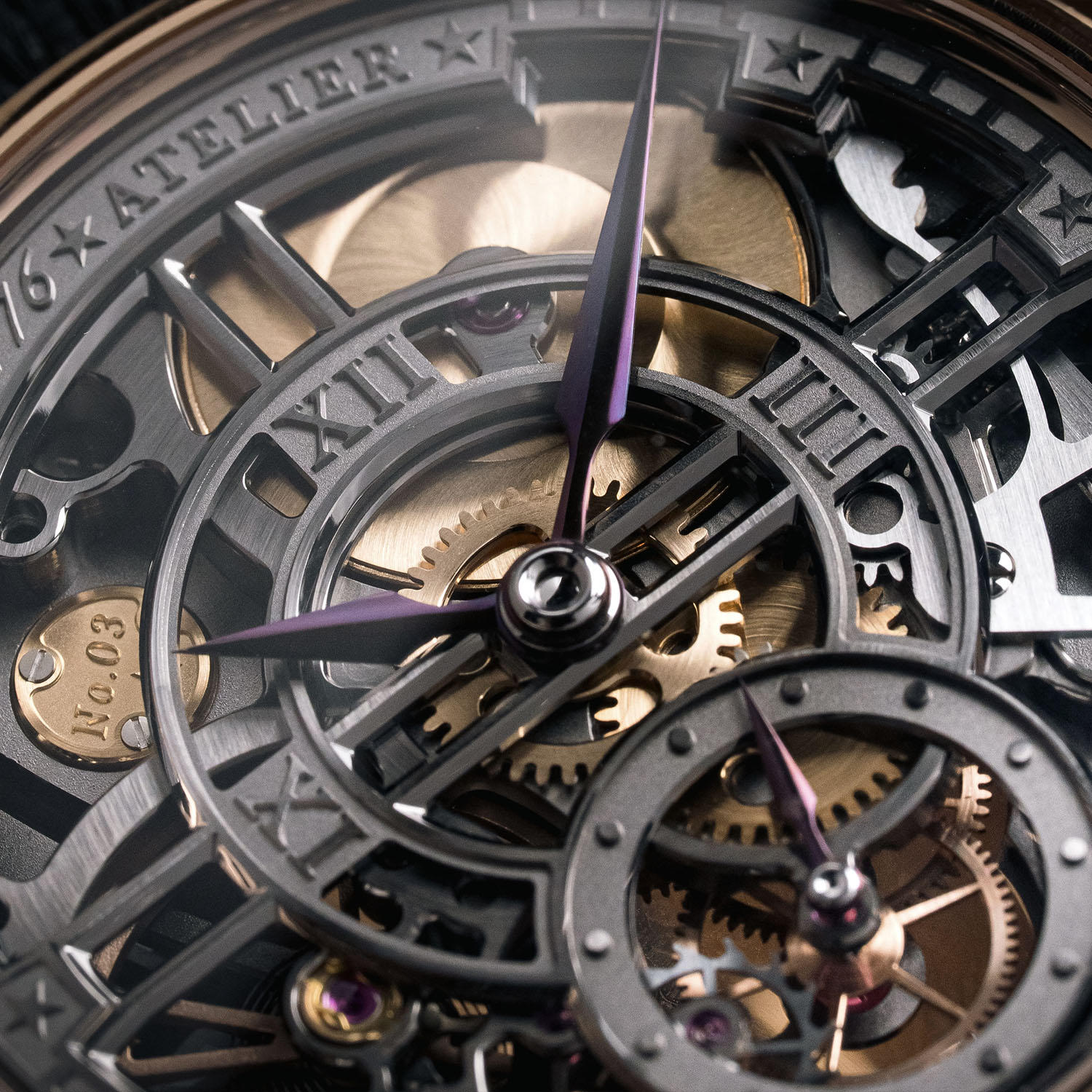
What matters here is how much 1776 Atelier has chosen to manufacture itself.
The brand states that more than 90 percent of the movement’s parts are made in-house, including the main plate, bridges, wheels, screws, balance, regulating components and hands.
Primary components are produced from raw American brass, ground flat using restored vintage machines before machining.
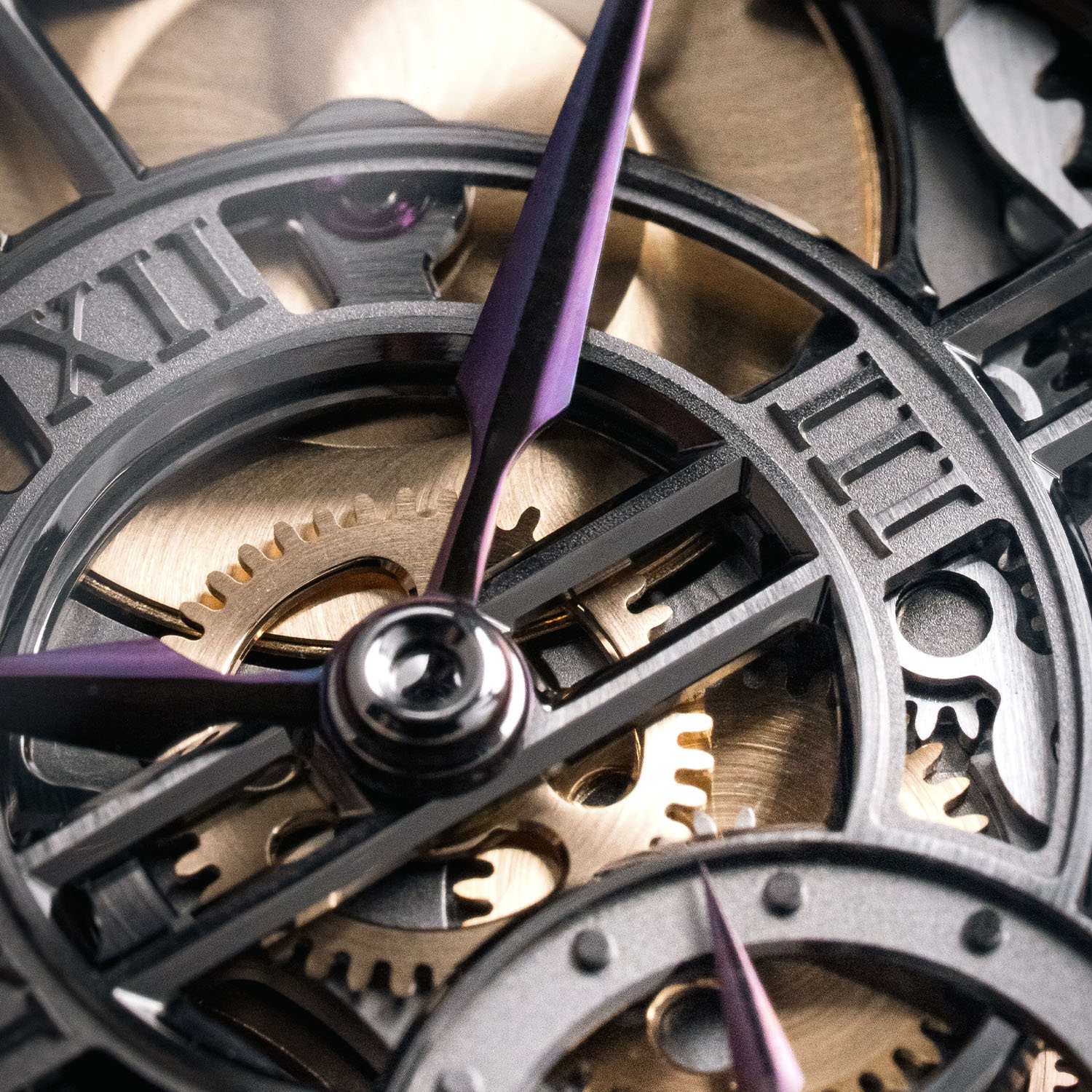
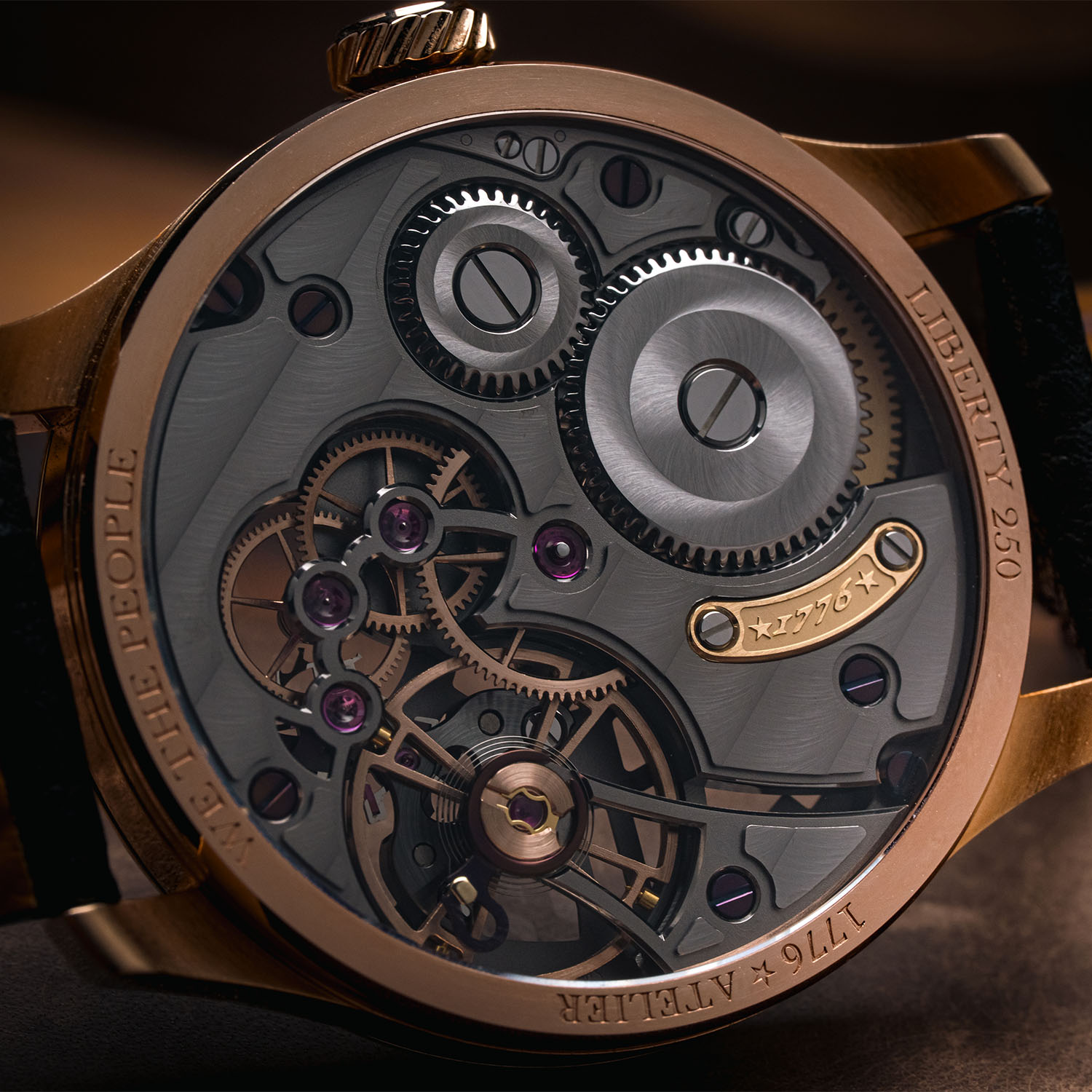
The calibre also replaces the standard Etachron-style regulation system with an in-house manufactured free-sprung balance, fitted with four screws recessed into the balance rim.
It runs at 18,000 vibrations per hour and offers a 48-hour power reserve, keeping the slower rhythm associated with the pocket watch architecture while moving the execution into a more bespoke register.
The movement finishing is the centre of the watch’s identity.
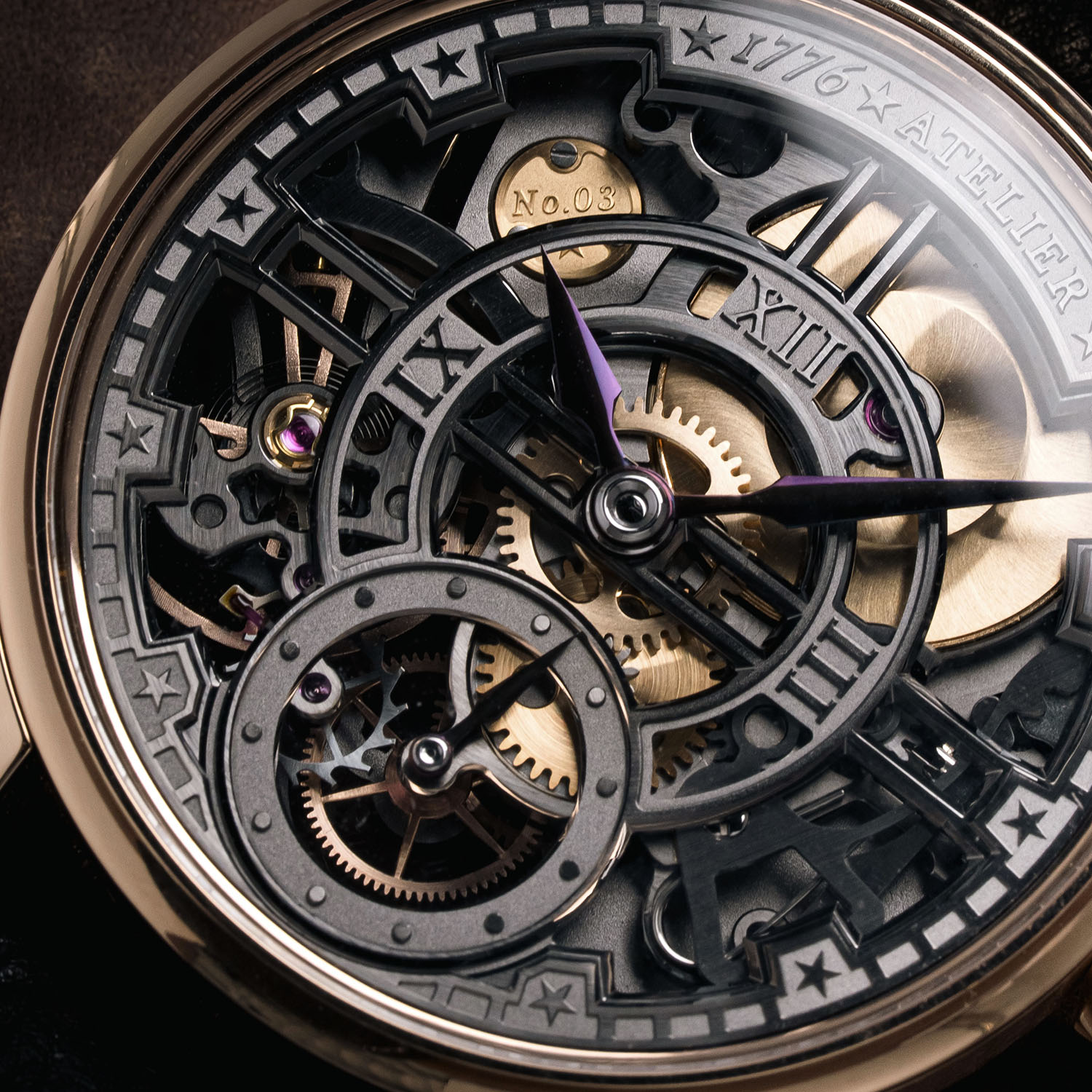
1776 Atelier lists hand anglage, black polishing, solarisation grinding, thermal colouring, hand engraving and fully bevelled steelwork among the treatments, with 222 hand-finished internal angles across the movement.
The openworked construction makes those angles more than a technical bragging point, because they’re visible through the front of the watch rather than hidden as a private pleasure for the owner.
The back is treated with Geneva stripes, media-blasted surfaces and additional anglage, giving the watch a properly finished reverse view rather than treating the caseback as secondary.
Details & Specifications
| Brand | 1776 Atelier |
|---|---|
| Model | Liberty 250 |
| Case size | 41mm diameter, 10.2mm thick, 49.5mm lug-to-lug |
| Case material | 18k rose gold, polished and satin-finished |
| Case manufacturer | RP Uhrgehäuse in Germany, made to 1776 Atelier specifications |
| Crystal | Sapphire front and back |
| Water resistance | 50 metres |
| Dial | Two-piece layered dial in black rhodium with satiné circulaire upper surfaces, frosted recesses and 62 hand-finished internal angles |
| Hands | Handmade two-piece hands, polished, riveted and thermally coloured plum |
| Movement | Calibre L250, hand-wound |
| Movement construction | More than 90 percent in-house produced, including plate, bridges, wheels, screws, hands, balance and regulating components |
| Architecture | Uses Unitas 6498 gear train and calculations as its mechanical foundation |
| Jewels | 19 |
| Frequency | 18,000 vibrations per hour |
| Power reserve | 48 hours |
| Balance | In-house manufactured free-sprung balance |
| Functions | Hours, minutes and small seconds |
| Movement decoration | 222 hand-finished internal angles, anglage, Geneva stripes, black polishing, solarisation grinding, thermal colouring and bevelled gear train |
| Production | Limited to 25 pieces |
| Price | USD 44,000 excluding taxes |
| Availability | 1776 Atelier directly and authorised retailers |
The Liberty 250 is not trying to recreate the mass-scale American watch industry of the past.
Its appeal is narrower and more contemporary, aimed at collectors who care about hand finishing, visible movement architecture and the emerging identity of American independent watchmaking.
At USD 44,000, it sits firmly in connoisseur territory, but its small production run, extensive manual work and measured use of national symbolism give it a clearer purpose than a typical anniversary edition.