Manhattan has no shortage of hotels with grand lobbies, global loyalty schemes and rooms that could belong almost anywhere.
Walker Hotels makes a quieter case for something more specific, with two independently owned properties that feel closely tied to their corners of the city.
One leans into the romance and rhythm of Greenwich Village, the other into Tribeca’s design-minded downtown energy.
At a glance
- Walker Hotels has two independently owned Manhattan properties in Greenwich Village and Tribeca.
- The Village hotel brings live jazz, local amenities and classic neighbourhood dining, while Tribeca adds a design-led lobby, rooftop bar and candlelit cellar venue.
- Both hotels suit travellers who value location, atmosphere and local texture over oversized rooms or corporate polish.
Greenwich Village with jazz in the lobby
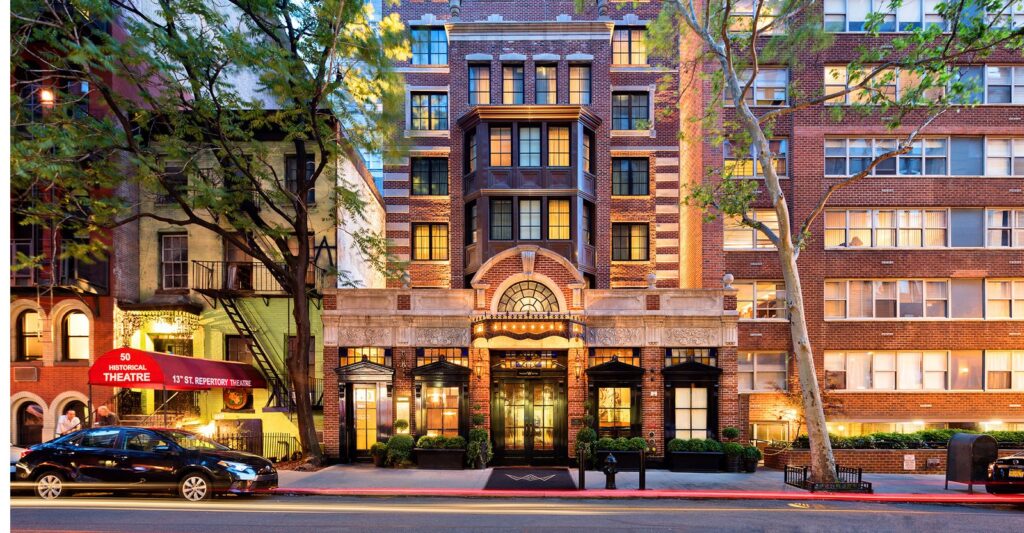
Walker Hotel Greenwich Village sits on West 13th Street, the kind of leafy block that explains the area’s enduring hold on New York imagination.
The arrival is intentionally soft, with a sitting area, water and hot apple cider setting a tone that feels more residential than transactional.
By evening, live jazz gives the lobby the relaxed charge of a neighbourhood salon, somewhere between hotel lounge and private club without the formality.
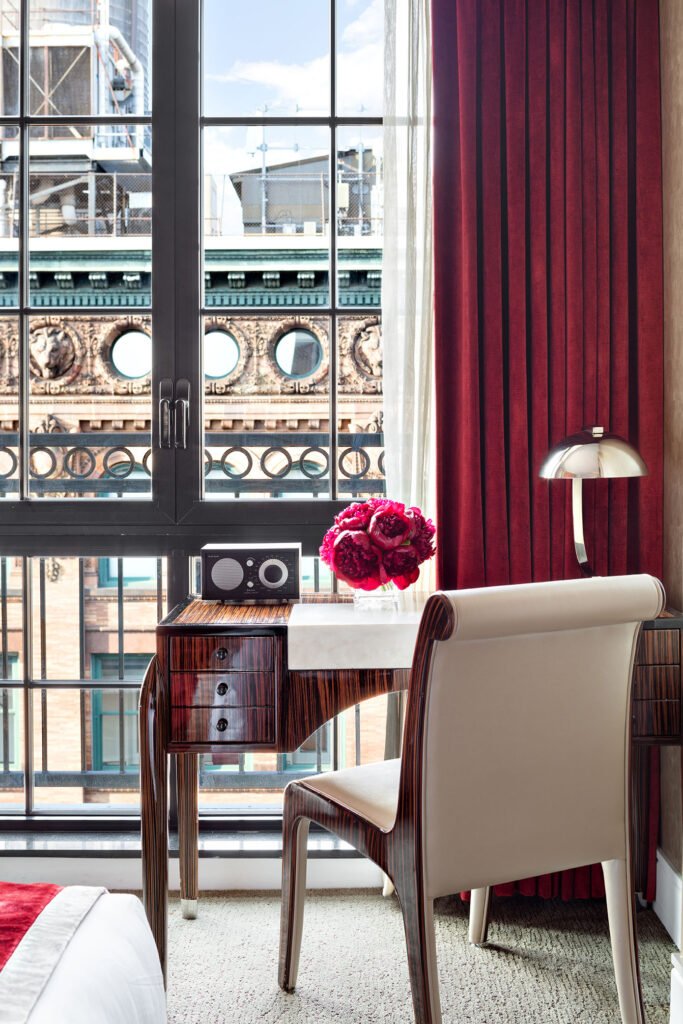
The rooms are compact, as Manhattan rooms often are, but the important details are handled well.
Crisp linens, generous down pillows, proper blackout blinds and a surprising level of quiet make sleep feel like the real luxury here.
Bathrooms are tiled and practical, with walk-in showers and C.O. Bigelow apothecary products, a fitting touch given the historic chemist has been part of Greenwich Village since 1838.
Breakfast is served at Society Café, where a complimentary continental offering starts the day and the pancakes have a reputation for slowing down even the most ambitious morning itinerary.
For an early New York start, Murray’s Bagels on Sixth Avenue is close by and opens at 6am, which is useful when jet lag has you awake before the neighbourhood is fully moving.
The hotel’s surroundings do a lot of the work.
Da Andrea sits directly opposite for Italian cooking, while the Waverly Diner delivers the all-hours, coffee-refill version of New York that visitors still hope to find.
Music is also woven into the area, with Bleecker Street institutions such as Terra Blues and The Bitter End within easy reach.
Tribeca in a former button and ribbon factory
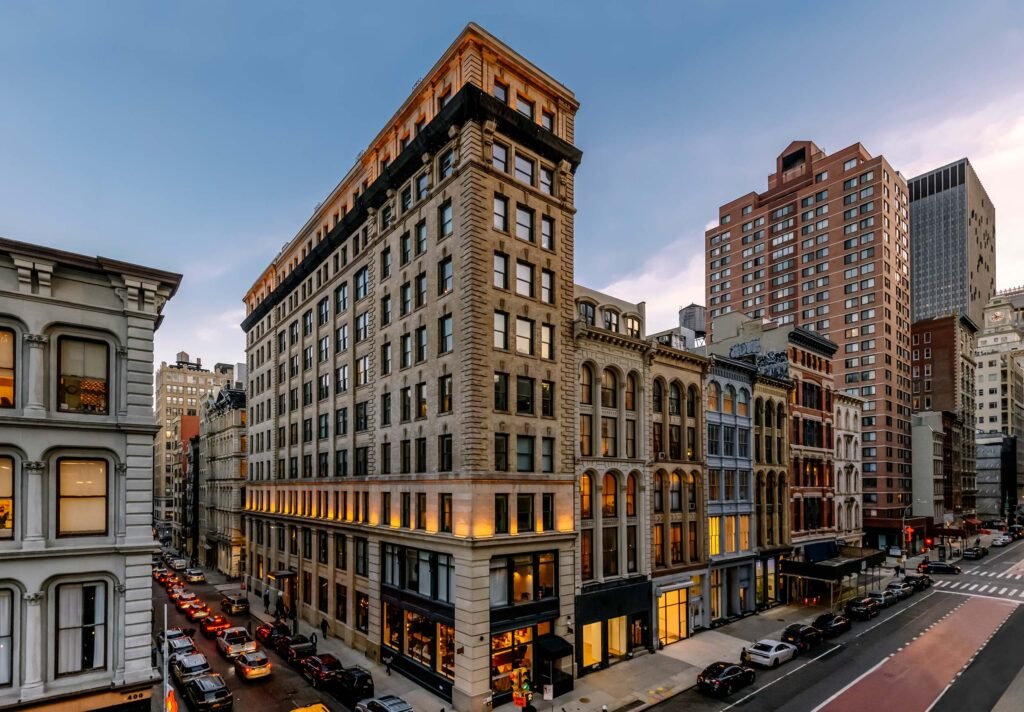
Walker Hotel Tribeca is a different expression of downtown, set in a 1900s Renaissance-revival tower at Walker Street and Broadway.
The building once housed a button and ribbon factory, and the hotel keeps enough of that working history in view to give the interiors a grounded character.
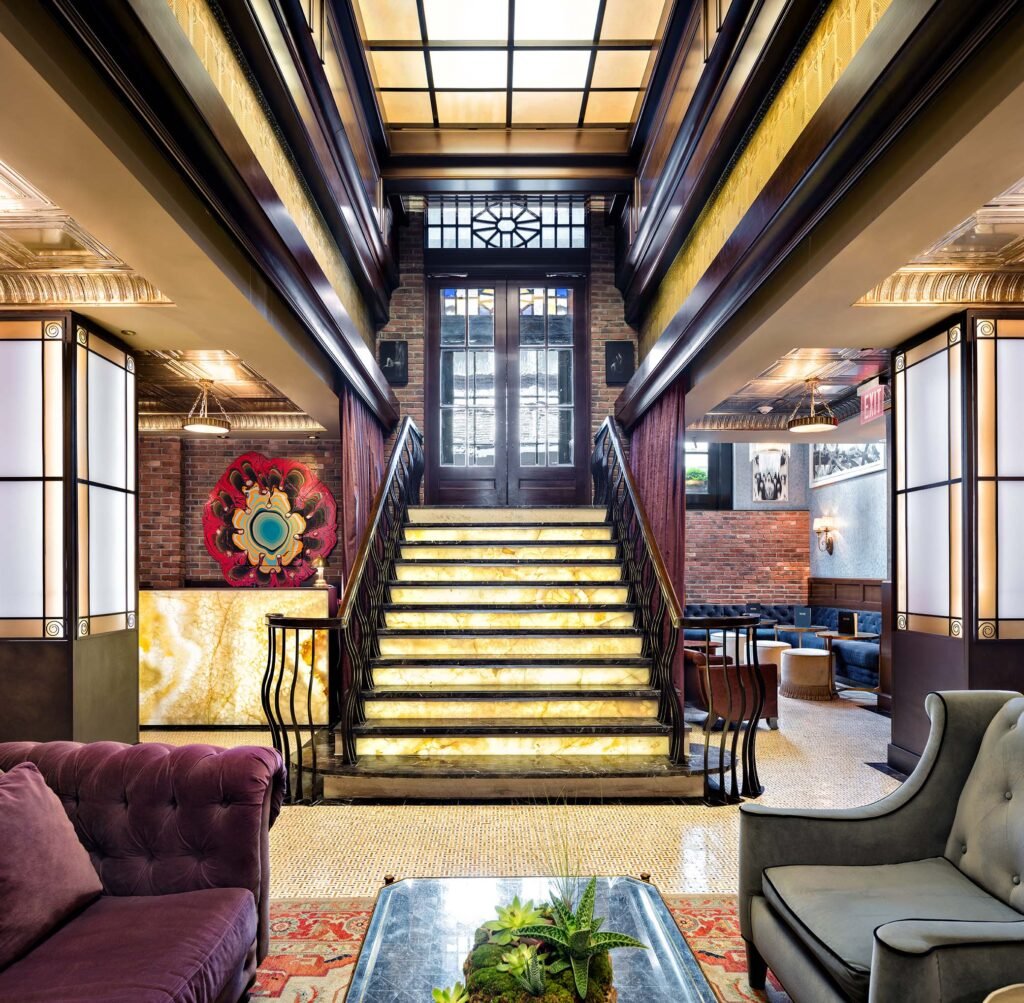
The lobby is one of its strongest assets, mixing mid-century furniture, art books, a Blue Bottle counter and the steady presence of locals using it as a living room.
That local adoption matters, because a hotel lobby only really works in New York when people who don’t have rooms upstairs still choose to spend time there.
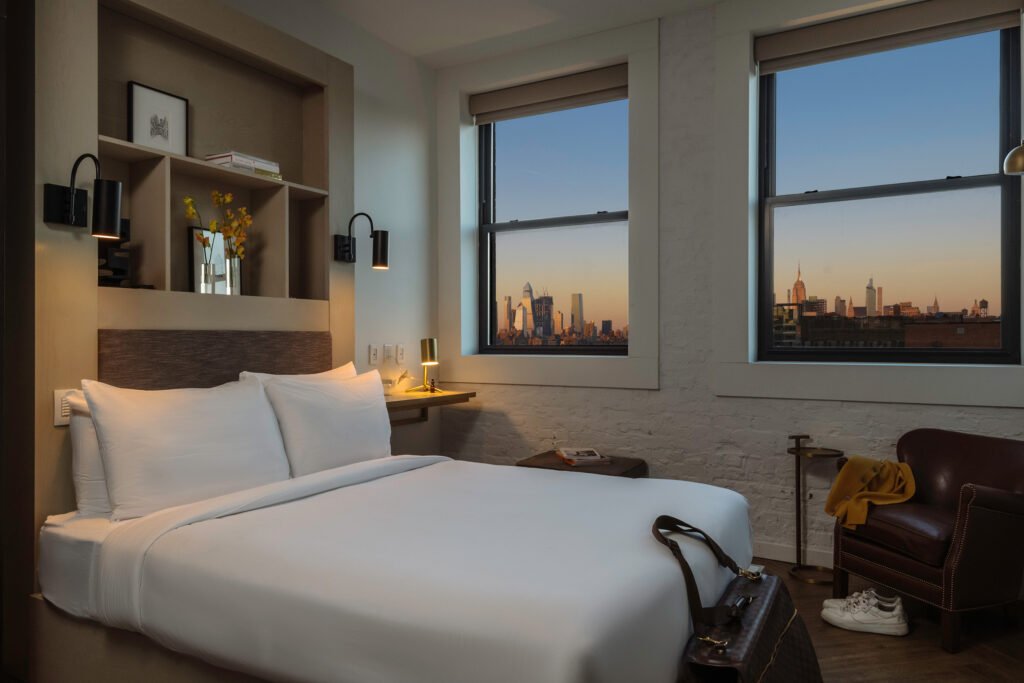
The hotel has 171 rooms, clean-lined and compact, with whitewashed brick and a restrained industrial feel.
Views improve on the higher floors, while the rooftop bar adds a seasonal reason to stay put rather than immediately head back out into the city.
The more atmospheric draw is below street level.
Saint Tuesday is a candlelit sub-cellar bar with low ceilings, cocktails and live music nightly, moving through styles such as gypsy jazz and Brazilian choro.
It feels like the kind of downtown room travellers hope to stumble upon and locals prefer not to overexplain.
Two neighbourhoods, two versions of downtown
The Greenwich Village property is the more romantic of the pair, helped by brownstone streets, late-night music and the sense that dinner, drinks and a good walk home can all happen within a few blocks.
Tribeca is sharper and more strategic, with Canal Street subway nearby and SoHo, Chinatown and Little Italy all within roughly a ten-minute walk.
Head west from Tribeca and the mood softens toward Hudson River Park, cobbled streets and the quieter side of downtown life.
What connects both hotels is not a uniform house style but a shared feeling that decisions have been made by people paying attention.
The cider in the lobby, the Village-made bathroom products, the music happening as guests check in and the lobby that locals actually use all point in the same direction.
New York will always offer bigger rooms, louder arrivals and more recognisable names, but Walker Hotels has something more useful for a certain kind of traveller.
Each property gives you an address with its own rhythm, and if choosing between Village romance and Tribeca energy proves difficult, the subway ride between the two takes about twenty minutes.