Few watch complications have a more natural link to motorsport than the chronograph.
Long before the idea of a racing watch became a style category, timing laps, stages and gaps was part of the sport’s language.
Today’s best racing chronographs don’t need to live in a pit lane to make sense, but the good ones still carry that practical, instrument-led energy.
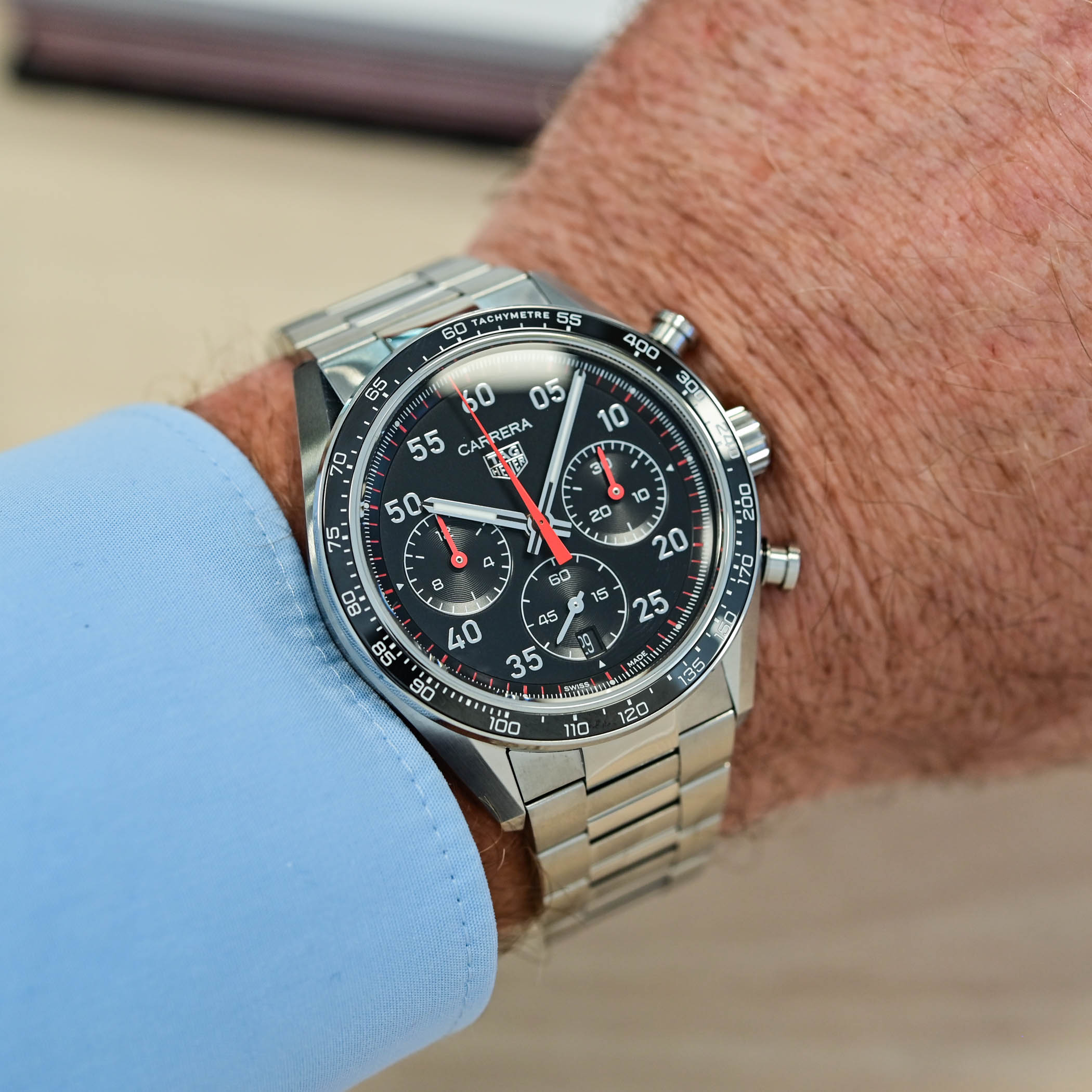
These six watches range from relatively accessible mechanical chronographs to Formula 1-linked special editions and country-specific Mille Miglia pieces.
At a glance
- Six contemporary racing chronographs bring together track-inspired design, mechanical movements and strong motorsport links.
- Standout details include carbon construction, tachymeter scales, national racing colours, Formula 1 team colours and column-wheel chronograph movements.
- Confirmed pricing ranges from EUR 2,680 for a Seiko Prospex Speedtimer variant to EUR 20,500 for the Girard-Perregaux Laureato Chronograph Williams.
Motorsport links that still feel purposeful
The racing chronograph has survived because it isn’t just decorative.
A central seconds hand, elapsed-minute registers and, in many cases, a tachymeter scale still create a clear connection to speed, distance and measured performance.
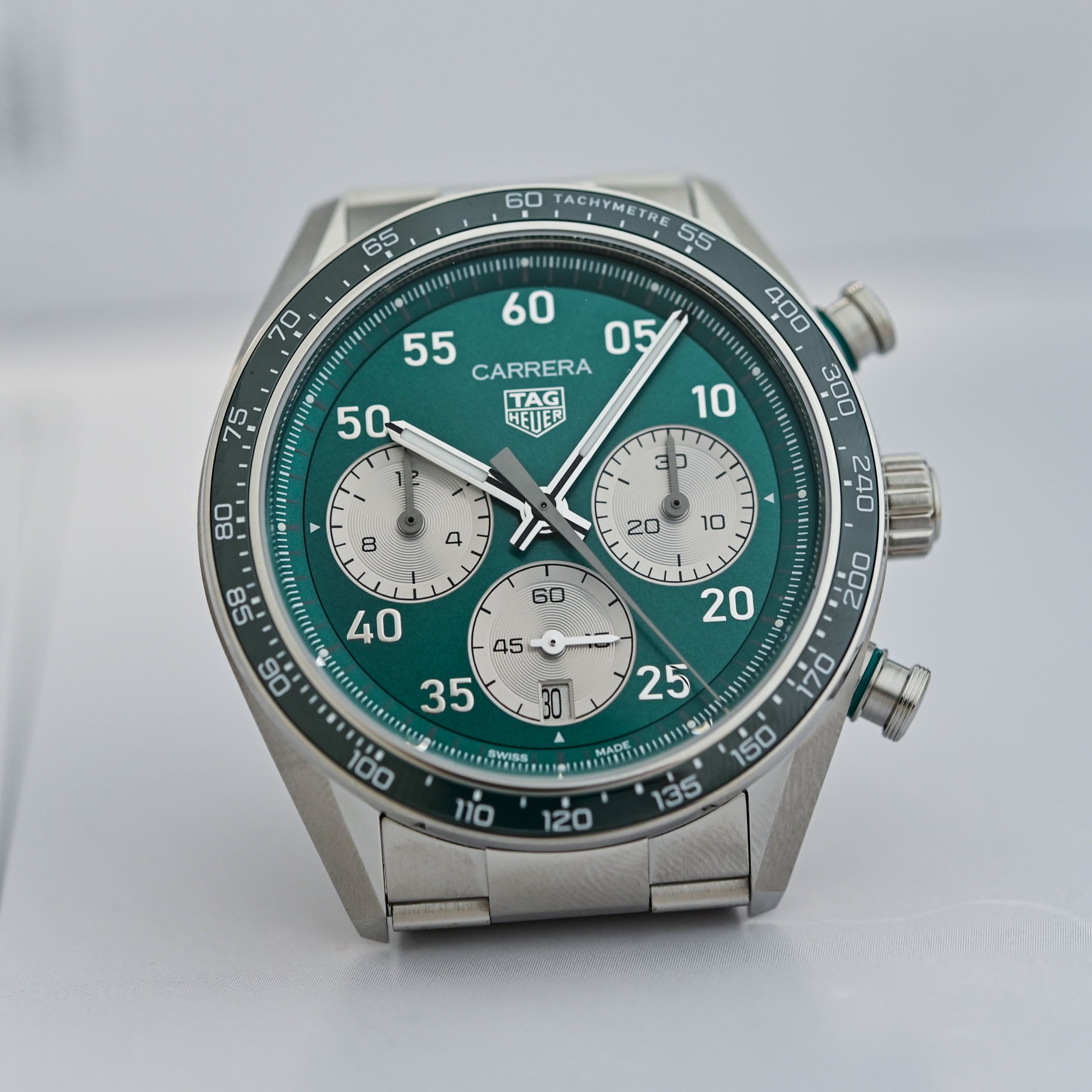
TAG Heuer is the most obvious name here, with the Carrera standing as one of the defining motorsport watch lines.
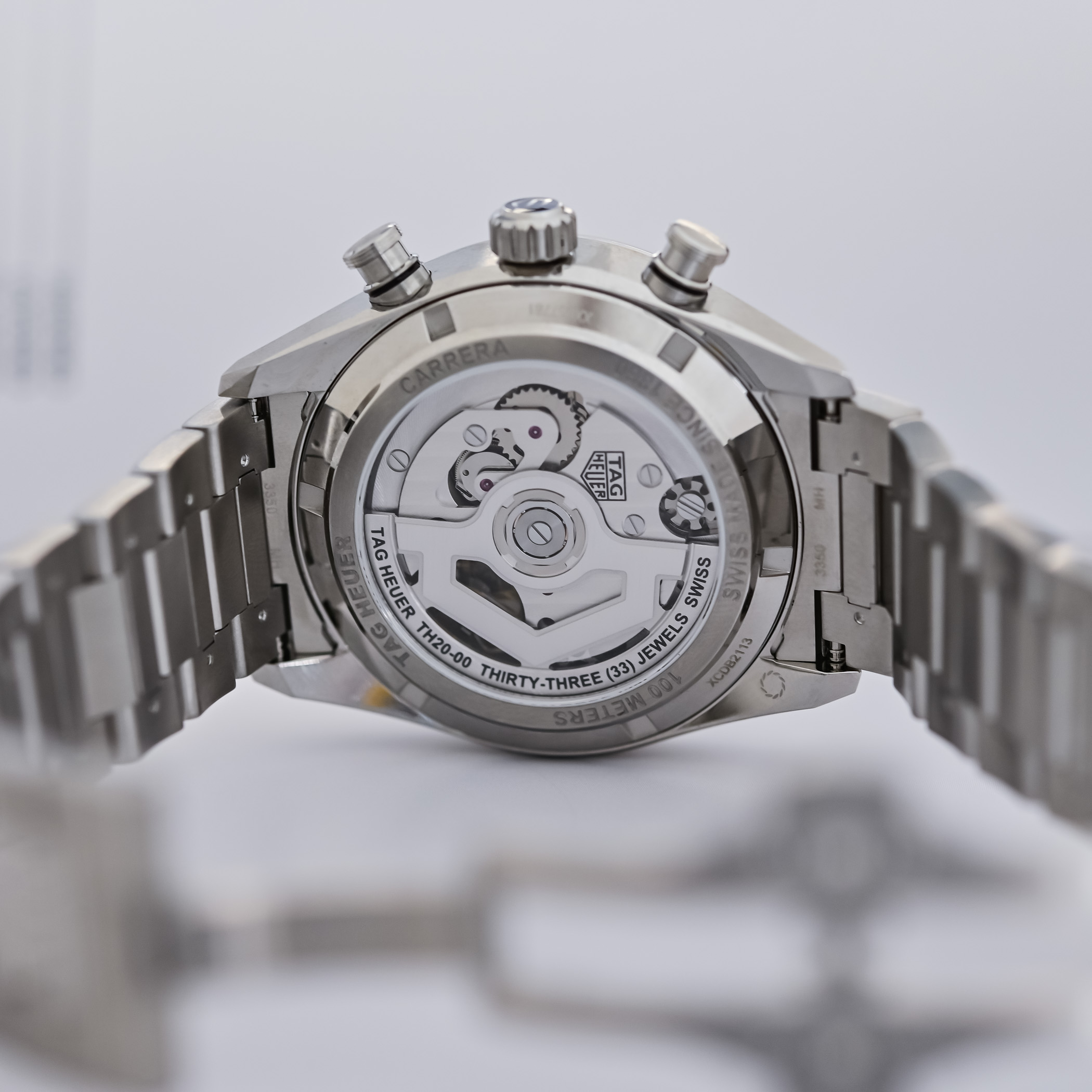
The latest Carrera Chronograph Sport keeps the formula familiar, with a 42mm stainless steel case, ceramic bezel, contrasting subdials and TAG Heuer’s TH20-00 automatic chronograph movement.
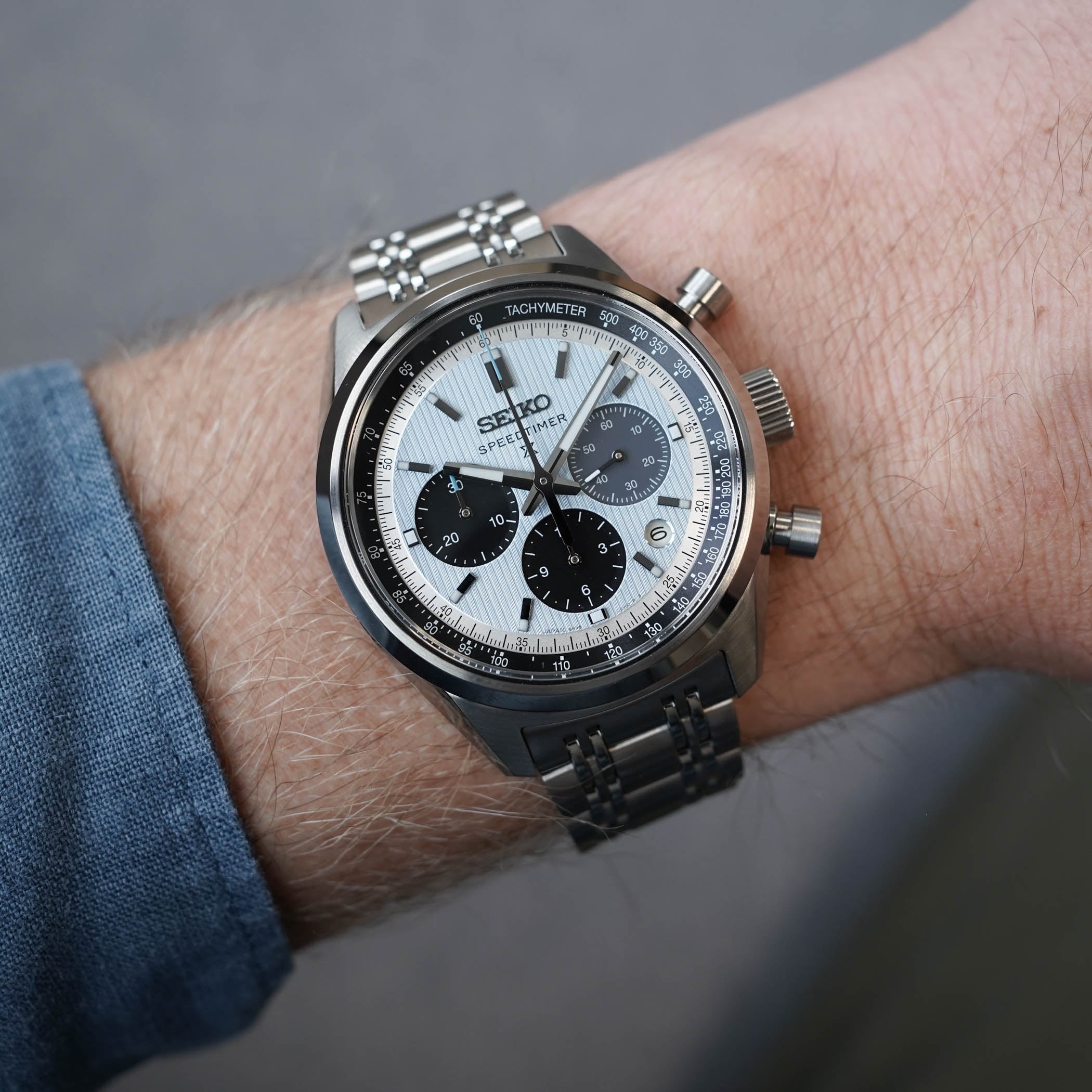
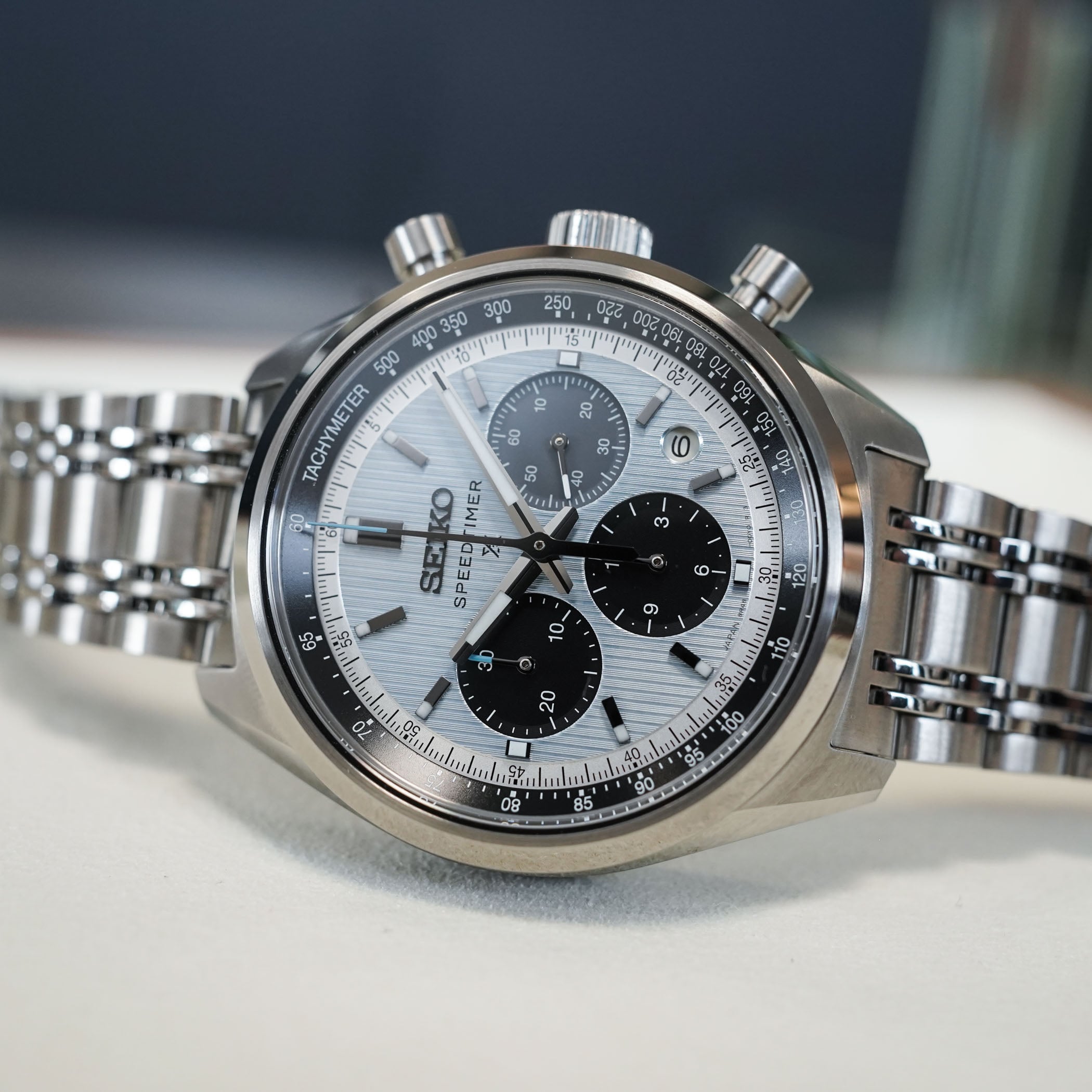
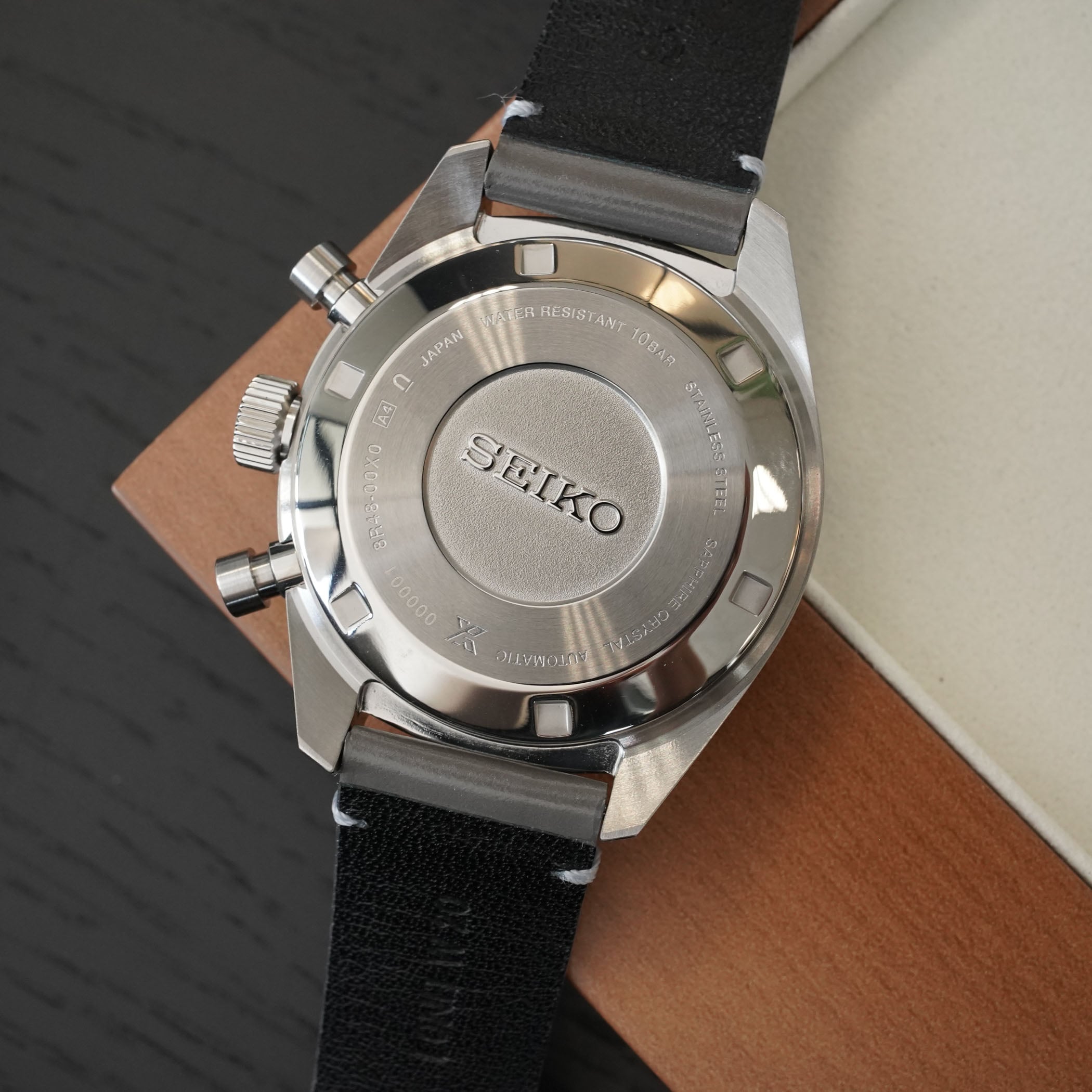
Seiko approaches the category from a different angle with the Prospex Speedtimer Mechanical Chronograph HBD001 and HBD002.
They’re robust, mechanical and priced well below the Swiss pieces in this selection, while still using an in-house automatic chronograph calibre with a column wheel and vertical clutch.
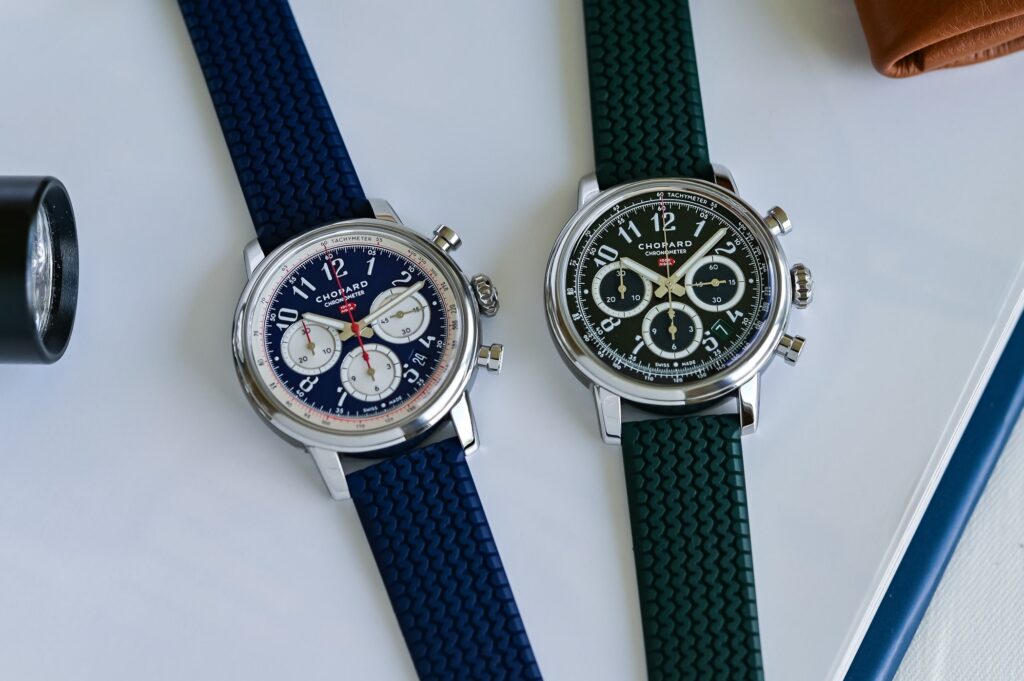
Chopard’s Mille Miglia Classic Chronograph Racing Colours leans into historic road-racing culture.
The blue, silver and green dials reference national racing colours for France, Germany and the UK, with each version limited to 100 pieces and sold only in its associated country.
Formula 1 adds sharper team identity
Three watches in this guide have a direct Formula 1 connection, and each handles that link in a different way.
Tudor’s Black Bay Chrono 26 is tied to the Racing Bulls Formula 1 team and takes its colour cues from the VCARB 03 racing livery.
Its forged carbon case, carbon bezel, carbon end-links and carbon fibre subdials make it the most material-forward watch in the group.
Girard-Perregaux’s Laureato Chronograph Williams marks the brand’s partnership with Williams Racing for the 2026 season.
The watch keeps the Laureato’s integrated-bracelet architecture but gives the Clous de Paris dial a Williams blue treatment with silver subdial rings.
IWC’s Pilot Chronograph 41 Mercedes-AMG Petronas Formula One Team is the most vivid of the six.
Released in honour of the Singapore Grand Prix, it pairs a grade 5 titanium case with a purple sunburst dial, purple rubber strap and PETRONAS green details across the hands, markers and numerals.
Details & Specifications
| TAG Heuer Carrera Chronograph Sport | 42mm stainless steel case; ceramic bezel; sapphire front and back; 100m water resistance; black, blue, green or silver sunray dial; TH20-00 in-house integrated automatic chronograph with column wheel and vertical clutch; 80-hour power reserve; EUR 6,350 on leather or EUR 6,550 on bracelet. |
|---|---|
| Seiko Prospex Speedtimer HBD001 and HBD002 | 42mm steel case with super-hard coating; sapphire crystal and solid steel back; 100m water resistance; calibre 8R48 in-house automatic chronograph with column wheel and vertical clutch; 45-hour power reserve; HBD001 on steel bracelet and HBD002 on leather strap; EUR 2,780 for HBD001 and EUR 2,680 for HBD002. |
| Chopard Mille Miglia Classic Chronograph Racing Colours | 40.5mm Lucent steel case; sapphire front and back; British Racing Green, French Blue or Speed Silver dial; tachymeter scale; automatic chronograph based on ETA A322-11; 54-hour power reserve; tyre-tread rubber strap or black perforated leather strap; 100 pieces per colour; exclusive to the UK, France and Germany; GBP 8,050, EUR 11,100 or EUR 11,300 depending on market. |
| Tudor Black Bay Chrono 26 | 42mm carbon fibre case; fixed carbon bezel; PVD-coated crown, pushers and caseback; 200m water resistance; racing white dial with yellow details and carbon fibre subdials; MT5813 automatic COSC-certified chronograph with column wheel; hybrid leather-rubber strap; limited to 2,026 pieces; EUR 7,980. |
| Girard-Perregaux Laureato Chronograph Williams | 42mm 904L steel case; sapphire front and back; 100m water resistance; Williams blue Clous de Paris dial with silver subdial rings; GP03300-2451 automatic modular chronograph; 46-hour power reserve; integrated 904L steel bracelet; reference 81020-11-3681-1GM; not limited; EUR 20,500. |
| IWC Pilot Chronograph 41 Mercedes-AMG Petronas Formula One Team | 41mm grade 5 titanium case; screw-in crown; sapphire front and back; 100m water resistance; purple sunburst dial with PETRONAS green luminous details; recessed snailed subdials; calibre 69385 automatic chronograph; 46-hour power reserve; purple rubber strap with titanium pin buckle; permanent collection; CHF 7,700. |
How to choose between them
The Seiko is the value-led mechanical choice, particularly for buyers who want a proper automatic chronograph movement without moving into higher Swiss pricing.
The TAG Heuer is the natural pick for someone who wants a core motorsport watch from a brand deeply associated with timing and racing culture.

Chopard’s Mille Miglia editions are more niche because of their country-specific availability and 100-piece runs, but that constraint is also part of their appeal.
The Tudor is the most overtly modern racing watch here, with its forged carbon build and direct Racing Bulls Formula 1 connection.
The Girard-Perregaux is the most elevated integrated-bracelet option, while the IWC offers the boldest colour statement and a permanent-collection route into a Formula 1 team edition.

None of these watches needs a race weekend to justify itself, but each one carries some part of motorsport’s timing culture in a credible way.
For buyers, the choice comes down to whether the draw is heritage, engineering, team affiliation, limited production or simply the pleasure of a chronograph that looks ready to measure something fast.