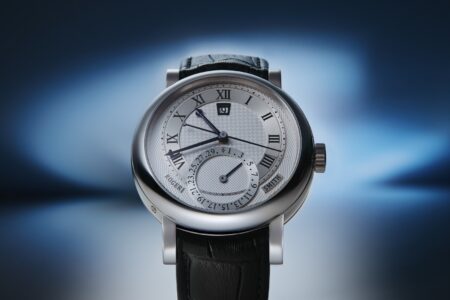
Roger W. Smith’s Series Seven is the kind of anniversary watch that looks backward without getting trapped there.
Created to mark 25 years of Roger W. Smith Ltd, it also arrives in the centenary year of George Daniels’ birth, making its timing unusually loaded for British independent watchmaking.
Yet the watch isn’t a tribute piece in the conventional sense. It’s a new chapter built around a new movement, a discreet tourbillon and Smith’s first annual calendar.

At a glance
- Roger W. Smith has unveiled the Series Seven to mark 25 years of his Isle of Man watchmaking company.
- The watch uses a newly designed British calibre with a one-minute tourbillon, central seconds and an annual calendar.
- Two prototypes exist in platinum and red gold, with no fixed edition size and expected production of roughly one or two watches a year.
A Daniels lineage in Smith’s own hand
The Series Seven is deeply connected to Smith’s history with George Daniels, but it doesn’t try to recreate a Daniels watch.
Its offset dial recalls the Daniels Millennium, the double-signed wristwatch that became one of the defining collaborations between mentor and apprentice.
There is also a link to Smith’s Pocket Watch No. 2, the piece that led Daniels to tell him he was a watchmaker after rejecting his first handmade pocket watch.
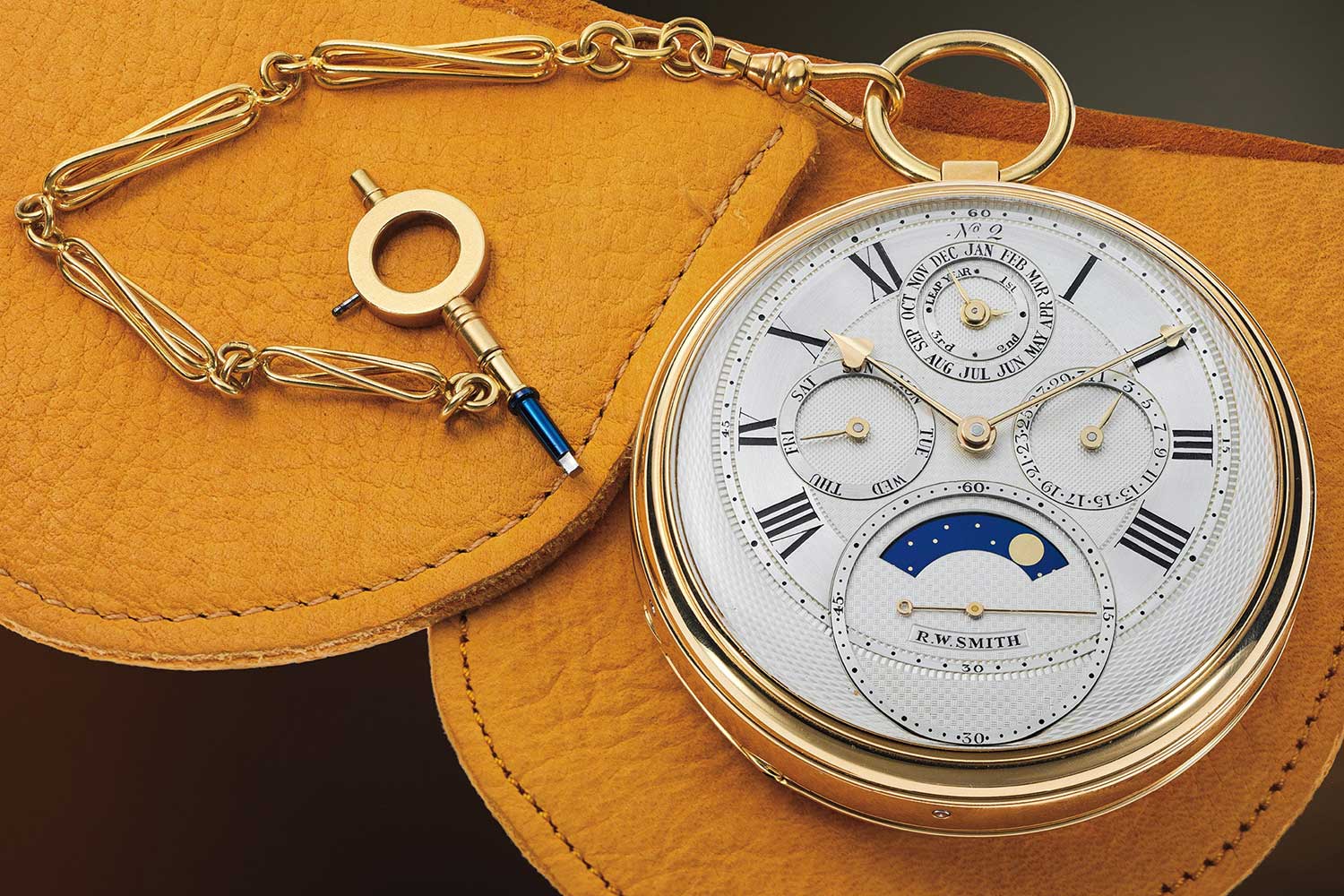
Smith has described the Series Seven as “very much my own chapter,” and that distinction matters.
The Daniels influence is visible in the priorities rather than the proportions, especially the restraint, the English movement architecture and the continued use of the co-axial escapement.
The dial that forced a new calibre
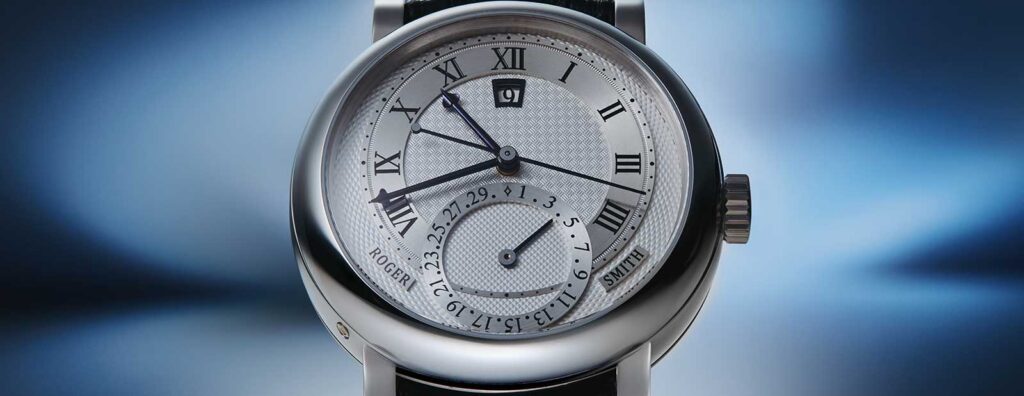
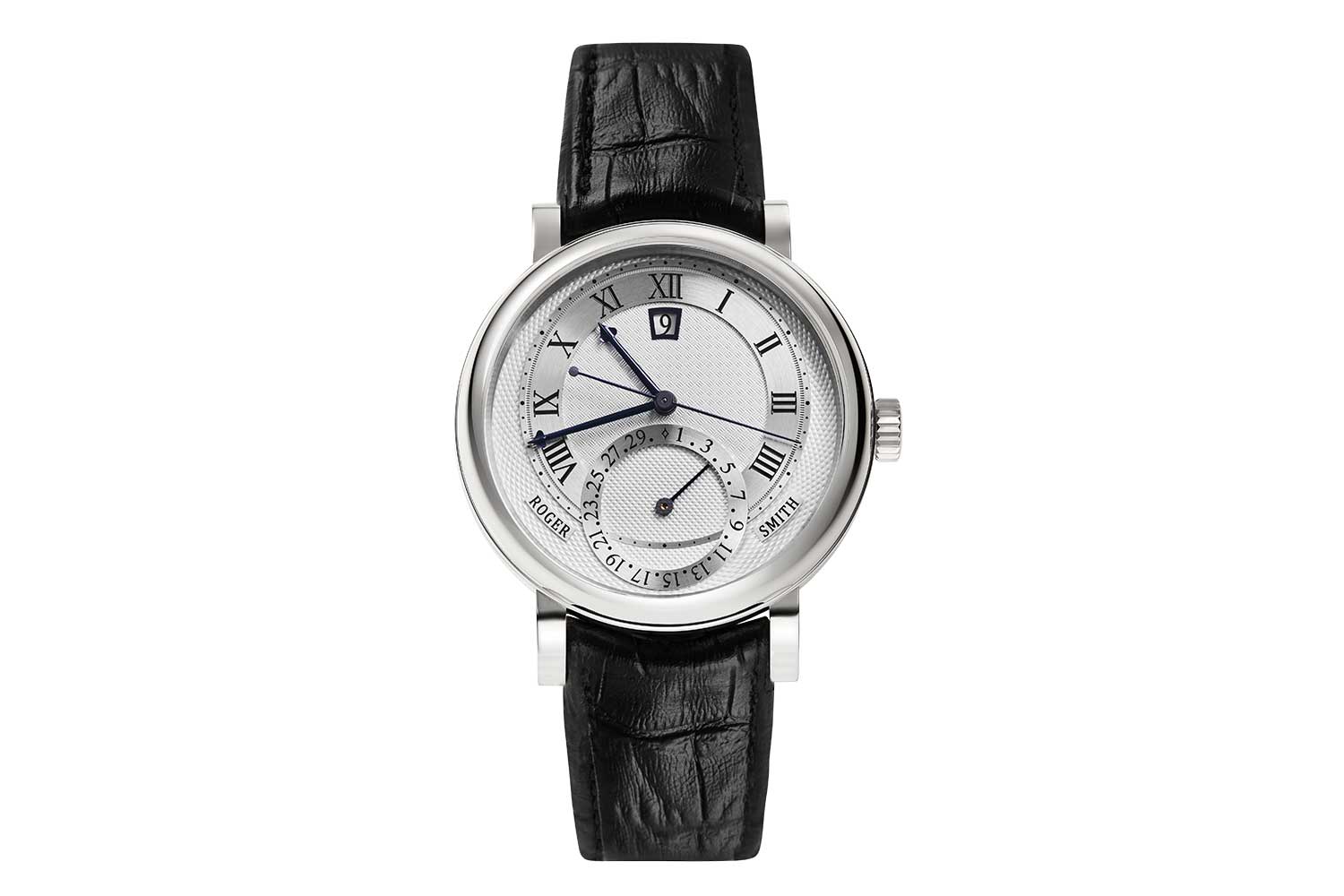
From the front, the Series Seven is calmer than its specification suggests.
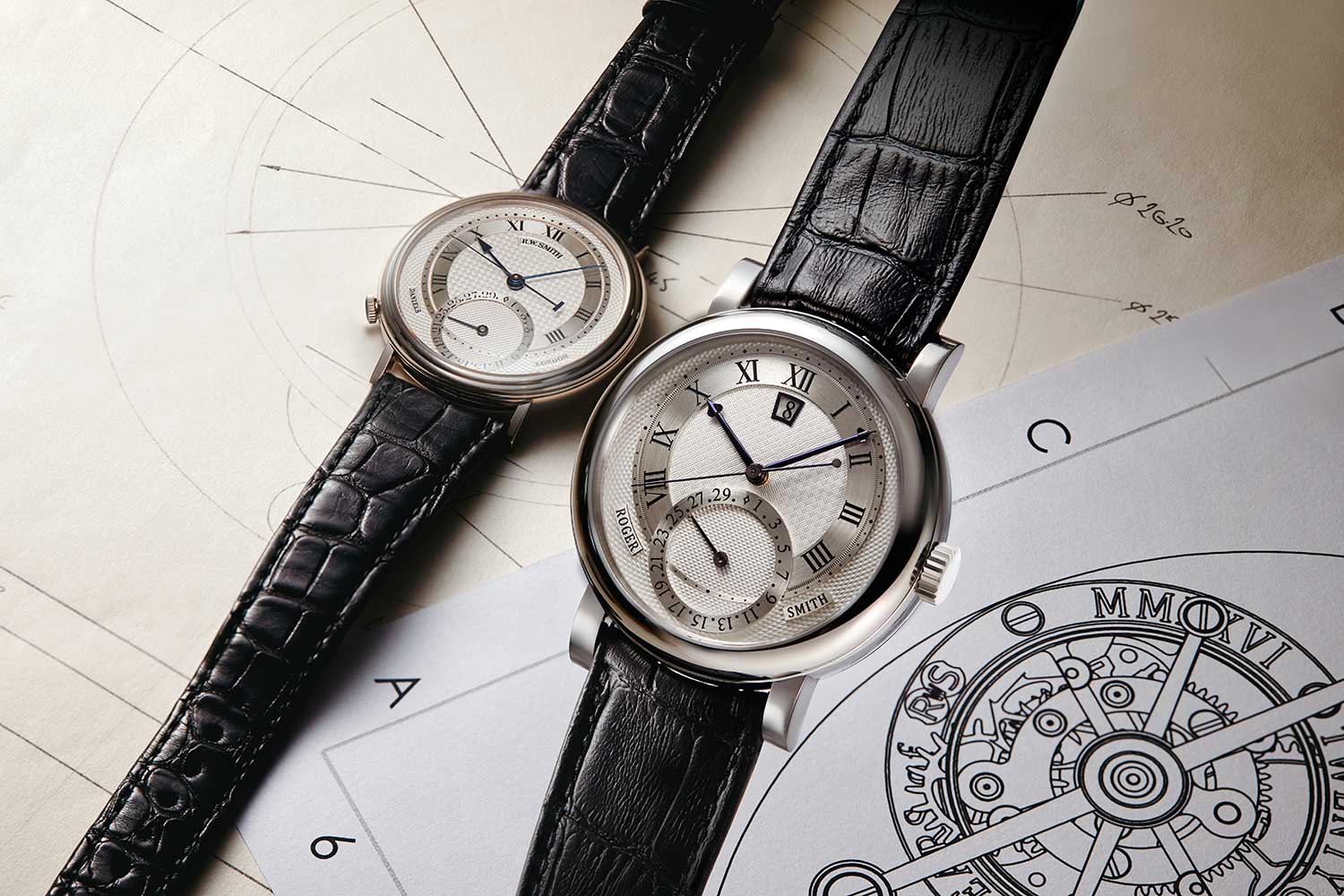
The offset time display carries hours and minutes, while a long central seconds hand gives the watch a more animated, assertive rhythm than many of Smith’s earlier pieces.
A pointer date sits at 6 o’clock, with a numerical month display beneath 12 o’clock.
That combination makes the Series Seven Smith’s first annual calendar, despite his long-running interest in calendar mechanisms.
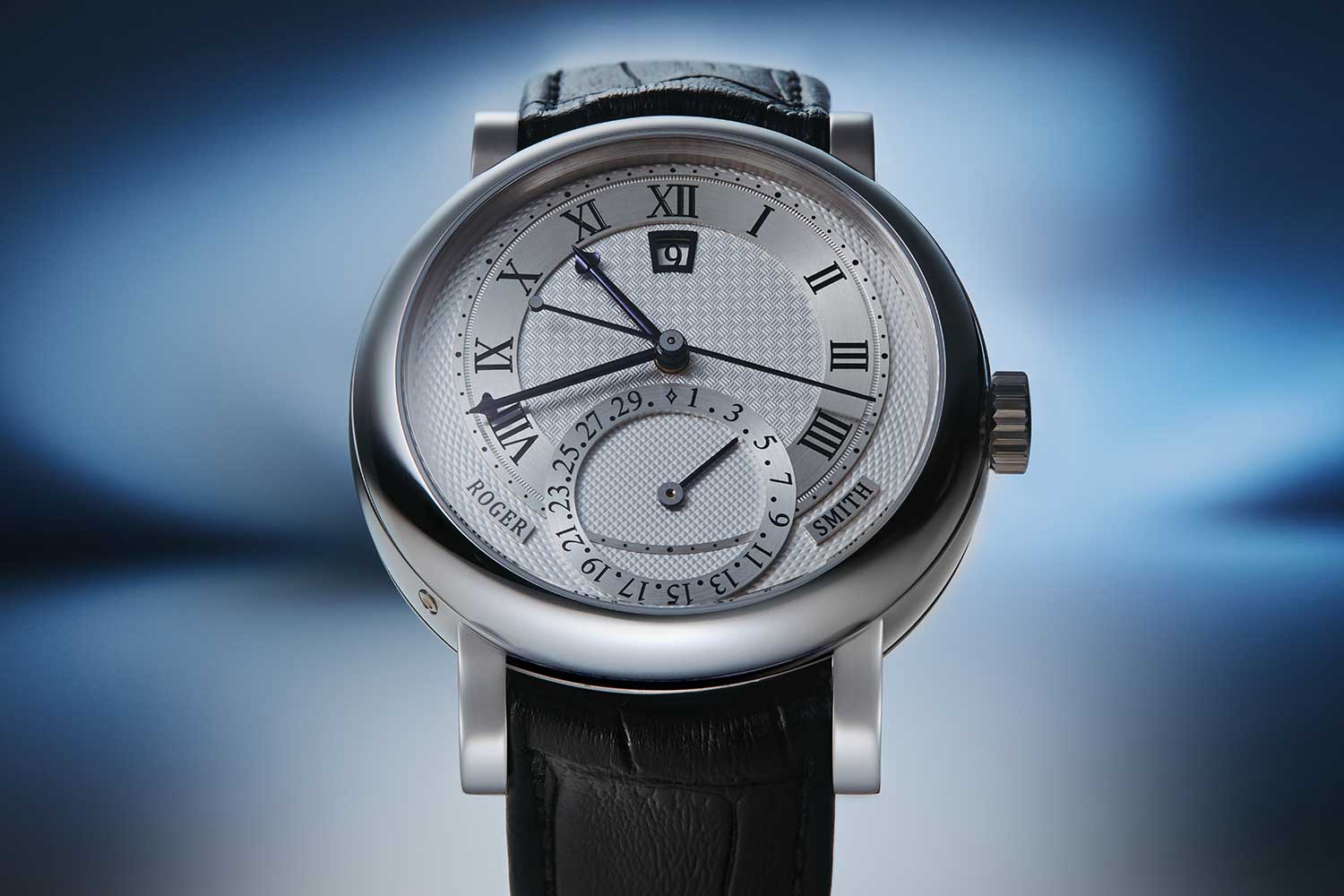
The launch prototype in platinum has a silver engine-turned dial signed simply “Roger Smith.”
The dial is made from solid silver and uses applied chapter rings with three hand engine-turned patterns, then receives a depletion gilding process that leaves a pale, near-pure silver surface.
Smith has said the dial led the movement design, rather than the other way around.
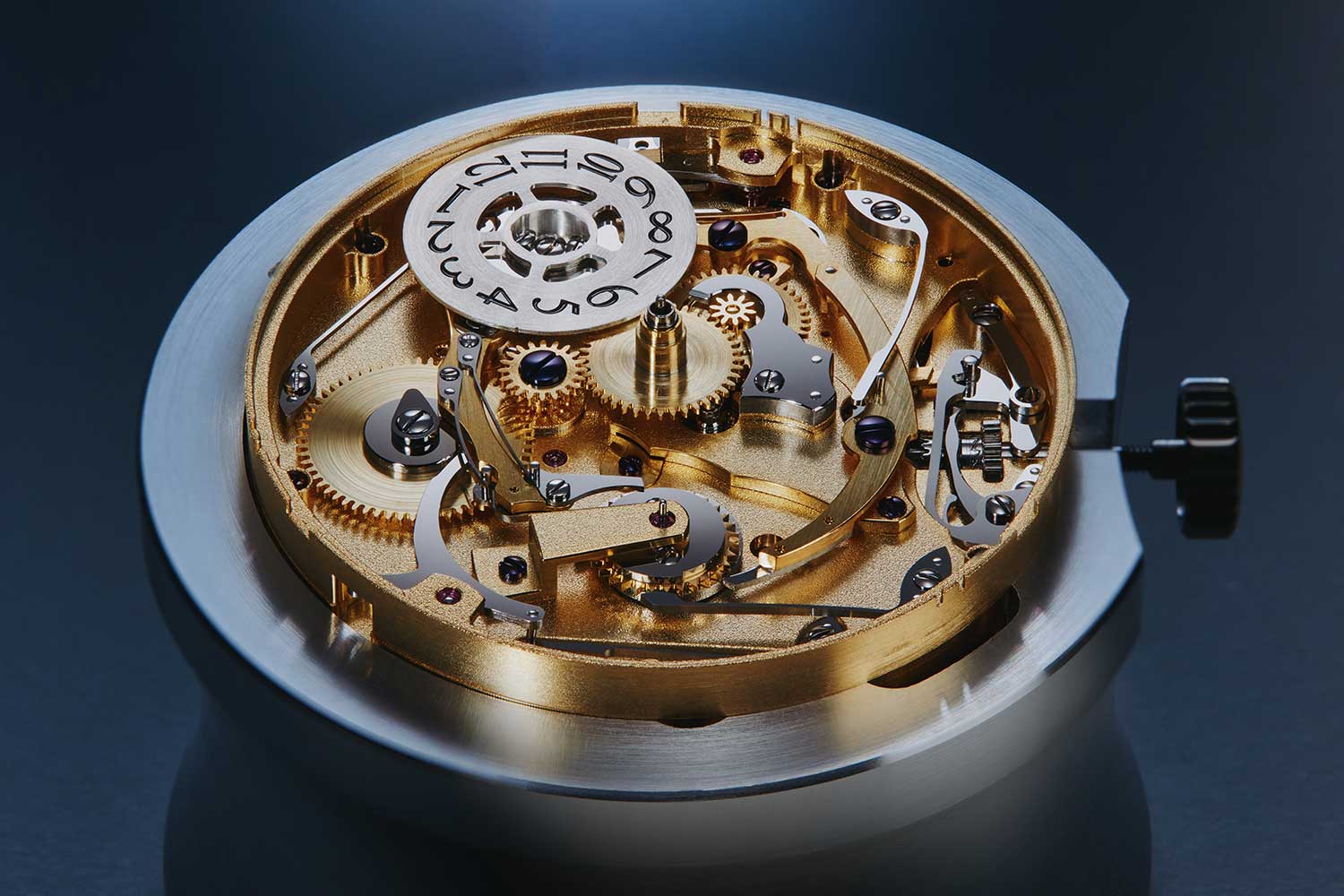
The separated month and date displays required a long connecting lever, while the decision to include central seconds meant his earlier tourbillon layouts couldn’t simply be reduced or adapted.
The result is a new calibre, not a reworked existing architecture.
A private tourbillon and English movement architecture
The Series Seven’s one-minute tourbillon is kept off the dial and placed on the movement side, visible through the exhibition caseback.
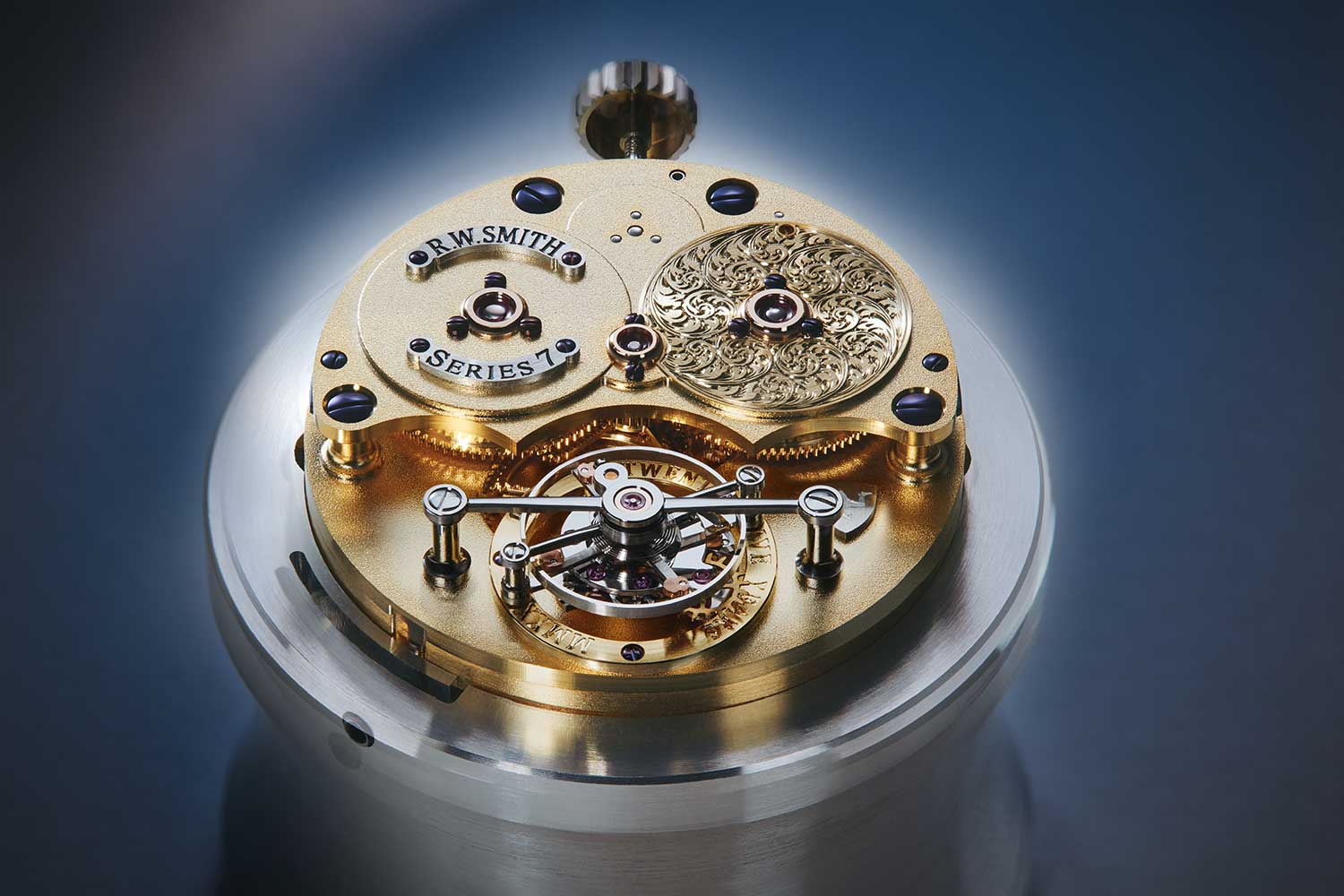
Smith’s view is characteristically restrained, with the tourbillon intended for the owner rather than for everyone across the table.
The movement is built around twin barrels and a traditional English architecture, using turned pillars to raise a large barrel plate above the mainplate.
Instead of Swiss-style anglage, perlage or striping, the plates are frosted and gilded, with screwed-in gold chatons, floral engraving on the barrel cover and a fully black-polished tourbillon carriage.
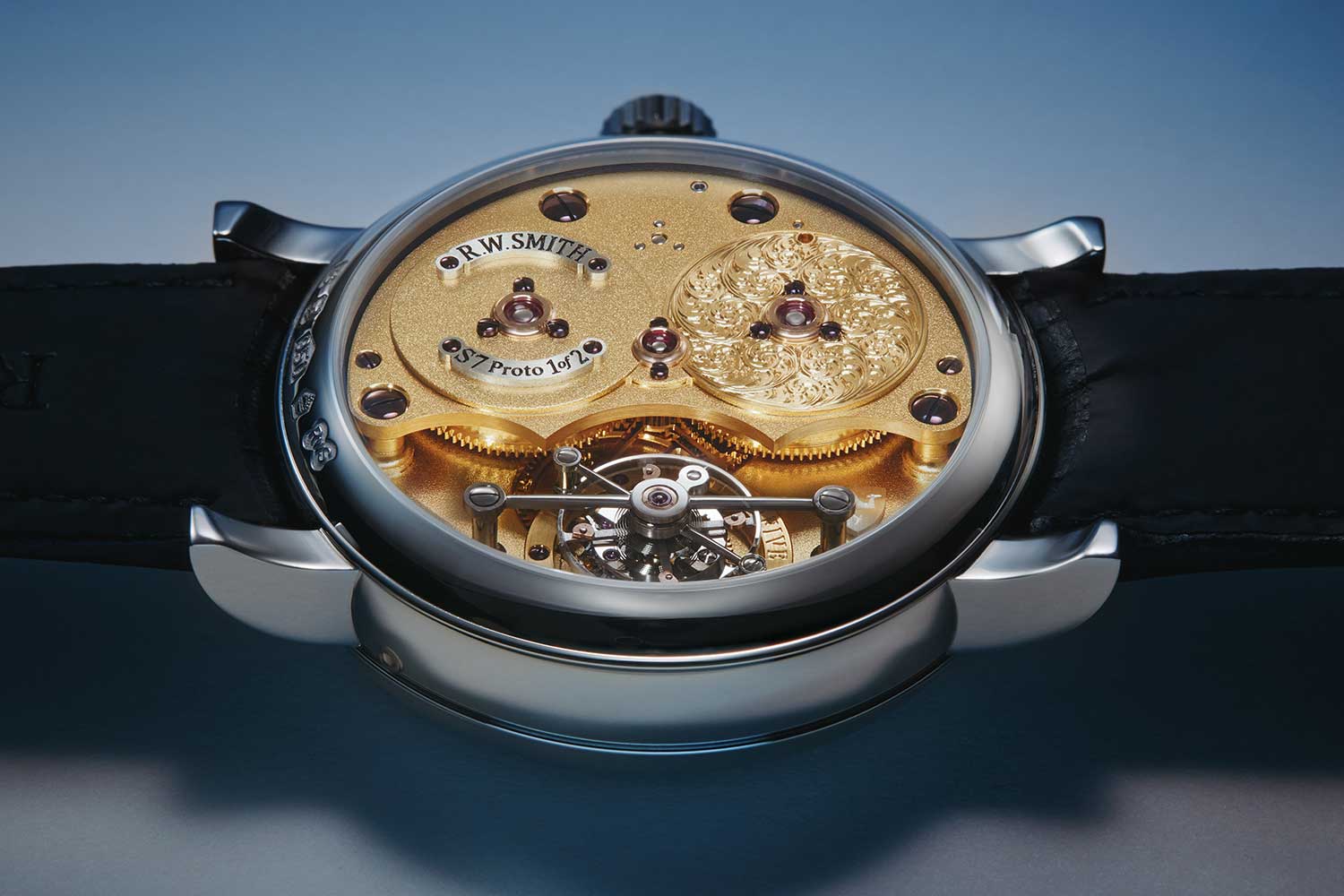
The twin barrels serve a technical role by helping balance forces on the center wheel, but Smith also sees them as an aesthetic choice tied to historic English watchmaking.
The calibre runs at 3 Hz and has a stated 48-hour power reserve.
One especially candid detail is the escapement.
Smith has said the co-axial escapement components used in the Series Seven come from an Omega wristwatch, explaining that at this scale the components are too small for his workshop to manufacture.
Rather than feeling out of place, the decision connects the watch back to the Daniels Millennium, where Smith and Daniels faced a similar practical problem with small co-axial components.
The case measures 40mm across and 14.60mm thick, dimensions that reflect the depth of the movement rather than a pursuit of slimness for its own sake.
Details & Specifications
| Brand | Roger W. Smith |
|---|---|
| Model | Series Seven |
| Case size | 40mm diameter, 14.60mm thick |
| Case material | Gold or platinum, with prototypes in red gold and platinum |
| Caseback | Exhibition caseback with London hallmark |
| Dial | Offset dial centre; platinum prototype with silver engine-turned dial signed “Roger Smith” |
| Movement | New British-designed calibre |
| Complications | One-minute tourbillon and annual calendar |
| Functions | Hours, minutes, central seconds, date at 6 o’clock and numerical month display beneath 12 o’clock |
| Escapement | Co-axial escapement |
| Frequency | 3 Hz, 21,600 vph |
| Power reserve | 48 hours |
| Strap details | 20mm lug width, 18mm buckle width, gold or platinum buckle engraved R.W. Smith |
| Special prototype detail | Third-wheel bridge engraved “MMXXVI Twenty Five Years of RWS” |
| Availability | Two prototypes completed; no fixed edition size; expected production of approximately one or two watches per year |
| Price | Not announced |
The Series Seven may be rare by necessity rather than marketing strategy, but that suits the watch.
It’s a measured, technically ambitious piece from a maker who has spent a quarter-century turning the lessons of Daniels into his own language, and it shows exactly how far the Isle of Man workshop has come.