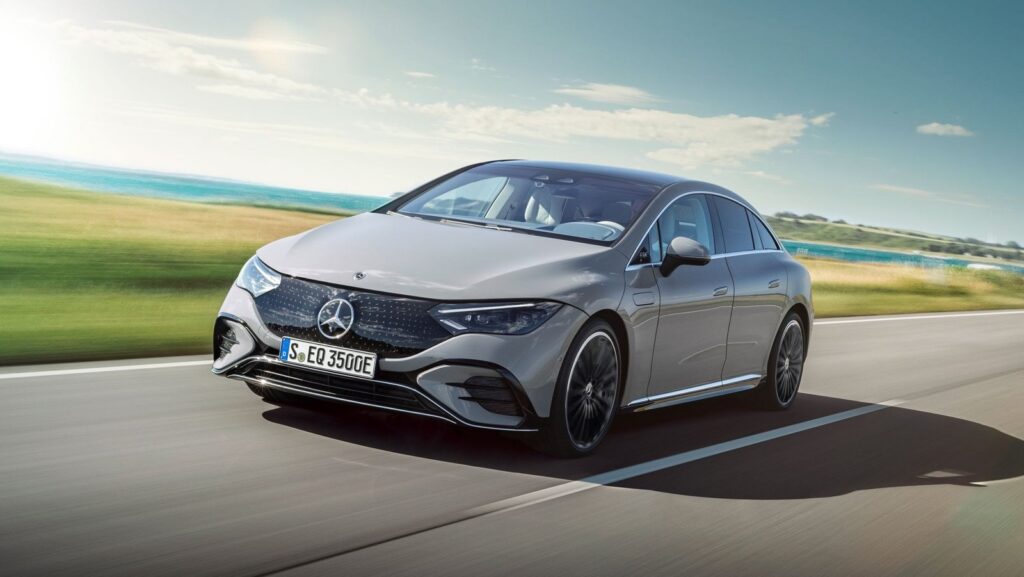
Mercedes-Benz has made a notable change to its electric line-up in Europe, even if it hasn’t dressed it up as a public announcement.
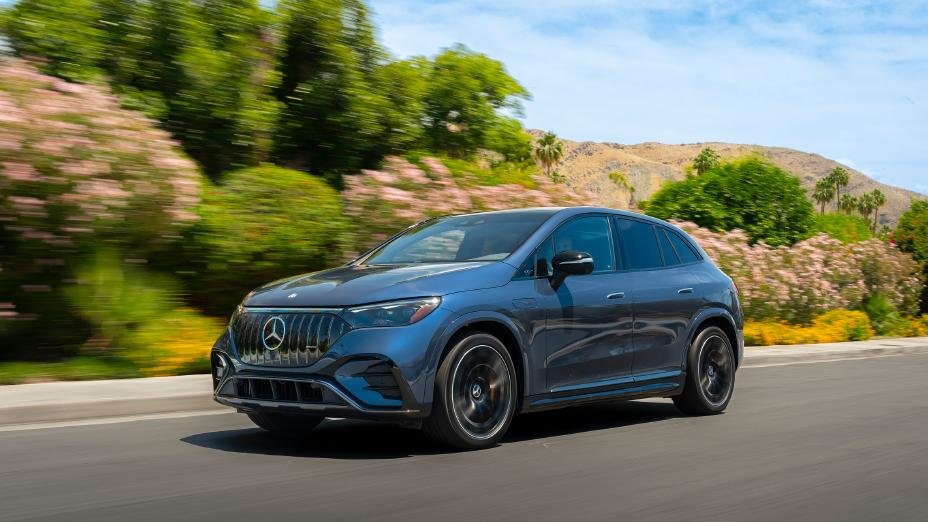
The EQE Sedan, EQE SUV and EQS SUV have disappeared from the German online configurator, shifting interested buyers toward vehicles already in stock.
For a brand still defining the next phase of its EV strategy, the move is worth watching.
At a glance
- Mercedes-Benz has stopped accepting individual orders for the EQE Sedan, EQE SUV and EQS SUV in Germany.
- The affected models no longer appear in the German online configurator, with buyers directed toward existing stock.
- Similar ordering limits are appearing in the UK, France and the Netherlands, while Mercedes-Benz has not explained the decision.
Three electric models leave the German configurator
The affected cars sit in an important part of Mercedes-Benz’s electric portfolio.
The EQE Sedan, EQE SUV and EQS SUV cover executive saloon and premium SUV territory, segments that matter heavily to the brand’s electric ambitions.
In Germany, prospective customers can no longer configure these models as individual factory orders through the online system.
Instead, the process points them toward cars that are already available from stock.
That distinction matters because it suggests Mercedes-Benz is managing ordering channels rather than simply removing the cars from public view.
Ordering limits extend beyond Germany
The change isn’t confined to Mercedes-Benz’s home market.
Customers in several other European markets, including the UK, France and the Netherlands, are facing similar limitations.
Mercedes-Benz has not officially clarified whether this is a temporary ordering restriction, a production planning decision or part of a wider product strategy.
There is also no confirmed indication that the EQE Sedan, EQE SUV or EQS SUV have been discontinued in the region.
For buyers, the immediate practical effect is simpler and less flexible than before.
Choice shifts from building a preferred specification to selecting from vehicles already in the network.
A wider reset around EV production costs
The timing gives the move a broader industry significance.
Mercedes-Benz is putting new investments in its German manufacturing plants on hold as it works to reduce production costs and respond to pressure on its domestic operations.
The company is also exploring possible site closures, underlining the strain facing parts of Germany’s automotive sector.
Against that backdrop, tighter control over EV ordering and stock flow would fit a more cautious approach to production planning.
Luxury EV demand, manufacturing cost and model complexity are all becoming harder to balance, particularly for carmakers with large European factory footprints.
What it means for Mercedes EV buyers
For now, the clearest answer is that buyers interested in these three electric models may need to shop from available inventory rather than place a bespoke order.
That may suit customers who want faster access to a car, but it narrows the appeal for those who expect the full configuration experience from a luxury brand.
The more important question is what Mercedes-Benz does next.
If the restriction proves temporary, it may simply reflect production planning or regional stock management.
If it becomes part of a longer-term reshuffle, it could signal a more selective European EV strategy built around fewer orderable variants and tighter cost control.
Either way, the disappearance of the EQE Sedan, EQE SUV and EQS SUV from the German configurator is a meaningful change, and one that shows how quickly the premium electric market is being recalibrated.