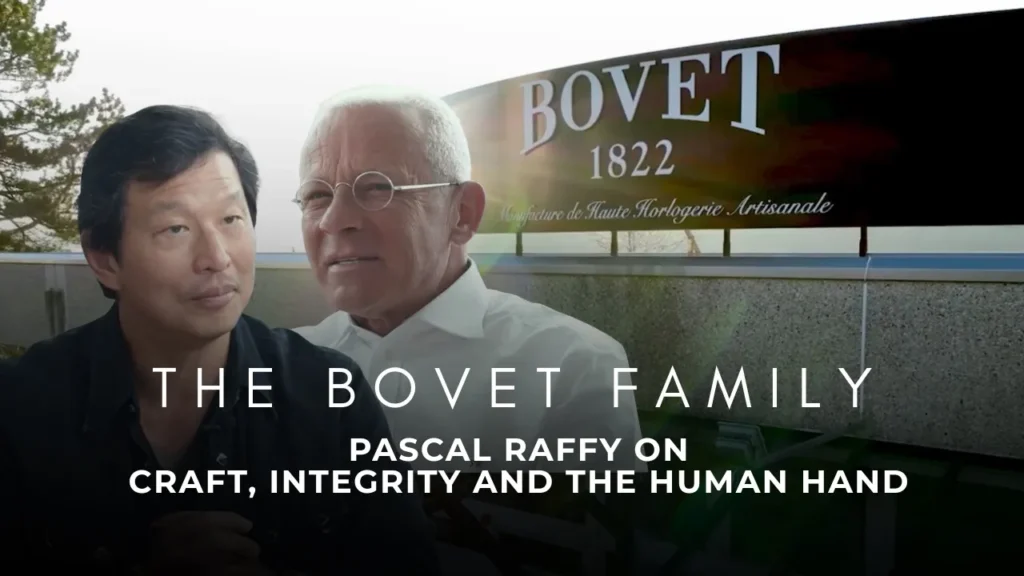
Few independent watch houses speak about vertical integration with the warmth Bovet brings to the subject.
For Pascal Raffy, Owner and CEO of Bovet, independence isn’t just a matter of owning machinery or mastering production steps. It’s about building a culture where artisans can hold one another to exacting standards without losing the human texture that makes high watchmaking worth caring about.
The story turns on 2006, a decisive year that deepened Bovet’s modern identity through Château de Môtiers and the manufacture in Tramelan.
At a glance
- Pascal Raffy outlines how Bovet became a deeply integrated high watchmaking manufacture.
- The maison’s capabilities span movement components, cases, hairsprings, regulating organs, decorative arts, engraving, pad printing and assembly.
- Recent watches including the Virtuoso XI, Récital 28 Prowess 1 and Récital 30 show how Bovet links technical ambition with hand-led craft.
The 2006 turning point at Bovet
Bovet’s contemporary shape is closely tied to Raffy’s push for independence in the mid-2000s.
The acquisition of Château de Môtiers gave the maison a symbolic and practical home, while the Tramelan manufacture expanded the technical foundation needed to build watches with greater autonomy.
That combination matters because Bovet’s identity has never been only industrial.
The château speaks to history, patronage and decorative craft, while Tramelan represents the demanding mechanical discipline behind the finished watch.
Together, they created the conditions for a maison that could control more of its own destiny without reducing watchmaking to a cold exercise in production management.
A manufacture built around artisans
Raffy’s view of integration is unusually personal.
At Bovet, the pursuit of in-house capability reaches into movement components, case construction, hairsprings, regulating organs, decorative arts, hand engraving, pad printing and final assembly.
That breadth gives the maison technical freedom, but the more interesting point is cultural.
Raffy describes an environment shaped by mutual respect and what he calls “positive pressure,” where each craftsperson’s work affects the next person’s ability to meet the house standard.
In that sense, integration is less about corporate neatness than accountability.
A movement finisher, engraver, case maker, dial specialist and watchmaker are not isolated departments; they’re part of a shared chain where compromise becomes visible very quickly.
Why the hand still defines luxury
Bovet’s work is a useful reminder that modern haute horlogerie isn’t at its best when it tries to erase the hand.
The human hand remains central because it introduces judgment, rhythm and nuance into objects that could otherwise become merely precise.
Hand engraving is the clearest example, but the idea runs deeper than ornament.
Adjustment, finishing, assembly and decoration all require a sensitivity that can’t be reduced to a checklist.
That’s especially relevant for Bovet, where mechanical complexity often meets expressive case architecture and elaborate visual craft.
The appeal isn’t only that something has been made by hand, but that the hand has been given enough authority to matter.
The watches that carry the philosophy
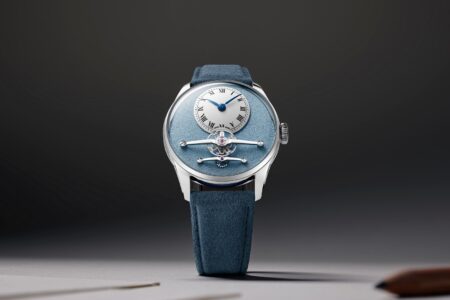
Recent Bovet creations such as the Virtuoso XI, Récital 28 Prowess 1 and Récital 30 help explain why the maison’s manufacturing philosophy isn’t abstract.
These watches carry technical ambition, but they also show Bovet’s preference for presenting mechanics as part of a larger artistic composition.
The Récital line in particular has become a stage for architectural thinking, where displays, complications and case geometry work together rather than sitting in separate visual zones.
The Virtuoso XI continues Bovet’s taste for watchmaking that invites close reading, rewarding the owner who wants to understand not only what a watch does, but how it has been expressed.
For collectors, that combination is the point.
Bovet is not chasing minimalism or anonymity; it is making watches for people who want evidence of craft, technique and personality in the same object.
Raffy’s version of luxury is not detached from the people who make it.
It is rooted in the idea that a watch gains meaning when the maison behind it protects both mechanical expertise and the dignity of the artisan’s contribution.
In an industry often drawn toward scale, speed and spectacle, Bovet’s insistence on the human hand feels less nostalgic than quietly radical.