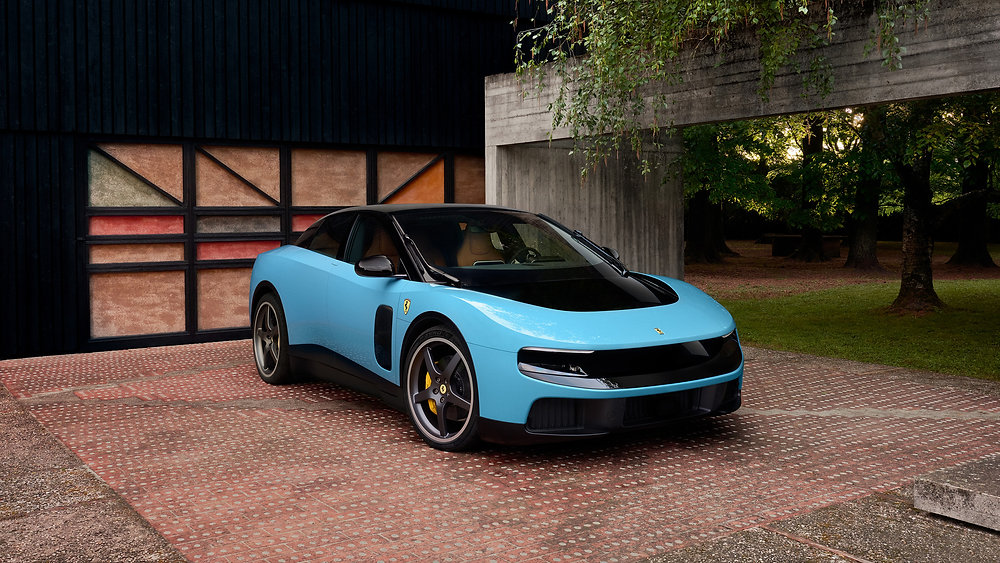
Ferrari’s first fully electric chapter now has a name, a shape and a very deliberate sense of occasion.
Unveiled at the Vela di Calatrava – Città dello Sport in Rome, the Ferrari Luce arrives as more than a battery-powered addition to the range. It’s Maranello’s attempt to define what an electric Ferrari can be without treating electrification as a replacement for the engines that built the marque.
The location carried its own weight, as Ferrari’s first victory came in Rome in 1947 when Franco Cortese drove the 125 S to victory at the Gran Premio di Roma on the Baths of Caracalla circuit.
At a glance
- Ferrari has unveiled the Luce, a new all-electric model that marks a major step in Maranello’s multi-energy strategy.
- The Luce uses four electric motors, a 122 kWh battery, active suspension and a five-seat, four-door architecture.
- With 1050 cv, a claimed 0–100 km/h time of 2.5 seconds and more than 530 km of range, it places electric performance within Ferrari’s own design language.
A new Ferrari rather than a familiar one with batteries
The Luce is positioned as the culmination of Ferrari’s multi-energy strategy, first laid out at its 2022 Capital Markets Day.
That approach matters because Ferrari is not presenting electrification as a single destination. Instead, it is treating electric technology as another way to expand performance, packaging, design and driver engagement alongside its existing powertrain families.
The name Luce, Italian for light, is intended to suggest clarity and direction rather than simply signal a technical category.
Ferrari is also keeping the most important elements close to home. The electric motors and battery pack are engineered, developed and manufactured in Maranello, with the project encompassing more than 60 new patents.
That level of vertical control is significant for a brand whose identity is tied as much to engineering authorship as to speed.
LoveFrom reshapes the Ferrari cabin and silhouette
The Luce introduces an unusual creative partnership for Ferrari, with its design entrusted to LoveFrom, the collective led by Sir Jony Ive and Marc Newson.
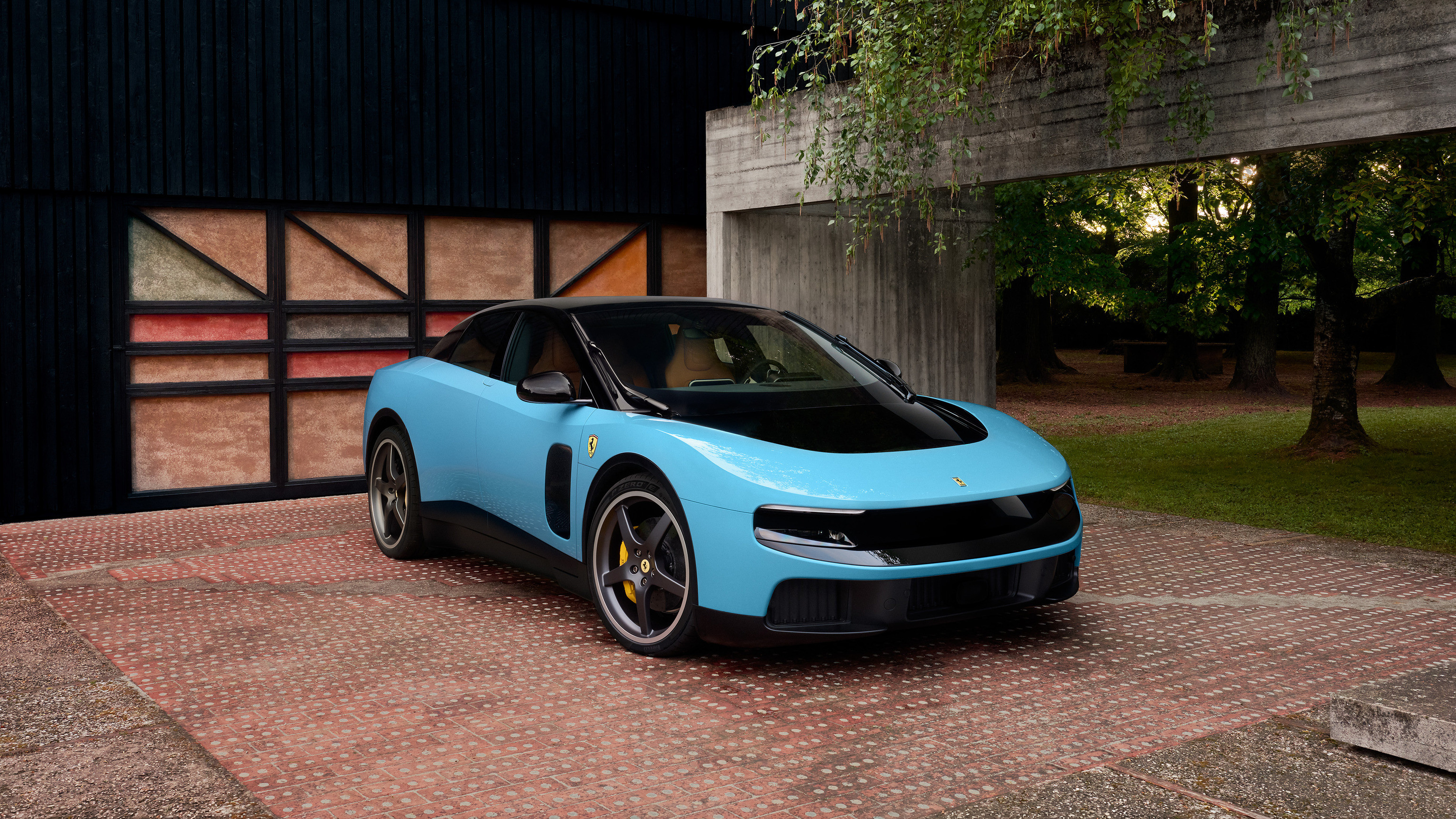
Working outside the usual Ferrari Design Studio structure led by Flavio Manzoni, LoveFrom was given room to define the project’s visual direction from the beginning.
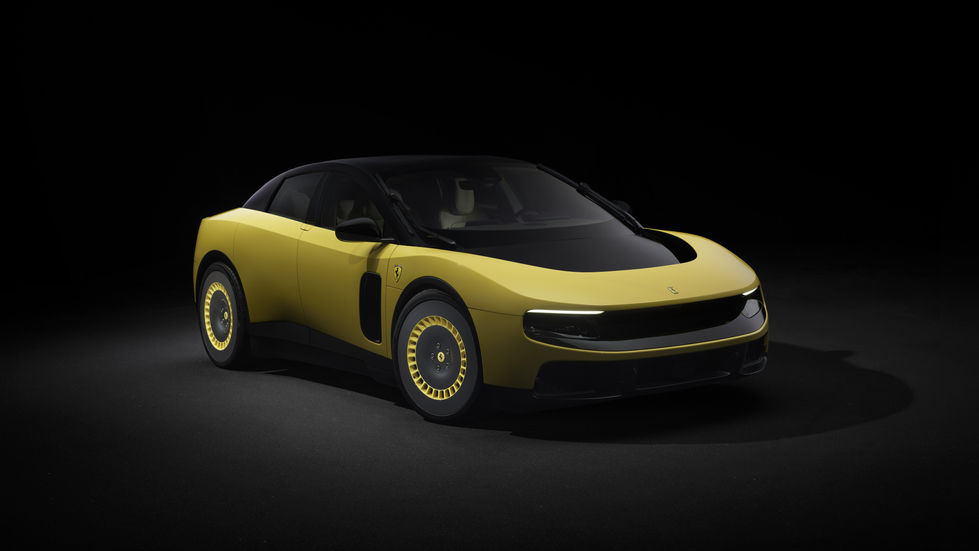
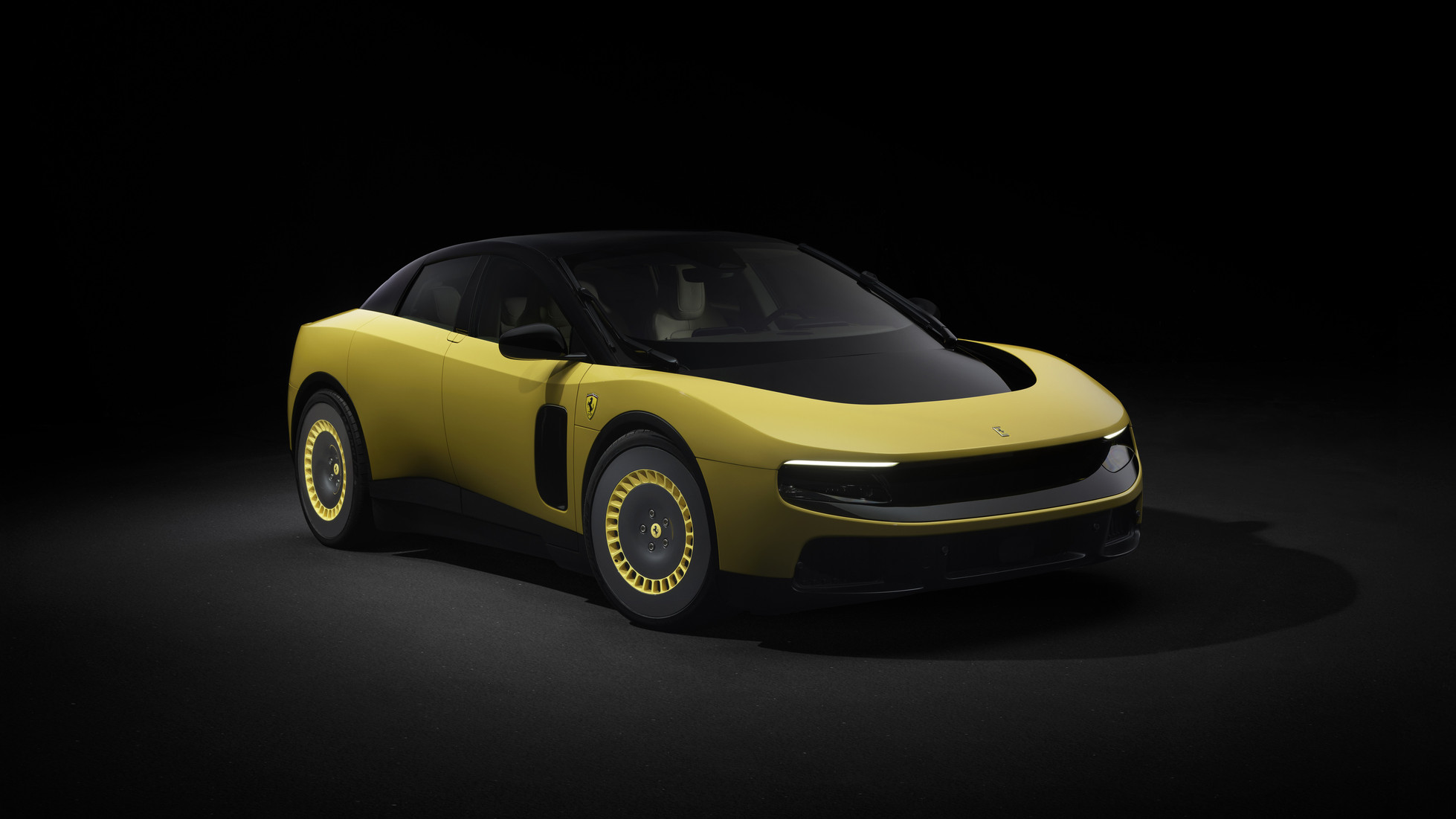
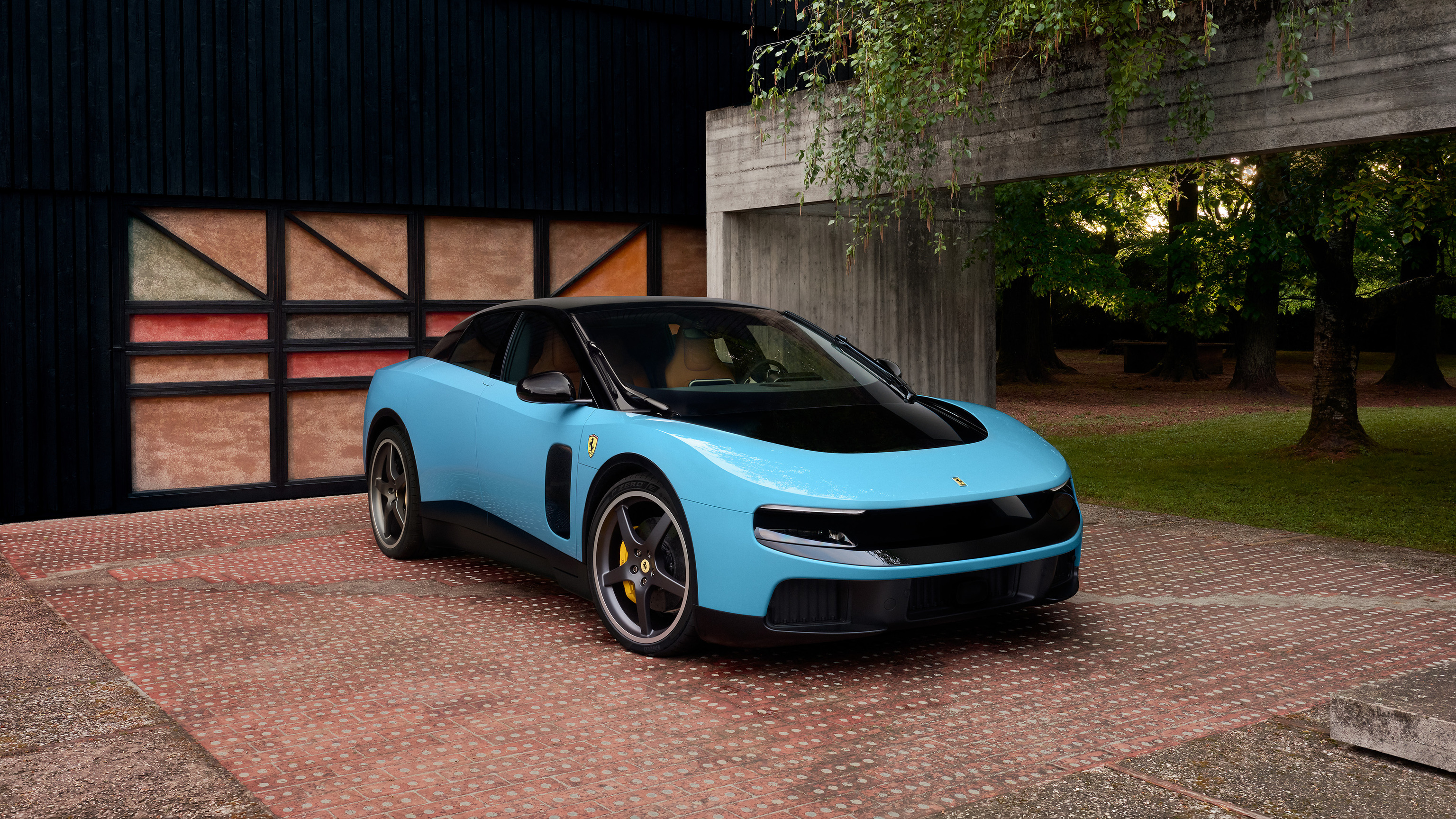
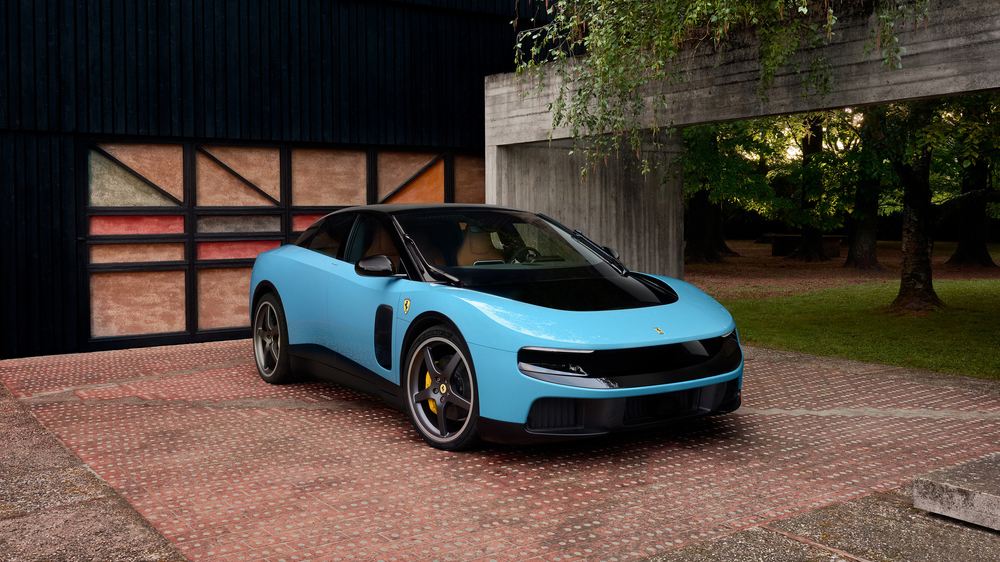
The result is a car with four doors and five seats, a first for Ferrari, made possible by an electric architecture that avoids the packaging limits of a front-mid engine and rear gearbox transaxle arrangement.
The exterior is defined by what Ferrari describes as an unusually pure glass house, extending below the belt line and framed by front and rear aerodynamic wings that appear to float around the main volume.

The front and rear light panels are transparent and integrated into the primary surfaces, while the halo tail lights nod to the 360 Modena and 458 Italia.
The wheels are another statement of intent. The Luce uses the largest staggered wheel diameters yet fitted to a series-production Ferrari road car, with 23-inch fronts and 24-inch rears.
Inside the five-seat Ferrari
The interior is described less as a traditional cabin and more as a collection of carefully resolved individual objects brought together into one clean volume.
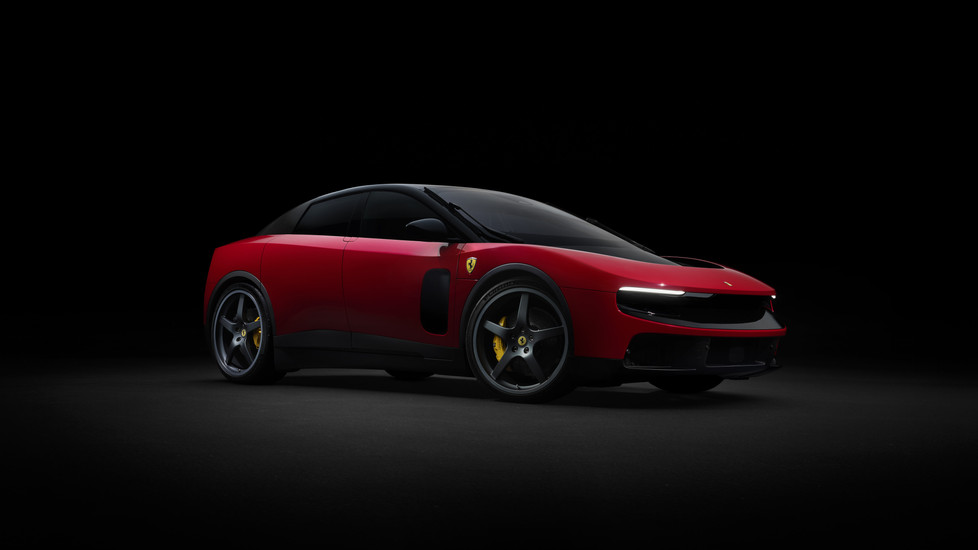
Ferrari says the exterior, interior and interface share a unified design language, with simplified forms intended to support the driving experience rather than compete with it.
The interface separates input and output with a clear functional hierarchy. Essential controls and driver feedback sit directly ahead of the person at the wheel.
Physical interaction has not been abandoned. Precision mechanical buttons, dials, toggles and switches sit alongside multifunction digital displays developed with Samsung Display.
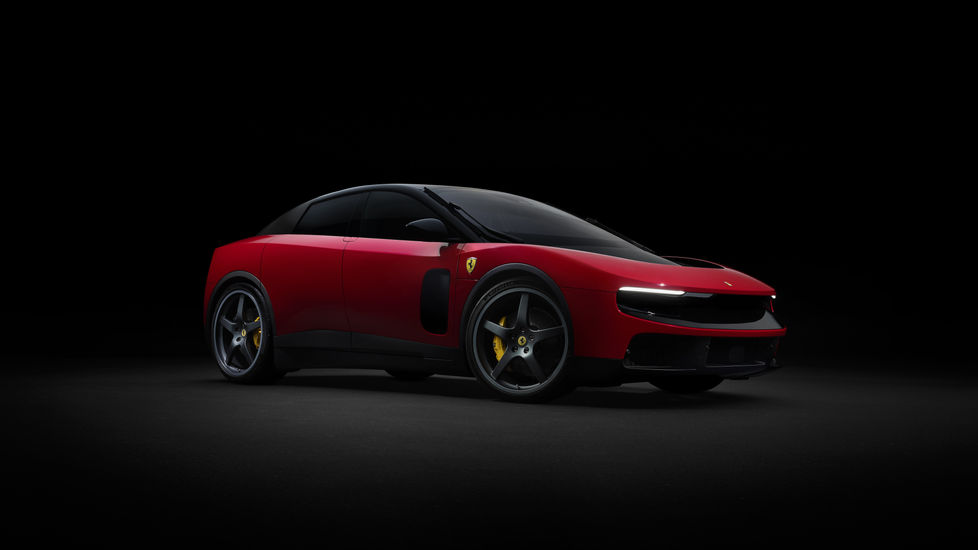
Material choices include recycled anodised aluminium, Corning Gorilla Glass and premium leather.
The audio system is also unusually ambitious, with 21 speakers, 24-channel amplification and 3000 W output. It incorporates Ferrari Audio Signature, with presets, individual listening optimisation and dynamic compensation functions.
Four motors and wheel-by-wheel control
The Luce sits on a bespoke platform with a dedicated chassis and extensive component-level engineering.
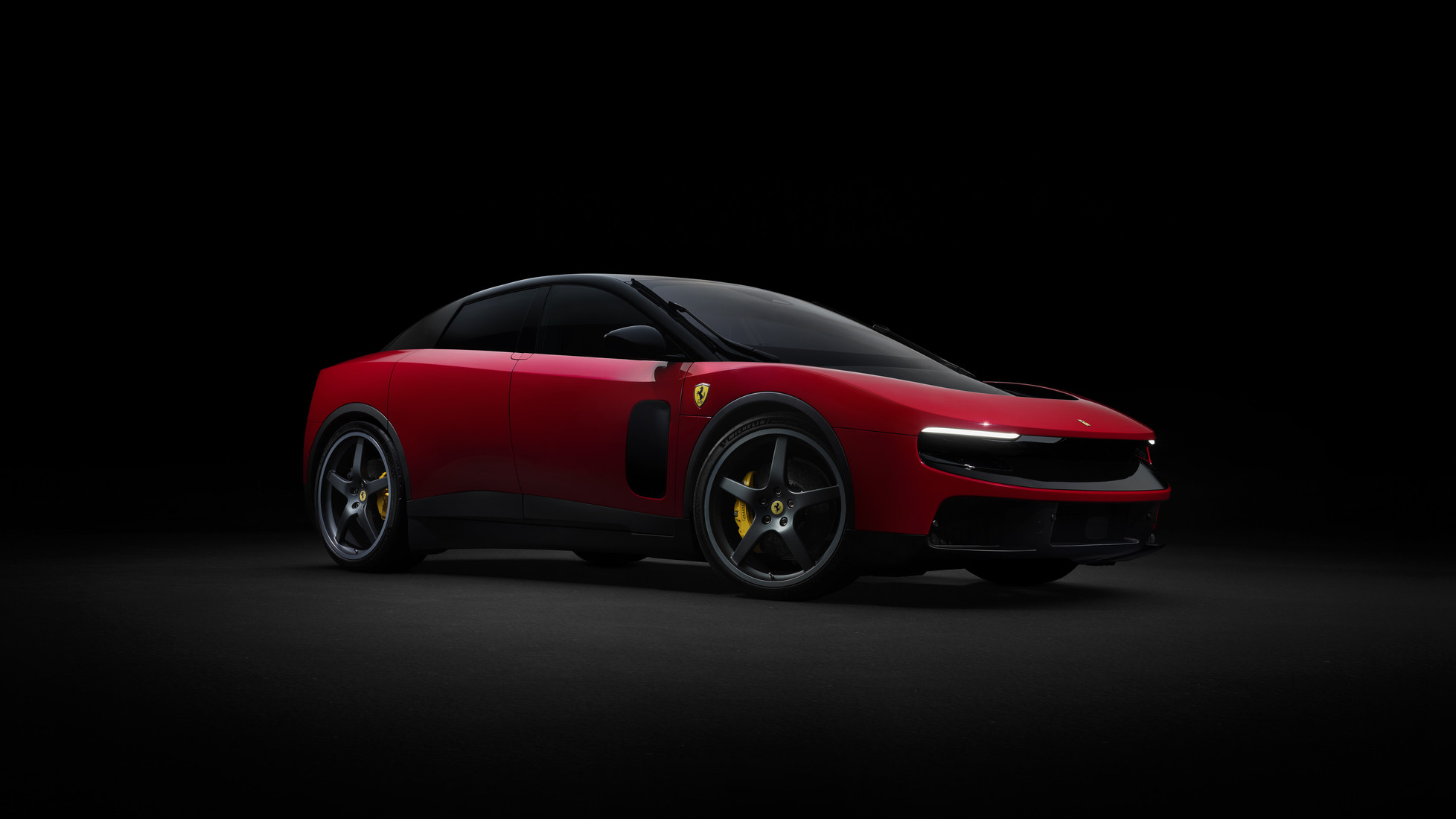
Ferrari claims a kerb weight of 2260 kg, a maximum total output of 1050 cv, a 0–100 km/h time of 2.5 seconds and a 0–200 km/h time of 6.8 seconds.
Top speed is stated at more than 310 km/h, while range is listed at over 530 km.
Power comes from four electric motors, one at each wheel, paired with a 122 kWh battery, active suspension derived from the F80 and an independently steering rear axle.

The most interesting technical idea is not simply that each wheel is powered, but that each wheel is actively managed in traction, regeneration, steering angle and vertical movement.
That gives the car real-time control over torque distribution and body behaviour, with torque vectoring and the suspension’s elastic balance used to sharpen agility and make direction changes feel more fluid.
Ferrari is also taking a measured approach to sound, framing it as something authentic and functional rather than a theatrical substitute for combustion noise.

Details & Specifications
| Brand | Ferrari |
|---|---|
| Model | Luce |
| Powertrain | Four electric motors, one per wheel |
| Maximum output | 1050 cv |
| Battery | 122 kWh |
| Range | More than 530 km |
| 0–100 km/h | 2.5 seconds |
| 0–200 km/h | 6.8 seconds |
| Top speed | Over 310 km/h |
| Kerb weight | 2260 kg |
| Seating | Five seats |
| Doors | Four |
| Suspension | Active suspension derived from the F80 |
| Rear axle | Independently steering rear axle |
| Wheels | 23-inch front, 24-inch rear |
| Audio | 21 speakers, 24-channel amplification, 3000 W |
The Luce is a pivotal car because it broadens Ferrari’s idea of performance without severing the line to Maranello’s past.
It brings five-seat practicality, electric packaging and a new design authorship into the same conversation as lap-time thinking, mechanical tactility and brand continuity. For Ferrari, that makes it less a detour than a deliberately challenging new chapter.