Benalmádena is often treated as a classic Costa del Sol beach stop, but the town has more range than its seafront first suggests.
Between the award-winning marina, the mountain above Arroyo de la Miel and the whitewashed lanes of Benalmádena Pueblo, it moves easily from holiday gloss to Andalusian character.
That contrast is exactly what makes it one of the more rewarding coastal towns west of Málaga.
At a glance
- Benalmádena combines a lively marina, a traditional old town and a mountain cable car within one Costa del Sol destination.
- Highlights include Puerto Marina, El Parque de la Paloma, Monte Calamorro and the historic streets of Benalmádena Pueblo.
- It suits travellers who want beach time with easy access to gardens, viewpoints, local history and relaxed Andalusian streets.
Three Benalmádenas in one coastal town
Benalmádena is best understood as three linked areas rather than one single resort strip.
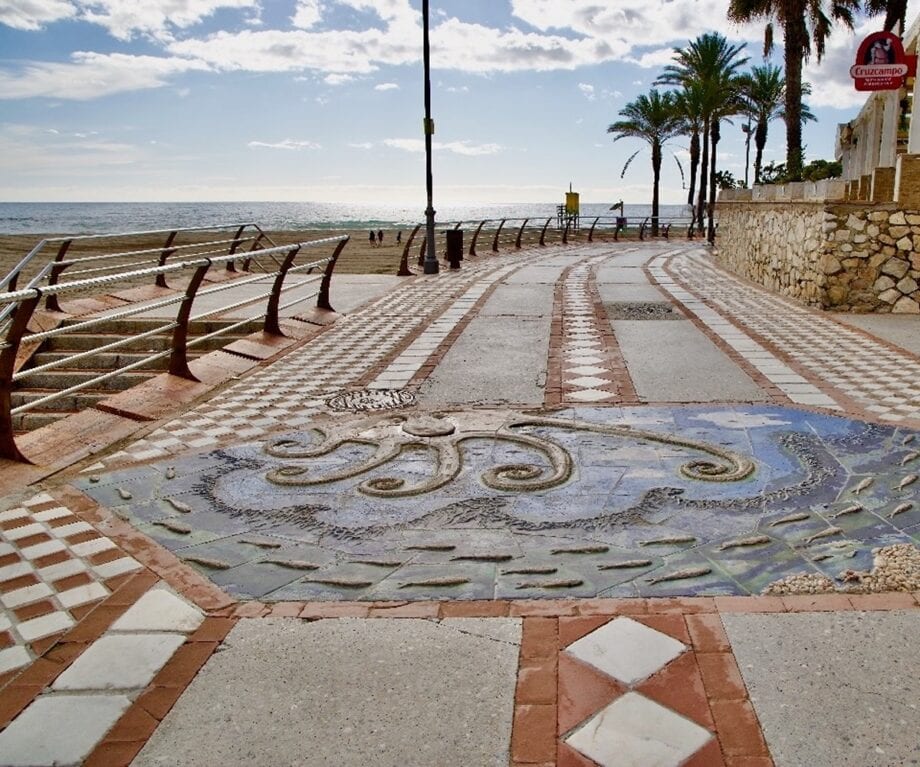
Along the coast, the Paseo Marítimo runs past cafés, bars, souvenir shops and the easy bustle of a Mediterranean promenade.
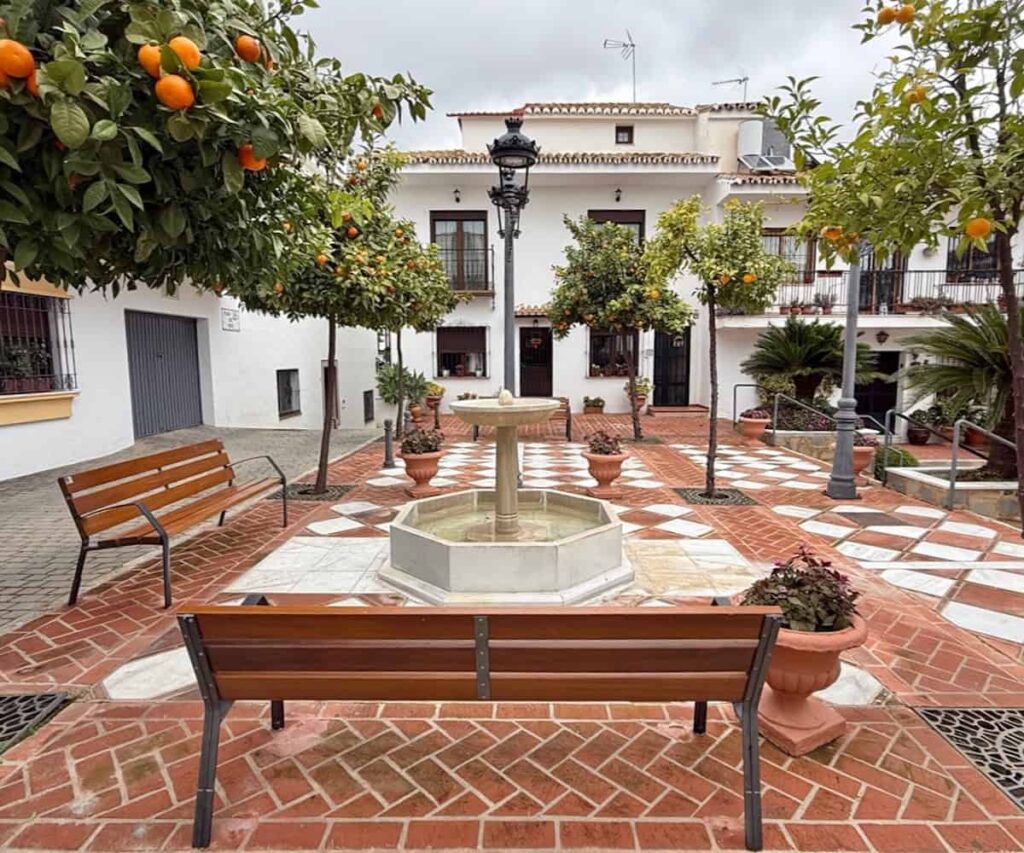
Inland, Arroyo de la Miel acts as the town centre, with narrow streets, small courtyards and orange trees giving it a noticeably different rhythm.
A few kilometres away, Benalmádena Pueblo keeps the older village atmosphere, with cobbled lanes, whitewashed houses and a slower pace.
The town’s history reaches back to Phoenician settlement in the seventh and eighth centuries BC, with Roman and Arab influence leaving further layers over time.
Its name is linked to the Arabic “Ben-al-Madina”, commonly understood as “Children of the mines”.
Fishing, agriculture and paper manufacture once shaped daily life here, long before the marina and beach tourism became central to its modern identity.
For a closer look at early Benalmádena, the Archaeological Museum in Benalmádena Pueblo holds objects connected with the area’s ancient settlements.
At the heart of the museum is the private collection of D. Felipe Orlando, a Mexican resident who gifted it to the town on the condition that it remained on display locally.
Puerto Marina and the seafront surprise
Puerto Marina doesn’t reveal its character all at once.
The approach can feel understated, but beyond the shopping frontage is one of the most distinctive marina developments on the Costa del Sol.
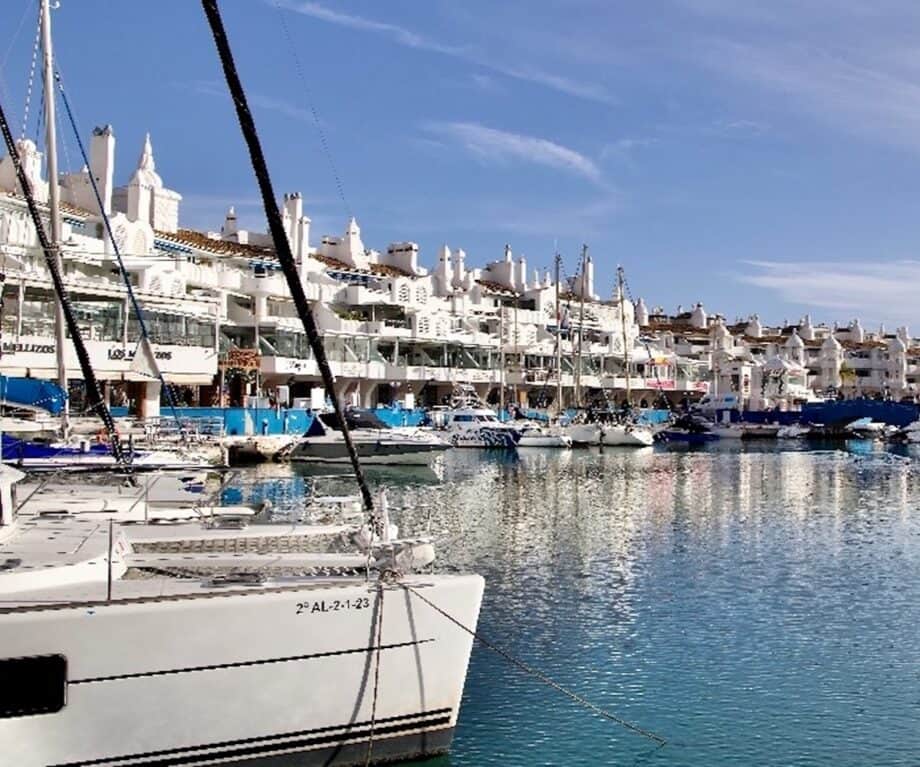
Opened in 1979, Puerto Marina Benalmádena has been recognised several times as one of the world’s leading marinas.
Its appeal lies partly in the unusual architecture, where Indian, Arabic and Andalusian influences appear across residential islands reached by small bridges over the water.
The marina has moorings for more than 1,000 boats and yachts, framed by covered walkways, waterside restaurants, cafés and shops.
It’s polished without feeling sealed off, and it works as well for a casual evening walk as it does for a long lunch by the harbour.
Away from the marina, the seafront’s most useful landmark is the red Moorish-style Bil-Bil Castle.
Once a private residence, the castle now serves as a municipal cultural centre and sits close to the route up towards one of Benalmádena’s best green spaces.
El Parque de la Paloma and a quieter side of town
El Parque de la Paloma offers a softer counterpoint to the promenade and marina.
Opened to the public in 1995, the park was developed as part of the town’s green spaces and has become one of Benalmádena’s most pleasant places to pause.
A large artificial lake sits at its centre, with walking paths branching off into gardens, lawns and shaded areas.
The lake is home to turtles and water birds including ducks, moorhens and swans, while mouflon sheep have their own enclosure within the park.
One of the more unexpected features is a group of three large bronze heads by José Seguiri, known as “Las cabezas”.
The sculptures represent fallen civilisations and were first displayed in the marina before being moved to the park.
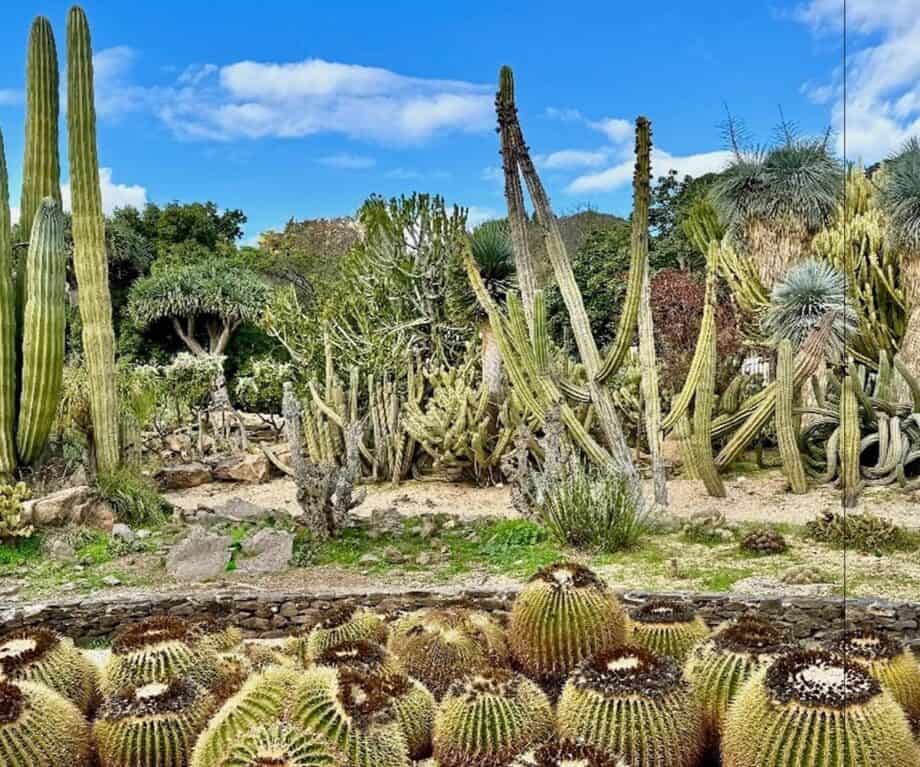
The gardens include bamboo, water lilies and an important collection of cacti and succulents, giving the park more variety than a standard urban green space.
There are also cafés, picnic areas, play areas, an auditorium for concerts and a municipal library near the upper end of the park.
Monte Calamorro and Benalmádena Pueblo
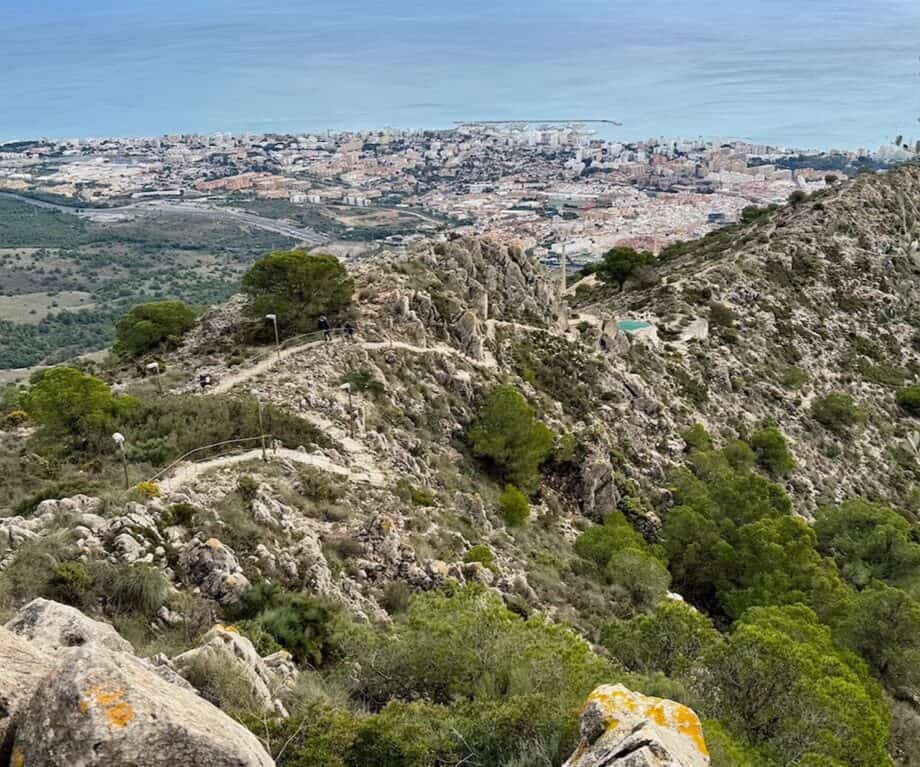
Arroyo de la Miel is the starting point for the Teleférico Benalmádena, the cable car that climbs towards Monte Calamorro.
The area’s name means “stream of honey” and comes from its earlier life as farmland, before paper mills helped turn it into an industrial centre and later the nucleus of the modern town.
Today, the cable car gives Benalmádena one of its most memorable experiences.
Small cabins rise above the town towards the mountain, with views opening gradually over the coast and inland landscape.
The cable car stops just below the peak, where stone paths with handrails lead towards two summits.
On clear days, the reward is a broad panorama that makes the town’s geography easy to understand at a glance.
A wooden walkway on the descent passes an area dedicated to birds of prey, with flying demonstrations held when weather conditions allow and an extra charge applied.
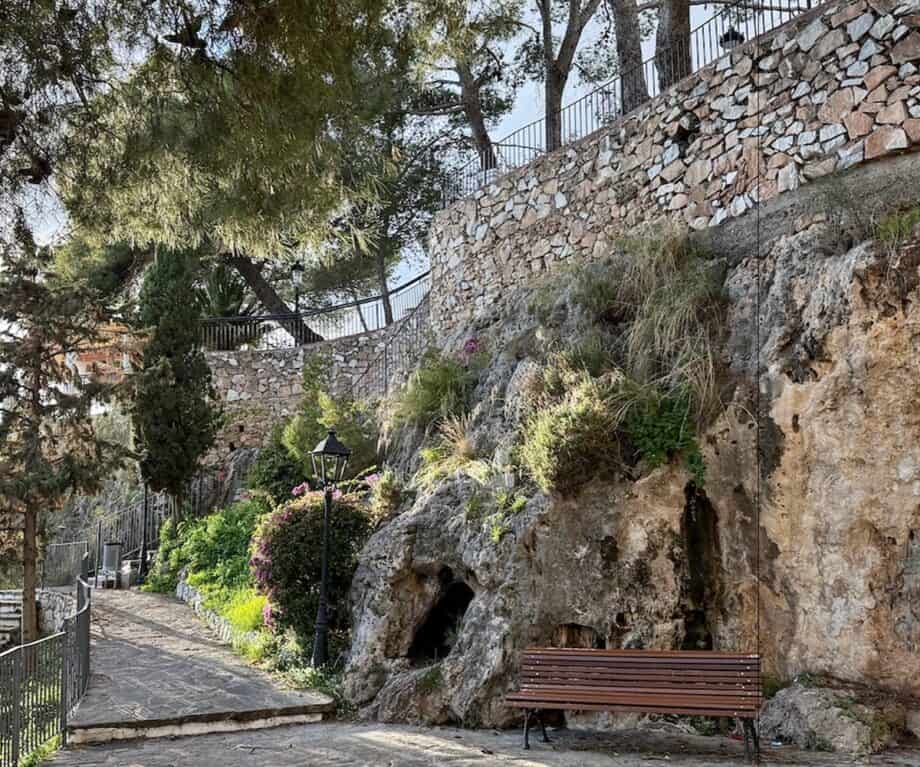
Back down from the heights, Benalmádena Pueblo is where the town feels most traditionally Andalusian.
Its lanes lead towards Plaza de España, a small square with restaurants and the sculpture of the “Niña de Benalmádena”, the town’s emblem.
Wall gardens brighten the white façades, with potted plants arranged along the houses leading towards the Church of Santo Domingo de Guzmán.
The church dates to the seventeenth century and has been extended and renovated over time, with a distinctive belfry holding three bells and a clock.
Benalmádena’s charm is in the way these pieces sit close together without blending into one generic resort experience.
Come for the coast, but leave time for the marina bridges, the park lake, the mountain paths and the old town streets, because that’s where the town becomes far more interesting.